
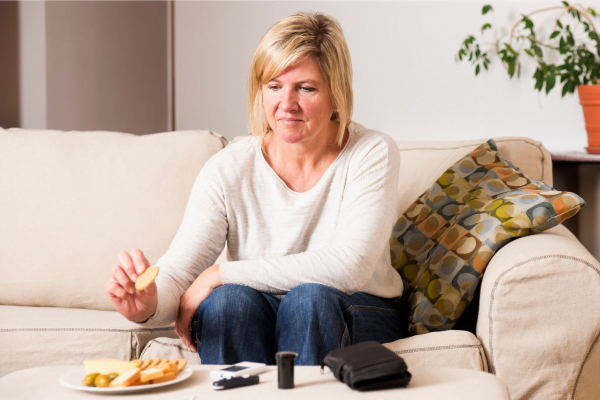
A healthy snack for diabetes is a portioned food or small pairing that fits your carbohydrate plan and adds fiber, protein, or unsaturated fat. It should help with hunger without causing a fast, unexpected glucose rise. The best choice depends on your medications, activity, timing, appetite, and usual glucose patterns, so the goal is flexible planning rather than a rigid list of forbidden foods.
This matters because snacks can smooth the gap between meals, but they can also add extra carbohydrate you did not plan for. If you use insulin or medicines that can cause hypoglycemia (low blood sugar), snack timing may also affect safety. Use the ideas below as a practical starting point, then personalize them with your clinician or registered dietitian.
Key Takeaways
- Pair carbohydrates with protein, fiber, or healthy fats when possible.
- Check serving size and total carbohydrate before added sugar claims.
- Vegetables can be flexible, but dips and portions still count.
- Bedtime snacks help some people, but they are not automatic.
- Ask for professional input if snacks trigger repeated highs, lows, or weight changes.
What Makes a Snack Blood Sugar Friendly?
A healthy snack for diabetes works best when it fits your day, your hunger, and your glucose goals. It does not need to be carbohydrate-free. Carbohydrate has the most direct effect on postprandial glucose (blood sugar after eating), but the amount, type, portion, and pairing all matter.
Many diabetes-friendly snacks include a modest carbohydrate source, such as fruit, whole grains, beans, or plain yogurt, plus a food that adds protein, fat, or fiber. This combination may slow digestion and help you feel satisfied. For example, berries with plain Greek yogurt often behave differently than a sweet drink, even when both taste sweet.
Fruit can fit many diabetes meal patterns. The portion, ripeness, and pairing make a difference. If fruit feels confusing, a guide to Low Sugar Fruits can help you compare options without treating fruit as off-limits.
Nutrition labels are usually more useful than front-of-package claims. Start with serving size, then total carbohydrate. Added sugars, fiber, sodium, and saturated fat provide extra context. A sugar-free snack can still contain carbohydrate, sugar alcohols, or calories. A food with natural sugar, such as fruit or milk, may still fit when the portion and pairing make sense.
Why it matters: The same snack can affect two people differently because digestion, sleep, activity, stress, and medicines differ.
How to Build a Healthy Snack for Diabetes
The simplest method is to pair a carbohydrate with something that slows digestion or adds staying power. This does not guarantee a flat glucose line. It can reduce the chance of a sharp swing, especially when the snack replaces a highly refined, sweet, or oversized choice.
Think in small building blocks. Choose one carbohydrate source, then add protein, fiber, or unsaturated fat. If you are not hungry enough for a balanced snack, you may only need water, tea, or a few vegetables. If you are very hungry, the snack may need to be closer to a planned mini-meal.
| Starting Point | Helpful Pairing | Snack Example | Main Check |
|---|---|---|---|
| Fruit | Protein or fat | Apple slices with nut butter | Fruit portion and spread amount |
| Whole grain | Protein | Whole-grain crackers with cheese | Serving size and sodium |
| Non-starchy vegetables | Bean or yogurt dip | Peppers and cucumber with hummus | Dip portion |
| Protein-rich food | Fiber-rich side | Egg with tomatoes or a small fruit | Meal timing and hunger level |
| Crunchy snack | Measured serving | Air-popped popcorn with nuts | Total carbohydrate and added fat |
Texture and convenience matter too. If a snack feels boring, it is harder to repeat. Try combining creamy, crunchy, sweet, or savory elements in a small portion. Plain yogurt with berries, celery with peanut butter, or roasted chickpeas with raw vegetables can feel more complete than one packaged item eaten quickly.
Label Reading Without Guesswork
When a label lists total carbohydrate, compare that number with your personal snack plan. The calculator below can estimate carbohydrate servings from a packaged snack’s total carbohydrate amount. It helps you compare labels more consistently.
Carb Serving Calculator
Convert total carbohydrate grams into carb choices for meal planning and diabetes education.
These calculations are for education only and do not replace clinical advice, diagnosis, or treatment. Always confirm medical decisions with a qualified healthcare professional.
The calculator does not set a target for you or replace advice from a diabetes care professional. If you have been given carbohydrate ranges, use those instructions first. If you have not, a registered dietitian can help you build targets that match your health history, appetite, and medicines.
Diabetes-Friendly Snack Ideas by Situation
The best snacks are the ones that solve a real problem. That problem may be hunger between meals, a long work shift, travel, exercise, or an evening gap after dinner. A snack that works at home may not work in a car, at work, or during a busy clinic day.
Quick Options at Home
- Greek yogurt bowl: plain yogurt, berries, and cinnamon.
- Egg and vegetables: hard-boiled egg with cherry tomatoes.
- Crunchy plate: cucumber, peppers, and hummus.
- Cottage cheese cup: cottage cheese with a small fruit portion.
- Avocado toast: avocado on a small slice of whole-grain bread.
For food-specific nuance, read about Avocados And Diabetes, Strawberries And Diabetes, and Popcorn And Diabetes. These foods can fit many patterns, but portions and pairings still matter.
Portable Choices for Work, Errands, or Travel
- Portioned nuts: choose a small container, not a large bag.
- Cheese pairing: string cheese with whole-grain crackers.
- Roasted chickpeas: pack a measured serving.
- Nut butter packet: pair with celery sticks.
- Tuna pouch: choose lower-sodium options when needed.
Portable snacks deserve extra attention because packages often contain more than one serving. If you eat directly from a large bag, it is easy to lose track. Pre-portioning can help without making food feel clinical or restrictive.
Sweet or Crunchy Choices
- Berries and yogurt: keep the yogurt plain.
- Chia pudding: avoid heavy sweetening.
- Apple and nut butter: measure the spread.
- Air-popped popcorn: keep the serving planned.
- Ricotta toast: add cinnamon instead of syrup.
Sweet does not automatically mean unsuitable, and sugar-free does not automatically mean better. The better question is how the snack fits your glucose pattern, meal plan, and appetite. If a food repeatedly leads to readings outside your target range, bring that pattern to your diabetes care team rather than guessing alone.
What Can People With Diabetes Snack On More Freely?
Non-starchy vegetables are the closest thing to a flexible snack for many people managing diabetes. Examples include cucumbers, celery, peppers, broccoli, cauliflower, leafy greens, mushrooms, and zucchini. They are usually low in carbohydrate and high in water or fiber, which can help with fullness.
Freely does not mean without context. Dips, dressings, crackers, cheese, nuts, and sauces can add carbohydrate, sodium, saturated fat, or calories. That does not make them bad. It means the extras deserve the same portion awareness as the main snack.
Other very low-carbohydrate options may include unsweetened tea, sparkling water without sugar, or broth-style drinks, depending on sodium needs. If you have high blood pressure, kidney disease, heart failure, or fluid restrictions, ask before using salty snack drinks or broths often. For broader condition reading, you can browse the Diabetes collection.
Late-Night and Bedtime Snacks Need a Pattern, Not a Rule
Choosing a healthy snack for diabetes at night depends on why you want it. Hunger, long gaps after dinner, evening activity, alcohol, and medication timing can all change the situation. Some people need a planned bedtime snack because of overnight lows. Others see higher morning glucose when they snack late.
A bedtime snack is not automatically protective. If you wake with low readings, sweating, shakiness, confusion, or unusual morning highs, your clinician may want to review your medication plan, dinner pattern, or overnight glucose data. Do not change insulin or other prescription medicines on your own because of snack patterns.
When a bedtime snack is part of your plan, many people aim for something small and balanced rather than a large sweet item. Examples include plain yogurt, a small amount of nuts with fruit, cheese with whole-grain crackers, or vegetables with hummus. The best choice is the one that matches your care plan and does not leave you uncomfortably full.
Quick tip: Write down the snack, time, and morning glucose for a few days before your next visit.
What About Junk Food, Sugar-Free Snacks, and Packaged Foods?
Most people do not need a shame-based food list. Still, some snack patterns can make glucose management harder. Sweet drinks, large desserts, highly refined crackers, big portions of dried fruit, candy eaten for hunger, and oversized snack bags can add carbohydrate quickly without much fullness.
Packaged snacks can fit, but the label matters. Compare serving size, total carbohydrate, fiber, sodium, saturated fat, and added sugars. Protein bars, granola, smoothie bowls, sweetened yogurt, and gluten-free snacks can still contain significant carbohydrate or added sugar. Some are useful in the right portion. Others act more like dessert, even when the package looks wellness-focused.
Low carb snacks for diabetes may help some people reduce glucose swings, but low carbohydrate is not the only goal. Heart health, kidney health, blood pressure, appetite, and food satisfaction also matter. Jerky, processed cheese snacks, salted nuts, chips, and packaged snack mixes may fit occasionally, but they are not automatically better because they are low in sugar.
If you want something less nutrient-dense, plan the portion and avoid using it as your main hunger solution. For example, a small serving of chips with a protein-containing meal may affect you differently than chips eaten alone from a large bag. Repeated glucose checks, if part of your plan, can show patterns more clearly than one isolated reading.
When Snacks Need Extra Planning
Snack planning becomes more important when low blood sugar is a risk. Insulin and some diabetes medicines can increase hypoglycemia risk, especially when meals are delayed, activity increases, or alcohol is involved. Follow the low-blood-sugar plan your clinician gave you, and seek urgent help for severe confusion, fainting, seizure, or symptoms that do not improve after following that plan.
Pregnancy, kidney disease, gastroparesis (delayed stomach emptying), eating disorder history, and unplanned weight change also deserve individualized guidance. In pregnancy, carbohydrate distribution and snack timing may be part of a treatment plan. Kidney disease can change what counts as a safe everyday snack because potassium, phosphorus, sodium, and protein needs may shift.
Older adults may need a different approach. Appetite, dental health, swallowing comfort, medication schedules, and fall risk can all affect snack choices. A simple snack that is easy to chew, store, and prepare may be more useful than an ideal snack that never gets eaten.
If you are adjusting snacks because your readings often run high or low, involve your care team. Food changes can interact with medicines, activity, and illness. A registered dietitian can also help turn a generic diabetic snack list into choices that match your culture, budget, and schedule.
How Snacks Fit Into A1C and Daily Energy
Snacks can support steadier daily habits, but no single snack lowers A1C by itself. A1C is a lab measure that reflects average glucose over roughly the past two to three months. It is influenced by meals, activity, sleep, medications, stress, illness, and individual biology.
If snacks often leave you tired, hungry again quickly, or above your usual target range, the pattern deserves review. You might need a different portion, more protein, more fiber, a different time, or fewer unplanned snacks. A healthy snack for diabetes should support the next part of your day, not create a cycle of grazing and frustration.
For people with prediabetes or early glucose changes, snacks can be a useful place to practice label reading and portion awareness. They are not a substitute for diagnosis or follow-up testing. A practical review can be simple: notice whether the snack solved hunger, whether the portion matched your plan, and whether your next meal felt easier to manage.
If you like fruit-based snacks, consider rotating types and portions instead of relying on one option every day. Peaches, berries, apples, and citrus can all fit for some people. For a closer look at one common choice, see Peaches And Diabetes.
Authoritative Sources
- The CDC healthy eating guidance for diabetes explains balanced meal planning and carbohydrate awareness.
- The NIDDK healthy living with diabetes resource reviews food, activity, and daily diabetes care basics.
- The American Diabetes Association carbohydrate resource outlines how carbohydrate affects blood glucose.
A healthy snack for diabetes does not need to be perfect, expensive, or complicated. Start with portion, total carbohydrate, fiber, protein, and timing. Then adjust based on your hunger, glucose patterns, health conditions, and professional guidance.
This content is for informational purposes only and is not a substitute for professional medical advice.


