

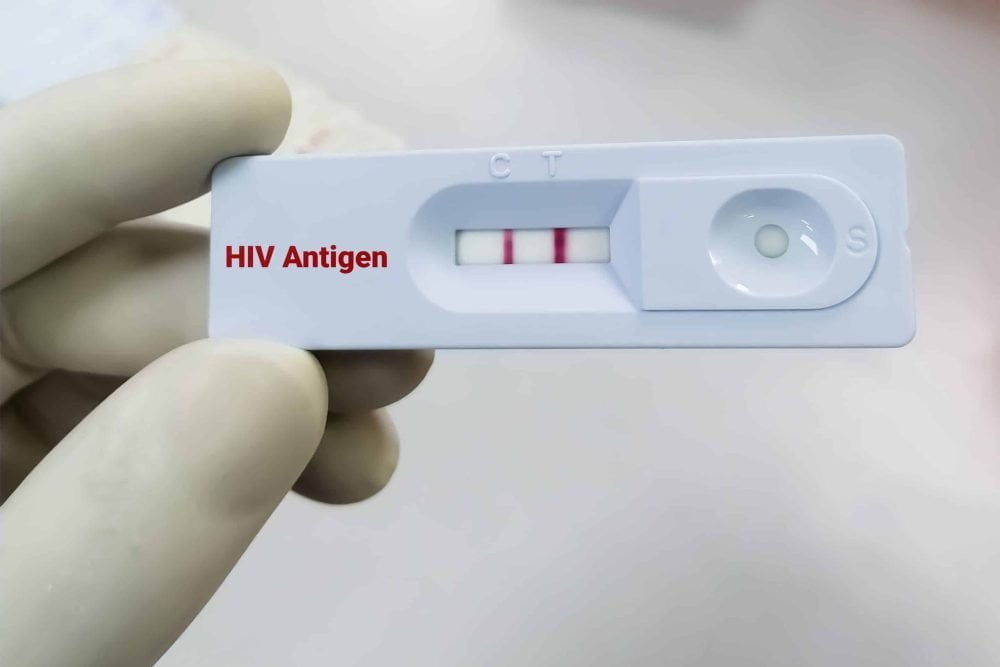
There are three main types of HIV tests: antibody tests, antigen/antibody tests, and nucleic acid tests (NATs). They do not become useful at the same time after exposure, and a quick screening result is not always the same as a final diagnosis. Understanding the types of HIV tests helps you make sense of timing, accuracy, and what happens next. For broader context, the Sexual Health and Infectious Disease hubs can help you explore related topics.
Key Takeaways
- Lab antigen/antibody tests often detect infection earlier than antibody-only tests.
- NATs may identify HIV sooner, but they are not the routine first test for everyone.
- Rapid and home tests can be helpful, though some have longer window periods.
- A reactive screening result usually needs confirmatory follow-up.
- A negative result taken too soon after exposure may need repeat testing.
BorderFreeHealth works with licensed Canadian partner pharmacies for U.S. patients.
Types of HIV Tests and What Each One Detects
HIV tests look for different signs of infection. Some measure your immune response. Others look for part of the virus itself. That difference explains why one test may turn positive earlier than another.
Antibody tests
Antibody tests look for the proteins your immune system makes after exposure to HIV. These tests can use blood or oral fluid. Many rapid tests and some home tests fall into this group. They are useful and widely available, but they usually detect infection later than newer lab-based options because the body needs time to make detectable antibodies.
An oral swab home test is convenient and private, but it is still an antibody test. That matters because an oral fluid test may have a longer window period than a blood test.
Antigen/antibody tests
Antigen/antibody tests look for both HIV antibodies and p24 antigen, a viral protein that can appear earlier in infection. The best-known version is the lab-based fourth-generation, or 4th generation HIV test, usually done on blood drawn from a vein. In many clinics and hospitals, this is the standard first screening test because it balances early detection with broad availability.
Some point-of-care (done where you are tested) rapid tests also use blood from a fingerstick. They can be helpful when speed matters, but the exact performance and timing depend on the device and sample type.
Nucleic acid tests
A nucleic acid test, or NAT, looks for HIV RNA, the virus’s genetic material. Because it detects the virus directly, it may identify infection earlier than antibody-only testing. NATs are not the routine starting point for everyone, though. They are often reserved for very recent exposures, symptoms that raise concern for acute HIV infection, or cases where other test results do not fully match the clinical picture.
| Test type | What it detects | Common sample | Typical window period | Practical role |
|---|---|---|---|---|
| Antibody test | Immune response to HIV | Blood or oral fluid | About 23 to 90 days | Common for rapid and home testing |
| Lab antigen/antibody test | p24 antigen and antibodies | Blood from a vein | About 18 to 45 days | Common first-line lab screening |
| Rapid fingerstick test | Varies by device | Fingerstick blood | About 18 to 90 days, depending on device | Same-visit screening in many settings |
| NAT | Viral RNA | Blood | About 10 to 33 days | Used when very early infection is a concern |
These ranges are general. The exact window period comes from the specific test used, so the package instructions or testing site guidance still matter.
Window Periods and Why Timing Changes the Answer
The window period is the time between a possible exposure and when a test can reliably detect infection. It is not just a technical detail. It is often the main reason one person gets a clear answer while another needs repeat testing.
If you test too soon, the result may be negative even though infection is present but not yet detectable. This is why timing should always be interpreted alongside the test type. A lab blood test and an oral swab do not answer the same question on the same day after exposure.
In general, NATs can detect HIV earliest. Lab-based antigen/antibody tests usually come next. Antibody-only tests, including many self-tests, often need more time. That is why a home test can be very useful for privacy and access, but it may be less helpful when the exposure was very recent.
Quick tip: When reviewing a result, ask which test was used before focusing on the date alone.
Timing also affects how people interpret symptoms. Fever, rash, sore throat, or swollen glands can happen for many reasons. Symptoms alone cannot confirm or rule out HIV. Testing is what makes the answer clearer.
Accuracy, False Positives, and False Negatives
HIV test accuracy is not one fixed number that applies in every setting. It depends on when the test was taken, what kind of sample was used, whether the instructions were followed, and whether a screening result was confirmed correctly.
False negatives are more likely during the window period. In plain terms, the test may be accurate, but it is being asked to detect infection before that method can usually do so. This is the most common reason a negative result does not fully settle the question after a recent exposure.
False positives can also happen on screening tests, though they are uncommon. That is why diagnosis does not rest on one reactive screen alone. Testing programs use a sequence of follow-up steps to sort out true infection from an initial reactive result.
Why a reactive screen is not the final word
In many laboratories, testing starts with an antigen/antibody screen. If that screen is reactive, the next step is often an HIV-1/HIV-2 differentiation test to clarify the result. If those findings are unclear, or if very early infection is still suspected, a NAT may be added. This stepwise approach is often called the HIV testing algorithm.
Why a negative result may still need follow-up
A nonreactive or negative result is reassuring only if the test was taken after the relevant window period. If the exposure was recent, repeat testing may be needed based on the test used and the timing of that exposure. Ongoing risk can also change the follow-up plan.
Rapid, Laboratory, and Self-Testing: How They Compare
Among the types of HIV tests, the best option often depends on one practical question: do you need the earliest possible detection, the fastest same-visit answer, the most privacy, or the easiest access to follow-up care?
A laboratory HIV test is usually the strongest choice when early detection matters or when formal confirmatory testing may be needed. It often uses blood drawn from a vein and fits smoothly into the standard diagnostic algorithm.
A rapid HIV test can be done in a clinic, community site, or other point-of-care setting. Results may come back quickly, which lowers the stress of waiting. The tradeoff is that some rapid formats have longer window periods than lab-based blood testing.
An HIV self-test can help people who want privacy or who face barriers to in-person care. Home HIV test accuracy depends heavily on timing and correct use. A reactive self-test still needs follow-up with a healthcare professional or testing service, and a negative home result may need repeat testing if the exposure was recent.
- Recent exposure date matters most.
- Blood usually detects earlier than oral fluid.
- Fast results are not always final.
- Follow-up access can shape the best choice.
- Privacy needs are valid and important.
What Results Mean and What Usually Happens Next
Most reports use a few key terms. Nonreactive usually means the screening test did not detect HIV. Reactive means the screening test found a signal that needs confirmatory follow-up. Inconclusive or indeterminate means the answer is not yet clear and more testing is needed.
What the testing process looks like is usually simple. A sample may come from a fingerstick, an oral swab, or blood drawn from a vein. Rapid testing can return same-visit results. Lab testing may take longer because the sample goes through a fuller process, especially if confirmatory steps are added.
- Identify which test was used.
- Match the test to the exposure date.
- Read whether the result is screening or confirmatory.
- Ask if repeat testing is recommended.
- Make sure follow-up instructions are clear.
Why it matters: The meaning of an HIV result depends on both the method and the timing.
These types of HIV tests are designed to diagnose infection, not to judge risk on their own. A negative result does not explain why an exposure happened, and a reactive result does not define the next months of care by itself. Interpretation is strongest when the testing method, the timing, and the follow-up plan all line up.
After a Test: Prevention, Treatment, and Further Reading
If a result is negative but exposure risk continues, the next step may be a prevention conversation rather than more worry. For example, some people ask about preventive medicines such as Truvada, Descovy, or long-acting Apretude. These are separate from testing, but they often come up during the same visit.
If a result is confirmed positive, care usually shifts toward baseline lab work, education, and treatment planning. Examples of HIV treatment pages on our site include Dovato, Delstrigo, Genvoya, and Triumeq. You can also browse the Infectious Disease Treatments hub for broader context. These examples are not interchangeable choices, and final selection depends on clinical evaluation.
When prescriptions are required, pharmacy teams may verify details with the prescriber.
Put simply, knowing the types of HIV tests can reduce confusion and help you ask better questions. The right test is the one that fits the timing of the exposure, the setting you can access, and the follow-up you may need.
Authoritative Sources
- CDC clinical testing guidance for HIV
- NIH HIVinfo overview of HIV testing
- HIV.gov summary of testing and next steps
This content is for informational purposes only and is not a substitute for professional medical advice.


