

Please note: a valid prescription is required for all prescription medication.
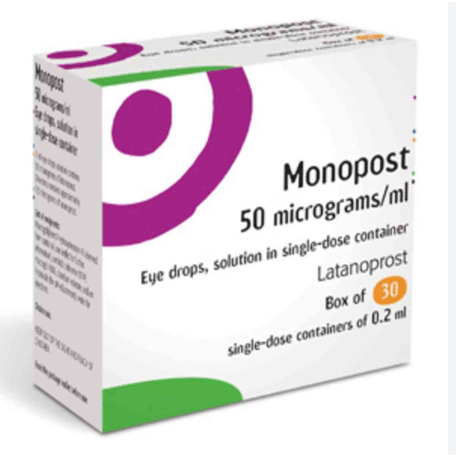
Monoprost
Buy Monoprost Eye Drops Online
Secure Encrypted Payments
Monoprost is a preservative-free latanoprost eye drop used to lower high pressure inside the eye in open-angle glaucoma or ocular hypertension. You can order Monoprost online, view current pricing, and choose the available strength that matches your clinician’s directions. Its single-dose format is designed for once-daily evening use and reduces exposure to common bottle preservatives.
Monoprost Price, Strength, and Ordering Basics
Monoprost price can vary by quantity, supply source, and current pharmacy costs. During ordering, review the available Monoprost eye drops presentation and select the strength or quantity that matches your treatment plan. If you are paying out of pocket, the displayed cash-pay cost can help you plan refills before you run low.
This medicine is commonly searched as Monoprost 50 mcg/mL, Monoprost 0.005% ophthalmic solution, or latanoprost Monoprost. These names refer to the latanoprost concentration used in the preservative-free ophthalmic solution. The product is supplied through licensed pharmacies, and order details may be reviewed before the medicine is provided.
Customers in the United States can use our cross-border service for US delivery from Canada. Keep your eye-care team informed about the exact product and strength you receive, especially if you are switching from a preserved latanoprost bottle or from another prostaglandin analog.
What Monoprost Is Used For
Monoprost is used to reduce elevated intraocular pressure, which means pressure inside the eye. It is used in adults with open-angle glaucoma or ocular hypertension. Lowering eye pressure helps reduce ongoing stress on the optic nerve, although your clinician will still monitor your eye pressure and optic nerve health over time.
Open-angle glaucoma is a long-term eye condition in which fluid drainage is not efficient enough, leading to pressure that can damage vision. Ocular hypertension means the eye pressure is higher than normal, even if glaucoma damage has not been detected. You can read more about these conditions in our sections on glaucoma and ocular hypertension.
Monoprost is not a quick symptom-relief drop for redness, allergy, or dry eye. It is a pressure-lowering treatment that works best when used consistently as directed. If your vision changes, eye pain worsens, or symptoms feel urgent, contact an eye-care professional promptly rather than waiting for a routine follow-up.
How Latanoprost Works in the Eye
Monoprost contains latanoprost, a prostaglandin analog. This class helps fluid leave the eye more effectively, mainly by improving uveoscleral outflow. Better fluid outflow can lower intraocular pressure and support long-term glaucoma or ocular hypertension management.
Monoprost is the brand product, while latanoprost is the active ingredient. A clinician may use the active ingredient name when discussing treatment choices, and a pharmacy label may emphasize either the brand or ingredient name depending on the supply. If you are comparing Monoprost with another latanoprost eye drop, ask whether the formulation is preservative-free and whether the dosing schedule is the same.
The preservative-free format is a practical distinction. Many multi-dose eye drop bottles contain benzalkonium chloride or another preservative. Monoprost single-dose containers avoid that preservative exposure, which may matter for people with ocular-surface sensitivity, irritation, or long-term use of multiple eye medicines.
Single-Dose Vials and How to Use Them
Monoprost single-dose vials are intended to be opened, used once, and discarded. Typical use is one drop in the affected eye or eyes once daily in the evening, unless your clinician gives different directions. Using prostaglandin drops more often than directed may reduce the pressure-lowering effect and can increase irritation.
- Wash and dry your hands before handling the vial.
- Open one single-use container only when you are ready to dose.
- Tilt your head back and gently pull down the lower eyelid.
- Place one drop into the pocket between the eyelid and eye.
- Avoid touching the dropper tip to your eye, lashes, fingers, or any surface.
- Discard the opened vial after use, even if liquid remains.
If you use more than one ophthalmic medicine, separate drops by at least five minutes unless your clinician gives another schedule. This spacing helps keep one drop from washing out another. Some people are advised to gently press the inner corner of the eye near the nose for about one minute after applying a drop to limit drainage into the tear duct.
Quick tip: Set an evening reminder on your phone so dosing becomes part of your routine.
Contact Lenses, Storage, and Travel
Remove contact lenses before using Monoprost eye drops. Wait at least 15 minutes before reinserting lenses, unless your eye-care professional has given different instructions. If your eyes feel irritated after dosing, avoid rubbing them and ask whether lens timing or another eye product could be contributing.
Store the medicine as directed on the label and keep single-dose containers in their pouch until use to help protect them from light. Do not freeze the vials. Keep them away from children and pets, and never reuse an opened container because sterility cannot be assured after opening.
For travel, keep Monoprost in your carry-on bag rather than checked luggage. Heat, cold, and rough handling are easier to avoid when the medicine stays with you. If you cross time zones, many people continue with evening use based on the new local schedule, but ask your clinician if your dosing time needs special adjustment.
Benefits and Practical Treatment Expectations
Monoprost offers once-daily pressure-lowering therapy in a preservative-free, single-use format. The evening schedule can be easier to coordinate with daytime drops, work routines, and travel. The individual vials also reduce the need to carry a larger bottle and can help limit contamination from repeated bottle-tip contact.
Eye pressure may improve with consistent use, but you may not feel a noticeable change. Glaucoma and ocular hypertension often have few symptoms until damage is advanced, so pressure checks remain important. Keep follow-up visits even if your eyes feel normal, because the goal is long-term protection of vision.
Some visible changes can occur slowly. Latanoprost may darken the iris, especially in eyes with mixed brown coloration, and the change may be permanent. Eyelashes can become longer, thicker, or darker. These effects are usually gradual, so mention any changes during eye exams.
Side Effects, Warnings, and Monitoring
Like all ophthalmic medicines, Monoprost can cause side effects. Many are local eye effects and may improve as you adjust, but persistent symptoms deserve medical attention. Tell your clinician about new symptoms, recent eye surgery, lens problems, or a history of inflammatory eye disease.
- Eye redness
- Burning, stinging, or itching after application
- Dry eye or a gritty feeling
- Temporary blurred vision after dosing
- Eyelid skin darkening
- Eyelash growth or thickening
- Gradual iris color change
Less common but more serious concerns include uveitis, macular edema, and worsening or recurrence of herpetic keratitis in people with a relevant history. Seek urgent care for sudden vision changes, severe eye pain, marked light sensitivity, discharge, swelling, or signs of infection. Do not share eye drops with anyone else, even if they have similar symptoms.
Monitoring usually includes eye-pressure measurements and periodic optic nerve assessment. Your clinician may also review visual field testing, retinal status, and how well you tolerate the drops. Bring all eye medicines to appointments so timing, duplication, and interactions can be checked accurately.
Interactions and When Monoprost May Not Be Suitable
Using two prostaglandin analog eye drops together is generally avoided because it may reduce the intended pressure-lowering effect or increase side effects. If another eye drop is added, the timing and sequence matter. Separate products by at least five minutes unless instructed otherwise.
Monoprost may not be appropriate for people with hypersensitivity to latanoprost or other ingredients in the formulation. Extra caution may be needed with active eye inflammation, a history of uveitis, macular edema risk, aphakia, pseudoaphakia with a torn posterior lens capsule, or previous herpetic keratitis. Pregnancy, nursing, and planned eye procedures should also be discussed with a healthcare professional.
Tell your care team about all eye drops, ointments, supplements, and medicines you use. Over-the-counter lubricating drops can still affect comfort and timing. If eye pressure remains above goal despite correct use, your clinician may consider a different prostaglandin, an added beta blocker, a carbonic anhydrase inhibitor, or another glaucoma strategy.
Comparing Preservative-Free Latanoprost With Other Options
Monoprost is often chosen when a preservative-free latanoprost option is preferred. Preservative-free therapy may be useful for people who experience surface irritation with preserved bottles or who use several long-term eye drops. It does not mean the medicine is free of side effects, and it does not replace routine monitoring.
Other prostaglandin analogs may be considered if response, tolerability, or formulation needs differ. Some patients use bimatoprost or travoprost products instead of latanoprost. When comparing choices, focus on pressure response, irritation, dosing convenience, contact-lens routine, and any history of inflammation or retinal risk.
You can browse related eye-care treatments in ophthalmology. For broader educational reading, our ophthalmology articles cover eye-health topics that may help you prepare questions for your next appointment. Country-of-origin browsing is also available through our Canada-sourced medicines section.
Cost-Saving and Refill Planning
If you use Monoprost long term, refill planning can prevent missed doses. Count how many single-use vials you have left and reorder early enough to allow processing and prompt, express shipping. Do not stretch therapy by skipping days unless a clinician tells you to stop or change the schedule.
Self-pay customers often look at Monoprost Canadian pricing because out-of-pocket costs can differ from local retail pricing. Review the current quantity and price before checkout, then align your refill timing with follow-up visits when possible. If your clinician changes your glaucoma plan, confirm whether the existing supply should still be used.
Keep a simple medication list that includes Monoprost, other eye drops, dosing times, allergies, and prior reactions. This makes appointments more productive and helps reduce duplication if another clinician becomes involved in your care.
Questions to Ask Your Eye-Care Professional
Good questions can make long-term glaucoma treatment easier to follow. Bring up comfort, timing, affordability, and any cosmetic or vision changes. If your eyes are dry or irritated, ask whether the preservative-free format should change how you use lubricating drops or contact lenses.
- Is preservative-free latanoprost the right choice for my eye surface?
- What eye-pressure target are we trying to reach?
- How often should my pressure and optic nerve be monitored?
- How should I time Monoprost with my other eye medicines?
- Which symptoms should lead me to call urgently?
- What are my alternatives if irritation or pressure control becomes a problem?
Write down the answers or keep them in your phone. Small timing details, such as spacing drops or discarding opened vials, can affect how well treatment fits daily life.
Authoritative Sources
Health Canada Drug and Health Product Register record for Monoprost
NCBI review of preservative-free latanoprost 50 mcg/mL ophthalmic solution
NHS latanoprost medicine information
This content is for informational purposes only and is not a substitute for professional medical advice.
Express Shipping - from $29.99
Shipping with this method takes 3-5 days
Prices:
- Dry-Packed Products $29.99
- Cold-Packed Products $39.99
Shipping Countries:
- United States (all contiguous states**)
- Worldwide (excludes some countries***)
Standard Shipping - $19.99
Shipping with this method takes 5-10 days
Prices:
- Dry-Packed Products $19.99
- Not available for Cold-Packed products
Shipping Countries:
- United States (all contiguous states**)
- Worldwide (excludes some countries***)
What is Monoprost used for?
Monoprost is used to lower high pressure inside the eye in adults with open-angle glaucoma or ocular hypertension. It contains latanoprost, a prostaglandin analog that helps eye fluid drain more effectively.
Is Monoprost the same as latanoprost?
Monoprost is a brand of latanoprost eye drops. Latanoprost is the active ingredient, while Monoprost refers to the preservative-free single-dose product format.
What are common Monoprost side effects?
Common side effects can include eye redness, burning, stinging, itching, dry eye sensation, eyelash changes, eyelid skin darkening, and gradual iris color change. Contact a clinician urgently for severe pain, sudden vision changes, swelling, discharge, or signs of infection.
How often is Monoprost usually used?
Monoprost is typically used once daily in the evening, with one drop in the affected eye or eyes. Follow your clinician’s directions and do not use extra drops to make up for a missed dose.
Can Monoprost be used with contact lenses?
Remove contact lenses before applying Monoprost and wait at least 15 minutes before reinserting them, unless your eye-care professional gives different instructions. Avoid touching the vial tip to the eye, lens, or any surface.
How should Monoprost single-dose vials be stored?
Store Monoprost as directed on the label, keep vials in their pouch until use, protect them from light, and do not freeze them. Discard each opened vial after one use, even if liquid remains.
Rewards Program
Earn points on birthdays, product orders, reviews, friend referrals, and more! Enjoy your medication at unparalleled discounts while reaping rewards for every step you take with us.
You can read more about rewards here.
POINT VALUE
How to earn points
- 1Create an account and start earning.
- 2Earn points every time you shop or perform certain actions.
- 3Redeem points for exclusive discounts.
You Might Also Like
Select options
This product has multiple variants. The options may be chosen on the product page
Select options
This product has multiple variants. The options may be chosen on the product page
Select options
This product has multiple variants. The options may be chosen on the product page
Select options
This product has multiple variants. The options may be chosen on the product page