

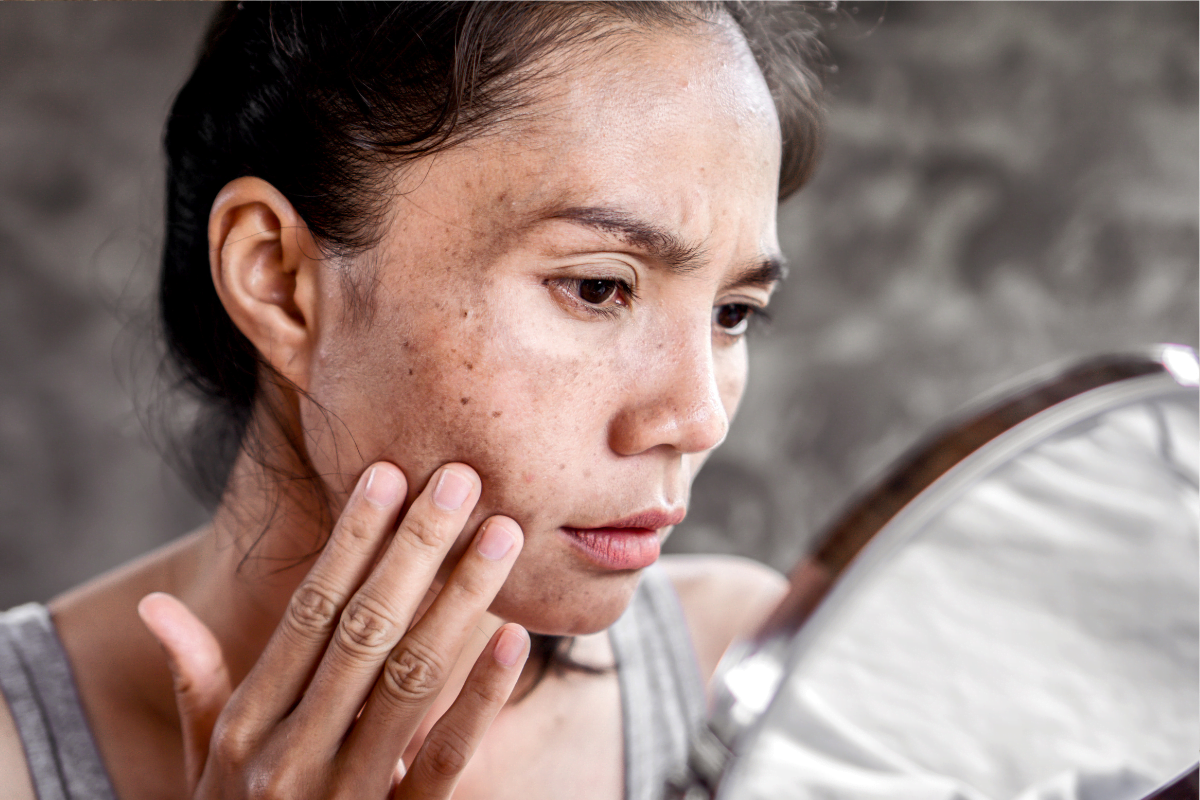
Cosmetic camouflage for hyperpigmentation uses makeup and sun protection to make dark patches look less noticeable for the day. It does not treat excess pigment, but it can reduce contrast from melasma, post-inflammatory marks, scars, and uneven tone when products are chosen and removed carefully.
Why it matters: Coverage should support confidence without delaying care for changing or unexplained skin spots.
Key Takeaways
- Sunscreen comes first, especially for melasma-prone skin.
- Color corrector can reduce contrast before concealer.
- Thin layers usually look more natural than heavy coverage.
- Patch testing helps lower irritation and clogged-pore risk.
- New, painful, bleeding, or changing spots need clinical assessment.
How Cosmetic Camouflage for Hyperpigmentation Works
Cosmetic camouflage is the careful use of skin-safe makeup to temporarily conceal visible color differences. A routine may include sunscreen, primer, color corrector, concealer, foundation, setting powder, or setting spray. Some clinicians use the term skin camouflage therapy when products are selected for medical-looking coverage and taught as a technique.
Hyperpigmentation means an area of skin looks darker because of extra melanin, the pigment that gives skin color. It can follow acne, eczema, injury, burns, rashes, or inflammation. It can also appear as melasma, which often causes brown or gray-brown facial patches.
Coverage is not the same as treatment. A concealer for dark spots can reduce contrast for several hours, but it does not remove pigment or address the cause. Treatment decisions depend on the type of discoloration, skin sensitivity, medical history, and the risk of irritation.
For broader skin-health reading, the Dermatology collection groups related skin education. The browseable Dermatology Products category can also help readers distinguish skin-care items, medicines, and prescription-related options.
Who May Find Camouflage Useful
Camouflage may help people who want temporary control over how uneven tone appears in daily life. This can include people with post-inflammatory hyperpigmentation after acne, melasma, sun-related dark spots, scars, or mixed discoloration. Some people use coverage daily. Others reserve it for work, photos, events, or days when their skin feels more noticeable.
Post-inflammatory hyperpigmentation often follows inflamed breakouts. If acne is still active, heavy layers may feel uncomfortable or contribute to clogged pores, depending on the formula and your skin. A lighter routine may work better than a thick one. If acne is part of your pattern, What Is Acne offers broader context on causes and care concepts.
Visible skin changes can also affect self-image. That does not mean anyone has to cover their skin. The choice should remain personal. Advocacy starts with respecting both choices: using makeup when it helps, or not using it when it feels unnecessary.
Some pigment changes come from less common medical conditions. For example, photosensitivity and skin fragility can occur in certain disorders. Porphyria Cutanea Tarda Treatment explains one condition where sun sensitivity and skin findings need medical guidance. The key point is simple: camouflage can support confidence, but it should not replace evaluation when skin changes are unusual.
Build a Routine Without Overloading Skin
A good routine starts with comfort, not maximum coverage. If the skin barrier is irritated, makeup can sting, settle unevenly, or emphasize texture. Gentle cleansing, moisturizer, and sun protection create a smoother base. Then targeted color correction can reduce the need for heavy foundation.
Start with a small area and apply each layer thinly. Wait briefly before adding the next product. This helps you see whether the mark still needs coverage or whether the previous layer already softened the contrast. More product is not always better. It can crease, transfer, or make texture more visible.
A practical layering order
- Cleanse gently and avoid scrubbing dark patches.
- Apply moisturizer suited to your skin type.
- Use sunscreen you can wear consistently.
- Tap color corrector only on the darker area.
- Add concealer or foundation in thin layers.
- Set lightly where transfer is likely.
- Remove makeup fully at the end of the day.
For melasma and stubborn facial pigment, sun protection matters because ultraviolet light and visible light may worsen discoloration in some people. Tinted sunscreen for hyperpigmentation often contains iron oxides, which are pigments that can help reduce some visible-light exposure. This does not replace clinical care, but it can support a practical daily routine.
If your routine also includes prescription or non-prescription skin treatments, keep camouflage simple around irritated areas. Retinoid-related care can be drying for some users. For background reading, see Differin and Wrinkles and Renova Cream. These pages are not camouflage instructions, but they explain why tolerance matters when active products are involved.
BorderFreeHealth connects U.S. patients with licensed Canadian partner pharmacies when medication access is relevant and permitted.
Choosing Correctors, Concealers, and Foundations
Color correction works by softening the undertone of a dark area before skin-toned makeup goes on top. The right color corrector for hyperpigmentation depends on your skin depth and the undertone of the mark. Peach may help some brown marks on lighter skin. Orange, red-orange, rust, or terracotta may look more natural on deeper skin tones. Yellow or olive-toned correctors may help some red-brown areas.
Use the smallest amount that changes the look of the spot. If the corrector is too bright, the final result can look orange. If it is too pale, the area may look gray or ashy. At this stage, the goal is not to erase the mark. It is to reduce contrast so the next layer can blend.
| Pigment Look | Corrector Direction | Coverage Note |
|---|---|---|
| Brown or gray-brown patches | Peach, apricot, orange, or warm tan | Use tiny amounts and blend only at the edge. |
| Red-brown post-acne marks | Muted green, yellow, or warm neutral | Check in daylight to avoid a chalky cast. |
| Blue-gray or ashy marks | Orange, rust, or terracotta | Deeper skin tones often need deeper correctors. |
| Mixed melasma patches | Sheer peach plus a matching base | Thin layers usually look more natural than one thick coat. |
Shade matching matters as much as correction. Match the surrounding skin, not the dark spot itself. Test near the jaw, cheek, or area you plan to cover. If your face and neck are different shades, choose the match that looks most balanced in daylight.
Quick tip: Test a base shade in daylight before relying on it for an event.
Foundation for hyperpigmentation does not always need to be full coverage. Many people get better results from medium coverage plus targeted concealer. Others prefer long-wear or water-resistant formulas for heat, masks, or long days. If your skin is acne-prone, non-comedogenic labeling may be helpful, but it is not a guarantee for every person.
Ingredient awareness can also help. Products marketed for glow, resurfacing, or anti-aging may contain acids, retinoids, or other active ingredients. These are not automatically harmful, but layering several active products under makeup can increase dryness or irritation. For a label-reading perspective, Peptides Skin Care Basics explains how to think about claims and routines.
Different Pigment Concerns Need Different Techniques
Melasma often covers broader facial areas, so a mask-like base can look obvious. A sheer corrector, tinted sunscreen, and flexible foundation may feel more wearable. Makeup to cover melasma usually works best when it blends into nearby skin rather than trying to create a completely blank surface.
Post-inflammatory marks after acne are often smaller. Spot concealing can preserve natural skin texture while reducing contrast where it matters. Covering post-inflammatory hyperpigmentation may require less foundation than expected if the corrector and concealer match well.
Scars may involve both color and texture. Makeup can soften discoloration, but it cannot flatten a raised scar or fully fill a depressed one. A smoothing primer may help some texture look softer, though results vary. Avoid aggressive rubbing when applying or removing product over scars.
Vitiligo involves lighter areas rather than darker areas. Cosmetic camouflage for vitiligo usually focuses on matching surrounding skin or creating a balanced overall tone. That approach differs from cosmetic camouflage for hyperpigmentation, where warm correctors often matter more. People with widespread pigment changes may benefit from professional shade matching, especially for visible areas such as the face, hands, or neck.
Safety Steps Before Daily Wear
Safe makeup for hyperpigmentation starts with avoiding irritation. Irritation can inflame skin and may worsen post-inflammatory discoloration in some people. Fragrance, harsh exfoliants, drying alcohols, and aggressive scrubbing can be troublesome for sensitive skin. That does not mean every scented or long-wear product is unsafe. It means your skin’s response matters.
Patch testing is a simple safety step. Apply a small amount of product to a discreet area, such as the jawline or behind the ear. Watch for stinging, rash, swelling, itching, or new bumps. If you have eczema, frequent allergic reactions, or very reactive skin, ask a clinician before testing several products.
Remove camouflage gently. Oil-based removers, micellar water, or balm cleansers may help dissolve long-wear formulas without scrubbing. Follow with a mild cleanser if needed. Leaving heavy makeup on overnight can irritate skin or clog pores, especially around acne-prone areas.
Ask a clinician about dark spots that are new, changing quickly, bleeding, painful, crusting, or uneven in shape. Also seek care for discoloration that appears after a new medication, illness, burn, or severe rash. Makeup can cover many things, but it cannot tell you whether a spot is harmless.
When prescriptions are involved, partner pharmacies may verify required prescription details with the prescriber before dispensing.
Permanent Camouflage and Tattooing Require Caution
Permanent makeup and skin-tone tattooing are different from daily cosmetic camouflage. These procedures place pigment into the skin. They may be difficult to reverse, and colors can shift over time. They may also be unsuitable for active inflammation, changing pigment, keloid-prone skin, or uncertain diagnoses.
If you are considering tattoo camouflage for scars or discoloration, speak with a qualified medical professional first. Ask whether the area is stable, whether the cause is known, and whether the procedure could make future evaluation harder. Also ask the practitioner about training, infection-control practices, pigment selection, and aftercare.
Daily makeup has one major advantage: it is adjustable. You can change color, coverage, finish, and formula as your skin changes. That flexibility matters for melasma, acne marks, scars, and seasonal skin-tone shifts.
Common Mistakes That Make Coverage Less Natural
- Skipping sunscreen: Light exposure can make some pigment concerns harder to manage.
- Using excess corrector: Bright peach or orange can show through foundation.
- Matching the spot: Choose the surrounding skin tone instead.
- Scrubbing removal: Friction can irritate already reactive skin.
- Ignoring texture: Scars need different techniques than flat marks.
- Covering new changes: Unexplained spots should be checked first.
These mistakes are common because hyperpigmentation camouflage makeup can look different in bathroom lighting, daylight, and photos. If a routine looks heavy, reduce one layer at a time. Often, a better shade match or a smaller corrector area improves the result more than adding coverage.
Authoritative Sources
- For patient guidance on professional camouflage techniques, the British Association of Dermatologists explains skin camouflage.
- For regulatory sunscreen basics, the U.S. Food and Drug Administration explains sunscreen use.
- For research on visible skin conditions and confidence, a peer-reviewed review discusses cosmetic camouflage benefits.
Practical Next Steps
Cosmetic camouflage for hyperpigmentation works best when it supports your life rather than controls it. Start with sunscreen, use gentle products, correct undertones lightly, and keep the final finish close to your real skin. If pigment is changing or unexplained, put evaluation before concealment.
Use this page as a starting point for makeup conversations, dermatologist visits, or product label checks. A small, consistent routine often looks better than a complicated one. It is also easier to adjust when skin tone, texture, or sensitivity changes.
This content is for informational purposes only and is not a substitute for professional medical advice.


