
Please note: a valid prescription is required for all prescription medication.
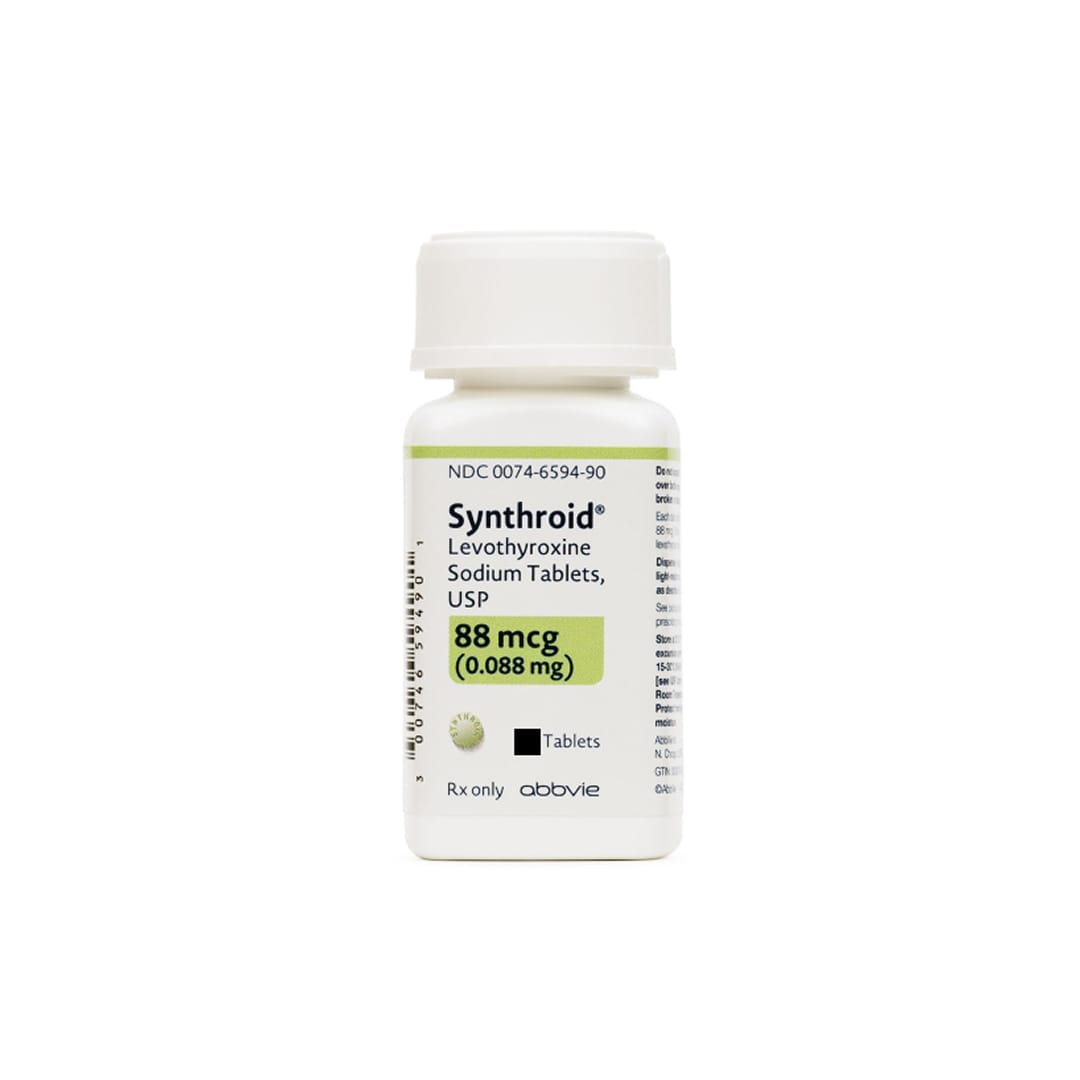
Synthroid
Buy Synthroid Online
Secure Encrypted Payments
Synthroid is a brand of levothyroxine sodium tablets, a man-made form of the thyroid hormone thyroxine (T4). It is prescribed mainly as thyroid hormone replacement when the thyroid gland does not make enough hormone on its own. You can buy Synthroid online with a valid prescription from your own prescriber, and select the tablet strength your prescriber wrote for you.
Tablets are dosed in micrograms (mcg), not milligrams. Synthroid is supplied in several strengths, commonly from 25 mcg up to 300 mcg, so most prescriptions can be matched exactly rather than split or doubled.
Tablet strengths and matching your prescription
Levothyroxine is a narrow therapeutic index medicine. That means small changes in the amount absorbed can change how you feel and what your blood tests show. For that reason, your prescription will name one specific strength, and the goal when ordering is to match it exactly.
A few practical points when choosing a strength:
- Strengths are written in mcg. A 100 mcg tablet is the same as 0.1 mg, which is why some people search for “Synthroid 100 mg” when they mean 100 mcg.
- Tablets of different strengths look different by color and imprint. A new color does not mean the wrong medicine, but check the strength on the label against your prescription.
- Do not change strengths, split tablets, or skip days unless your prescriber tells you to.
View current pricing for the strength you need, then order the quantity your prescription allows. Many people take Synthroid long term, so prescribers often write for a larger day supply.
What you need to order Synthroid
Synthroid is a prescription medicine. A valid prescription from your own prescriber is required, and we may review order details and help confirm prescription information before your order moves forward. Border Free Health is an online prescription referral service that works with certified, accredited pharmacy partners, so Synthroid is supplied through licensed pharmacy channels.
Useful details to have ready: the exact strength in mcg, the number of tablets, your prescriber’s name and contact information, and any recent thyroid lab results if your dose has changed recently.
Quick tip: Keep one pharmacy label photo on your phone so the strength and quantity are easy to confirm when you reorder.
What Synthroid is used for
Synthroid is used as replacement therapy in hypothyroidism, meaning low thyroid hormone from any cause, including Hashimoto’s thyroiditis, surgical removal of the thyroid, and radiation treatment to the thyroid. Replacing the missing hormone can ease symptoms such as fatigue, cold intolerance, dry skin, constipation, and slowed thinking.
Levothyroxine is also used to lower thyroid-stimulating hormone (TSH) in people with well-differentiated thyroid cancer, as part of specialist care after thyroid surgery.
Important limits on use:
- It is not a weight-loss medicine, and it should not be used for obesity.
- It does not treat an overactive thyroid.
- It is not recommended for benign thyroid nodules or ordinary goiter in people who get enough iodine.
- It does not replace cortisol, so untreated adrenal problems must be managed first.
How Synthroid is usually taken
The prescribing information directs that levothyroxine tablets be taken once daily on an empty stomach, with a full glass of water, about 30 to 60 minutes before breakfast. Food, coffee, and many supplements lower absorption, so consistent timing matters more with this medicine than with most others.
Doses are individualized by weight, age, heart health, pregnancy status, and lab results. Prescribers often start lower in older adults and in people with heart disease, then adjust slowly. Follow the directions on your own prescription label rather than a general range.
If you miss a dose, ask your pharmacist what to do. Do not take two doses at once to catch up unless you are told to.
Side effects, warnings, and interactions
Most side effects from levothyroxine come from getting too much hormone. They can look like an overactive thyroid.
Commonly reported effects include:
- Fast or pounding heartbeat, palpitations
- Trouble sleeping, nervousness, irritability, tremor
- Headache, sweating, heat intolerance
- Increased appetite, diarrhea, weight change
- Menstrual changes; temporary hair loss, mainly in the first few months of treatment in children
Serious warnings to know:
- Thyroid hormones, including Synthroid, should not be used for weight loss. In normal doses they do not cause weight loss, and larger doses can cause serious or life-threatening toxic effects, especially when combined with appetite suppressants (MedlinePlus levothyroxine information).
- Levothyroxine is contraindicated in people with uncorrected adrenal insufficiency, because treatment can trigger an adrenal crisis.
- In older adults and people with heart disease, too much hormone can cause chest pain, abnormal heart rhythms, or heart failure symptoms.
- Long-term over-replacement can lower bone mineral density, particularly after menopause.
- People with diabetes may need their blood glucose or insulin plan reviewed when thyroid dosing changes.
Interactions are common and mostly about absorption and timing. Separate Synthroid by about four hours from calcium carbonate, iron, aluminum or magnesium antacids, sucralfate, sevelamer, and bile acid binders such as cholestyramine and colesevelam. Proton pump inhibitors, orlistat, soy products, and high-fiber foods can also reduce absorption. Estrogens, androgens, some seizure medicines, amiodarone, and rifampin can change thyroid hormone levels or dose needs. Levothyroxine can increase the effect of warfarin and change the response to digoxin. Biotin supplements can distort thyroid lab results, so tell the lab if you take them.
Call your clinician promptly for chest pain, a racing or irregular heartbeat, shortness of breath, severe tremor, or a rash with swelling. Seek urgent care for symptoms that feel severe.
Monitoring and what to expect
Treatment is guided by blood tests, mainly TSH, sometimes with free T4. Labs are usually rechecked about six to eight weeks after starting or changing a dose, then periodically once you are stable. Pregnancy, major weight change, new medicines, and switching products can all change dose needs.
Symptom relief is gradual. Many people notice improvement over several weeks, not days, because thyroid hormone levels shift slowly. Weight change, if any, tends to be modest and mostly reflects losing extra fluid when hypothyroidism is corrected.
Brand Synthroid and generic levothyroxine
Synthroid is a brand name for levothyroxine sodium. Generic levothyroxine tablets contain the same active ingredient, and other brands exist as well. Because the medicine has a narrow therapeutic index, many clinicians prefer that patients stay on the same product rather than moving between brands and generics without retesting.
Brand and generic naming, labeling, and equivalence ratings can differ between the United States and other markets. If your order arrives with labeling you do not recognize, confirm the active ingredient and strength in mcg, and keep your prescriber informed about which product you are taking so labs can be interpreted correctly.
Storage and handling
Store Synthroid tablets at controlled room temperature, roughly 20°C to 25°C (68°F to 77°F), and protect them from light and moisture. The bathroom medicine cabinet is a poor choice because of humidity.
Keep tablets in their original container with the label attached, keep them out of reach of children, and do not use tablets past the expiration date. If tablets are crumbled, discolored, or damp, ask a pharmacist before taking them.
Questions worth asking your clinician
- What TSH range are we aiming for, and when is my next lab test?
- Should I stay on the same levothyroxine product each refill?
- Which of my supplements or medicines need to be spaced four hours apart?
- What symptoms mean my dose is too high or too low?
- Does my dose need review if I become pregnant or my weight changes a lot?
Authoritative sources
This content is for general informational purposes only and is not a substitute for professional medical advice, diagnosis, or treatment. Always consult a qualified clinician or pharmacist about your situation, and seek urgent care or call your local emergency number for severe or worsening symptoms.
Frequently asked questions
What does Synthroid treat?
Synthroid replaces thyroid hormone in people with hypothyroidism, including low thyroid function after thyroid surgery, radiation, or Hashimoto’s thyroiditis. Levothyroxine is also used to lower TSH in well-differentiated thyroid cancer care. It is not approved for weight loss or for an overactive thyroid.
Is Synthroid the same as generic levothyroxine?
Both contain levothyroxine sodium as the active ingredient. Because small differences in absorption can shift lab results, many clinicians prefer patients stay on one product consistently and retest TSH if a switch happens. Tell your prescriber which product you are taking.
When should Synthroid be taken each day?
Labeling directs once-daily dosing on an empty stomach with water, about 30 to 60 minutes before breakfast. Keep the timing consistent, and separate it by about four hours from calcium, iron, antacids, and bile acid binders. Follow your own prescription directions.
Does Synthroid cause weight loss?
At normal replacement doses it does not cause meaningful weight loss. Some people lose retained fluid as thyroid levels normalize. Thyroid hormone should not be used for obesity, because higher doses can cause serious heart and metabolic effects.
How is Synthroid treatment monitored?
TSH, sometimes with free T4, is usually checked about six to eight weeks after starting or changing a dose, then periodically. More frequent testing may be needed in pregnancy, after large weight changes, or when interacting medicines begin or stop.
Who should not take Synthroid?
It is contraindicated in people with uncorrected adrenal insufficiency, since treatment can trigger an adrenal crisis. Caution is needed in older adults and people with heart disease, and in anyone with untreated thyrotoxicosis. Discuss your full health history with your prescriber.
BMI Calculator
Estimate adult body mass index from height and weight, with metric and imperial units.
BMI
-
kg/m2 equivalent
Category
-
Adult screening range
These calculations are for education only and do not replace clinical advice, diagnosis, or treatment. Always confirm medical decisions with a qualified healthcare professional.
Body Surface Area Calculator
Calculate body surface area from height and weight using the Mosteller equation.
BSA
-
m2, Mosteller equation
These calculations are for education only and do not replace clinical advice, diagnosis, or treatment. Always confirm medical decisions with a qualified healthcare professional.
Ideal & Adjusted Body Weight Calculator
Estimate ideal body weight with the Devine equation and adjusted body weight when actual weight is above the estimate.
Ideal body weight
-
Devine equation
Adjusted body weight
-
IBW + 0.4 x excess weight
Difference from IBW
-
actual minus ideal
These calculations are for education only and do not replace clinical advice, diagnosis, or treatment. Always confirm medical decisions with a qualified healthcare professional.
Customer Reviews
5.0
Based on 6 Reviews
Write a Review
Ask a Question
- Reviews
- Questions
Filter Reviews:
FS
10/14/2024
Francis S.  US
Synthroid
I have used it for years to good effect.
10/15/2024
borderfreehealth.com
Hi Francis,Thank you for sharing your experience with Synthroid! We're glad to hear that it has been effective for you over the years.If you have any questions or need further assistance, please let us know, we're here to support you.Thank you for choosing Border Free Health. Have an amazing day!
CJ
10/08/2024
Catherine J. USSynthroid
I prefer the brand name drug to the generic, levothyroxine. I believe I get a better and more consistent result.
10/08/2024
borderfreehealth.com
Hi Catherine,Thank you for sharing your preference for the brand-name Synthroid over the generic, levothyroxine. We're glad to hear you're finding better and more consistent results with it—your well-being is our top priority!If you have any questions or need further assistance, please let us know, we're here to support you.Thank you for choosing Border Free Health. Have an amazing day!
FS
08/28/2024
Francis S. USSynthroid
I have taken Synthroid for years, and it works well.
08/29/2024
borderfreehealth.com
Hi Francis,Thank you for your feedback on Synthroid! We're pleased to hear that it has been working well for you over the years. We appreciate your support with us.If you have any questions or need further assistance, please let us know, we're here to support you.Thank you for choosing Border Free Health. Have an amazing day!
CJ
06/26/2024
Catherine J. USGreat Service and Price
This is routine medication for me and everything went smoothly with this transaction.
06/27/2024
borderfreehealth.com
Hi Catherine,Thank you for your feedback! We're glad to hear that everything went smoothly with your transaction and that you're satisfied with our service and pricing. If you have any questions or need further assistance, please don't hesitate to reach out. We're here to support you.Thank you for choosing Border Free Health. Have a great day!
CS
06/25/2024
Constantine S. USSynthroid
Good
06/26/2024
borderfreehealth.com
Hi Constantine,Thank you for your feedback! We're glad to hear that you're satisfied with Synthroid. If you have any questions or need further assistance, please don't hesitate to reach out. We're here to support you.Thank you for choosing Border Free Health. Have a great day!
Express Shipping - from $29.99
Shipping with this method takes 3-5 days
Prices:
- Dry-Packed Products $29.99
- Cold-Packed Products $39.99
Shipping Countries:
- United States (all contiguous states**)
- Worldwide (excludes some countries***)
Standard Shipping - $19.99
Shipping with this method takes 5-10 days
Prices:
- Dry-Packed Products $19.99
- Not available for Cold-Packed products
Shipping Countries:
- United States (all contiguous states**)
- Worldwide (excludes some countries***)
What is Synthroid used to treat?
Synthroid is used as thyroid hormone replacement for hypothyroidism, when the thyroid does not make enough hormone. In specialist care, levothyroxine may also be used to help manage thyroid-stimulating hormone after certain thyroid cancers.
What is the generic name for Synthroid?
The generic name for Synthroid is levothyroxine sodium. Generic levothyroxine contains the same active hormone, but tablets may differ by manufacturer, inactive ingredients, and appearance.
Can Synthroid be taken at night?
Some people take Synthroid at night when their clinician agrees. It should be taken consistently and separated from meals, supplements, and interacting medicines so absorption stays predictable.
What should be avoided close to a Synthroid dose?
Calcium, iron, magnesium, aluminum antacids, sucralfate, bile acid binders, some ulcer medicines, coffee, soy, and high-fiber meals can reduce absorption if taken too close to Synthroid. Ask how far apart to space them.
Is Synthroid the same as levothyroxine?
Synthroid is a brand-name levothyroxine sodium tablet. Levothyroxine is the active thyroid hormone, while Synthroid is one branded version with specific inactive ingredients and tablet characteristics.
What are common Synthroid side effects?
Common dose-related symptoms can include palpitations, fast heartbeat, tremor, sweating, heat intolerance, nervousness, insomnia, diarrhea, increased appetite, or temporary hair shedding. Chest pain, fainting, or severe shortness of breath needs urgent care.
Rewards Program
Earn points on birthdays, product orders, reviews, friend referrals, and more! Enjoy your medication at unparalleled discounts while reaping rewards for every step you take with us.
You can read more about rewards.
POINT VALUE
How to earn points
- 1Create an account and start earning.
- 2Earn points every time you shop or perform certain actions.
- 3Redeem points for exclusive discounts.
You Might Also Like
Select options
This product has multiple variants. The options may be chosen on the product page
Select options
This product has multiple variants. The options may be chosen on the product page
Select options
This product has multiple variants. The options may be chosen on the product page
Select options
This product has multiple variants. The options may be chosen on the product page