
Please note: a valid prescription is required for all prescription medication.
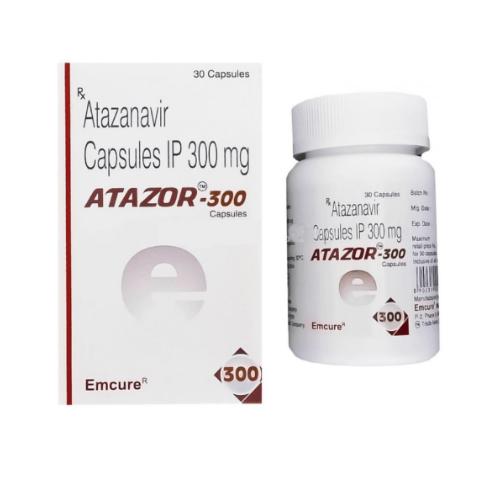
Atazor
Buy Atazor Online
Secure Encrypted Payments
Atazor contains atazanavir, an antiretroviral protease inhibitor used with other HIV medicines to treat HIV-1 infection. It can be ordered online, with current product quantities and strengths shown during checkout so your selection matches your clinician’s directions. For U.S. customers using a Canada-based service, Atazor may be supplied through licensed pharmacies with US delivery from Canada.
Atazor Price, Strength Selection, and Ordering
Atazor medicine price can vary by strength, quantity, manufacturer, and the pharmacy supplying the order. During ordering, choose the dose or strength displayed for Atazor and match it to the treatment plan given by your HIV clinician. Do not substitute a different strength or switch between Atazor and a boosted combination unless your care team has told you to do so.
Atazor is commonly discussed alongside Atazor R because both involve atazanavir-based HIV therapy. Atazor contains atazanavir, while Atazor R refers to an atazanavir and ritonavir combination in some markets. That distinction matters: ritonavir can boost atazanavir levels, but it also changes interaction risks and tolerability considerations. If your regimen calls for boosting, confirm whether your clinician intended separate ritonavir, a co-formulated product, or another complete HIV regimen.
Customers paying out of pocket often look closely at the total monthly regimen, not only one medicine. Atazor is only one component of HIV treatment when used appropriately. Costs for companion antiretrovirals, lab monitoring, and clinic visits can affect the full care budget. Choosing a longer fill may reduce repeated handling costs in some cases, but only do so when your dosing plan is stable and your clinician agrees.
Quick tip: Keep the product name, strength, and quantity aligned with your current medication list before completing checkout.
What Atazor Treats
Atazor is used with other antiretroviral medicines for HIV-1 infection. HIV-1 is the most common type of human immunodeficiency virus, and treatment aims to suppress viral replication so the immune system can be protected over time. Atazor is not an antibiotic, and it does not treat bacterial infections. It is also not a cure for HIV or AIDS.
Atazanavir belongs to the protease inhibitor class. Protease is an HIV enzyme the virus uses to make mature infectious particles. By blocking that enzyme, atazanavir helps reduce the ability of HIV to multiply when combined with an effective background regimen. Because HIV treatment requires multiple active drugs, Atazor should not be used as a stand-alone therapy.
Broader information about HIV care, monitoring, and treatment goals is available in our HIV condition information. For customers comparing antiretroviral classes, the antivirals category can help place Atazor among related medicines used for viral conditions.
How Atazanavir-Based Therapy Is Usually Taken
Atazanavir is typically taken once daily with food, although the exact regimen depends on companion medicines, prior treatment history, viral resistance information, and individual health factors. Food is important because it improves absorption. Skipping meals around the dose may reduce how much medicine the body absorbs.
Some regimens use atazanavir with low-dose ritonavir to increase atazanavir exposure. That approach is sometimes described as boosted atazanavir. Terms such as atazanavir ritonavir tablets, atazanavir/ritonavir 300 mg, or Atazor R 300 mg tablets may appear in discussions of boosted therapy, but they should not be treated as interchangeable with Atazor unless the active ingredients and directions match your clinician’s plan.
Acid-reducing medicines can be especially important with atazanavir. Proton pump inhibitors, H2 blockers, antacids, and buffered medicines can reduce atazanavir absorption or require careful timing. Tell your care team about heartburn medicines, supplements, minerals, and over-the-counter products before starting or refilling Atazor.
- Take the medicine with food unless your clinician gives different directions.
- Keep the same daily dosing time whenever practical.
- Use Atazor only as part of the complete HIV regimen selected for you.
- Do not change acid-reducer timing without clinical guidance.
- Ask for a written medication schedule if your regimen has several timing rules.
Strengths, Forms, and Product Identity
Atazor is the brand name used for atazanavir products. Existing Atazor capsule strengths commonly include 100 mg, 150 mg, 200 mg, and 300 mg, although the strength available for ordering can vary. Select the strength shown for the product and match it to the directions you were given. If your regimen uses a different atazanavir product, do not assume the same directions apply.
Atazor R is a related but distinct product name used for atazanavir plus ritonavir in some settings. Searches for Atazor R tablet 30s, Atazor R tab, or Atazor R 300 mg price often refer to the boosted combination rather than Atazor alone. The presence of ritonavir can affect drug interactions with statins, sedatives, anticoagulants, seizure medicines, and other therapies. This is one reason product names and active ingredients should be checked carefully.
Country of origin, manufacturer, and market naming can differ between products. When available, origin information may appear under attributes such as India. Country information does not replace the need to match the medicine, strength, and active ingredient to your regimen.
Missed Dose, Timing, and Daily Routine
If you miss a dose, general label guidance for atazanavir-based therapy is to take it with food when remembered unless it is close to the next scheduled dose. If it is nearly time for the next dose, the missed dose is usually skipped. Do not take two doses together to make up for a missed one unless a clinician specifically instructs you.
Consistent timing supports viral suppression when Atazor is used in a complete antiretroviral regimen. Missed doses can allow HIV replication and may increase the risk of resistance. Many people pair the dose with the same meal each day, use phone reminders, or keep a written checklist. If adherence is difficult, raise it early with your HIV care team; solutions may include schedule changes, pill organizers, or discussion of a different regimen.
Travel planning is also important. Keep Atazor in your carry-on bag, bring enough supply for the trip, and carry a medication list. If crossing time zones, ask how to keep once-daily spacing practical without creating long gaps. For service logistics, eligible orders may use prompt, express shipping after order details are processed.
Storage and Handling
Store Atazor in its original container with the lid tightly closed. Keep it away from excess heat, moisture, and direct sunlight. Bathrooms and kitchen counters near sinks are often poor storage spots because humidity changes can affect medicines. Keep all antiretrovirals out of reach of children and pets.
Do not use capsules that appear damaged, wet, or otherwise changed. If a container opens during travel or a medicine is exposed to unusual heat or moisture, ask a pharmacist or clinician what to do before continuing. Keeping a current medication list with the product name and strength can also help during emergency visits or travel delays.
Side Effects, Warnings, and Monitoring
Atazor can cause side effects, and some require prompt clinical attention. Commonly reported effects with atazanavir-based therapy include nausea, stomach discomfort, headache, rash, fatigue, and changes in liver-related laboratory values. Atazanavir can raise bilirubin, a pigment processed by the liver. This may cause yellowing of the eyes or skin and is often not the same as liver injury, but new or worsening yellowing should still be discussed with a clinician.
Serious reactions are less common but important. Seek urgent care for severe rash, blistering, facial swelling, breathing trouble, fainting, chest symptoms, severe abdominal pain, or jaundice with pain or dark urine. Atazanavir has been associated with liver problems, heart rhythm conduction changes, gallbladder issues, and kidney stones. People with liver disease, hepatitis B or C coinfection, prior kidney stones, or certain heart conduction problems may need additional monitoring or a different regimen.
Lab monitoring usually includes HIV viral load, CD4 count, liver tests, bilirubin, kidney-related measures, and other tests chosen by the care team. These results help determine whether the regimen is controlling HIV and whether side effects are developing. Do not stop Atazor suddenly because of mild symptoms without contacting your clinician, since stopping one HIV medicine can affect the whole regimen.
Drug Interactions to Discuss
Atazanavir interacts with many medicines because it is affected by stomach acidity and by liver enzyme pathways, especially CYP3A. Ritonavir-boosted regimens can intensify several interaction risks. Give your care team a full list of prescription medicines, over-the-counter products, vitamins, minerals, and herbals at every visit.
- Acid reducers may lower atazanavir absorption or require timing separation.
- Rifampin, St. John’s wort, and some seizure medicines may reduce drug levels.
- Certain sedatives, ergot medicines, and cholesterol medicines may be unsafe with boosted regimens.
- Tenofovir disoproxil fumarate can reduce atazanavir exposure in some regimens.
- Medicines affecting heart rhythm may require extra caution.
Why it matters: Interaction checks protect both HIV control and day-to-day medication safety.
What to Expect Over Time
When Atazor is taken consistently as part of an effective HIV regimen, clinicians monitor viral load to see whether HIV remains suppressed. Some people notice digestive effects early in therapy that improve as the body adjusts. Bilirubin-related eye yellowing can be concerning to see, even when it is mainly cosmetic, so it is worth reporting and documenting with lab tests.
Atazanavir is still used in selected HIV treatment situations, although many newer regimens are also available. The best choice depends on resistance history, other health conditions, pregnancy considerations, drug interactions, convenience, and tolerability. Some people may remain stable on atazanavir-based therapy for long periods, while others may be switched to simplify dosing or reduce interaction concerns.
Weight changes are a common concern with HIV therapy. Atazanavir is not used as a weight-loss or weight-gain medicine. Body weight can change for many reasons, including immune recovery after treatment starts, diet, other antiretrovirals, fluid changes, and unrelated health conditions. Report rapid or unexplained changes so your care team can evaluate the cause.
Related HIV Treatment Choices
Atazor should be evaluated as one part of a complete antiretroviral plan. Some regimens include a protease inhibitor, while others use integrase inhibitors, NNRTIs, or different combinations. If your current regimen includes atazanavir plus ritonavir, make sure the active ingredients and directions match the medicine you intend to order.
Atazor R price questions usually relate to a boosted atazanavir product rather than Atazor alone. Because ritonavir affects medication levels, switching between separate products and a combination tablet is not simply a convenience decision. It changes what you take, how interactions are assessed, and sometimes how the rest of the regimen is organized.
When comparing choices, focus on the active ingredient, strength, companion antiretrovirals, food requirements, interaction profile, lab monitoring, and your ability to take the medicine consistently. The lowest out-of-pocket cost is not always the safest option if it leads to a mismatch with your treatment plan.
Questions to Ask Your HIV Clinician
Before ordering Atazor, bring a concise list of practical questions to your next visit. This helps ensure the medicine, strength, and timing fit the full regimen and your daily routine.
- Is Atazor the exact atazanavir product intended for my current regimen?
- Do I need ritonavir boosting, and should it be separate or combined?
- How should I time Atazor with meals and acid-reducing medicines?
- Which side effects should I report immediately?
- What lab tests will monitor viral suppression and safety?
- Are any of my current medicines unsafe with atazanavir?
- What should I do if I miss doses during travel or illness?
Clear answers can prevent ordering errors, missed doses, and interaction problems. If your medication list changes, repeat the interaction check before continuing the same routine.
Authoritative Sources
Official prescribing information for Reyataz (atazanavir)
This content is for informational purposes only and is not a substitute for professional medical advice.
Express Shipping - from $29.99
Shipping with this method takes 3-5 days
Prices:
- Dry-Packed Products $29.99
- Cold-Packed Products $39.99
Shipping Countries:
- United States (all contiguous states**)
- Worldwide (excludes some countries***)
Standard Shipping - $19.99
Shipping with this method takes 5-10 days
Prices:
- Dry-Packed Products $19.99
- Not available for Cold-Packed products
Shipping Countries:
- United States (all contiguous states**)
- Worldwide (excludes some countries***)
What is Atazor used for?
Atazor contains atazanavir, a protease inhibitor used with other antiretroviral medicines to treat HIV-1 infection. It is not a cure for HIV or AIDS and should not be used alone.
Is atazanavir an antibiotic?
No. Atazanavir is an antiretroviral medicine, not an antibiotic. It targets HIV protease, an enzyme involved in HIV replication, and does not treat bacterial infections.
What is the difference between Atazor and Atazor R?
Atazor refers to atazanavir. Atazor R commonly refers to atazanavir plus ritonavir in some markets. Ritonavir can boost atazanavir levels, but it also changes interaction considerations, so the products should not be treated as interchangeable unless your clinician confirms the match.
Does atazanavir cause weight gain?
Atazanavir is not used to cause weight gain or weight loss. Weight changes during HIV treatment can happen for several reasons, including immune recovery, diet, other medicines, or unrelated health issues. Report unexplained changes to your care team.
Is atazanavir still used?
Yes, atazanavir-based therapy is still used for selected HIV treatment situations. Choice of regimen depends on treatment history, resistance testing, other medicines, liver or kidney considerations, pregnancy factors, and tolerability.
Why does Atazor need to be taken with food?
Food helps the body absorb atazanavir. Taking it without food may reduce exposure and could affect HIV control. Follow the meal and timing instructions given for your complete regimen.
Which medicines can interact with Atazor?
Important interaction groups include acid reducers, rifampin, St. John’s wort, certain seizure medicines, some sedatives, ergot medicines, selected cholesterol medicines, and other drugs affected by CYP3A pathways. Always have a clinician or pharmacist check your full medication list.
Rewards Program
Earn points on birthdays, product orders, reviews, friend referrals, and more! Enjoy your medication at unparalleled discounts while reaping rewards for every step you take with us.
You can read more about rewards here.
POINT VALUE
How to earn points
- 1Create an account and start earning.
- 2Earn points every time you shop or perform certain actions.
- 3Redeem points for exclusive discounts.
You Might Also Like
Select options
This product has multiple variants. The options may be chosen on the product page
Select options
This product has multiple variants. The options may be chosen on the product page
Select options
This product has multiple variants. The options may be chosen on the product page
Select options
This product has multiple variants. The options may be chosen on the product page