
Shipping with this method takes 3-5 days
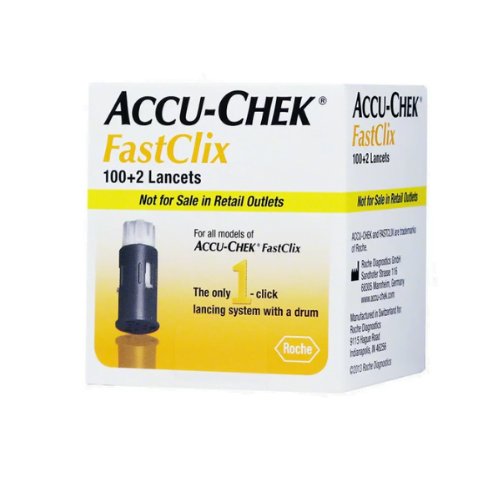
Accu-Chek Fastclix Lancets
Buy Accu-Chek Fastclix Lancets Online
Secure Encrypted Payments
Accu-Chek Fastclix Lancets are sterile, single-use lancets for fingertip blood sampling with a compatible Accu-Chek FastClix lancing device. They can be ordered online for routine glucose testing supplies, with the quantity and pack format chosen during checkout to match your testing routine and clinician guidance. The drum design helps limit direct handling of bare lancet tips while keeping fresh tips ready inside the device.
These lancets are intended for capillary blood sampling, most often from the side of a fingertip, so a glucose meter can read a small blood drop. They are not a glucose meter, test strip, insulin pen, or medication. If you are building or refreshing a testing kit, you can also browse related items in our Diabetes Supplies category.
Price, Quantity, and Ordering Details
You can buy Accu-Chek Fastclix Lancets online and view the current cash price before placing an order. Pack counts may vary by supply source and carton, so choose the quantity shown at checkout that best fits how often you test. Common searches mention 102-count and 204-count boxes, but the carton displayed during ordering should be used as the source for the exact count you receive.
Ordering a larger supply may reduce how often you need to reorder, especially if you test multiple times per day. Keep your meter, test strips, lancing device, lancet drums, and sharps-disposal plan together when estimating how much to keep on hand. Accu-Chek FastClix Lancets from Canada may be available with US delivery from Canada, with prompt, express shipping used as the handling option when applicable.
Quick tip: Before reordering, count both unused drums and remaining test strips so your supplies run out at roughly the same time.
Compatibility With FastClix Devices
Fastclix lancets are made for the Accu-Chek FastClix lancing device. They use a drum format rather than loose, individually handled lancets. Always match the lancet drum to the device named in your lancing-device manual and on the product carton, because lancet systems are not universally interchangeable.
The Accu-Chek FastClix lancing device uses a rotating drum that advances a fresh lancet tip when activated according to the device instructions. This format can be helpful for people who prefer fewer loose pieces in a diabetes kit. Do not force an Accu-Chek FastClix lancet drum into a different lancing device, and do not attempt to refill or modify an empty drum.
People sometimes use terms such as accu chek lancet drum, fastclix lancet drum, or drum lancets when looking for this format. The practical point is device fit: the lancets must match the FastClix system. If you use a different Accu-Chek lancing device, the correct lancet type may be different.
How the Drum System Works
Accu-Chek FastClix Lancets are housed inside a compact drum. The drum stores multiple sterile tips internally, so you do not need to load a loose lancet for each individual fingerstick. After a test, the device advances to another tip as directed by the manufacturer’s instructions.
This drum-based design reduces contact with bare needles and can make testing feel more organized at home, work, school, or while traveling. It also helps prevent loose unused lancets from scattering inside a pouch. The device still creates a skin puncture, so clean technique and proper sharps disposal remain important.
The carton and device literature should be used for exact specifications such as needle gauge, needle size, and total number of punctures per box. Some retail descriptions refer to 0.3 mm 30 gauge FastClix lancets, but you should rely on the packaging you receive for the exact product details.
Who May Use These Lancets
These lancets may suit people who monitor blood glucose with a compatible FastClix lancing device. That includes many adults and older children who self-test, as well as people who are assisted by a caregiver. They are commonly used as part of diabetes self-monitoring routines for people living with conditions such as type 1 diabetes, type 2 diabetes, or gestational diabetes.
Some people should ask a healthcare professional about safe fingerstick technique before routine use. This includes people with bleeding disorders, those taking medicines that increase bleeding risk, people with severe skin infections, and anyone with poor circulation or fragile skin. If fingertip testing is painful or difficult, ask whether alternative-site testing is appropriate for your meter and care plan.
Caregivers should avoid sharing a lancing device between people. Even if the lancet tip is changed, blood residue can remain on parts of a device. Use separate devices for separate users and clean equipment according to the manufacturer’s instructions.
How to Use Accu-Chek FastClix Lancets
Start by washing your hands with soap and warm water, then dry them fully. Load the drum into the Accu-Chek FastClix lancing device as described in the device manual. Select a depth setting that balances comfort with enough blood for your meter and test strip.
- Choose the side of a fingertip rather than the center pad when possible.
- Press the lancing device firmly against the skin.
- Trigger the device to make a quick puncture.
- Collect the blood drop with the test strip as your meter directs.
- Advance to a new lancet tip after the test.
- Dispose of used drums in a puncture-resistant sharps container.
Some clinicians or meter instructions may advise wiping away the first drop before collecting the sample. Follow your own meter manual and care-team instructions, especially if food residue, lotion, or moisture could affect the sample. For broader testing context, diabetes education in our type 2 diabetes articles may help you understand how testing fits into daily self-care.
How Often to Replace a Lancet Tip
Use a fresh lancet tip for each fingerstick. Reusing a lancet can make the tip duller, increase discomfort, and raise hygiene concerns. Once the drum has advanced through its sterile tips, replace it with a new drum rather than trying to reuse or reset it.
There is no medication dose schedule for lancets, but your glucose-testing schedule matters. If you miss a planned glucose check, follow the testing plan provided by your clinician. Do not perform extra fingersticks just to make up for a missed check unless your diabetes care instructions tell you to do so.
Why it matters: A fresh tip is usually more comfortable and supports cleaner sampling technique.
Storage, Travel, and Everyday Handling
Keep unused lancet drums in their original packaging until needed. Store them at room temperature in a dry place, away from excess heat, moisture, and direct sunlight. Do not use a drum if the packaging looks damaged, opened, wet, or otherwise compromised.
For travel, pack the meter, compatible lancing device, lancet drums, test strips, and a small sharps container together in your carry-on bag. Original cartons can help identify supplies during security screening. If you use insulin or other diabetes medicines, keep your testing supplies close enough to check glucose when your care plan requires it.
Families managing diabetes across school, work, or trips may benefit from keeping a spare drum in a dedicated testing pouch. Educational topics in our type 1 diabetes articles can also support planning for daily monitoring routines.
Sharps Disposal and Safe Handling
Accu-Chek FastClix Lancets are sharps, even though the tips are contained in a drum. Used drums should go into a puncture-resistant container that closes securely. Local rules may allow pharmacy drop-off, community sharps programs, or household hazardous-waste collection.
Never place loose sharps in household trash or recycling. Do not carry used drums loose in a purse, backpack, or diabetes kit. Keep all lancets and lancing devices away from children and pets, including drums that appear empty.
If someone is accidentally stuck by a used lancet or exposed to another person’s blood, clean the area and contact a healthcare professional for guidance. Sharing devices or reusing tips increases preventable risk.
Comfort, Sampling Quality, and Troubleshooting
Most people find that comfort improves after choosing the right depth setting and rotating fingers. Fingertip sides often feel less sensitive than the center pads. Warm hands may also produce a better blood drop, while cold hands can make sampling harder.
If the blood drop is too small, wash and warm the hand, lower it briefly, and use the device settings allowed by your manual. Avoid squeezing the fingertip aggressively, because too much pressure may affect the sample. If a setting repeatedly causes bruising or significant pain, ask your clinician or diabetes educator to review your technique.
Persistent bleeding, swelling, warmth, pus, spreading redness, or worsening pain around puncture sites should be discussed with a healthcare professional. These symptoms are not expected from routine fingerstick testing.
Side Effects, Warnings, and Precautions
Lancets do not cause medication side effects, but fingersticks can cause local skin reactions. Common issues include brief pain, pinpoint bleeding, tenderness, small bruises, redness, or mild irritation. These effects are usually limited to the puncture site and improve with careful technique.
- Use a new tip for every test.
- Do not share lancing devices between users.
- Avoid puncturing infected, swollen, or severely irritated skin.
- Ask for guidance if you bruise easily or bleed longer than expected.
- Follow your meter instructions for sample collection and site choices.
People who take anticoagulants or have clotting disorders should discuss fingerstick safety with a clinician. People with neuropathy may not feel injuries clearly, so visual skin checks matter. If your diabetes plan includes frequent testing, rotate sites to reduce repeated irritation in one area.
How These Lancets Compare With Other Systems
Traditional lancing systems often use one loose lancet at a time. The FastClix system uses a preloaded drum, which reduces manual needle handling and keeps multiple tips in one compact piece. This can be convenient for people who test regularly and prefer a simpler kit.
Device compatibility is the main limitation. Accu-Chek FastClix Lancets are not a general replacement for every lancet. If your lancing device uses a different format, browse diabetes supply options carefully and match the lancet to the device instructions before switching.
Some patients use different lancet systems with other meters or devices. If you are reviewing related choices, start with the device name and manufacturer guidance, then consider comfort, pack size, travel needs, and disposal routine.
Diabetes Testing Context
Blood glucose testing helps many people understand how food, activity, illness, stress, and medication timing affect glucose patterns. Lancets are only one part of that process. Accurate readings also depend on clean hands, unexpired test strips, a properly functioning meter, and following your care plan.
Testing frequency varies widely. Some people test several times daily, while others test less often depending on treatment plan and clinician instructions. People using insulin, those with changing therapy, and pregnant people with gestational diabetes may have different monitoring needs than someone with a stable plan.
For condition-specific education, our type 2 diabetes and gestational diabetes sections can help you discuss monitoring goals more clearly with your care team.
Questions to Ask Before Choosing Supplies
Before buying new lancet drums, make sure the choice fits your device, testing routine, and comfort needs. These questions can help prevent ordering the wrong format or running short between refills.
- Is my lancing device specifically an Accu-Chek FastClix device?
- How many times per day does my care plan ask me to test?
- Which depth setting should I start with?
- Should I use fingertip testing only, or are other sites allowed for my meter?
- How should I dispose of used drums in my local area?
- What signs of infection or bleeding should prompt a call?
If you manage more than one diabetes kit, label each device and supply pouch. This is especially useful in households where more than one person tests glucose.
Authoritative Sources
For manufacturer instructions and device-specific handling details, consult the official FastClix information before using a new drum system.
Manufacturer support: Accu-Chek FastClix lancing device
This content is for informational purposes only and is not a substitute for professional medical advice.
Blood Glucose Unit Converter
Convert glucose readings between mg/dL and mmol/L without changing the clinical value.
mg/dL
-
US reporting unit
mmol/L
-
International reporting unit
These calculations are for education only and do not replace clinical advice, diagnosis, or treatment. Always confirm medical decisions with a qualified healthcare professional.
HbA1c & eAG Calculator
Convert between HbA1c percentage and estimated average glucose using the ADAG relationship.
HbA1c
-
percentage
eAG mg/dL
-
estimated average glucose
eAG mmol/L
-
estimated average glucose
These calculations are for education only and do not replace clinical advice, diagnosis, or treatment. Always confirm medical decisions with a qualified healthcare professional.
CGM Time-in-Range Summary
Summarise CGM percentages across very low, low, in-range, high, and very high glucose bands.
Entered total
-
should equal 100%
Below range
-
very low plus low
Above range
-
high plus very high
Summary
-
common adult CGM targets vary by patient
These calculations are for education only and do not replace clinical advice, diagnosis, or treatment. Always confirm medical decisions with a qualified healthcare professional.
Express Shipping - from $29.99
Prices:
- Dry-Packed Products $29.99
- Cold-Packed Products $39.99
Shipping Countries:
- United States (all contiguous states**)
- Worldwide (excludes some countries***)
Standard Shipping - $19.99
Shipping with this method takes 5-10 days
Prices:
- Dry-Packed Products $19.99
- Not available for Cold-Packed products
Shipping Countries:
- United States (all contiguous states**)
- Worldwide (excludes some countries***)
What lancets go with the Accu-Chek FastClix lancing device?
Accu-Chek FastClix Lancets are designed for the Accu-Chek FastClix lancing device. They use a drum format, so they should not be substituted for loose lancets or forced into another device.
How do you use Accu-Chek FastClix Lancets?
Wash and dry your hands, load the drum as directed, choose a depth setting, press the lancing device against the side of a fingertip, and trigger it to collect a blood drop for your meter. Follow your device and meter instructions.
How often should I replace an Accu-Chek FastClix lancet?
Use a fresh lancet tip for each fingerstick. Reusing tips can make punctures less comfortable and may increase hygiene concerns.
Can more than one person use the same lancing device?
No. Lancing devices should not be shared between people, even if a new lancet tip is used. Blood residue can remain on device parts and create infection risk.
How should used FastClix drums be disposed of?
Place used drums in a puncture-resistant sharps container that closes securely. Follow local disposal rules, such as pharmacy drop-off, community sharps programs, or hazardous-waste collection.
Rewards Program
Earn points on birthdays, product orders, reviews, friend referrals, and more! Enjoy your medication at unparalleled discounts while reaping rewards for every step you take with us.
You can read more about rewards here.
POINT VALUE
How to earn points
- 1Create an account and start earning.
- 2Earn points every time you shop or perform certain actions.
- 3Redeem points for exclusive discounts.
You Might Also Like
Select options
This product has multiple variants. The options may be chosen on the product page
Select options
This product has multiple variants. The options may be chosen on the product page
Select options
This product has multiple variants. The options may be chosen on the product page
Select options
This product has multiple variants. The options may be chosen on the product page