

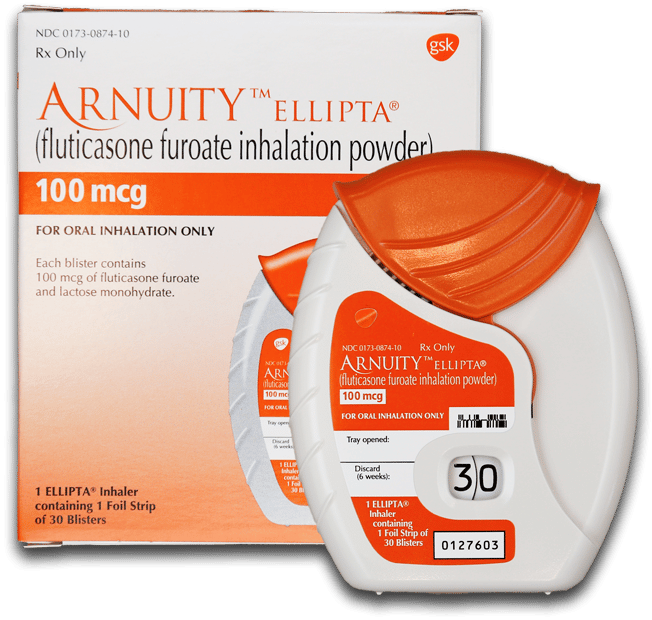
If Arnuity Ellipta is not the right fit, arnuity ellipta alternatives usually fall into three groups: other inhaled corticosteroid controllers, combination inhalers, and non-steroid add-on options for selected patients. The best choice depends on asthma control, inhaler technique, side effects, coverage, and whether the device matches your breathing pattern.
Arnuity Ellipta contains fluticasone furoate, an inhaled corticosteroid (ICS) used for asthma maintenance. It is not a rescue inhaler. If symptoms are breaking through, your clinician may first check how often you use it, how you inhale, and whether a reliever medicine is being used more than expected.
Key Takeaways
- Same class options: Other ICS inhalers may suit different devices or formularies.
- Step-up choices: Some patients need an ICS/LABA combination inhaler.
- Device fit matters: Dry powders and sprays require different techniques.
- Side effects vary: Mouth care and dose review can reduce local problems.
- Access changes: Formularies, brand status, and programs affect out-of-pocket cost.
Where Arnuity Fits in Asthma Controller Care
Arnuity is a once-daily ICS controller that helps reduce airway inflammation over time. That makes it different from albuterol, which is a short-acting bronchodilator used for quick symptom relief. In plain terms, a controller helps prevent trouble; a reliever helps during symptoms.
The arnuity ellipta generic name is fluticasone furoate. Its active ingredient belongs to the corticosteroid family, but it is inhaled directly into the lungs. This local delivery helps target airway inflammation, though some medicine can still be absorbed into the body.
Arnuity is delivered through the Ellipta dry-powder device. You do not press a canister while breathing in. Instead, the device relies on a strong, steady inhalation. That can be easier for some people, but harder for others with low inspiratory flow, severe symptoms, tremor, or hand limitations.
For a product-specific orientation, the site’s What Is Arnuity Ellipta page can help you review how this inhaler fits into maintenance treatment. If you are comparing available forms, the Arnuity Ellipta Inhaler page may also help you recognize the device and presentation.
Why it matters: A medicine can be clinically reasonable but still fail if the device does not suit you.
Common Arnuity Ellipta Alternatives to Discuss
Most Arnuity Ellipta alternatives are not exact substitutes. They may use a different corticosteroid, delivery device, dosing schedule, or combination of medicines. Your prescriber usually compares the drug class first, then adjusts based on asthma severity and response.
Other ICS-only inhalers
ICS-only alternatives include medicines such as budesonide, beclomethasone, mometasone, and fluticasone propionate products. These options share the same broad purpose: they reduce airway inflammation as maintenance therapy. They are not intended for sudden breathing symptoms.
People often compare Arnuity with Qvar, Pulmicort, Asmanex, and older fluticasone products because each can serve as a controller option. The practical differences often involve device mechanics, labeled dosing frequency, strength range, and insurance preference. To compare examples of different controller devices, you can review Qvar Aerosol Inhaler, Pulmicort Turbuhaler, and Asmanex.
Combination controller inhalers
If asthma remains uncontrolled on an ICS alone, a clinician may consider an ICS with a long-acting beta agonist (LABA). These inhalers combine anti-inflammatory treatment with long-acting airway relaxation. They are not the same as an ICS-only inhaler, so switching requires a clinical reason and careful review.
Breo Ellipta is one example of an ICS/LABA combination inhaler that uses an Ellipta device. It is not interchangeable with Arnuity because it adds a LABA component. For device and class context, see Breo Ellipta. For another combination-inhaler comparison, Breyna vs Symbicort explains how combination products can differ.
Relievers and add-on therapies
Albuterol is not an Arnuity alternative for maintenance. It works quickly to relax airway muscles, while ICS medicines work gradually on inflammation. Other add-on treatments, including leukotriene receptor antagonists or biologic medicines, may be considered in specific asthma patterns. Those choices depend on triggers, exacerbation history, allergies, lung function, and other conditions.
How to Compare Devices, Doses, and Daily Use
The most useful comparison starts with how the inhaler behaves in real life. A dry-powder inhaler, metered-dose inhaler, soft mist inhaler, and nebulized treatment can all deliver respiratory medicine, but they ask different things from the person using them.
Arnuity’s Ellipta device is breath-activated. You open the cover until it clicks, breathe out away from the mouthpiece, seal your lips, and inhale strongly and steadily. After inhaling, you hold your breath briefly if you can. Then you close the device and rinse, gargle, and spit.
Metered-dose inhalers release a spray. They often require coordination between pressing the canister and breathing in. Some people use a spacer or valved holding chamber when appropriate. Dry-powder inhalers do not use a spray, but they usually require a faster inhalation.
Arnuity Ellipta dosage strengths are commonly discussed as 50 mcg, 100 mcg, and 200 mcg inhalations, but the right strength is not chosen by matching numbers across brands. Potency is not one-to-one between fluticasone furoate, fluticasone propionate, budesonide, beclomethasone, and mometasone. Clinicians use labeled guidance, asthma severity, prior response, and follow-up monitoring.
Daily routine also matters. A once-daily controller can help some people stay consistent. Others prefer a device that matches an existing routine, such as morning and evening use. Missed doses can make it harder to judge whether a medicine is working.
If you track peak flow as part of an asthma action plan, this tool can help estimate zone ranges from a personal best. It does not replace your clinician’s plan.
Peak Flow Zone Calculator
Calculate asthma peak-flow zones from personal best and current peak flow.
These calculations are for education only and do not replace clinical advice, diagnosis, or treatment. Always confirm medical decisions with a qualified healthcare professional.
Quick tip: Bring your inhaler to appointments so your technique can be checked directly.
Side Effects, Warnings, and When to Seek Help
Arnuity Ellipta side effects most often involve the mouth and throat. Possible effects include sore throat, hoarseness, cough, and oral thrush, which is a yeast infection in the mouth. Rinsing and spitting after each dose can lower the chance of some local effects.
ICS medicines can also have systemic effects, especially at higher exposures or with long-term use. These may include concerns related to adrenal function, bone health, eye conditions, growth in children and adolescents, or infection risk. The level of concern depends on dose, duration, other steroid use, and individual health history.
People with severe milk protein allergy should ask their prescriber or pharmacist about dry-powder inhaler ingredients. Some dry-powder products contain lactose, which can carry trace milk proteins. This is a safety question, not a preference issue.
Drug interactions can also matter. Certain medicines that strongly affect steroid metabolism may increase corticosteroid exposure. Your care team should know about prescription medicines, over-the-counter products, inhalers, and supplements before a switch.
Seek urgent medical care for severe breathing trouble, blue lips or face, confusion, chest pain, or symptoms that do not improve with your prescribed rescue plan. Maintenance inhalers should not be used as the only response to a sudden severe attack unless your clinician has given a specific action plan.
Comparing Arnuity With Flovent, Pulmicort, Qvar, and Albuterol
Arnuity and Flovent are both corticosteroid controller inhalers, but they are not the same medicine. Arnuity contains fluticasone furoate in a dry powder. Flovent products used fluticasone propionate in different inhaler formats. A conversion between them is clinical, not a simple microgram-for-microgram swap.
Pulmicort contains budesonide, another ICS. Some people compare Pulmicort vs Arnuity Ellipta when looking for a different device or dosing approach. The better fit depends on inhalation ability, prior response, age-appropriate use, coverage, and the treatment plan your clinician is following.
Qvar contains beclomethasone. It is another ICS controller, but its device and dose equivalence differ from Arnuity. A person who struggles with one dry-powder platform may do better with a different inhaler style, but that decision should be tested with technique review and follow-up.
Arnuity vs albuterol is a different comparison. Albuterol is a rescue medicine that opens airways quickly. Arnuity is a maintenance corticosteroid that helps reduce inflammation over time. Needing albuterol more often than usual may signal poor control, poor technique, trigger exposure, or the need to reassess the controller plan.
If you want broader respiratory navigation, the Respiratory Articles category collects educational posts. The Respiratory Products category can help you recognize different inhaler and respiratory medication pages without treating them as direct substitutes.
Cost, Generic Status, and Access Questions
Many readers ask why Arnuity Ellipta is so expensive. Common cost drivers include brand-only status in some markets, device manufacturing, insurance formularies, deductibles, and whether a plan prefers a different controller. Out-of-pocket cost can change when insurance coverage changes, even if your asthma treatment has not changed.
There may not be a lower-cost option that is clinically equivalent for every person. Still, it is reasonable to ask whether another ICS, a covered fluticasone propionate product, budesonide, beclomethasone, mometasone, or a combination controller is appropriate. The answer depends on asthma control, exacerbation risk, prior side effects, and device technique.
People also ask who is eligible for $35 inhalers. Some manufacturers have announced patient cost programs or monthly caps for certain inhalers, but eligibility terms vary. Programs may depend on insurance type, medicine, location, and program rules. Government insurance exclusions and monthly limits can apply, so check current terms through the manufacturer or your pharmacist.
For people comparing access routes, BorderFreeHealth connects U.S. patients with licensed Canadian partner pharmacies. When required, prescription details are verified with the prescriber before a partner pharmacy dispenses. Cash-pay cross-border options may be relevant for some patients without insurance, depending on eligibility and jurisdiction.
Do not stop a controller inhaler because of cost without a backup plan. Uncontrolled asthma can worsen quickly. If affordability is a problem, ask your clinician or pharmacist to compare covered controller options and confirm which inhaler you can use correctly.
Questions to Bring to Your Clinician
A focused list can make the visit more useful. The goal is not to choose the “strongest” inhaler. The goal is to match your asthma pattern, risk level, device ability, and access needs.
- Control pattern: How often are symptoms or night awakenings happening?
- Reliever use: Has albuterol use increased recently?
- Technique check: Can I demonstrate my current inhaler?
- Device fit: Is a dry powder still appropriate for me?
- Side effects: Could hoarseness or thrush be related?
- Step-up need: Should we consider combination therapy?
- Coverage issue: Which similar controllers are preferred?
Example: A person with good control but persistent hoarseness may need a technique check, mouth-care review, or dose reassessment. Another person with frequent rescue inhaler use may need a broader asthma-control review rather than a simple device swap.
Authoritative Sources
For label-backed details on ingredients, warnings, and use, review the FDA prescribing information for Arnuity Ellipta.
For general asthma medication classes and controller-versus-reliever context, see the NHLBI asthma treatment overview.
For device technique education and asthma self-management basics, the CDC asthma treatment resources provide public-health guidance.
Recap
Arnuity Ellipta alternatives include other ICS controllers, combination inhalers, and selected add-on treatments. The right comparison looks beyond the drug name. Device technique, dosing routine, side effects, asthma severity, and access all matter.
Before switching, ask for a technique check and a clear follow-up plan. A well-matched inhaler should be one you can use correctly, tolerate, and access consistently.
This content is for informational purposes only and is not a substitute for professional medical advice.


