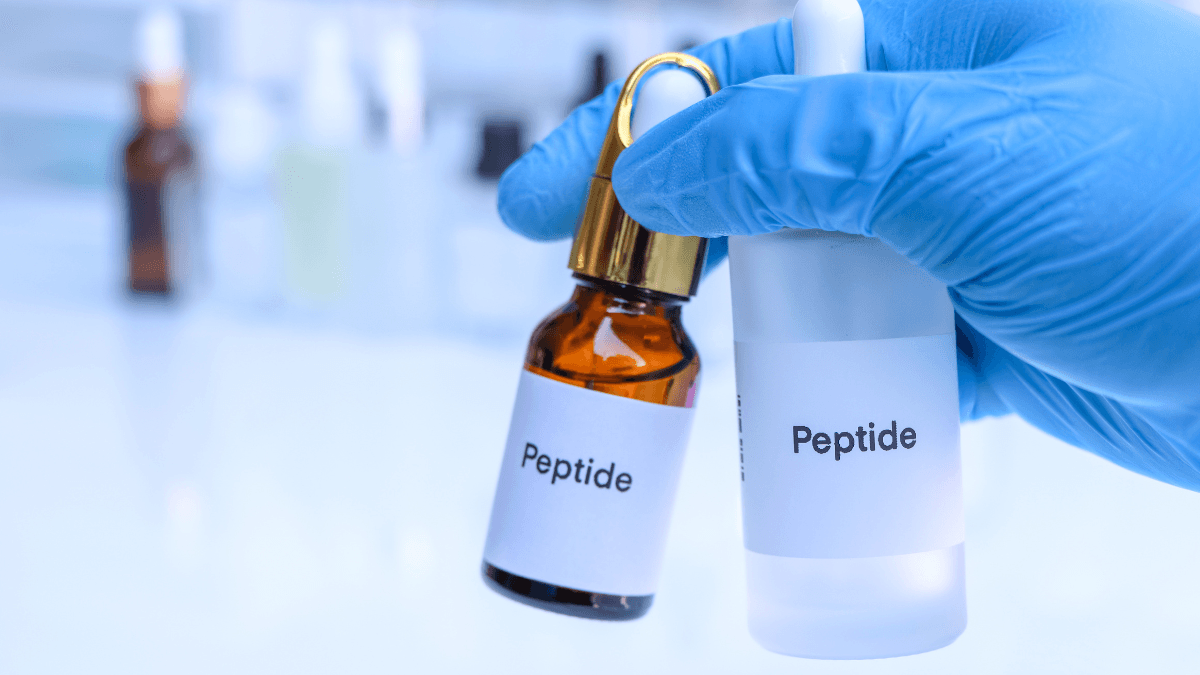
Peptides are short chains of amino acids, but the word can describe very different products. Some are prescription medicines, some are compounded preparations, and others are supplements, skin-care ingredients, or research-use items. That distinction matters because evidence, safety oversight, storage, and access rules can change from one product to another.
Key Takeaways
- One word, many categories: A peptide may be a drug, compounded item, supplement, cosmetic, or research material.
- Form changes risk: Injections, nasal products, creams, and capsules are not interchangeable.
- Labels matter: Exact ingredient names, manufacturer details, prescription status, and storage instructions deserve attention.
- Access needs verification: Prescription items may require prescriber confirmation and pharmacy review.
- Hype is not evidence: Broad wellness claims should be separated from regulated medical uses.
What Peptides Are and Why the Category Causes Confusion
Peptides are molecules made from amino acids, the building blocks of proteins. In the body, some act as signaling molecules, meaning they help cells communicate. Others are part of larger biological processes involving hormones, immune activity, skin structure, appetite signals, or tissue repair.
The confusing part is not the basic chemistry. It is the way the term appears across health care, fitness, beauty, and supplement marketing. A prescription product with a defined active ingredient is not the same as a cream that lists peptide ingredients for skin appearance. A compounded injectable preparation is not the same as a bottle labeled for laboratory research.
Why it matters: The product category tells you more about oversight than the buzzword does.
Patients often first hear about this topic through weight management, gym recovery, anti-aging claims, or social media. Those sources may use confident language without showing whether a product is approved, prescribed, compounded, or only marketed for general wellness. If you want a deeper safety-focused follow-up, see Are Peptides Safe.
What Taking Peptides May Mean in Real Life
Taking peptides can mean several different things, depending on the exact product and reason for use. A clinician may prescribe a regulated medicine for a specific medical purpose. A person may encounter a compounded preparation for an individualized order. Someone else may use a supplement or cosmetic product that makes less specific claims.
That is why the question “what do they do?” has no single answer. The effect depends on the molecule, route, dose, product quality, and whether the claim is supported by strong clinical evidence. Some peptide-based medicines have formal labeling and pharmacy dispensing rules. Other products may have limited human data, unclear sourcing, or claims that go beyond what the label supports.
For weight-related searches, it is especially important to avoid treating every product in the category as the same. Some medicines used in metabolic care are peptide-based or peptide-like, but that does not make an unrelated product equivalent. For that narrower topic, Peptides for Weight Loss explains the patient questions more directly.
Peptides are also not steroids. Steroids are a different class of molecules with different structures and clinical uses. Some online fitness content discusses both categories together, which can make the language feel interchangeable. It is not. If a product page blurs those lines, ask for the exact active ingredient and product category before drawing conclusions.
Product Types Patients Commonly Encounter
The same search term can lead to several product types. Sorting them early helps you ask better questions and avoid comparing unlike items.
Prescription peptide medicines
Some medicines are peptide-based or use peptide-like signaling pathways. These products usually have defined active ingredients, labeling, prescribing requirements, and pharmacy dispensing standards. They may require monitoring, eligibility review, and discussion of side effects or contraindications with a clinician.
Compounded preparations
A compounded preparation may be made by a pharmacy for an individual patient order when permitted and appropriate. Compounding can be clinically useful in specific circumstances, but it is not the same as buying a standardized retail product. The prescriber and pharmacy should be able to explain the ingredient, formulation, rationale, and handling instructions.
Supplements and cosmetics
Supplement and cosmetic products operate under different rules than prescription medicines. A supplement may use general wellness language. A cosmetic product may focus on appearance, such as skin texture or hydration. These products should not be assumed to treat medical conditions unless the claim is supported by the appropriate regulatory framework.
For supplement-style label reading, Peptide Supplements gives more focused context. For beauty and appearance claims, Peptides Skin Care can help separate cosmetic language from medical claims.
Research-use products
Some listings use phrases such as “research use only.” That wording usually means the item is not being presented as a patient medication. Patients should not assume that a research-use listing is safe, appropriate, sterile, or legally suitable for personal use.
Formulation, Injections, and Handling Questions
The form of a peptide product can change the safety conversation. Injections, nasal products, capsules, and creams may differ in absorption, sterility concerns, storage, and how much of the active substance reaches the body. A similar-sounding ingredient name does not make two products interchangeable.
Injectable products deserve special caution because sterility, storage, reconstitution, and administration technique all matter. Reconstitution means mixing a powder with a liquid before use. Patients should not guess at mixing volumes, syringe units, or injection technique. Those details should come from the prescriber, pharmacy, or official product instructions.
For readers comparing injection-specific questions, Peptide Injections covers route, access, and safety considerations in more detail.
If a clinician or pharmacy has already provided written instructions, a calculation tool can help organize basic vial-preparation math. It does not decide whether a product is appropriate, sterile, or correctly prescribed.
Research & Education Tool
Peptide Dosage Calculator
Enter the vial amount, diluent volume, and target amount to estimate concentration, draw volume on a 1 mL U-100 syringe, and approximate vial yield.
For research and educational use only. Check all values against the product label, certificate of analysis, and any applicable professional guidance before relying on the result.
mg
Draw Reference
Enter values to estimate the syringe mark.
Quick tip: Keep the original label or pharmacy instructions beside any calculation notes.
How to Read Labels and Marketing Claims
Label reading is one of the most practical skills in this area. Start with the exact ingredient name, not the headline term. Then check the product category, dosage form, manufacturer, prescription status, lot details when available, storage instructions, and whether the product is sold as a drug, supplement, cosmetic, or research material.
Patients should be cautious when a page makes dramatic claims but avoids basic product identity. Missing details do not prove a product is unsafe, but they do mean you lack the information needed for a responsible conversation. Save the page, label, or screenshot and ask a licensed clinician or pharmacist to review the wording.
Watch for these practical red flags:
- Unclear ingredient: The label uses broad terms without naming the substance.
- Vague sourcing: No manufacturer, pharmacy, or responsible seller is clear.
- Overbroad claims: The product promises many unrelated benefits.
- Research-use wording: The listing is not presented for patient treatment.
- Missing handling details: Storage, sterility, or preparation steps are unclear.
Some specific peptide products are discussed online by name, including items such as BPC-157, TB500, and Ipamorelin. Treat named product pages as starting points for identifying the exact item, not as proof that a product is suitable for you.
Access Questions to Clarify Before You Act
Access depends on the exact product, prescription status, patient location, and dispensing rules. For prescription items, the practical steps may include prescriber information, pharmacy review, and confirmation that the requested product can be dispensed under applicable rules.
BorderFreeHealth connects U.S. patients with licensed Canadian partner pharmacies, which can be relevant when patients are comparing cross-border prescription pathways. When a prescription is required, the pharmacy may verify details with the prescriber before dispensing. Some patients without insurance also review cash-pay options, subject to eligibility and jurisdictional limits.
That access model does not mean every item is available, appropriate, or dispensable. It means the administrative question is separate from the clinical one. A clinician can discuss whether a product fits your health situation. A pharmacy can address dispensing, documentation, and product-specific handling questions.
Before a visit or pharmacy review, organize these details:
- Exact product name: Include spelling, brand wording, and ingredient name.
- Product category: Note drug, compounded item, supplement, cosmetic, or research-use wording.
- Dosage form: Record injection, capsule, nasal product, cream, or another form.
- Source details: Save the manufacturer, pharmacy, or listing information.
- Reason for interest: Write the claim or symptom that prompted your search.
- Current medicines: Bring a current medication and supplement list.
- Key questions: Ask about evidence, risks, monitoring, and paperwork.
How Peptides Compare With Similar Health Terms
Peptides are often mixed into conversations about hormones, proteins, steroids, supplements, and newer metabolic medicines. Clear definitions reduce confusion.
A protein is usually larger and made from longer chains of amino acids. A peptide is shorter, though exact boundaries can vary by context. A hormone is a messenger substance, and some hormones are peptides. A steroid is structurally different from a peptide. A supplement is a regulatory category, not a chemical structure.
Peptides are also not automatically the same as medicines used in diabetes or weight management. Some medications in that field act on peptide-related pathways, but product identity still matters. Patients should compare official labeling, prescriber guidance, and pharmacy information rather than relying on social media shorthand.
Some searches also ask which peptides are best for osteoporosis. That is not a question to answer from online trend lists. Osteoporosis care depends on fracture risk, bone density testing, age, sex, kidney function, other medicines, and medical history. A clinician can discuss established treatment options and whether any peptide-related therapy has a role in a specific plan.
Authoritative Sources
Reliable sources help separate scientific definitions from promotional language. These references are useful starting points when you want definitions, pharmacy safety guidance, or supplement context.
- The NCI definition of peptide explains the basic scientific meaning.
- FDA BeSafeRx online pharmacy information explains online pharmacy safety checks.
- NCCIH supplement guidance outlines cautions for dietary supplement use.
Recap
Peptides are not one product, one risk level, or one access pathway. The useful question is always more specific: What is the exact substance, what product category is it in, what evidence supports it, and what oversight applies?
For patients and caregivers, the safest next step is practical. Save the label, identify the product type, gather your medication list, and bring focused questions to a licensed clinician or pharmacist before assuming a product fits your needs.
This content is for informational purposes only and is not a substitute for professional medical advice.