
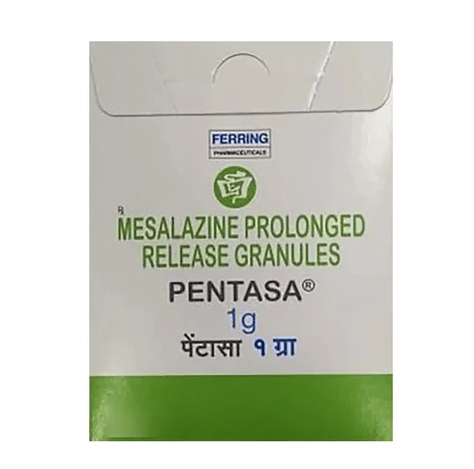
Asacol and Pentasa are both mesalamine medicines, but they do not work in exactly the same way. An Asacol vs Pentasa comparison is mainly about delivery: where the drug releases in the gut, when it may fit ulcerative colitis or Crohn’s disease discussions, how dosing schedules are written, and why switching is not a simple mg-for-mg swap. That matters because the same active ingredient can behave differently once the formulation changes.
For most patients, the practical questions are straightforward. Is one more colon-focused? Does one reach more of the small intestine? Will the pill burden or schedule change? And if symptoms are not controlled, does the problem call for a different mesalamine product, a rectal treatment, or a different drug class entirely? This review walks through those points in plain language.
Key Takeaways
- Same drug, different delivery systems.
- Asacol-type products release later in the bowel; Pentasa releases more gradually.
- Pentasa is not automatically better than Asacol.
- Switching products needs a formulation review, not a homemade conversion.
- Side effects overlap, but worsening symptoms or kidney concerns need prompt attention.
Asacol vs Pentasa Comparison at a Glance
The short answer is simple: both products contain mesalamine, also called mesalazine, a 5-aminosalicylic acid (5-ASA) anti-inflammatory used to calm inflammation in the bowel lining. The biggest difference is not the drug itself. It is the release system that decides where the medicine becomes available as it moves through the gut.
| Feature | Asacol | Pentasa | Why It Matters |
|---|---|---|---|
| Active ingredient | Mesalamine | Mesalamine | The class is the same, but delivery differs. |
| Release design | pH-dependent delayed release | Time-dependent extended release | Release timing affects where the drug is most available. |
| Usual treatment logic | Often discussed for colon-focused inflammation | Often discussed when small-bowel reach is part of the conversation | Disease location can shape the choice. |
| Switching | Not automatically interchangeable | Not automatically interchangeable | Total milligrams alone do not tell the full story. |
That is why comparisons between mesalamine brands can feel confusing. Two products may sound similar, yet they can behave differently after you swallow them. If you want a product-specific explainer, our Pentasa Overview gives more background on that formulation.
BorderFreeHealth works with licensed Canadian partner pharmacies for eligible U.S. patients.
How Release Design Changes Where the Drug Works
Release design is the biggest clinical difference between them. Mesalamine works mainly where it touches the intestinal lining, so the coating or capsule system matters almost as much as the ingredient name on the box.
Asacol-type delayed release
Asacol is known for a pH-dependent delayed-release coating. In plain language, the tablet is designed to stay intact until it reaches a less acidic part of the gut. That means more of the medicine is aimed later in the digestive tract, especially around the terminal ileum and colon. This later release is one reason Asacol-type products are often discussed in colon-predominant inflammatory bowel disease care.
That delayed-release family includes other products that patients often compare side by side. If your real question is whether one delayed-release option may be more similar to another, the differences discussed in Delzicol Vs Asacol and Asacol Vs Lialda can help frame the conversation.
Pentasa time-release system
Pentasa uses a different idea. Instead of waiting for a specific pH trigger, it releases mesalamine gradually as the contents move through more of the small intestine and colon. That broader release pattern is why Pentasa often comes up in discussions about disease location. It is less about one product being stronger and more about one product spreading the drug through a different section of the bowel.
This is also where people can get tripped up. They hear that both drugs are mesalamine and assume the effect should be identical. In real practice, the delivery system can change symptom control, convenience, and the logic behind switching. It can even change whether a clinician thinks oral therapy alone makes sense.
When Each One May Fit Better
Neither drug is universally better. The better fit depends on where inflammation sits, how severe it is, and what has or has not worked before.
For ulcerative colitis, which affects the colon, colon-focused mesalamine often makes intuitive sense in mild disease. That does not mean Pentasa has no role. It means the release pattern becomes part of the decision. For some patients, the discussion centers on colon delivery. For others, pill schedule, past response, or tolerance matters just as much.
Crohn’s disease makes the comparison more complicated. Pentasa may enter the conversation because its release pattern extends through more of the small intestine. Even so, mesalamine has a limited and debated role in Crohn’s disease overall, and many patients with Crohn’s need other treatment approaches depending on disease location and severity. So the answer to Is Pentasa better than Asacol is usually no, not across the board. The better question is which formulation best matches the treatment plan, if mesalamine is appropriate at all.
Oral tablets are not the only mesalamine option either. If inflammation is mainly in the rectum or lower colon, clinicians may think beyond oral therapy alone and discuss local treatments such as Pentasa Suppositories, Salofalk Suspension, or Uceris Rectal Foam. That does not make oral drugs irrelevant. It shows why disease location matters so much.
Why it matters: The same active drug can act very differently when the release system changes.
Dosing, Adherence, and Why Switching Needs a Plan
Dosing is where many comparisons go wrong. There is no universal mesalamine conversion chart that safely replaces a review of the actual product, schedule, and reason for treatment.
This is why an Asacol vs Pentasa comparison should not end with total daily milligrams. Two regimens can list similar milligram amounts and still behave differently in the bowel. The formulation, tablet or capsule design, dosing frequency, and the part of the intestine being targeted all matter. Even small differences in schedule can affect adherence if a regimen feels hard to remember or hard to tolerate.
Brand names and regional labeling can add another layer of confusion. Some products share the same active ingredient but not the same release mechanics. Before a refill, substitution, or switch, verify the exact product name rather than relying on memory. If you are reviewing a formulation change, compare it with the details listed for Pentasa Details and the prescribing instructions you were given, not just the mesalamine number printed on the label.
There are also practical issues that rarely show up in short comparison charts. Can the tablet be crushed? Usually not, because doing so may disrupt the release pattern. Does the pill size or number of daily doses affect whether someone actually takes it consistently? Often, yes. If a person misses doses often, the best drug on paper may not be the best real-world fit.
If a switch is being discussed, these questions usually matter most:
- Exact product name and formulation.
- Reason for the switch.
- Total daily amount and schedule.
- How the medicine releases.
- Whether tablets must stay whole.
- What symptoms to watch after switching.
- What follow-up or lab monitoring is planned.
Quick tip: Write down the exact product name and release type before any refill or switch.
When required, prescription details are checked with the prescriber before dispensing.
Side Effects and Safety Questions to Raise
Because both products deliver mesalamine, many side effects overlap. The formulation can influence how the medicine feels for a given person, but the core safety profile comes from the same active drug class.
Common side effects may include headache, nausea, belly pain, cramping, diarrhea, or indigestion. Some people feel better after the first adjustment period. Others notice that the medicine does not agree with them, even if a related product once did. That can happen because excipients, pill burden, or release pattern differ.
More serious problems are less common, but they matter. Mesalamine products can occasionally worsen colitis-like symptoms, irritate the pancreas, affect the kidneys, or trigger allergic-type reactions. Chest pain, shortness of breath, a significant rash, severe abdominal pain, reduced urination, or a clear worsening of bloody diarrhea should not be brushed off as routine side effects. Those symptoms need medical review.
Kidney safety deserves special mention. Mesalamine is not known mainly as a kidney drug, yet clinicians often check renal function before and during treatment because rare kidney injury has been reported across the class. That is one reason medication reviews should include over-the-counter pain relievers and other medicines that may also stress the kidneys.
If symptoms are not improving, the issue may not be which mesalamine brand is best. The bigger question may be whether mesalamine is still the right tool. Some patients move on to short steroid courses or other therapies when inflammation is more active. That is a separate conversation with a different risk profile, and our Prednisone Explained article outlines why steroids are handled differently from maintenance mesalamine therapy.
How It Compares With Other Mesalamine and IBD Options
A good Asacol vs Pentasa comparison also puts both drugs in the wider 5-ASA and inflammatory bowel disease landscape. They are two formulations in a larger group, not the only choices a patient may hear about.
Within mesalamine itself, the first comparison point is release profile. Some products are delayed-release and more colon-focused. Others are extended-release or designed for once-daily convenience. Some are oral, while others are rectal. That is why the words better, stronger, or equivalent can be misleading. A formulation may fit better because it targets a different bowel segment or because a patient can realistically stay on the schedule.
Beyond mesalamine, treatment choices widen quickly. Mild ulcerative colitis may still be managed with a 5-ASA approach, sometimes combining oral and rectal therapy. More active disease can bring steroids, immunomodulators, or biologics into the picture. For Crohn’s disease, the conversation often shifts sooner toward therapies outside the mesalamine family. In other words, Asacol and Pentasa sit in one part of the care pathway, not the whole pathway.
If you want broader context, browse our Gastrointestinal Articles for condition-focused reading or the Gastrointestinal Medications hub to see how digestive treatments are grouped.
Cash-pay cross-border prescription options may fit some patients without insurance, subject to eligibility and jurisdiction.
Authoritative Sources
- Specialist Pharmacy Service overview of mesalazine tablets
- American Gastroenterological Association technical review on mild UC
- NIH-hosted review of 5-ASA formulations
In the end, Asacol and Pentasa are best understood as different delivery systems for the same anti-inflammatory drug. The useful comparison is not which name sounds stronger. It is which formulation matches the part of the bowel being treated, how realistic the schedule is, and whether mesalamine still fits the bigger treatment plan. Further reading should focus on release type, switching questions, and where each option sits in overall IBD care.
This content is for informational purposes only and is not a substitute for professional medical advice.


