
Please note: a valid prescription is required for all prescription medication.
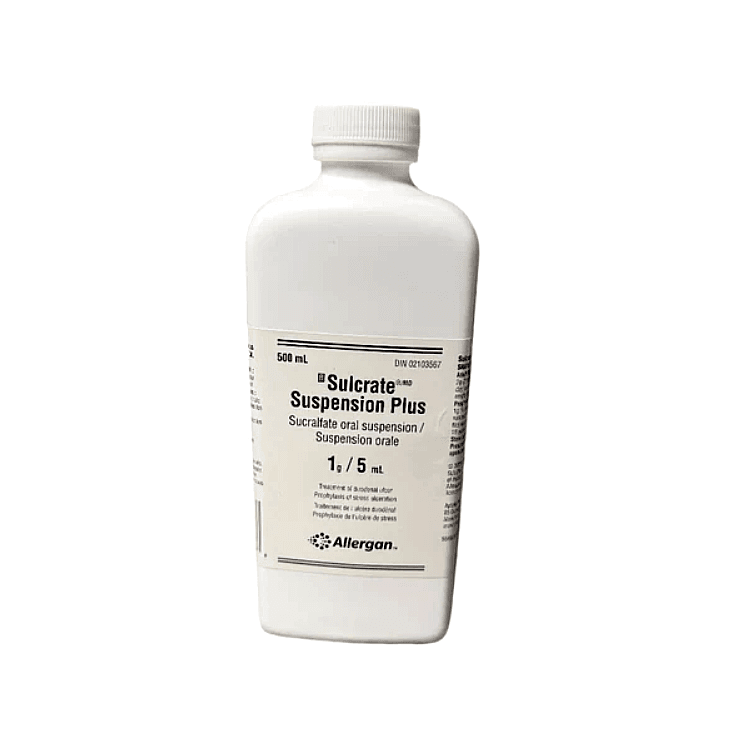
Sulcrate Suspension Plus
Buy Sulcrate Suspension Plus Online
Secure Encrypted Payments
Sulcrate Suspension Plus is a sucralfate oral suspension used to help protect irritated tissue in the upper digestive tract. It can be bought online for cash-pay access, with current product choices shown during ordering so the dose or strength can be matched to clinician directions.
This liquid form may be useful when swallowing tablets is difficult or when a coating medicine is preferred for ulcer-related care. Sulcrate Suspension Plus works differently from acid reducers: it mainly forms a local protective barrier rather than lowering stomach acid production.
Sulcrate Suspension Plus Price and Product Selection
Sulcrate Suspension Plus price can vary with the quantity, concentration, and pharmacy-supplied presentation available at the time of ordering. During checkout, use the current product information to choose the dose or strength that matches the directions you were given, then review the total before completing the purchase.
Many customers compare Sulcrate Suspension Plus cost on a cash-pay basis, especially when insurance coverage for sucralfate liquid is limited or inconsistent. If your clinician wrote directions for a specific liquid concentration, make sure the selected product and measured volume align with those instructions before use.
Quick tip: Keep the bottle label visible until you have confirmed the concentration, directions, and total quantity.
How to Order Sucralfate Oral Suspension
Order Sulcrate Suspension Plus online by selecting the product, reviewing the current price, and completing the checkout steps. US delivery from Canada may be available through licensed pharmacy channels, and prompt, express shipping can be selected when shown during checkout.
Because sucralfate liquid is measured in milliliters, ordering accuracy matters. Match the selected bottle and concentration to your clinician’s directions, and avoid substituting tablets for liquid unless a healthcare professional has confirmed the schedule and volume are appropriate.
For broader digestive-health browsing, the Gastrointestinal category includes related therapy areas commonly used in upper GI treatment plans. Product choices should still be based on the diagnosis, medication list, and safety factors reviewed with a clinician.
What Sulcrate Suspension Plus Is Used For
Sulcrate Suspension Plus contains sucralfate, a medicine best known for treating active duodenal ulcers and protecting irritated tissue in the stomach or upper small intestine. A duodenal ulcer is a sore in the first part of the small intestine, an area exposed to stomach acid and digestive fluids.
Sucralfate is often described as a coating agent. In an acidic environment, it can bind to proteins at the ulcer site and form a protective layer. That barrier helps shield damaged tissue from acid, bile salts, and digestive enzymes while healing occurs.
People reviewing ulcer-related treatment can also read about peptic ulcer disease to understand how ulcers are evaluated and why different medicine classes may be used together. Persistent pain, vomiting blood, black stools, unexplained weight loss, or trouble swallowing should be treated as urgent warning signs that need medical evaluation.
Liquid Form, Strength, and Measuring Basics
Sulcrate Suspension Plus is an oral suspension, meaning the medicine is dispersed in liquid and should be shaken before measuring. Sucralfate suspensions are commonly discussed in relation to liquid dosing, including 1 g/5 mL presentations, but the exact concentration and bottle quantity should always come from the product label supplied with your order.
Accurate measurement is part of safe use. Household spoons can vary widely, so a marked oral syringe or medication cup is usually more reliable for milliliter dosing. If your directions use teaspoons or tablespoons, ask a pharmacist or clinician to translate the amount into mL before relying on an approximate household measure.
Liquid sucralfate is not automatically interchangeable with tablets. Timing, volume, and adherence can differ, and the liquid may be chosen specifically because it coats the upper GI tract and is easier to swallow. When a refill looks different, confirm the name, concentration, and directions before taking the next dose.
How It Is Usually Timed
Sucralfate is commonly taken on an empty stomach so it can contact the irritated area more effectively. Many treatment schedules place doses before meals and sometimes at bedtime, but the right schedule depends on the condition being treated and the directions provided for you.
Food may reduce the amount of medicine that reaches the ulcer surface, and other medicines may need spacing to prevent binding in the digestive tract. If you take several morning medications, ask for a practical timing plan that accounts for breakfast, acid reducers, supplements, and any medicines that must also be taken on an empty stomach.
Why it matters: Timing helps sucralfate coat tissue while allowing other medicines to absorb properly.
If a dose is missed, do not double a later amount unless a clinician specifically told you to do so. A missed-dose plan should consider how close you are to the next scheduled dose and whether the medicine is being used for active ulcer healing or another GI indication.
Side Effects, Warnings, and Monitoring
Most sucralfate side effects involve the digestive tract. Constipation is one of the more common complaints. Some people also report nausea, stomach discomfort, gas, dry mouth, dizziness, rash, or an unpleasant chalky taste from the suspension.
Seek urgent care for signs of a serious allergic reaction, including hives, swelling of the face or throat, wheezing, or trouble breathing. Contact a healthcare professional promptly for worsening abdominal pain, vomiting blood, black stools, severe constipation, new swallowing problems, or symptoms that do not improve as expected.
Kidney disease deserves extra attention because sucralfate contains aluminum. In severe renal impairment, aluminum can accumulate, especially with prolonged use or other aluminum-containing products. People on dialysis or with advanced kidney disease should discuss safer alternatives, monitoring, or additional precautions before using sucralfate.
People with feeding tubes, swallowing difficulty, delayed stomach emptying, or serious illness may need closer monitoring. Rarely, sucralfate can contribute to bezoar formation, which means a mass of material can build up in the digestive tract. Report new bloating, vomiting, blockage symptoms, or tube-related problems quickly.
Drug Interactions and Spacing Cautions
Sucralfate can bind other medicines in the gut and reduce their absorption. This interaction is important for drugs where blood levels need to stay consistent, because a timing error can make another treatment less effective.
Medicines that may require careful spacing include fluoroquinolone antibiotics, tetracycline antibiotics, thyroid hormone replacement, digoxin, warfarin, phenytoin, and some other seizure medicines. Iron, calcium, magnesium, antacids, and multivitamins may also complicate the schedule. Bring a complete medication and supplement list to each clinical visit so timing can be adjusted safely.
Acid reducers may still appear in ulcer treatment plans, but they work differently. Famotidine is an H2 blocker that reduces acid signaling, while sucralfate coats irritated tissue. For related safety reading, see cimetidine side effects, which covers another H2 blocker used in some acid-related conditions.
Storage, Handling, and Travel
Store Sulcrate Suspension Plus according to the bottle label. Many sucralfate liquids are kept at controlled room temperature with the cap tightly closed, but the exact instructions on the container should be followed. Do not freeze a suspension unless the label specifically says that handling is acceptable.
Shake the bottle well before each measured dose. If the liquid becomes unusually thick, changes color or odor, leaks, or separates in a way that does not remix after shaking, contact the pharmacy before taking more. Keep the measuring device with the bottle and clean it after use to reduce residue and dosing errors.
For travel, keep the medicine in its original labeled container and place it in a sealed bag to reduce leak risk. Carrying the bottle with you rather than packing it in checked luggage can help avoid temperature extremes and missed doses caused by lost bags.
How It Compares With Other GI Medicines
Sulcrate Suspension Plus is mainly a protective coating medicine. Proton pump inhibitors, such as omeprazole or rabeprazole, reduce acid production more strongly. H2 blockers, such as famotidine, reduce acid signaling. Bismuth products and antibiotics may be used when an infection such as H. pylori is part of the treatment plan.
The best choice depends on the diagnosis. A coating agent may be selected when direct tissue protection is useful, while an acid reducer may be emphasized when acid suppression is the main goal. Some people use more than one class under clinician direction, but the schedule must be planned carefully to reduce interactions.
Related product information may help you understand nearby options. See famotidine for an H2 blocker, rabeprazole for a proton pump inhibitor, and Salofalk Suspension for a different GI medicine used in inflammatory bowel disease care.
When to Ask for Clinical Guidance
Ask a healthcare professional how long you should use sucralfate and when symptoms should be reassessed. Ulcer symptoms can improve before healing is complete, and ongoing pain may indicate another cause that needs testing or a change in therapy.
Discuss pregnancy, breastfeeding, kidney disease, feeding tube use, constipation history, and all medicines taken by mouth. These details can change the timing plan or determine whether sucralfate is appropriate. Do not stop or restart ulcer medicines repeatedly without guidance, especially if symptoms recur after treatment.
For general digestive-health education, the Gastrointestinal articles section covers related medication and condition topics. Product decisions should still be individualized, particularly when alarm symptoms or complicated medication schedules are present.
Authoritative Sources
Use the bottle label and pharmacy-provided medication information as the primary instructions for your specific product. For patient-friendly clinical information about sucralfate, MedlinePlus provides a reviewed summary of uses, precautions, side effects, and administration considerations.
This content is for informational purposes only and is not a substitute for professional medical advice.
Express Shipping - from $29.99
Shipping with this method takes 3-5 days
Prices:
- Dry-Packed Products $29.99
- Cold-Packed Products $39.99
Shipping Countries:
- United States (all contiguous states**)
- Worldwide (excludes some countries***)
Standard Shipping - $19.99
Shipping with this method takes 5-10 days
Prices:
- Dry-Packed Products $19.99
- Not available for Cold-Packed products
Shipping Countries:
- United States (all contiguous states**)
- Worldwide (excludes some countries***)
What is Sulcrate Suspension Plus used for?
Sulcrate Suspension Plus is a sucralfate oral suspension used to help protect irritated tissue in the upper digestive tract. Sucralfate is commonly associated with treatment of active duodenal ulcers and other clinician-directed upper GI protection plans.
How is sucralfate liquid different from acid reducers?
Sucralfate mainly forms a protective coating over damaged tissue. Proton pump inhibitors and H2 blockers reduce stomach acid by different mechanisms, so the best choice depends on the diagnosis and treatment goal.
When should Sulcrate Suspension Plus be taken?
Sucralfate is often timed on an empty stomach, commonly before meals and sometimes at bedtime. Follow your own directions because food, antacids, and other oral medicines may need spacing.
What are common side effects of sucralfate suspension?
Constipation is one of the more common side effects. Nausea, gas, stomach discomfort, dry mouth, dizziness, rash, or a chalky taste may also occur. Seek urgent help for allergic reaction symptoms or GI bleeding signs.
Can sucralfate interact with other medicines?
Yes. Sucralfate can bind some medicines in the digestive tract and reduce absorption. Antibiotics, thyroid hormone, digoxin, warfarin, seizure medicines, antacids, iron, calcium, and multivitamins may require a timing plan.
How should Sulcrate Suspension Plus be stored?
Follow the bottle label. Many sucralfate liquids are stored at controlled room temperature with the cap tightly closed. Shake well before measuring, and contact the pharmacy if the liquid changes unexpectedly.
Rewards Program
Earn points on birthdays, product orders, reviews, friend referrals, and more! Enjoy your medication at unparalleled discounts while reaping rewards for every step you take with us.
You can read more about rewards here.
POINT VALUE
How to earn points
- 1Create an account and start earning.
- 2Earn points every time you shop or perform certain actions.
- 3Redeem points for exclusive discounts.
You Might Also Like
Select options
This product has multiple variants. The options may be chosen on the product page
Select options
This product has multiple variants. The options may be chosen on the product page
Select options
This product has multiple variants. The options may be chosen on the product page
Select options
This product has multiple variants. The options may be chosen on the product page