
Shipping with this method takes 3-5 days
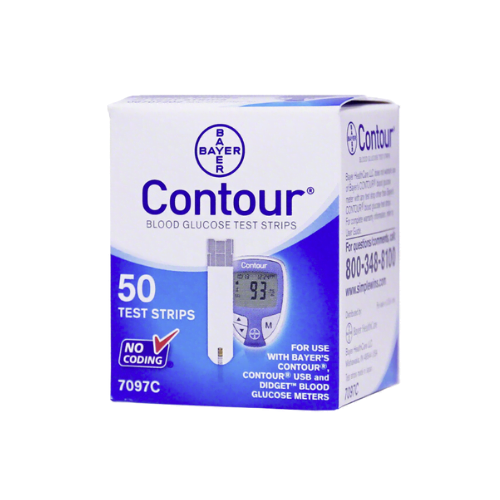
Bayer Contour Test Strips
Buy Bayer Contour Test Strips Online
Secure Encrypted Payments
Bayer Contour Test Strips are single-use blood glucose testing supplies for compatible Contour family meters. They can be ordered online for home monitoring, with count sizes and current cash price shown during checkout. Match the strip type to your exact meter model and follow the testing schedule recommended by your healthcare professional.
Price, Count Sizes, and Ordering
You can buy Bayer Contour Test Strips for routine blood sugar checks when you use a compatible Contour meter. Current pricing is shown before checkout, so you can decide whether a smaller vial or a larger supply fits your testing frequency. Common packaging may include 25-count, 50-count, or 100-count configurations, although packaging can vary by manufacturer updates and pharmacy supply.
These strips are a cash-pay diabetes supply. People paying out of pocket often look at the number of daily tests, the remaining strips at home, and the expiration date before choosing a quantity. If you test several times per day, a larger count may reduce how often you need to reorder, but only choose an amount you can use within the labeled dating.
BorderFreeHealth supports U.S.-from-Canada service for eligible store orders, including Ships from Canada to US logistics when applicable. Add the item to your cart to see the current total and any available shipping choices. Keep your meter model nearby while ordering, because strip compatibility matters more than brand familiarity.
What Bayer Contour Test Strips Do
Bayer Contour Glucose Test Strips help measure glucose in a small capillary blood sample, usually from a fingertip. After you insert the strip into a compatible meter and apply blood, the meter reads the sample through an electrochemical testing process and displays a result. The number can help you understand glucose patterns around meals, activity, illness, and diabetes medicines.
These strips do not treat diabetes, lower glucose, or replace your care plan. They provide information that you and your clinician can use to make safer decisions. For background on diabetes management by condition type, see our sections on type 1 diabetes and type 2 diabetes.
Self-monitoring can be especially useful when your treatment plan includes insulin, medicines that can cause low blood sugar, recent therapy changes, pregnancy-related monitoring, or illness-day guidance. Your clinician may recommend different testing times depending on your goals. Some people test before meals, after meals, at bedtime, before driving, or when symptoms feel unusual.
Meter Compatibility Comes First
Not all Contour test strips fit all Contour meters. The Contour family has included different meter generations and strip systems, and packaging names can look similar. Before ordering Bayer Contour Test Strips online, confirm the exact meter name printed on your device and compare it with the strip labeling.
Using the wrong strip can cause an error message or an unreliable result. Do not cut, bend, reuse, or modify a strip to make it fit. If your meter has been replaced, upgraded, or supplied as part of a kit, recheck the strip name before restocking.
Quick tip: Keep one empty strip vial or carton until your new supply arrives, so you can match the labeling accurately.
How to Use the Strips
Always follow the user guide for your specific Contour meter. A typical fingerstick test starts with washing and drying your hands, inserting a fresh strip into the meter, preparing the lancing device, and touching the blood drop to the sampling end of the strip. The strip should draw in the sample rather than being smeared across the surface.
If your meter supports alternative site testing, follow the meter instructions closely. Fingertip testing is usually preferred when glucose may be changing quickly, such as after meals, after exercise, during illness, or when symptoms suggest low blood sugar. Alternative sites may lag behind fingertip values during rapid glucose changes.
Dispose of used strips with household waste unless local rules say otherwise, and place lancets in an appropriate sharps container. Wash hands after testing. If blood exposure occurs on shared surfaces, clean the area according to household safety guidance.
Getting a Reliable Reading
Good technique helps reduce avoidable errors. Hands should be clean and dry because food residue, lotion, or moisture can affect the blood sample. If you use alcohol, let the site dry completely before lancing. Many people use the side of a fingertip because it can be less tender than the pad.
You may hear advice about wiping away the first drop of blood. Follow your meter instructions and your clinician’s training. In general, clean dry hands are more important than repeating extra steps. If your hands cannot be washed, your care team may suggest a specific approach for reducing contamination risk.
- Use a new strip for each test.
- Close the vial immediately after removing one strip.
- Apply enough blood for the meter to complete the reading.
- Repeat with a new strip if the result does not match how you feel.
- Use control solution when your meter manual recommends it.
If you get repeated error messages, check the strip expiration date, battery status, meter cleanliness, and storage conditions. Persistent problems may mean the meter, strips, or technique needs review.
When and How Often to Test
Testing frequency depends on your diabetes type, medicines, glucose targets, and daily routine. Someone using multiple daily insulin doses may need a different schedule than someone managing glucose with lifestyle changes and non-insulin medicines. Your clinician may adjust timing after reviewing your logs.
Common testing moments include before meals, two hours after meals, at bedtime, before exercise, when symptoms occur, and when treating a low reading. Do not add repeated back-to-back checks only to make up for a missed test unless a clinician has advised that approach. If you miss a planned check, test when it is useful and return to your usual routine.
Recording results helps turn individual numbers into patterns. Many meters store readings automatically, while some people prefer a notebook or app. Bring summaries to appointments so your clinician can assess trends rather than isolated values.
Storage, Expiration, and Travel
Store Bayer Contour Test Strips in the original vial with the cap tightly closed. Keep them at the room conditions shown on the package, away from heat, moisture, and direct sunlight. Do not refrigerate, freeze, or transfer strips into another container. The vial protects strips from humidity and handling damage.
Use strips before the expiration date and within any open-vial period described on the label. Expired or improperly stored strips may produce inaccurate readings, even when the meter appears to work normally. If a vial has been left open, exposed to moisture, or stored in a hot car, consider replacing it.
For travel, carry your meter, strips, lancets, batteries, and written diabetes instructions in hand luggage. Checked bags can face temperature swings. If you cross time zones, coordinate testing around meals, medicines, and your clinician’s advice. Bring more supplies than you expect to need, especially if you test frequently.
Safety, Limits, and When to Recheck
Test strips are not medicines, so they do not cause drug side effects. The main safety concerns come from fingersticks, handling sharps, and acting on inaccurate results. Mild soreness, small bruises, or skin irritation can occur with frequent lancing. Rotating fingers and using the shallowest effective lancet setting may reduce discomfort.
Several factors can affect readings. Expired strips, insufficient blood, wet hands, extreme temperatures, severe dehydration, unusually high or low hematocrit, and certain substances may interfere with some glucose systems. Read the labeling for your exact meter and strip combination for known limitations.
Recheck with a new strip if the number does not match your symptoms. Signs of low blood sugar can include shakiness, sweating, confusion, fast heartbeat, hunger, or weakness. Very high glucose may cause thirst, frequent urination, nausea, fatigue, or blurred vision. Seek urgent help for severe symptoms, fainting, seizure, persistent vomiting, or signs that your diabetes emergency plan applies.
Do not use these strips to diagnose diabetes in someone who has not been evaluated. Home readings can support conversations with a healthcare professional, but diagnosis and treatment decisions require appropriate clinical assessment. For broader supply browsing, see our diabetes supplies category.
Contour Strips, Arm Sensors, and Other Monitoring Options
Some people with diabetes wear a sensor on the arm. That device is usually a continuous glucose monitor, often called a CGM. A CGM tracks glucose trends through a sensor placed under the skin, while Bayer Contour Test Strips are used with a blood glucose meter for fingerstick testing. These tools are different and are not interchangeable.
Even people who use a CGM may still need fingerstick strips in certain situations, such as confirming symptoms, checking unexpected sensor readings, calibrating when a device requires it, or following illness-day instructions. Your clinician can explain when meter testing should guide action.
Fingerstick meters remain useful because they are portable, familiar, and give a direct blood sample result at the time of testing. CGMs provide trend information and alerts for some users. The best choice depends on treatment plan, comfort with devices, insurance or cash-pay needs, and the level of monitoring recommended for your diabetes.
Choosing a Supply Amount
A 50-count vial may suit people who test occasionally or want a smaller restock. A 100-count supply may be more practical for frequent testing if available and if the strips will be used before expiration. A 25-count vial may help when testing is less frequent or when you want to confirm compatibility before purchasing more.
To estimate quantity, multiply your usual daily tests by the number of days until your next planned reorder, then add a modest buffer for retests, illness, travel, or meter errors. Avoid buying far more than you can use within the labeled period. Proper storage protects your out-of-pocket spend by reducing waste.
If you are comparing Bayer Contour Test Strips price with other systems, include the meter you already own, strip compatibility, lancets, control solution, and how often you test. A lower strip cost is not helpful if the strips do not match your meter or your clinician’s monitoring plan.
Related Diabetes Information
Blood glucose testing is only one part of diabetes care. People with type 1 diabetes usually need insulin and careful glucose monitoring, while people with type 2 diabetes may use lifestyle changes, oral medicines, injectable therapies, insulin, or a combination. Testing schedules can change when treatment changes.
For condition-focused reading, visit our type 1 diabetes articles or type 2 diabetes articles. These sections can help you prepare questions for your next appointment, especially if your readings are trending above or below your usual range.
Ask your clinician what numbers should prompt action, when to repeat a test, how to treat lows, and how to handle sick days. Clear instructions make home monitoring more useful and reduce uncertainty when a reading is unexpected.
Authoritative Sources
For device and testing-system safety context, see the FDA medical devices information and Ascensia Diabetes Care. Use manufacturer instructions for your exact meter and strip system as the primary reference for testing steps, storage limits, and known interferences.
Ready to restock? Add Bayer Contour Test Strips to your cart, choose the count shown during ordering, and use prompt, express shipping when it is offered for your order.
This content is for informational purposes only and is not a substitute for professional medical advice.
Blood Glucose Unit Converter
Convert glucose readings between mg/dL and mmol/L without changing the clinical value.
mg/dL
-
US reporting unit
mmol/L
-
International reporting unit
These calculations are for education only and do not replace clinical advice, diagnosis, or treatment. Always confirm medical decisions with a qualified healthcare professional.
HbA1c & eAG Calculator
Convert between HbA1c percentage and estimated average glucose using the ADAG relationship.
HbA1c
-
percentage
eAG mg/dL
-
estimated average glucose
eAG mmol/L
-
estimated average glucose
These calculations are for education only and do not replace clinical advice, diagnosis, or treatment. Always confirm medical decisions with a qualified healthcare professional.
CGM Time-in-Range Summary
Summarise CGM percentages across very low, low, in-range, high, and very high glucose bands.
Entered total
-
should equal 100%
Below range
-
very low plus low
Above range
-
high plus very high
Summary
-
common adult CGM targets vary by patient
These calculations are for education only and do not replace clinical advice, diagnosis, or treatment. Always confirm medical decisions with a qualified healthcare professional.
Carb Serving Calculator
Convert total carbohydrate grams into carb choices for meal planning and diabetes education.
Carb choices
-
total carbs divided by choice size
Rounded choices
-
nearest half choice
Carb calories
-
4 kcal per gram
These calculations are for education only and do not replace clinical advice, diagnosis, or treatment. Always confirm medical decisions with a qualified healthcare professional.
Express Shipping - from $29.99
Prices:
- Dry-Packed Products $29.99
- Cold-Packed Products $39.99
Shipping Countries:
- United States (all contiguous states**)
- Worldwide (excludes some countries***)
Standard Shipping - $19.99
Shipping with this method takes 5-10 days
Prices:
- Dry-Packed Products $19.99
- Not available for Cold-Packed products
Shipping Countries:
- United States (all contiguous states**)
- Worldwide (excludes some countries***)
Are all Contour test strips compatible with every Contour meter?
No. Contour meters and strips can differ by model and generation. Match the strip labeling to the exact meter name before ordering, because the wrong strip can cause errors or unreliable readings.
Which finger is best for checking blood sugar?
Many people use the side of a fingertip because it may be less tender than the pad. Rotate fingers, wash and dry hands first, and follow your meter and lancing-device instructions.
Why do some instructions mention wiping away the first drop of blood?
The goal is to reduce contamination from food residue, moisture, or other substances. Follow your meter instructions and clinician training; clean, dry hands are especially important for reliable results.
What should I do if a reading does not match how I feel?
Wash and dry your hands, repeat the test with a new strip, and consult the meter manual for troubleshooting. Seek urgent care if symptoms suggest severe low or high blood sugar.
What is the device some people with diabetes wear on their arm?
It is often a continuous glucose monitor, or CGM. A CGM sensor tracks glucose trends under the skin, while Bayer Contour Test Strips are used with a compatible blood glucose meter for fingerstick testing.
Rewards Program
Earn points on birthdays, product orders, reviews, friend referrals, and more! Enjoy your medication at unparalleled discounts while reaping rewards for every step you take with us.
You can read more about rewards here.
POINT VALUE
How to earn points
- 1Create an account and start earning.
- 2Earn points every time you shop or perform certain actions.
- 3Redeem points for exclusive discounts.
You Might Also Like
Select options
This product has multiple variants. The options may be chosen on the product page
Select options
This product has multiple variants. The options may be chosen on the product page
Select options
This product has multiple variants. The options may be chosen on the product page
Select options
This product has multiple variants. The options may be chosen on the product page