
Please note: a valid prescription is required for all prescription medication.
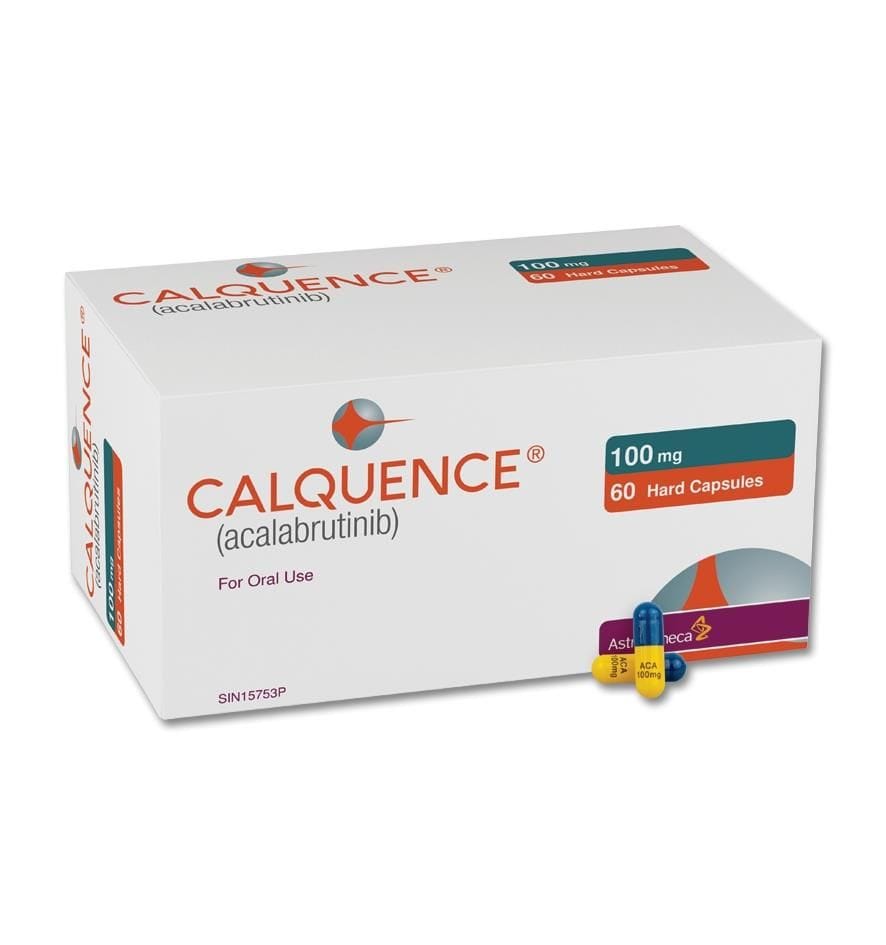
Calquence
Buy Calquence Online
Secure Encrypted Payments
Calquence is an oral targeted cancer medicine containing acalabrutinib, a Bruton tyrosine kinase inhibitor used in certain B-cell blood cancers. You can buy Calquence online, view the current Calquence price during ordering, and choose the form, strength, and quantity that match your oncology team’s directions.
Calquence 100 mg is a commonly referenced strength, and product wording may distinguish Calquence tablets, Calquence capsules, acalabrutinib capsules, or acalabrutinib 100 mg capsules. Match those details carefully because tablets and capsules can have different administration instructions, especially if you take medicines for stomach acid.
Calquence is used as part of a carefully monitored cancer treatment plan. Keep your current medication list, clinic instructions, and refill timing close when ordering, because this medicine can interact with many common drugs and may require lab monitoring over time.
Calquence Price, Form, and Strength Selection
The Calquence cost shown during ordering can vary by form, strength, bottle quantity, and supply amount. Review the total number of tablets or capsules included, not just the name on the bottle, so the purchase aligns with your expected dosing schedule and refill plan.
If more than one acalabrutinib product appears, treat each form as a separate choice until it matches your clinic directions. Calquence tablets and Calquence capsules are both oral acalabrutinib products, but the form may matter for how the medicine is taken and how acid-reducing drugs are handled.
People looking at Calquence monthly cost, cash pay Calquence, or acalabrutinib without insurance usually need a clear way to compare the total out-of-pocket amount against the quantity supplied. A larger bottle may change the immediate total and the timing of the next refill, while a smaller fill may require more frequent coordination.
| Ordering detail | Why it matters |
|---|---|
| Form | Capsule and tablet instructions may differ, especially with acid reducers. |
| Strength | Match Calquence 100 mg or another shown strength to clinic directions. |
| Quantity | Total unit count affects refill timing and monthly cost estimates. |
| Medication list | Other drugs may affect bleeding risk, heart rhythm risk, or acalabrutinib levels. |
Quick tip: Keep the exact medicine name, form, strength, and quantity from your clinic plan nearby while ordering.
How to Order Calquence Online
To order Calquence online, choose the form and strength shown during ordering, then make sure the quantity fits your current treatment plan. Do not switch from capsules to tablets, or from tablets to capsules, just because one form appears more convenient.
BorderFreeHealth can help U.S. customers with Calquence US delivery from Canada through licensed pharmacy channels. Order details may be reviewed before the medicine is supplied, and complete clinic and medication information can help avoid delays caused by conflicting directions or outdated records.
Calquence price US shipping from Canada should be considered together with handling needs, refill timing, and how much medicine remains at home. Avoid waiting until the bottle is nearly empty, because specialty cancer medicines may require extra coordination before release.
If the available form does not match your oncology team’s instructions, ask your clinic before ordering. This is especially important if you take a proton pump inhibitor, H2 blocker, antacid, blood thinner, antifungal, antibiotic, antiviral, or supplement that could affect treatment safety.
What Calquence Treats
Calquence contains acalabrutinib and is used in adults with chronic lymphocytic leukemia, also called CLL, and small lymphocytic lymphoma, called SLL. It is also used in adults with mantle cell lymphoma in label-defined treatment settings.
CLL, SLL, and mantle cell lymphoma are B-cell cancers. B-cells are immune-system white blood cells, and in these cancers they can grow or survive abnormally. Acalabrutinib blocks Bruton tyrosine kinase, often shortened to BTK, a signaling protein that cancerous B-cells can use to stay active.
Calquence is not traditional chemotherapy in the classic sense. It is a targeted therapy taken by mouth, and it may be used alone or with other anticancer medicines depending on the diagnosis and treatment plan. For broader browsing within this treatment area, see the Cancer category.
Condition-specific navigation is also available for Chronic Lymphocytic Leukemia, Small Lymphocytic Lymphoma, and Mantle Cell Lymphoma. These pages can help you review medicines associated with those diagnoses while keeping treatment decisions anchored to your oncology team.
Capsules, Tablets, and Dose Checks
Calquence capsules and Calquence tablets are not simply interchangeable packaging choices. Both contain acalabrutinib, but the form can affect administration guidance. Read the label that comes with your bottle and follow the directions provided by your oncology clinic.
Acalabrutinib 100 mg is often referenced in treatment information. Some adult treatment plans use twice-daily dosing about 12 hours apart, but individual directions can differ when Calquence is combined with other medicines, interrupted for side effects, or adjusted around interacting drugs.
Swallow capsules whole with water. Do not open, break, or chew capsules. Tablets may have different instructions, so follow the directions supplied with the medicine rather than assuming capsule instructions apply to tablets.
Acid-reducing medicines are a major reason to pay attention to form. Proton pump inhibitors, H2 blockers, and antacids can affect capsule absorption. Tablet instructions may differ, so tell your oncology team about reflux medicines before ordering or refilling.
Why it matters: The right form helps the medicine match both your cancer plan and your other daily medicines.
Side Effects, Warnings, and Monitoring
Common side effects may include headache, diarrhea, nausea, abdominal discomfort, fatigue, muscle aches, bruising, cough, rash, and upper respiratory symptoms. Blood counts can also decrease, including neutrophils, red blood cells, or platelets, so lab monitoring is commonly part of treatment.
Serious risks include severe infections, significant bleeding, abnormal heart rhythm such as atrial fibrillation or atrial flutter, high blood pressure, and second primary cancers including skin cancers. Rare serious brain infection has been reported with medicines in this class. Seek urgent care for sudden weakness, confusion, vision changes, severe headache, chest pain, fainting, or uncontrolled bleeding.
Tell your clinician about any history of bleeding problems, heart rhythm changes, high blood pressure, hepatitis B, recurrent infections, or planned surgery or dental work. Treatment may need careful timing around some procedures because BTK inhibitors can increase bleeding risk.
Pregnancy and breastfeeding require careful discussion before treatment. Acalabrutinib may harm an unborn baby, and breastfeeding is generally not recommended during treatment and for a period after the final dose according to labeling.
- Report black stools, vomiting blood, unusual bruising, or bleeding that will not stop.
- Call promptly for fever, chills, persistent cough, or other infection symptoms.
- Report palpitations, dizziness, chest discomfort, or shortness of breath.
- Use sun protection and report new or changing skin lesions.
- Keep blood pressure checks and lab visits recommended by your care team.
Interactions and What to Avoid
Acalabrutinib is affected by CYP3A, an enzyme pathway that processes many medicines. Strong CYP3A inhibitors, including some antifungals, macrolide antibiotics, and antivirals, can raise acalabrutinib levels. Strong CYP3A inducers, such as rifampin or St. John’s wort, can lower exposure and may reduce treatment effect.
Blood thinners, antiplatelet medicines, and some supplements can increase bleeding risk. Examples include warfarin, direct oral anticoagulants, aspirin, clopidogrel, fish oil, and high-dose vitamin E. Do not stop a medicine on your own, but make sure your oncology team knows every product you take.
Avoid grapefruit, grapefruit juice, and Seville oranges unless your clinician says otherwise. These can change how the body processes acalabrutinib. Alcohol may worsen stomach upset, dizziness, or dehydration for some people, so ask what is safe in your situation.
Monitoring often includes blood counts, infection review, blood pressure measurement, heart symptom checks, and assessment of bruising or bleeding. Some people have a temporary rise in lymphocyte counts early in treatment as cells shift from lymph nodes into the blood; your oncology team can explain whether a change is expected.
Missed Dose, Storage, and Travel
If a dose is missed, official instructions generally use a short time window to decide whether to take it or skip it. Do not double doses unless your oncology team has specifically told you to do so. If vomiting occurs after a dose, follow the medicine label or clinic directions rather than repeating the dose automatically.
Store Calquence at room temperature in the original container with the lid tightly closed. Keep it dry, away from direct light, and out of reach of children and pets. Do not transfer capsules or tablets into a pill organizer unless a pharmacist confirms that this is appropriate for the product supplied.
For travel, keep the labeled container in your carry-on bag when possible. Bring clinic directions or order documentation if crossing borders or flying. Avoid leaving the bottle in a hot car, checked baggage with temperature swings, or a damp bathroom cabinet.
Plan refills before the supply runs low. If the bottle, seal, tablets, or capsules look different from the last fill, contact the pharmacy before taking more. Calquence Ships from Canada to US service context may involve prompt, express shipping, but treatment continuity still depends on ordering early enough for review and handling.
How Long Treatment May Continue
Many people remain on acalabrutinib continuously until disease progression or unacceptable side effects, unless the treatment plan uses a fixed combination schedule. The length of therapy depends on diagnosis, response, tolerability, lab results, and whether other cancer medicines are included.
Response is assessed through symptoms, physical exams, blood counts, imaging when needed, and overall tolerability. Some people notice early side effects such as headache or diarrhea, while others mainly see changes on lab work. Persistent or worsening symptoms should be reported rather than saved for the next refill.
Refill timing works best when it aligns with oncology visits. That gives your care team a chance to confirm the current form, dose schedule, interacting medicines, lab results, and any planned procedures before another supply is arranged.
Related Treatment Choices and Product Navigation
Other medicines may be considered for CLL, SLL, or mantle cell lymphoma depending on treatment history and patient-specific risks. Some options work through the BTK pathway, while others affect different cancer-cell signaling routes. Your clinician weighs expected benefit, side effects, heart history, bleeding risk, infections, and interactions.
When a treatment plan changes, do not substitute another cancer medicine without direct oncology guidance. Similar-sounding therapies may differ in dosing, administration, monitoring, and risks. The Cancer health articles section can provide additional reading, but it should not replace clinic instructions.
Country-of-origin information may also matter to some customers coordinating cross-border care. You can browse products associated with Canada when reviewing sourcing context across the store.
Questions to Ask Your Oncology Team
Before starting or refilling Calquence, write down the practical questions that affect safe ordering and daily use. A short list can reduce confusion, especially if your treatment includes other cancer medicines or medicines for reflux, infection, clotting, or heart conditions.
- Should my medicine be tablets or capsules?
- How should antacids, H2 blockers, or proton pump inhibitors be handled?
- Which side effects should trigger an urgent call?
- Do any blood thinners or supplements increase my bleeding risk?
- Should treatment pause before dental work or surgery?
- Which labs should be completed before the next refill?
- How will response be measured over time?
Authoritative Sources
FDA-approved prescribing information for Calquence tablets provides official indication, dosing, interaction, and safety details.
Manufacturer patient medication guide summarizes key patient safety information and administration guidance.
This content is for informational purposes only and is not a substitute for professional medical advice.
Absolute Neutrophil Count Calculator
Calculate ANC from white blood cell count, neutrophil percentage, and optional band percentage.
ANC-cells/uL
ANC-10^9/L
These calculations are for education only and do not replace clinical advice, diagnosis, or treatment. Always confirm medical decisions with a qualified healthcare professional.
Express Shipping - from $29.99
Shipping with this method takes 3-5 days
Prices:
- Dry-Packed Products $29.99
- Cold-Packed Products $39.99
Shipping Countries:
- United States (all contiguous states**)
- Worldwide (excludes some countries***)
Standard Shipping - $19.99
Shipping with this method takes 5-10 days
Prices:
- Dry-Packed Products $19.99
- Not available for Cold-Packed products
Shipping Countries:
- United States (all contiguous states**)
- Worldwide (excludes some countries***)
Is Calquence a chemotherapy drug?
Calquence is not traditional chemotherapy in the classic sense. It is a targeted oral therapy called a BTK inhibitor, which means it blocks a signaling protein that certain B-cell cancers can use to grow and survive.
What is Calquence used to treat?
Calquence is used in adults with chronic lymphocytic leukemia, small lymphocytic lymphoma, and mantle cell lymphoma in label-defined treatment settings. Your oncology team decides whether acalabrutinib fits your diagnosis, prior treatment, and risk factors.
What should I avoid while taking Calquence?
Avoid grapefruit, grapefruit juice, Seville oranges, and St. John’s wort unless your clinician says otherwise. Also tell your care team about acid reducers, blood thinners, antiplatelet drugs, antifungals, antibiotics, antivirals, and supplements before refilling.
How long can you stay on Calquence?
Many people take acalabrutinib continuously until disease progression or unacceptable side effects, unless their oncology plan uses a fixed combination schedule. The right duration depends on response, tolerability, lab results, and the full treatment plan.
Are Calquence tablets and capsules the same to take?
They both contain acalabrutinib, but tablets and capsules can have different administration instructions. The distinction is especially important for people using medicines that reduce stomach acid, so match the form to clinic directions.
Rewards Program
Earn points on birthdays, product orders, reviews, friend referrals, and more! Enjoy your medication at unparalleled discounts while reaping rewards for every step you take with us.
You can read more about rewards here.
POINT VALUE
How to earn points
- 1Create an account and start earning.
- 2Earn points every time you shop or perform certain actions.
- 3Redeem points for exclusive discounts.
You Might Also Like
Select options
This product has multiple variants. The options may be chosen on the product page
Select options
This product has multiple variants. The options may be chosen on the product page
Select options
This product has multiple variants. The options may be chosen on the product page
Select options
This product has multiple variants. The options may be chosen on the product page