
Please note: a valid prescription is required for all prescription medication.
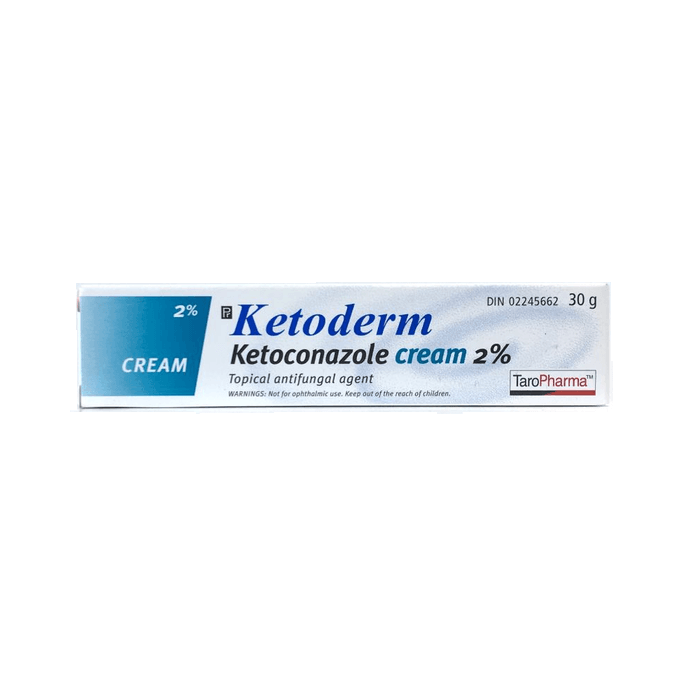
Ketoderm
Buy Ketoderm Online
Secure Encrypted Payments
Ketoderm is a ketoconazole topical antifungal used on the skin and, in some forms, the scalp. You can buy Ketoderm online and choose the form, strength, and quantity shown during ordering that match your clinician’s directions or the product label. BorderFreeHealth offers U.S. customers Canadian pharmacy access for this medication, including US delivery from Canada when it applies to the order.
Ketoconazole belongs to the azole antifungal class. It works locally by interfering with fungal cell membranes, which helps slow or stop the growth of susceptible fungi and yeasts. Because creams, shampoos, gels, and single-dose formats may be used differently, the form matters as much as the active ingredient.
Ketoderm Price and Form Selection
The Ketoderm price depends on the form, strength, and quantity chosen during ordering. Cream, shampoo, gel, and other ketoconazole formats can have different package sizes and directions, so a lower total amount is not always the better match. Focus on the active ingredient, concentration, container size, and intended treatment area.
Ketoderm cream 2% is commonly compared with ketoconazole 2% cream because both names may appear in customer searches for topical antifungal treatment. A 2% concentration describes the amount of ketoconazole in the product, not how much to apply at one time. The amount used over a course depends on the area treated, the directions you were given, and how long the routine should continue.
If you are weighing Ketoderm cost without insurance, compare the cash-pay amount with the exact form and total contents. A tube for a localized skin area and a bottle for scalp use are not interchangeable, even when both contain ketoconazole. Quick tip: Keep the package label or clinician note nearby so the form and strength are easy to match before checkout.
How to Order Ketoderm Online
To order Ketoderm, choose the item that matches the intended body site and directions. Review the strength, quantity, contact information, and delivery address before submitting the order. We may review order details when required so the pharmacy can supply the medication through licensed channels.
Customers often compare Ketoderm cream, Ketoderm shampoo, Ketoderm gel, and ketoconazole cream when deciding which topical antifungal fits their instructions. Use the medication name, active ingredient, and form together rather than relying on the brand name alone. If your clinician wrote directions for a cream, a rinse-off shampoo may not serve the same purpose.
People who order Ketoderm from Canada may be comparing cross-border cash-pay choices alongside local care. Plan around your current supply and avoid waiting until symptoms are severe or the container is nearly empty. If the exact form you expected is not the right clinical fit, ask a healthcare professional whether another topical antifungal would be appropriate.
What Ketoconazole Topicals Treat
Ketoderm ketoconazole is used for fungal or yeast-related skin and scalp conditions when the organism is susceptible to ketoconazole. Depending on the form, it may be considered for conditions such as ringworm, athlete’s foot, jock itch, and seborrheic dermatitis. It is not intended to treat bacterial infections, viral rashes, or noninfectious skin inflammation.
Ringworm, athlete’s foot, and jock itch are dermatophyte infections. Dermatophytes are fungi that commonly affect the outer skin, especially warm or moist areas. Seborrheic dermatitis is different; it is linked with inflammation and yeast activity, often causing flaking, redness, or itching on the scalp, face, or other oily areas.
Similar-looking rashes can have different causes. Peeling between the toes may be fungal, but eczema, psoriasis, friction, allergic contact dermatitis, or secondary infection can look similar. The Fungal Skin Infection category can help you browse related antifungal treatments, while Seborrheic Dermatitis is useful when scalp or facial flaking is the main concern.
Forms, Strengths, and Practical Differences
Ketoconazole topical products may be supplied as cream, shampoo, gel, or other formats depending on market and manufacturer. Cream is usually used for localized skin areas when directions support that use. Shampoo is usually chosen for scalp involvement or for rinse-off use on certain affected skin areas.
Search terms such as Ketoderm 2 gel, Ketoderm monodose, and Ketoderm shampoo may describe different product formats in different markets. Treat the active ingredient, form, strength, and quantity as separate details. A single-dose format, a tube, and a bottle can have different instructions even if ketoconazole is the antifungal ingredient.
| Detail | What to look for | Why it matters |
|---|---|---|
| Active ingredient | Ketoconazole | Confirms the antifungal medicine being used. |
| Form | Cream, shampoo, gel, or another format | Different forms are applied and rinsed differently. |
| Strength | The concentration shown during ordering | Strength should match the label or clinician directions. |
| Quantity | Tube, bottle, or package contents | Total supply affects how long the product may last. |
| Use area | Skin, scalp, feet, groin, or other directed area | The body site helps determine the correct routine. |
Why it matters: Choosing the wrong form may leave you with a medicine that does not match the area you need to treat.
How to Use Ketoderm Safely
Use Ketoderm exactly as directed on the label or by a healthcare professional. For cream, the usual routine involves cleaning and drying the area, then applying a thin layer to affected skin and nearby border. Wash your hands after application unless your hands are the treated area.
For shampoo, directions commonly involve applying it to the scalp or affected skin, working it into a lather, leaving it briefly as directed, and rinsing thoroughly. Avoid the eyes, mouth, inside the nose, and vaginal area. If accidental contact occurs, rinse well with water.
Do not cover treated skin with airtight dressings unless a clinician specifically tells you to do so. Occlusive coverings can increase irritation and may change how a topical product behaves on the skin. Avoid sharing towels, socks, razors, or hair tools when a contagious fungal infection is possible.
Moisture control can support treatment for some fungal conditions. Dry between toes after bathing, change sweaty clothing promptly, and choose breathable footwear when athlete’s foot is involved. For scalp use, follow the rinse timing carefully rather than leaving shampoo on longer than directed.
What to Expect During Treatment
Itching, redness, scaling, and flaking may gradually improve when the condition is caused by a fungus or yeast that responds to ketoconazole. The timing can vary by body site, severity, moisture, friction, and whether the diagnosis is correct. Cosmetic improvement may lag behind symptom improvement as skin or scalp flakes clear.
Continue the routine for the recommended course unless a healthcare professional gives different instructions. Stopping early can allow symptoms to return, especially in warm, moist areas such as the feet or groin. If the rash spreads, becomes painful, drains fluid, or does not improve as expected, the diagnosis or treatment plan may need reassessment.
Recurring skin or scalp flares may involve triggers beyond the medicine itself. Sweat, tight clothing, shared towels, oily hair products, harsh cleansers, and repeated moisture exposure can all matter. The broader Dermatology category can help you browse skin and scalp treatment areas without turning one rash into trial-and-error care.
Side Effects, Warnings, and Precautions
Topical ketoconazole usually acts where it is applied, and only small amounts are expected to absorb through intact skin. Local side effects can still occur. Burning, stinging, itching, redness, dryness, peeling, or irritation may appear at the treated area.
Shampoo users may notice changes in hair texture, oiliness, dryness, or scalp feel. These effects may overlap with the condition being treated, so watch for worsening irritation rather than assuming every change is part of healing. Stop use and seek medical guidance if severe redness, swelling, blistering, drainage, or significant pain develops.
- Do not use Ketoderm if you have had an allergic reaction to ketoconazole or any ingredient in the formula.
- Ask a healthcare professional before use on severely broken, infected, or extensively inflamed skin.
- Get urgent help for hives, facial swelling, trouble breathing, severe rash, or widespread blistering.
- Use caution when combining it with exfoliants, alcohol-based products, medicated acne treatments, or other irritating topicals.
- Tell a clinician if you are pregnant, planning pregnancy, or breastfeeding before starting a new medicated topical.
Topical products can irritate sensitive skin when layered too aggressively. Moisturizers may be useful for dryness, but medicated combinations should be discussed when the treated area is delicate, raw, or near the eyes. If you are using other prescription or non-prescription skin medicines, ask whether they should be separated from ketoconazole.
Storage, Handling, and Travel
Store Ketoderm at room temperature, away from excess heat and direct light. Keep the cap tightly closed after each use to reduce leaks, drying, and contamination. Avoid storing the container in a damp bathroom if humidity is high.
Keep the medicine out of reach of children and pets. Do not use a tube or bottle that looks contaminated, has changed texture unexpectedly, or has passed the date shown on the package. If you use the product on the feet or groin, avoid touching the container tip to irritated skin.
When traveling, place the container in a sealable pouch and keep the original label with it. This helps identify the medicine and reduces spill risk in luggage. For Ketoderm Ships from Canada to US service context, allow for normal order handling and prompt, express shipping choices when they are offered during checkout, without assuming a guaranteed arrival date.
Comparing Ketoderm With Related Antifungals
Ketoderm is one ketoconazole product, but other antifungal choices may be appropriate depending on the diagnosis, location, and past response. Generic ketoconazole may be considered when the active ingredient, strength, form, and directions match what you need. Brand and generic naming can vary by country, so compare the medicine itself rather than the label name alone.
Some fungal skin infections respond to antifungal ingredients other than ketoconazole. The best match depends on whether the condition involves dermatophytes, yeast, scalp flaking, or foot-focused irritation. For a foot-specific product to evaluate by ingredient and label directions, Flexitol Anti Fungal may be relevant.
Do not order several medicated products simply to experiment on the same rash. Multiple antifungals, exfoliants, steroids, or acne treatments can irritate skin and make the picture harder to interpret. A healthcare professional can help distinguish ringworm, candidiasis, seborrheic dermatitis, eczema, psoriasis, and contact irritation.
Questions to Ask a Healthcare Professional
Before starting Ketoderm, it can help to clarify the diagnosis, treatment area, form, and expected course. Bring the product name, active ingredient, and strength to the conversation. If you previously used ketoconazole cream without insurance or paid cash for a similar product, mention what helped and what caused irritation.
- Is my rash most consistent with a fungal infection, yeast-related condition, or another skin problem?
- Should I use a cream, shampoo, gel, or a different topical form?
- How far beyond the visible rash should the product be applied?
- Which moisturizers, cleansers, or other topicals can be used at the same time?
- What symptoms should prompt follow-up or urgent care?
These questions make the order decision safer and more practical. They also help distinguish Ketoderm cream, ketoconazole cream 2%, ketoconazole shampoo, and related dermatology products when more than one topical antifungal seems relevant.
Authoritative Sources
DailyMed provides official labeling for ketoconazole cream: Ketoconazole Cream 2% Prescribing Information.
Health Canada provides Canadian product record details for Ketoderm Cream 2%: Health Canada Drug Product Details.
This content is for informational purposes only and is not a substitute for professional medical advice.
Express Shipping - from $29.99
Shipping with this method takes 3-5 days
Prices:
- Dry-Packed Products $29.99
- Cold-Packed Products $39.99
Shipping Countries:
- United States (all contiguous states**)
- Worldwide (excludes some countries***)
Standard Shipping - $19.99
Shipping with this method takes 5-10 days
Prices:
- Dry-Packed Products $19.99
- Not available for Cold-Packed products
Shipping Countries:
- United States (all contiguous states**)
- Worldwide (excludes some countries***)
What is Ketoderm used for?
Ketoderm contains ketoconazole, a topical antifungal used for susceptible fungal or yeast-related skin and scalp conditions depending on the form. It may be considered for ringworm, athlete’s foot, jock itch, or seborrheic dermatitis when ketoconazole is appropriate. It is not used for bacterial or viral infections.
Is Ketoderm the same as ketoconazole cream?
Ketoderm is a brand name associated with ketoconazole topical products. Ketoconazole cream refers to the active ingredient and form. When comparing them, match the active ingredient, strength, form, quantity, and directions rather than relying on the name alone.
How should Ketoderm cream be applied?
Follow the product label or your healthcare professional’s directions. Cream is usually applied as a thin layer to clean, dry affected skin and a small surrounding border. Wash your hands afterward unless your hands are the treated area, and avoid the eyes, mouth, and other mucous membranes.
What side effects can Ketoderm cause?
Common local effects can include burning, stinging, itching, redness, dryness, flaking, or irritation where it is applied. Shampoo may affect scalp feel or hair texture. Seek medical help for hives, swelling, breathing trouble, blistering, severe rash, or widespread irritation.
How long does Ketoderm take to work?
Symptoms may improve gradually when the condition is caused by a susceptible fungus or yeast. Timing varies by body site, severity, moisture, friction, and correct diagnosis. If symptoms spread, worsen, or fail to improve as expected, ask a healthcare professional to reassess the condition.
Can Ketoderm be used on the scalp?
Ketoconazole shampoo is commonly used for scalp conditions when that form is directed. Cream and shampoo are used differently, so choose the form that matches the treatment area and instructions. Do not substitute one form for another without professional guidance.
How should Ketoderm be stored?
Store Ketoderm at room temperature away from excess heat, moisture, and direct light. Keep the cap tightly closed and keep the container out of reach of children and pets. Travel with the original label and place the container in a sealable pouch to reduce leaks.
Rewards Program
Earn points on birthdays, product orders, reviews, friend referrals, and more! Enjoy your medication at unparalleled discounts while reaping rewards for every step you take with us.
You can read more about rewards here.
POINT VALUE
How to earn points
- 1Create an account and start earning.
- 2Earn points every time you shop or perform certain actions.
- 3Redeem points for exclusive discounts.
You Might Also Like
Select options
This product has multiple variants. The options may be chosen on the product page
Select options
This product has multiple variants. The options may be chosen on the product page
Select options
This product has multiple variants. The options may be chosen on the product page
Select options
This product has multiple variants. The options may be chosen on the product page