
Please note: a valid prescription is required for all prescription medication.
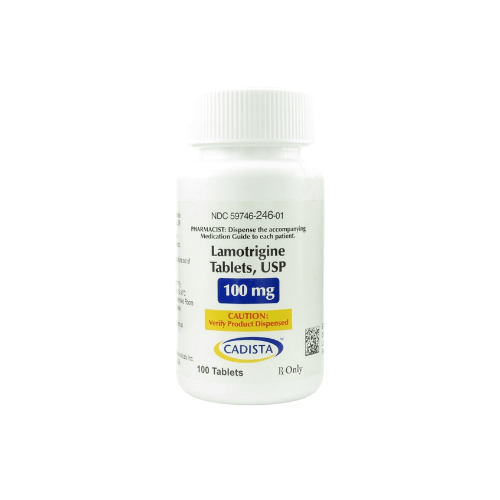
Lamotrigine
Buy Lamotrigine Online
Secure Encrypted Payments
Lamotrigine is an anticonvulsant medicine used for seizure control and for maintenance treatment in bipolar I disorder. It can be ordered online, with current Lamotrigine price information shown during checkout and dose or strength choices matched to your clinician’s directions. Choose the available strength and form that align with your treatment plan, then keep the same routine unless your care team tells you otherwise.
Lamotrigine is the active ingredient in Lamictal and several generic products. It is commonly supplied as oral tablets, with immediate-release, chewable-dispersible, orally disintegrating, and extended-release versions used in clinical practice. Availability of a specific form or strength can vary, so the safest buying decision starts with the exact medicine name, form, dose, and quantity written in your treatment instructions.
Lamotrigine Price, Strengths, and Ordering Choices
Lamotrigine cost depends on the form, strength, quantity, and whether the order is for brand-name Lamictal or generic lamotrigine. Many cash-pay buyers review the per-tablet cost and total supply cost before placing an order. During ordering, select the dose or strength displayed for the product and make sure it matches the directions from your clinician.
Common strengths seen in clinical use include 25 mg, 100 mg, 150 mg, 200 mg, and 300 mg, but the right strength is individualized. Lower strengths are often used during titration, while higher strengths may be used later in a maintenance plan. Do not switch tablet strength, split extended-release tablets, or change timing to reduce cost unless your care team has approved the change.
US delivery from Canada may be used for this medicine, with prompt, express shipping noted as part of the service context. We may review order details for completeness before the pharmacy supplies the medication through licensed pharmacy channels. If you are paying out of pocket, review the Lamotrigine cash price across quantities and forms, because convenience and total spend can differ by tablet type.
Quick tip: Before checkout, compare the medicine name, form, strength, and quantity against your current medication bottle or written instructions.
What Lamotrigine Treats
Lamotrigine is mainly used to help prevent and control certain seizures. It is approved for partial-onset seizures, primary generalized tonic-clonic seizures, and seizures associated with Lennox-Gastaut syndrome. Depending on the treatment plan, it may be used alone or with other anti-seizure medicines.
Lamotrigine is also used as maintenance treatment for bipolar I disorder. In that setting, it is a mood stabilizer because it helps delay the time to future mood episodes after symptoms are already stabilized. It is not used as an acute treatment for a current manic episode or a current depressive episode.
For people reviewing treatment choices, the condition matters. Epilepsy treatment decisions depend on seizure type, other medicines, age, tolerability, and safety history. Bipolar I maintenance decisions depend on past mood episodes, other mood-stabilizing medicines, adherence, and side-effect risk. You can browse related condition information for epilepsy and bipolar disorder when discussing options with your care team.
How This Medicine Works
Lamotrigine is an anti-seizure medicine that affects sodium channels in nerve cells. By helping reduce excessive electrical firing and glutamate release, it can lower seizure risk in appropriate patients. This brain-cell stabilizing action also helps explain its role in bipolar I maintenance therapy.
The medicine does not work like a sedative and is not intended to calm symptoms immediately. Dose increases are usually gradual because faster escalation can raise the risk of rash, including rare but serious skin reactions. The gradual titration schedule is one reason the exact strength and timing matter when ordering refills.
Immediate-release tablets are commonly taken on a daily schedule that may involve more than one dose per day. Lamotrigine XR is an extended-release version used for once-daily dosing when clinically appropriate. Orally disintegrating or chewable-dispersible tablets may help people who have difficulty swallowing standard tablets, but the form should match the product selected and the directions provided by the clinician.
Generic Lamotrigine and Lamictal
Lamictal is a brand name for lamotrigine. Generic lamotrigine contains the same active ingredient and is often chosen when a lower cash-pay cost is important. Some people stay with one manufacturer or form for consistency, especially if they are sensitive to changes in tablet appearance or release characteristics.
Brand and generic names can differ across markets, and the available package or manufacturer may vary. That does not change the key buying checks: active ingredient, immediate-release or extended-release form, strength, and quantity. If a prescriber has specified a particular brand or form, follow that direction rather than substituting on your own.
If you are comparing Lamictal price with generic lamotrigine price, consider the full regimen. A titration plan may require multiple strengths, while a stable maintenance plan may use one strength for longer periods. Matching the form and strength accurately is more important than choosing the lowest visible per-tablet amount.
How to Take Lamotrigine Safely
Take lamotrigine exactly as directed on your medication instructions. Standard tablets are swallowed with water. Chewable-dispersible tablets may be chewed, swallowed whole, or dispersed in a small amount of liquid if the specific product instructions allow it. Orally disintegrating tablets dissolve on the tongue, while extended-release tablets should be swallowed whole.
Do not crush, chew, or split extended-release tablets. Altering that form can change how the medicine is released. If swallowing is difficult, ask whether an orally disintegrating or chewable-dispersible form is appropriate instead of changing tablets yourself.
If you miss one dose, follow the instructions provided by your clinician or the official label. In many cases, a missed dose is taken when remembered unless it is close to the next scheduled dose. Do not double up to make up for a missed tablet. If several days are missed, contact your care team before restarting because retitration may be needed to reduce rash risk.
Consistent timing helps maintain steadier medication levels. Daily reminders, a medication log, or a routine anchor such as brushing your teeth can reduce missed doses. If you track seizures, mood changes, sleep disruption, missed tablets, or side effects, bring that record to follow-up visits.
Side Effects, Serious Warnings, and Monitoring
Common side effects include dizziness, headache, nausea, sleepiness, fatigue, insomnia, blurred or double vision, tremor, vomiting, and problems with coordination. Some effects improve as the body adjusts, but persistent or severe symptoms should be discussed promptly. Avoid driving or hazardous tasks until you know how the medicine affects alertness, vision, and coordination.
The most important serious risk is rash. Lamotrigine can rarely cause life-threatening skin reactions, including Stevens-Johnson syndrome and toxic epidermal necrolysis. Seek urgent medical care for rash with blistering, peeling skin, mouth sores, fever, swollen glands, facial swelling, or other systemic symptoms. Rash risk is higher when dose increases are too fast, when restarting after an interruption, and when certain interacting medicines are used.
Other serious but uncommon reactions include hypersensitivity reactions involving multiple organs, blood disorders, aseptic meningitis, and suicidal thoughts or behavior reported with anti-seizure medicines. Contact a clinician right away for new or worsening depression, unusual mood changes, agitation, thoughts of self-harm, severe headache with stiff neck, unexplained bruising, fever, or signs of infection.
Monitoring is individualized. Some people need closer review when other anti-seizure medicines are added or stopped, when hormonal contraception changes, during pregnancy planning, or when liver disease is present. A stable refill routine matters because sudden interruption can increase seizure risk in people using the medicine for epilepsy.
Interactions and What to Avoid
Valproate can raise lamotrigine levels and requires a different titration approach. Enzyme-inducing medicines such as carbamazepine, phenytoin, phenobarbital, and primidone can lower lamotrigine levels. Estrogen-containing contraceptives may also reduce lamotrigine concentrations, and levels can fluctuate during the cycle or when contraception is started or stopped.
Alcohol, sedatives, and medicines that cause drowsiness can worsen dizziness, sleepiness, and impaired coordination. Avoid adding new prescription medicines, over-the-counter products, or herbal supplements without checking for interactions. Do not abruptly stop lamotrigine unless a clinician instructs you to do so, because sudden discontinuation may worsen seizures in susceptible patients.
People with a previous serious reaction to lamotrigine or any tablet ingredient should not take it again unless a specialist has specifically directed otherwise. Extra caution is also important after any prior severe rash with anti-seizure medicines. If you are pregnant, planning pregnancy, or breastfeeding, discuss risks and monitoring because seizure control and medication exposure both require individualized planning.
Storage, Refills, and Travel
Store tablets at room temperature in the original container, away from moisture, heat, and direct light. Bathrooms are usually poor storage locations because humidity can damage tablets. Keep the medicine out of reach of children and pets, and do not use tablets that look damaged or have been stored outside labeled conditions.
Plan refills early, especially during titration when different strengths may be needed. Running out can interrupt therapy and may require a cautious restart plan. If you use a pill organizer, keep the original labeled container for identification, travel, and emergency reference.
For travel, carry lamotrigine in hand luggage and bring enough supply for the trip plus extra days in case plans change. A medication list with the active ingredient, strength, and dosing schedule can help during urgent care visits. If crossing borders, keep tablets in their labeled packaging.
Related Treatment Categories and Alternatives
Lamotrigine is only one option within anti-seizure and mood-stabilizing treatment. Other medicines may be considered if seizure type, mood history, side effects, interactions, or pregnancy planning make lamotrigine less suitable. Treatment changes should be guided by a clinician because switching can affect seizure control and mood stability.
For broader browsing, related therapies may appear under neurology and mental health. Educational articles within neurology topics and mental health topics can also help frame questions for a clinical visit.
When comparing alternatives, ask about seizure type coverage, mood-episode prevention, titration speed, rash history, pregnancy considerations, interactions, and monitoring. Some alternatives work faster for acute symptoms, while lamotrigine is best understood as a prevention and maintenance medicine in its approved use contexts.
Questions to Ask Before Ordering
- Which form should I use: immediate-release, extended-release, chewable-dispersible, or orally disintegrating?
- Which strength should I order for my current titration or maintenance step?
- What should I do if I miss several days of treatment?
- Which rash symptoms require urgent care?
- Do my seizure medicines, contraceptives, alcohol use, or sedatives affect safety?
- Should I stay with the same brand or generic manufacturer?
- How soon should I schedule follow-up after a dose change?
Authoritative Sources
Official prescribing information
This content is for informational purposes only and is not a substitute for professional medical advice.
Express Shipping - from $29.99
Shipping with this method takes 3-5 days
Prices:
- Dry-Packed Products $29.99
- Cold-Packed Products $39.99
Shipping Countries:
- United States (all contiguous states**)
- Worldwide (excludes some countries***)
Standard Shipping - $19.99
Shipping with this method takes 5-10 days
Prices:
- Dry-Packed Products $19.99
- Not available for Cold-Packed products
Shipping Countries:
- United States (all contiguous states**)
- Worldwide (excludes some countries***)
What is lamotrigine mainly used for?
Lamotrigine is mainly used to help prevent and control certain seizures. It is also used as maintenance treatment in bipolar I disorder to help delay future mood episodes after symptoms are stabilized.
Is lamotrigine a mood stabilizer?
Yes. In bipolar I disorder, lamotrigine is considered a mood stabilizer for maintenance treatment. It is not intended to treat an acute manic or depressive episode by itself.
What are the worst side effects of lamotrigine?
The most serious concern is a rare but potentially life-threatening rash, including Stevens-Johnson syndrome or toxic epidermal necrolysis. Urgent care is needed for rash with blistering, peeling, mouth sores, fever, facial swelling, or systemic symptoms.
What should I avoid while taking lamotrigine?
Avoid abrupt discontinuation, unapproved dose changes, and crushing or splitting extended-release tablets. Alcohol, sedatives, valproate, some anti-seizure medicines, and estrogen-containing contraceptives may affect safety or levels, so discuss them with a clinician.
Can lamotrigine cause weight gain?
Lamotrigine is not commonly known for major weight gain compared with some other mood stabilizers, but individual responses vary. Report noticeable weight changes, appetite changes, or swelling to your care team.
What happens if I miss several doses of lamotrigine?
If several days are missed, contact your clinician before restarting. A slower restart or retitration may be needed to reduce the risk of serious rash.
Rewards Program
Earn points on birthdays, product orders, reviews, friend referrals, and more! Enjoy your medication at unparalleled discounts while reaping rewards for every step you take with us.
You can read more about rewards here.
POINT VALUE
How to earn points
- 1Create an account and start earning.
- 2Earn points every time you shop or perform certain actions.
- 3Redeem points for exclusive discounts.
You Might Also Like
Select options
This product has multiple variants. The options may be chosen on the product page
Select options
This product has multiple variants. The options may be chosen on the product page
Select options
This product has multiple variants. The options may be chosen on the product page
Select options
This product has multiple variants. The options may be chosen on the product page