
Questions about peptides? Click here to schedule a free consultation with a physician.
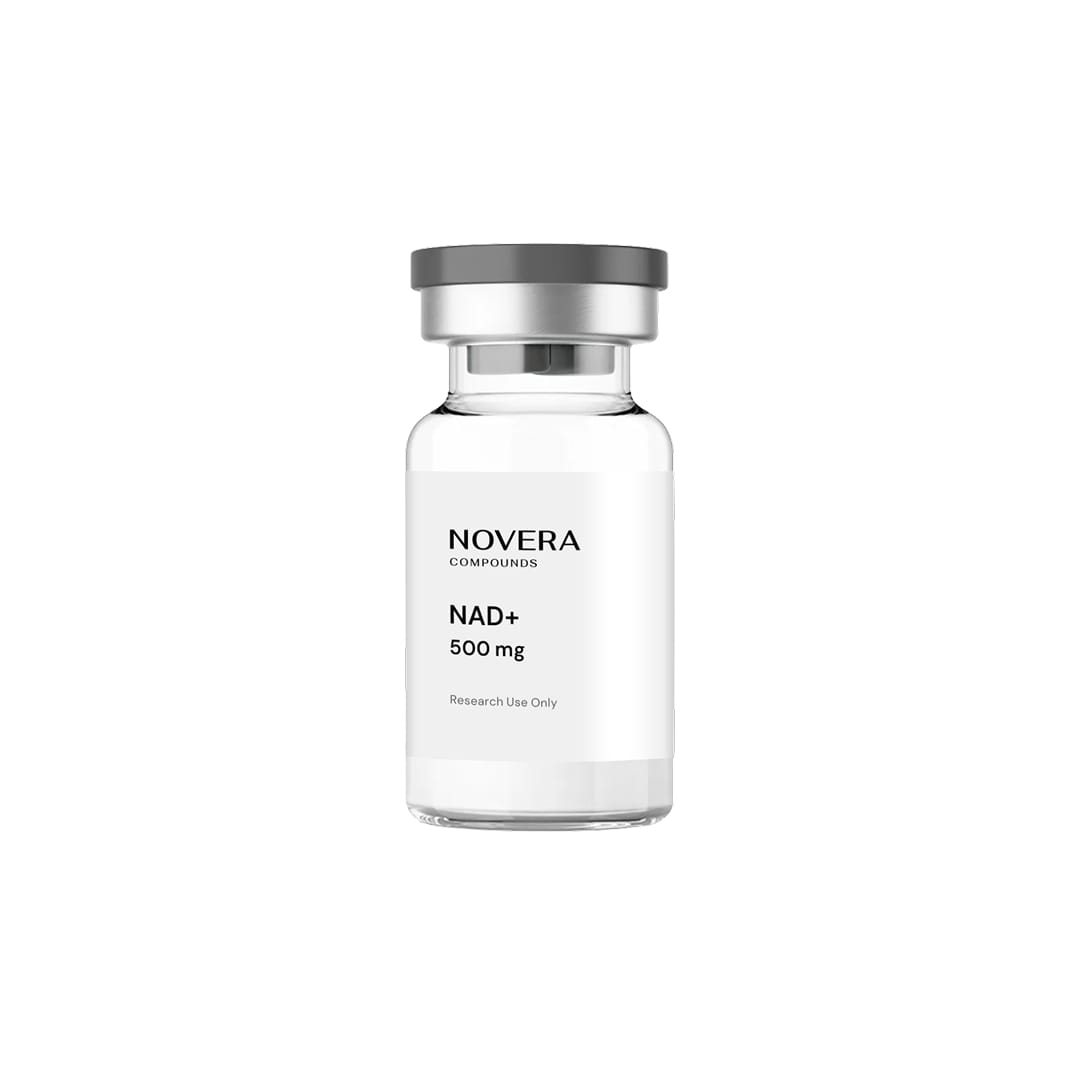
NAD+ (Nicotinamide Adenine Dinucleotide) is a naturally occurring coenzyme found in virtually all living cells and is essential for numerous biological processes involving cellular energy production, metabolic regulation, and intracellular signaling. As a central component of cellular metabolism, NAD+ has become a major focus of scientific investigation within the fields of biochemistry, mitochondrial biology, longevity research, and cellular physiology.
Researchers have extensively studied NAD+ due to its critical role in oxidation-reduction (redox) reactions, mitochondrial function, DNA repair pathways, and cellular stress-response mechanisms. Interest in NAD+ has expanded significantly as scientists continue to explore its involvement in age-related biological processes and cellular maintenance systems.
For laboratory research and analytical purposes only. Not intended for human consumption, therapeutic use, or clinical application.
Chemical Makeup
Molecular Formula: C21H27N7O14P2
Molecular Weight: 663.43 g/mol
Other Known Titles: nicotinamide adenine dinucleotide
Product Overview
NAD+ is a coenzyme that functions as a key electron carrier in cellular metabolic processes. It participates in numerous biochemical reactions that support energy production, cellular communication, and physiological regulation.
Scientific investigations have examined the role of NAD+ across a wide range of biological systems, making it one of the most extensively studied molecules in modern cellular biology.
Current areas of scientific interest include:
- Cellular energy metabolism research
- Mitochondrial function studies
- Longevity and healthy aging investigations
- DNA repair pathway research
- Cellular stress-response mechanisms
- Metabolic regulation studies
- Sirtuin and enzyme signaling research
Due to its fundamental importance in cellular physiology, NAD+ remains a cornerstone molecule in metabolic and longevity-focused research.
Technical Specifications
| Parameter | Specification |
| Product Name | NAD+ |
| Full Name | Nicotinamide Adenine Dinucleotide |
| Compound Class | Biological Coenzyme |
| Molecular Type | Dinucleotide Cofactor |
| Molecular Formula | C21H27N7O14P2 |
| Molecular Weight | 663.43 g/mol |
| Purity | Research Grade |
| Appearance | Lyophilized Powder |
| Solubility | Suitable for laboratory reconstitution |
| Storage Conditions | Store according to product documentation |
| Intended Use | Research and Laboratory Applications Only |
Scientific Background
NAD+ is present in all living cells and serves as a critical component of cellular metabolism. Its primary function involves facilitating electron transfer during biochemical reactions, enabling cells to generate energy and maintain metabolic activity.
Beyond its traditional role in energy production, research has demonstrated that NAD+ participates in numerous cellular pathways related to DNA maintenance, gene regulation, mitochondrial communication, and stress adaptation.
As scientific understanding of these pathways has expanded, NAD+ has become a central focus within aging, metabolic, and cellular health research.
Research Applications
Cellular Energy Metabolism Studies
One of the primary areas of investigation involving NAD+ centers on cellular energy production.
Researchers have examined how NAD+ functions within metabolic pathways responsible for converting nutrients into usable cellular energy. These studies continue to improve understanding of the biochemical processes that sustain cellular activity and physiological function.
This remains one of the most fundamental aspects of NAD+ research.
Mitochondrial Function Research
Mitochondria are responsible for generating the majority of cellular energy through oxidative metabolism.
Scientific investigations have explored how NAD+ participates in mitochondrial processes that regulate energy production, metabolic efficiency, and cellular adaptation. Researchers continue to study the relationship between NAD+ availability and mitochondrial performance.
These investigations contribute significantly to modern mitochondrial biology.
DNA Repair and Genomic Stability Studies
NAD+ has been studied extensively for its involvement in cellular systems responsible for maintaining genomic integrity.
Researchers have investigated how NAD+-dependent enzymes participate in DNA repair pathways and cellular responses to genetic damage. Understanding these mechanisms is considered important for advancing knowledge of cellular maintenance and long-term biological function.
This area remains a major focus of contemporary molecular biology research.
Longevity and Healthy Aging Research
Interest in NAD+ has grown substantially within the field of longevity science.
Experimental studies have examined the relationship between NAD+ levels and age-associated biological processes. Researchers continue to investigate how cellular NAD+ availability may influence mechanisms involved in maintenance, adaptation, and long-term physiological function.
These investigations have positioned NAD+ as a prominent molecule within aging research.
Cellular Stress Response Investigations
Cells possess sophisticated systems for responding to environmental and metabolic stressors.
Researchers have explored the role of NAD+ in pathways associated with stress adaptation, cellular resilience, and physiological recovery mechanisms. These studies seek to better understand how cells maintain function under changing biological conditions.
Further research continues to expand understanding of these complex processes.
Sirtuin and Enzyme Signaling Research
NAD+ serves as a required cofactor for several important enzyme families, including sirtuins and poly(ADP-ribose) polymerases (PARPs).
Researchers have investigated how NAD+-dependent enzymes influence cellular regulation, gene expression, metabolic adaptation, and biological maintenance systems. These interactions represent a rapidly growing area of scientific interest.
Such studies continue to reveal the broader regulatory functions of NAD+ within living systems.
Mechanisms Under Investigation
Current scientific literature suggests that NAD+ participates in biological processes that include:
- Cellular energy production and metabolism
- Mitochondrial function and signaling
- DNA repair mechanisms
- Cellular stress-response pathways
- Regulation of NAD+-dependent enzymes
- Maintenance of metabolic homeostasis
Many aspects of these mechanisms remain active areas of research and continue to be explored in experimental settings.
Research Significance
NAD+ is considered one of the most important biological cofactors in cellular physiology due to its involvement in energy metabolism, genomic maintenance, and cellular signaling.
Its central role across numerous biological systems has made it an indispensable research tool for scientists investigating metabolism, aging, mitochondrial biology, and molecular regulation.
As interest in cellular longevity and metabolic health continues to expand, NAD+ remains one of the most extensively studied compounds in modern biomedical research.
Quality and Research Standards
Our research-grade NAD+ is manufactured under strict quality-control procedures designed to support consistency, purity, and reliability for laboratory applications.
Each production batch undergoes analytical testing to help ensure product integrity and suitability for scientific investigation.
Researchers should follow all established laboratory handling, storage, and safety protocols when working with biochemical and peptide-related research materials.
Important Notice
This product is supplied exclusively for:
- Scientific research
- Laboratory investigation
- Analytical testing
- Educational applications
This material is not intended for:
- Human consumption
- Veterinary administration
- Medical treatment
- Diagnostic use
- Therapeutic application
Users are responsible for complying with all applicable regulations and institutional requirements concerning the purchase, handling, storage, and use of research compounds.
References
NAD+ has been the subject of extensive scientific investigation in the fields of biochemistry, mitochondrial biology, cellular metabolism, molecular genetics, longevity science, and biomedical research. Researchers are encouraged to consult peer-reviewed literature and experimental studies for detailed methodologies and findings relating to this compound.
Authoritative Sources
For a science-focused overview of NAD+ pathways, the NAD+ metabolism review in PMC describes its role in cellular energy and repair signaling. The Cleveland Clinic NAD overview gives plain-language context on nicotinamide adenine dinucleotide in the body.
This content is for informational purposes only and is not a substitute for professional medical advice.
Express Shipping - from $29.99
Shipping with this method takes 3-5 days
Prices:
- Dry-Packed Products $29.99
- Cold-Packed Products $39.99
Shipping Countries:
- United States (all contiguous states**)
- Worldwide (excludes some countries***)
Standard Shipping - $19.99
Shipping with this method takes 5-10 days
Prices:
- Dry-Packed Products $19.99
- Not available for Cold-Packed products
Shipping Countries:
- United States (all contiguous states**)
- Worldwide (excludes some countries***)
What does NAD+ do in the body?
NAD+ stands for nicotinamide adenine dinucleotide. It is a coenzyme involved in energy metabolism, oxidation-reduction reactions, and cellular signaling. Your cells use NAD+ in pathways connected with converting nutrients into usable energy and supporting normal repair processes. Those roles explain why NAD+ is discussed in cellular health, but they do not prove that a supplement will treat fatigue, aging, or a medical condition.
Is NAD+ the same as vitamin B3?
NAD+ is not exactly the same as vitamin B3. Vitamin B3 is a family of nutrients that includes niacin and nicotinamide, which the body can use in pathways related to NAD+ production. NAD+ is the coenzyme involved in cellular reactions. Because product labels may list NAD+, a precursor, or another related ingredient, it is important to check the exact ingredient name before comparing supplements.
What are possible downsides of NAD+ supplements?
Possible downsides include side effects, uncertain benefit claims, and interactions with an existing health plan. Some people may notice digestive upset, headache, flushing, sleep changes, or feeling unwell after adding a new supplement. Evidence for broad anti-aging or energy claims is still limited. People with chronic conditions, cancer treatment, pregnancy, breastfeeding, or multiple medicines should ask a healthcare professional before using NAD+.
What should I ask my clinician before using NAD+?
Ask whether NAD+ fits your health history, medicines, and supplement routine. Bring the product label or listing details, including the form, serving amount, other ingredients, and how often the label suggests use. It is also helpful to ask what side effects to watch for and whether any medicines, procedures, or health conditions make NAD+ a poor choice for you.
Is NAD+ similar to Ozempic?
No. NAD+ is not Ozempic and is not a GLP-1 weight-loss or diabetes medicine. NAD+ is a coenzyme involved in cellular metabolism, while Ozempic is a prescription medication with a specific active ingredient and approved medical uses. They should not be compared as substitutes. If weight, blood sugar, or metabolic symptoms are the concern, a clinician can help choose an evidence-based plan.
Rewards Program
Earn points on birthdays, product orders, reviews, friend referrals, and more! Enjoy your medication at unparalleled discounts while reaping rewards for every step you take with us.
You can read more about rewards here.
POINT VALUE
How to earn points
- 1Create an account and start earning.
- 2Earn points every time you shop or perform certain actions.
- 3Redeem points for exclusive discounts.
You Might Also Like
Select options
This product has multiple variants. The options may be chosen on the product page
Select options
This product has multiple variants. The options may be chosen on the product page
Select options
This product has multiple variants. The options may be chosen on the product page
Select options
This product has multiple variants. The options may be chosen on the product page