
Please note: a valid prescription is required for all prescription medication.
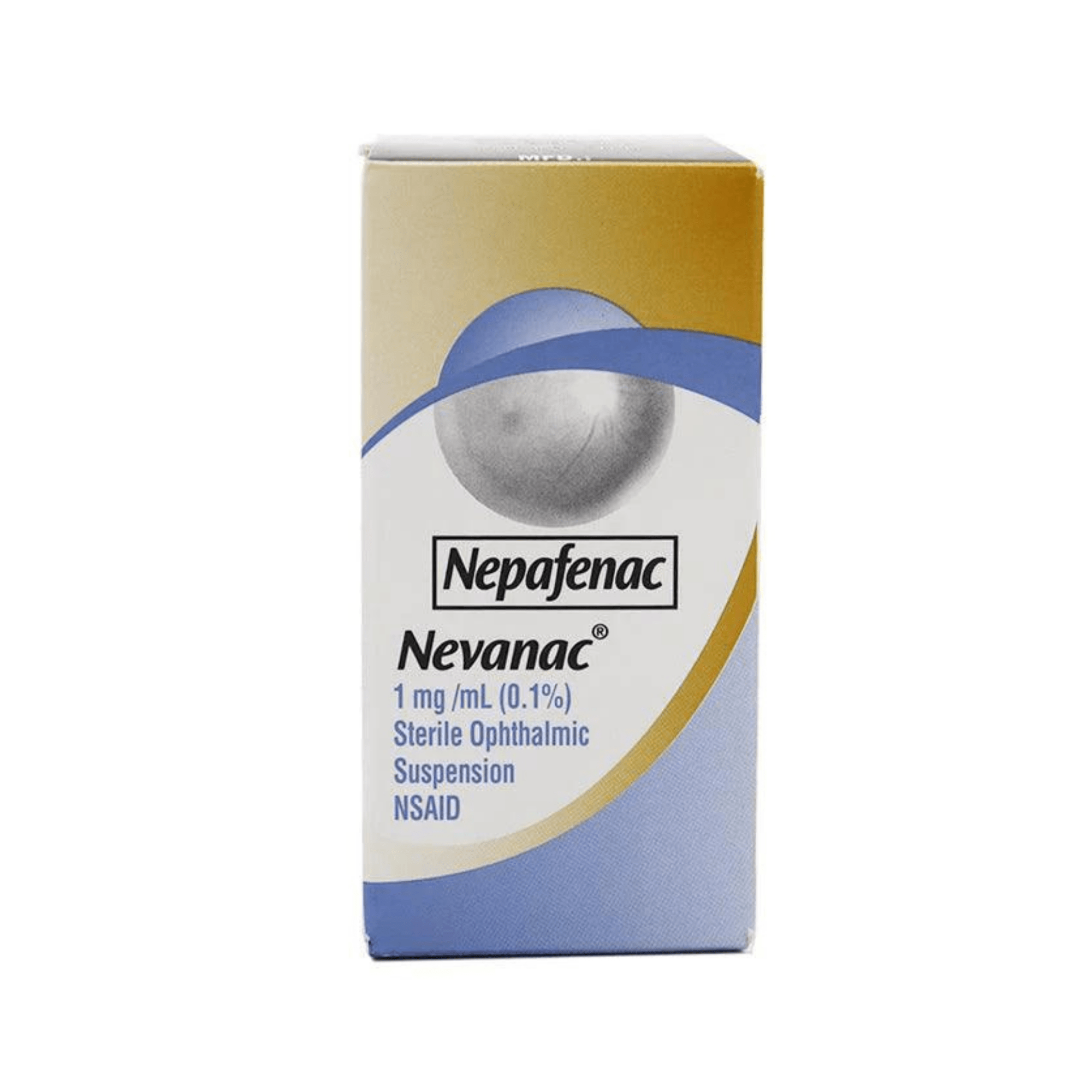
Nevanac
Buy Nevanac Online
Secure Encrypted Payments
Nevanac is a nepafenac ophthalmic medicine used in the eye to help manage pain and inflammation associated with cataract surgery. You can buy Nevanac online and choose the strength shown during ordering that matches your surgeon’s directions. Current pricing can vary by bottle, strength, source, and whether a brand or generic presentation is supplied.
Nevanac eye drops belong to a nonsteroidal anti-inflammatory drug class, often shortened to NSAID. They are not steroid drops, and they are not intended for routine redness, unexplained eye pain, or casual self-treatment. Because cataract recovery is time-sensitive, the most important details to match are the treated eye, the surgery date, the strength, and the exact schedule your eye-care team provided.
Nevanac Eye Drops Price and Strength Selection
The Nevanac price shown at checkout reflects the medicine and package available through the store at that time. Nevanac eye drops cost may differ from one source to another because brand status, generic nepafenac availability, bottle size, concentration, and pharmacy policies can all affect the final amount. If you are comparing nepafenac eye drop price across sources, match the active ingredient, strength, and directions rather than relying on the product name alone.
Marketed nepafenac products may appear as 0.1% or 0.3% ophthalmic preparations in different markets. Some people search for Nevanac 0.1, Nevanac 0.3, or nepafenac 0.1 eye drops when trying to match what their surgeon wrote. Select the dose or strength displayed during ordering only when it aligns with the instructions you were given for cataract-surgery recovery.
U.S. customers may use a US delivery from Canada service for eligible pharmacy products. Products are supplied through licensed pharmacies, and order details may be reviewed before the medicine is released for use. If the pharmacy needs clarification, accurate clinician contact information and a clear copy of the eye-drop directions can help prevent avoidable delays.
Quick tip: Keep a photo of the bottle label and written drop schedule on your phone for follow-up visits.
How to Order Nevanac for Cataract Surgery Recovery
Nevanac is most often used when an ophthalmologist or cataract surgeon includes nepafenac in the postoperative plan. The medicine is applied to the affected eye, and the timing commonly begins around the cataract procedure and continues for a limited recovery period. The exact plan depends on the formulation and the surgeon’s protocol, so the label and written instructions should guide every dose.
Before ordering, make sure the instructions identify which eye is being treated. Cataract patients may receive several eye medicines at once, including an antibiotic, a steroid, or another anti-inflammatory drop. Those medicines are not interchangeable, and each bottle may have its own timing and spacing. If you are browsing broader eye-care treatments, the ophthalmology products category can help you see related eye medications without replacing clinician guidance.
- Use context: pain and inflammation after cataract surgery.
- Active ingredient: nepafenac, an ophthalmic NSAID.
- Product type: eye-drop medicine used directly in the eye.
- Important match: strength, treated eye, and schedule from the surgeon.
Do not start Nevanac for a new red eye, eye injury, discharge, or vision change unless an eye-care professional has assessed the problem. Surgery changes the surface of the eye, and new symptoms can have causes that need urgent attention. If you are exploring general symptom topics, the eye inflammation and eye pain sections may support discussion with a clinician.
What Nevanac Treats and How It Works
Nevanac is used in adults to help prevent or treat pain and inflammation linked with cataract surgery. Cataract surgery removes the cloudy lens inside the eye, and inflammation is a normal part of healing. An ophthalmic NSAID helps reduce inflammatory substances in the eye, which can ease postoperative discomfort and swelling when used as directed.
Nepafenac is a prodrug, meaning it changes into its active form after entering eye tissues. That feature is part of how the medicine is designed, but it does not make the drop appropriate for every patient. People with corneal surface disease, severe dry eye, diabetes, rheumatoid arthritis, repeated eye surgery, or a history of slow healing may need closer monitoring.
Some patients ask whether Nevanac is the same as a steroid. It is not. Steroid eye drops and NSAID eye drops both reduce inflammation, but they work differently and may be used together or separately depending on the surgical plan. Do not substitute one for the other unless your eye-care team changes the regimen.
| Question | Practical answer |
|---|---|
| What is it for? | Post-cataract-surgery eye pain and inflammation. |
| Is it a steroid? | No, it is an ophthalmic NSAID. |
| Can it replace another drop? | Only if the surgeon changes the written schedule. |
| Can it be used for any red eye? | No, unexplained symptoms need assessment. |
How Long to Use It and Eye-Drop Technique
How long you use Nevanac depends on the strength, label directions, and cataract-surgery plan. Official labeling for some nepafenac products describes starting shortly before surgery, continuing on the day of surgery, and using the medicine for a limited time afterward. Other formulations may have different schedules, so do not extend or shorten treatment without clinical direction.
Good technique helps keep the bottle clean and improves the chance that each drop reaches the eye. Wash your hands, shake the bottle if the label identifies the medicine as a suspension, tilt your head back, and avoid touching the dropper tip to the eye, eyelids, fingers, or skin. After placing the drop, close the eye gently rather than squeezing hard.
If you use more than one eye medicine, leave a short gap between drops unless your surgical team gave a different spacing plan. This helps prevent one drop from washing out another. Ointments, if used, are often applied after liquid drops, but your written postoperative schedule should take priority.
Avoid contact lenses unless the surgeon says they are safe after cataract surgery. Also avoid driving, reading small print, or using tools immediately after instillation if vision is temporarily blurred. These precautions are practical safety steps, not signs that the medicine is failing.
Brand, Generic Nepafenac, and Form Differences
Nevanac is a brand name for nepafenac ophthalmic medicine. A generic for Nevanac may be available in some markets, and people may see terms such as nepafenac eye drops generic or Nevanac eye drops generic when comparing products. Availability and substitution rules can differ by country, pharmacy source, and the exact wording of the clinician’s instructions.
Brand and generic presentations should be matched carefully because eye medications are often written with strength and dosing in mind. A nepafenac ophthalmic eye drop with a different concentration may not use the same schedule. If the bottle, strength, or label directions do not match what you expected, ask for clarification before placing drops in the eye.
Alcon Nevanac is commonly associated with the branded product name in many markets. The manufacturer name can help identify the brand, but the active ingredient and concentration remain the key clinical details. When browsing products by source, country filters such as Canada-origin products and India-origin products are useful for product browsing, not for changing postoperative therapy on your own.
Storage, Handling, and Travel Basics
Store Nevanac exactly as the bottle label directs. Keep the cap tightly closed, protect the dropper tip from contamination, and keep the medicine away from children and pets. Do not share cataract-surgery eye drops with another person, even if that person had the same procedure.
Check the bottle before first use. If the tamper seal is broken, the label is damaged, the liquid looks different from what the label describes, or the expiry date has passed, contact the pharmacy before using it. Because the product is used in a healing eye, contamination risk matters more than it might with many non-eye medicines.
Travel during cataract recovery requires simple planning. Keep the bottle accessible, carry the written schedule, and pack it in a way that protects the cap and tip. If your order includes prompt, express shipping, still plan ahead so your postoperative medicines are on hand before the surgery date whenever possible.
For broader educational reading, the ophthalmology articles section covers eye-care topics. General reading should not replace instructions from the surgeon who examined your eye.
Side Effects, Warnings, and Monitoring
Common side effects of Nevanac eye drops can include brief burning, stinging, watering, temporary blurred vision, eye irritation, or a feeling that something is in the eye. These effects may settle quickly. If symptoms become stronger, last longer than expected, or feel different from the recovery plan described by your surgeon, contact an eye-care professional.
More serious concerns include increasing eye pain, worsening redness, discharge, swelling, light sensitivity, new vision changes, or signs of an allergic reaction. Allergic symptoms may include rash, itching, facial swelling, wheezing, or trouble breathing. Sudden vision loss or a rapidly worsening eye after surgery should be treated as urgent.
Topical ophthalmic NSAIDs can affect corneal healing in some higher-risk patients. Extra caution may be needed if you have severe dry eye, corneal disease, diabetes, rheumatoid arthritis, bleeding tendencies, or a history of multiple eye surgeries. Tell the surgical team about reactions to aspirin or other NSAIDs, because sensitivity to one medicine in this class may matter for another.
Bleeding risk is another reason to share a complete medicine history. People taking anticoagulants or other medicines that affect bleeding should make sure the eye-care team knows. Eye drops usually create less whole-body exposure than tablets, but safety decisions after surgery depend on the full clinical picture.
- Common effects: brief sting, blur, watering, or eye irritation.
- Urgent signs: sudden vision loss, severe pain, or rapidly worsening redness.
- Allergy concerns: swelling, wheezing, rash, or intense itching.
- Healing risks: corneal disease, severe dry eye, diabetes, or repeat surgery.
- Medicine history: disclose aspirin sensitivity, NSAID reactions, and blood thinners.
Why it matters: Cataract surgery recovery can change quickly, and early symptom review can protect vision.
Alternatives and Related Eye-Care Choices
Other postoperative anti-inflammatory choices may include ketorolac eye drops, bromfenac eye drops, or steroid drops. These medicines are not automatic substitutes for Nevanac. Their dosing, strengths, side effect profiles, and reasons for selection can differ, especially when the surgeon is balancing inflammation control with corneal healing.
If a different anti-inflammatory is suggested, ask whether the change affects timing before surgery, the number of daily drops, or the length of postoperative use. Convenience matters, but it should not outweigh the clinical reason for a chosen product. A simpler schedule is only helpful when it is appropriate for the eye being treated.
| Option | How it differs | Question to ask |
|---|---|---|
| Ketorolac eye drops | Another ophthalmic NSAID with its own schedule. | Is this preferred for my recovery plan? |
| Bromfenac eye drops | NSAID eye medicine with different formulations. | Does the dosing schedule fit my surgery instructions? |
| Steroid eye drops | Different anti-inflammatory class. | Is it being used with or instead of an NSAID? |
When comparing choices, focus on the active ingredient, concentration, route, treated eye, and duration. Similar-sounding eye drops can have meaningfully different instructions. If a pharmacy supplies a different brand or generic nepafenac presentation, verify the strength and label directions before use.
Authoritative Sources
For U.S. labeling details, see the FDA-approved prescribing information.
For Canadian regulatory product information, see the Health Canada Drug Product Register record.
For European product context, see the European Medicines Agency product page.
This content is for informational purposes only and is not a substitute for professional medical advice.
Express Shipping - from $29.99
Shipping with this method takes 3-5 days
Prices:
- Dry-Packed Products $29.99
- Cold-Packed Products $39.99
Shipping Countries:
- United States (all contiguous states**)
- Worldwide (excludes some countries***)
Standard Shipping - $19.99
Shipping with this method takes 5-10 days
Prices:
- Dry-Packed Products $19.99
- Not available for Cold-Packed products
Shipping Countries:
- United States (all contiguous states**)
- Worldwide (excludes some countries***)
What is Nevanac used for?
Nevanac is used in the eye to help manage pain and inflammation associated with cataract surgery. It is a nepafenac ophthalmic NSAID, not a steroid, and it should be used according to the cataract-surgery instructions provided by the eye-care team.
How long should Nevanac eye drops be used?
The length of use depends on the strength, label directions, and the surgeon’s postoperative plan. Some nepafenac regimens begin around the time of cataract surgery and continue for a limited period afterward. Do not extend or stop the drops early without clinical direction.
What should I avoid while using Nevanac?
Avoid touching the dropper tip to the eye, eyelids, skin, or fingers. Do not share the bottle, and avoid contact lenses unless the surgeon says they are allowed after surgery. If vision is temporarily blurred after a drop, wait until sight is clear before driving or using tools.
What are the side effects of Nevanac eye drops?
Common effects can include brief burning, stinging, watering, irritation, temporary blurred vision, or a foreign-body feeling. Seek prompt medical attention for worsening pain, increasing redness, discharge, swelling, light sensitivity, sudden vision changes, or signs of allergy.
Is there a generic for Nevanac?
Generic nepafenac eye drops may be available in some markets, but availability and substitution depend on the exact product, strength, and pharmacy source. Match the active ingredient, concentration, and directions to the cataract-surgery plan before using any substituted product.
Rewards Program
Earn points on birthdays, product orders, reviews, friend referrals, and more! Enjoy your medication at unparalleled discounts while reaping rewards for every step you take with us.
You can read more about rewards here.
POINT VALUE
How to earn points
- 1Create an account and start earning.
- 2Earn points every time you shop or perform certain actions.
- 3Redeem points for exclusive discounts.
You Might Also Like
Select options
This product has multiple variants. The options may be chosen on the product page
Select options
This product has multiple variants. The options may be chosen on the product page
Select options
This product has multiple variants. The options may be chosen on the product page
Select options
This product has multiple variants. The options may be chosen on the product page