
Please note: a valid prescription is required for all prescription medication.
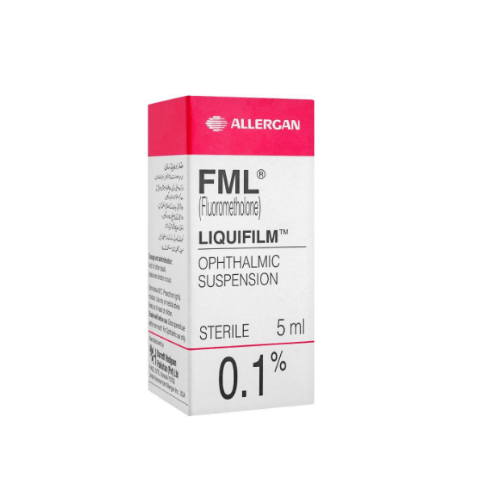
FML Liquifilm Eye Drops
Buy FML Liquifilm Eye Drops Online
Secure Encrypted Payments
FML Liquifilm Eye Drops contain fluorometholone, a corticosteroid medicine used in the eye to reduce steroid-responsive inflammation. You can buy FML Liquifilm Eye Drops online and choose the strength shown during ordering, matching it to your clinician’s directions. This ophthalmic suspension is used for conditions where swelling, redness, itching, or irritation involve the front part of the eye.
Fluorometholone acts locally on the eye surface to calm inflammatory pathways. The Liquifilm suspension helps the active ingredient remain in contact with the eye long enough to work, while the drop format keeps use practical for short courses and follow-up plans.
FML Liquifilm Price, Strength, and Ordering Details
FML Liquifilm price can vary by strength, bottle size, manufacturer supply, and cash-pay ordering needs. Current product pricing is shown during ordering so you can review the cost before completing checkout. Choose the dose or strength displayed for the product and make sure it matches the directions given by your eye-care clinician.
Many people look for FML Liquifilm cost information when they are paying out of pocket, replacing a local fill, or planning a refill before travel. Canadian pricing may help some U.S. customers compare their options, especially when they need a brand product rather than switching to another steroid drop. BorderFreeHealth uses licensed pharmacy channels, and order details may be reviewed before the pharmacy supplies the medication.
Quick tip: Keep the bottle label and dosing directions together so refills match your treatment plan.
What FML Liquifilm Treats
FML Liquifilm is used for corticosteroid-responsive inflammation affecting the conjunctiva, cornea, and anterior segment of the eye. In plain terms, it may be used when the front surface of the eye is inflamed and a clinician has decided that a steroid drop is appropriate. Common situations include allergic conjunctivitis flares, inflammation after minor eye procedures, and irritation related to injury or other non-infectious causes.
Fluorometholone does not treat every red or painful eye. Steroid drops can worsen or hide certain infections, so a clinician should assess symptoms such as discharge, severe pain, light sensitivity, or vision changes. For background on allergic eye symptoms, see allergic conjunctivitis. For broader inflammation context, the eye inflammation section may also help you understand why diagnosis matters.
FML Liquifilm belongs to the ophthalmic corticosteroid class. Steroids can be highly useful when inflammation is the main problem, but they also require careful timing and monitoring. That balance is why the product is usually used for a defined course rather than as a casual redness reliever.
How Fluorometholone Works in the Eye
Fluorometholone reduces inflammation by suppressing immune signals that drive swelling, redness, itching, and irritation. It is often described as a “soft” steroid because it may have less tendency to raise eye pressure than some stronger ophthalmic steroids, although pressure increases can still occur. The practical goal is symptom control with the lowest effective exposure for the shortest appropriate period.
FML Liquifilm is an ophthalmic suspension, which means the medicine particles are dispersed in liquid. Shake the bottle well before each use so the dose is evenly mixed. If the suspension is not shaken, the amount of medicine delivered may vary from drop to drop.
Because the medicine acts on the eye surface, it can target local inflammation with limited whole-body exposure. Even so, eye-specific risks remain important. Follow-up may be needed if use continues beyond a short course, especially for people with glaucoma risk, previous steroid response, or a history of elevated eye pressure.
How to Use FML Liquifilm Eye Drops
Use FML Liquifilm exactly as directed by your clinician. Typical label guidance for fluorometholone ophthalmic suspension often involves one drop into the affected eye several times daily, with frequency adjusted to severity and response. Do not increase the number of drops or extend treatment longer than directed, because steroid-related eye risks rise with longer or more frequent use.
- Wash your hands before handling the bottle.
- Shake the bottle well because the medicine is a suspension.
- Tilt your head back and gently pull down the lower eyelid.
- Place one drop into the pocket without touching the bottle tip.
- Close the eye gently and press the inner corner for about one minute.
- Replace the cap right away to reduce contamination risk.
If you use more than one eye product, separate drops by at least five to ten minutes. Ointments or gels usually go last because they can block other drops from spreading evenly. Avoid touching the dropper tip to the eye, eyelid, fingers, counter, or any other surface.
Soft contact lenses should be removed before using preserved steroid drops. Wait at least 15 minutes before reinserting lenses if your clinician says lenses are appropriate during treatment. During active inflammation, many people are advised to avoid lens wear until the eye has improved.
How Long It May Take to Feel Relief
Some people notice less redness, itching, or swelling after treatment is underway, but the timing depends on the cause and severity of inflammation. A mild allergic flare may feel different from post-procedure irritation or inflammation involving the cornea. Improvement should be judged against the plan given by your clinician, not by comfort alone.
Call for reassessment if symptoms worsen, new discharge develops, pain increases, or vision becomes blurred beyond the brief blur that can happen right after a drop. Steroids can make an infection look less obvious while it progresses. Prompt review is important when symptoms do not follow the expected pattern.
Do not stop suddenly after intensive or longer use unless your clinician tells you to do so. A taper may be recommended in some cases to reduce rebound inflammation. Short courses may not require the same approach, so the stopping plan should match the condition being treated.
Storage, Handling, and US Delivery from Canada
Store FML Liquifilm at room temperature unless the bottle label gives different instructions. Keep the cap tightly closed and keep the medicine away from children and pets. Do not freeze the bottle, and do not use it if the liquid appears contaminated or the bottle has been damaged.
When traveling, keep the bottle in your hand luggage with its original pharmacy label. Eye drops can leak if stored sideways or squeezed in a bag, so carry them upright when possible. If you are arranging US delivery from Canada, prompt, express shipping may be available as part of the order process.
Discard the bottle according to the label or pharmacy instructions after the recommended in-use period. Eye drop bottles can become contaminated over time, even when they look normal. Replacing the bottle on schedule helps reduce the chance of introducing bacteria into an irritated eye.
Side Effects, Warnings, and Monitoring
Common side effects of FML Liquifilm can include temporary burning, stinging, watery eyes, mild irritation, dryness, foreign-body sensation, or short-lived blurred vision after application. These effects are often brief. Avoid driving or using machinery until your vision is clear after a dose.
More serious risks can occur with ophthalmic steroids. These include increased intraocular pressure, glaucoma, cataract formation with prolonged use, delayed wound healing, and secondary eye infections. People with a thinning cornea or sclera may have a higher risk of tissue problems, including perforation. Longer courses often require eye pressure monitoring.
Do not use steroid drops for suspected viral, fungal, or mycobacterial eye disease unless a specialist is supervising the plan. Herpes simplex keratitis requires particular caution because steroids can worsen disease activity. Tell your clinician if you have glaucoma, cataracts, past steroid pressure response, corneal thinning, recent eye surgery, or any history of serious eye infection.
Seek urgent medical care for severe eye pain, sudden vision changes, intense redness, worsening light sensitivity, a new white spot on the cornea, or thick discharge. These symptoms may signal infection, pressure problems, or another condition that needs prompt evaluation.
Interactions and Products Used With FML Liquifilm
Eye drops can interact in practical ways even when they do not interact throughout the body. Using several drops back to back can wash out the first medicine or increase irritation. Space products apart, use them in the sequence recommended by your clinician, and avoid sharing eye drops with anyone else.
Tell your clinician about all other eye medicines, including antibiotic drops, antiviral drops, glaucoma treatments, artificial tears, allergy drops, and topical anti-inflammatory products. Topical NSAIDs and steroids may both affect corneal healing in certain settings. Other steroid medicines, including tablets, inhalers, sprays, creams, or injections, can also matter for people at risk of steroid side effects.
Preservatives such as benzalkonium chloride may irritate sensitive eyes or absorb into soft contact lenses. If you have reacted to preservatives before, mention that before starting treatment. People who need frequent eye drops may need a plan that reduces preservative exposure.
When FML Liquifilm May Not Be the Right Choice
FML Liquifilm is not the best fit for every red, itchy, or swollen eye. It should generally be avoided in untreated viral eye infections, fungal keratitis, mycobacterial eye disease, and situations where the cause of inflammation has not been clarified. Steroids can reduce visible inflammation while allowing an infection to spread.
Extra caution is needed for people with glaucoma, elevated eye pressure, cataract risk, diabetes-related eye concerns, corneal thinning, or recent eye surgery. Children and older adults may use fluorometholone when a clinician determines it is appropriate, but they still need a plan for monitoring and follow-up.
Why it matters: A steroid drop can feel soothing while still being unsafe for the wrong diagnosis.
FML Liquifilm Compared With Other Eye Inflammation Options
FML Liquifilm is one of several ophthalmic steroids used for inflammation. Clinicians may choose between fluorometholone, loteprednol, prednisolone, dexamethasone, or other options based on the diagnosis, desired potency, pressure risk, treatment duration, and prior response. A lower-potency steroid may be enough for some allergic flares, while other conditions need a different approach.
Loteprednol products are common alternatives in steroid-responsive eye inflammation. For example, some clinicians consider Lotemax formulations or Alrex for selected cases. The article Lotemax and Alrex comparison explains how two related steroid options may differ in use context. You can also browse the ophthalmology category for other eye-care medicines available through the store.
Non-steroid treatments may be better when allergy control, dry eye management, infection treatment, or pressure lowering is the main goal. If your symptoms include chronic dryness rather than inflammation alone, the article on Xiidra for chronic dry eye relief may provide useful context. If glaucoma or pressure control is part of your eye history, the Alphagan eye drops article discusses a different ophthalmology treatment area.
Questions to Ask Before Starting or Refilling
Clear instructions help prevent overuse and underuse. Ask what diagnosis is being treated, which eye or eyes need drops, how often to use them, and when symptoms should start improving. It is also reasonable to ask whether you need an eye pressure check if treatment continues.
- What is causing the inflammation?
- How many days should I use the drops?
- Will I need to taper the dose?
- When should eye pressure be checked?
- Should I stop wearing contact lenses for now?
- What symptoms mean I should call urgently?
- Could an allergy drop or non-steroid option work instead?
Bring your current eye medicines to appointments or keep a written list. That makes it easier to avoid duplicate steroid therapy, conflicting schedules, and contact lens problems. If cost is a concern, ask whether the same active ingredient, a different steroid, or a shorter course would be clinically reasonable.
Authoritative Sources
Official fluorometholone ophthalmic suspension label
This content is for informational purposes only and is not a substitute for professional medical advice.
Express Shipping - from $29.99
Shipping with this method takes 3-5 days
Prices:
- Dry-Packed Products $29.99
- Cold-Packed Products $39.99
Shipping Countries:
- United States (all contiguous states**)
- Worldwide (excludes some countries***)
Standard Shipping - $19.99
Shipping with this method takes 5-10 days
Prices:
- Dry-Packed Products $19.99
- Not available for Cold-Packed products
Shipping Countries:
- United States (all contiguous states**)
- Worldwide (excludes some countries***)
What is FML Liquifilm Eye Drops used for?
FML Liquifilm Eye Drops are used for steroid-responsive inflammation in the front part of the eye, such as inflammation involving the conjunctiva, cornea, or anterior segment. A clinician should confirm that inflammation, not an untreated infection, is the main problem.
Is FML Liquifilm a steroid eye drop?
Yes. FML Liquifilm contains fluorometholone, an ophthalmic corticosteroid. It helps reduce inflammatory symptoms such as redness, swelling, itching, and irritation when a steroid drop is appropriate for the diagnosis.
How many times a day can FML Liquifilm be used?
Use the schedule given by your clinician and the bottle label. Fluorometholone ophthalmic suspension is often used several times daily at the start of treatment, but the exact frequency and duration depend on the condition and response.
How long does FML Liquifilm take to work?
Some people notice improvement after treatment is underway, but timing varies with the cause and severity of inflammation. Contact a clinician if symptoms worsen, vision changes, pain increases, or the eye does not improve as expected.
Can FML Liquifilm raise eye pressure?
Yes. Ophthalmic steroids, including fluorometholone, can increase intraocular pressure in some people and may contribute to glaucoma risk with prolonged use. Longer courses may require pressure monitoring, especially if you have glaucoma risk or a past steroid response.
Can I wear contact lenses while using FML Liquifilm?
Remove soft contact lenses before applying the drops, and wait at least 15 minutes before reinserting them if lens wear is allowed. During active inflammation, your clinician may recommend avoiding contact lenses until the eye improves.
Rewards Program
Earn points on birthdays, product orders, reviews, friend referrals, and more! Enjoy your medication at unparalleled discounts while reaping rewards for every step you take with us.
You can read more about rewards here.
POINT VALUE
How to earn points
- 1Create an account and start earning.
- 2Earn points every time you shop or perform certain actions.
- 3Redeem points for exclusive discounts.
You Might Also Like
Select options
This product has multiple variants. The options may be chosen on the product page
Select options
This product has multiple variants. The options may be chosen on the product page
Select options
This product has multiple variants. The options may be chosen on the product page
Select options
This product has multiple variants. The options may be chosen on the product page