
Please note: a valid prescription is required for all prescription medication.
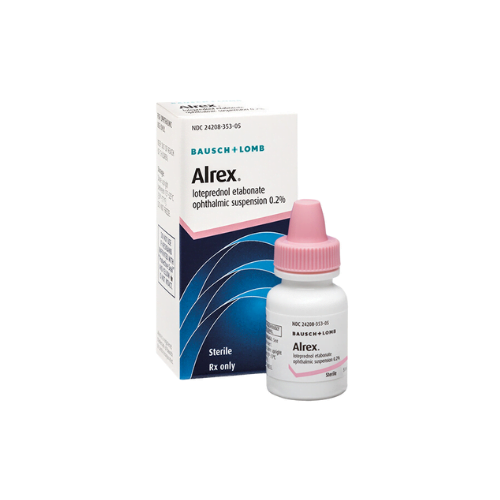
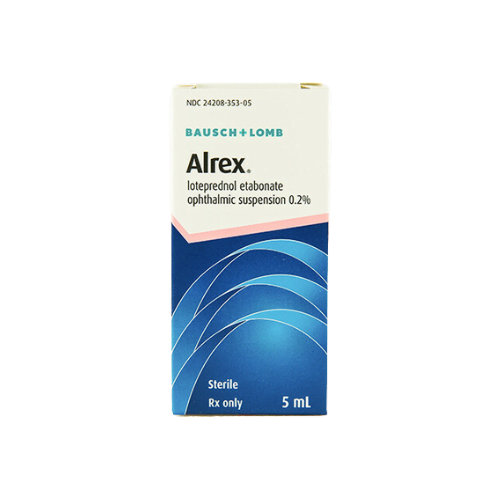

Alrex
Buy Alrex Eye Drops Online
Secure Encrypted Payments
Alrex is a loteprednol etabonate ophthalmic suspension used in the eye for temporary relief of signs and symptoms of seasonal allergic conjunctivitis. You can buy Alrex eye drops online, view the current Alrex price, and choose the strength and quantity shown during ordering to match the directions from your eye care clinician. The commonly referenced product is Alrex 0.2% ophthalmic suspension, a corticosteroid eye drop made for short-term allergy-related eye inflammation.
Seasonal allergic conjunctivitis can cause itchy, red, watery, irritated eyes when pollen or other allergens trigger inflammation on the eye surface. Alrex eye drops help reduce that inflammatory response. Because steroid eye drops can raise eye pressure or worsen certain eye infections, the medicine should be used only as directed and for the intended short course.
Alrex Price, Strength, and Ordering Details
Alrex cost can vary by bottle size, pharmacy source, and whether you are paying out of pocket. During ordering, match the strength and quantity displayed to your clinician’s directions, then view the current cash price before completing your request. If you are comparing Alrex eye drops price without insurance, the total may differ from local retail pricing because product source, handling, and order requirements can vary.
Alrex loteprednol etabonate 0.2% is the strength most commonly associated with this allergy eye drop. Existing product information describes a 5 mL bottle as a common presentation, although bottle availability can vary by market. Do not switch to a different steroid strength or related eye drop unless your clinician says it fits your diagnosis and eye exam findings.
We work with licensed pharmacies and may review order details so the medicine, strength, and quantity are consistent with the information provided. Orders may ship with prompt, express shipping once pharmacy processing is complete. If you are exploring broader eye-care categories, the ophthalmology section can help you find related treatments used for eye conditions.
What Alrex Eye Drops Treat
Alrex ophthalmic suspension is indicated for temporary relief of the signs and symptoms of seasonal allergic conjunctivitis. In plain terms, it is used when seasonal allergies affect the eyes and cause itching, redness, swelling, watering, or general irritation. The condition is different from an eye infection, even though some symptoms can overlap.
Allergic conjunctivitis happens when the immune system reacts to allergens such as pollen, grass, weeds, mold spores, or outdoor irritants. The eye surface releases inflammatory chemicals, which can make the eyes feel gritty, itchy, and watery. Alrex is a corticosteroid, so it works by calming inflammation rather than simply lubricating the eye or blocking histamine alone.
For condition background, the allergic conjunctivitis section explains common triggers and symptoms. That context can help you describe your symptoms more clearly, especially if you are unsure whether your discomfort is allergy-related, dry-eye related, or possibly infectious.
How Loteprednol Etabonate Works
Loteprednol etabonate is an ophthalmic corticosteroid, meaning it is a steroid medicine formulated for use in the eye. Corticosteroids reduce inflammatory signaling that contributes to redness, swelling, itching, and discomfort. Alrex is often described as a “soft” steroid because loteprednol is designed to act locally and then be metabolized into inactive compounds after its effect.
That design may help limit broader exposure compared with some older steroid medicines, but it does not remove the eye-related risks of steroid therapy. Increased intraocular pressure, glaucoma, cataracts, delayed healing, and infection-related complications can still occur. This is why duration, monitoring, and correct diagnosis matter.
Shake the suspension well before use. Ophthalmic suspensions contain particles that must be evenly distributed so each drop delivers the intended amount of medicine. If the bottle is not shaken, the dose may be inconsistent from one use to the next.
How to Use Alrex Safely
Use Alrex exactly as directed on the pharmacy label and by your clinician. A typical labeled schedule for seasonal allergic conjunctivitis is one drop in the affected eye or eyes four times daily for a limited course, but your own directions may differ. Do not extend use or increase frequency without clinical guidance.
- Wash and dry your hands before handling the bottle.
- Shake the bottle well before each dose.
- Tilt your head back and gently pull down the lower eyelid.
- Place one drop into the pocket without touching the dropper tip to the eye, lashes, fingers, or skin.
- Close the eye gently for one to two minutes.
- Replace the cap tightly after use.
If you use more than one eye medicine, separate drops by at least five to ten minutes unless your clinician gives different instructions. Use eye solutions before gels, and apply ointments last because thicker products can block absorption of drops placed afterward.
Contact lenses need special care during allergy flares. Do not wear lenses when the eye is red or irritated unless your clinician has approved it. Soft contact lenses should be removed before dosing because preservatives in eye drops can be absorbed by the lenses. Wait until your eyes are comfortable and follow the directions you were given before reinserting lenses.
How Long to Use It and What to Expect
Alrex is generally used for short-term control of seasonal allergy symptoms affecting the eyes. Some people notice less itching and redness after initial doses, while others need several days of scheduled use before symptoms feel meaningfully calmer. Response depends on allergen exposure, diagnosis, severity, and whether other eye problems are present.
Do not use Alrex longer than directed. Steroid eye drops can raise intraocular pressure, and that risk becomes more important with prolonged or repeated courses. If symptoms do not improve during the directed course, or if they return quickly after stopping, your eyes should be re-evaluated rather than automatically restarting the bottle.
Non-drug steps can support comfort during allergy season. Avoid rubbing your eyes, rinse pollen from eyelids with clean water, use cool compresses, and consider preservative-free lubricating drops if your clinician says they are appropriate. These measures do not replace Alrex, but they may reduce irritation while the medicine treats inflammation.
Side Effects, Warnings, and Monitoring
Common side effects of Alrex eye drops may include brief burning or stinging after the drop, temporary blurred vision, tearing, dryness, light sensitivity, eye discomfort, or a feeling that something is in the eye. Mild symptoms often pass quickly, but persistent irritation should be discussed with a healthcare professional.
More serious steroid-related risks include increased intraocular pressure, glaucoma, cataract formation, delayed wound healing, and masking or worsening of eye infections. Steroid drops are generally not appropriate for many active viral, fungal, or mycobacterial eye infections unless an eye specialist directs their use. Herpes simplex keratitis is an especially important history to mention before steroid eye treatment.
Seek urgent medical attention for severe eye pain, sudden vision changes, worsening redness, new swelling, thick discharge, eye injury, or symptoms that feel different from your usual allergies. People with glaucoma, a history of elevated eye pressure, cataracts, recent eye surgery, corneal ulcers, corneal thinning, or eye trauma may need closer evaluation before and during therapy.
Interactions with medicines taken by mouth are usually limited because Alrex is used in the eye, but interactions and additive effects can occur with other eye treatments. Using multiple steroid eye drops together can increase steroid-related risks. Tell your clinician about glaucoma drops, antibiotic drops, allergy drops, lubricants, contact lens products, recent procedures, and any ongoing eye disease.
Missed Dose, Storage, and Travel
If you miss a dose, use it when you remember. If the next scheduled dose is close, skip the missed dose and return to the regular timing. Do not use two doses at once to make up for a missed drop. Keeping doses evenly spaced during waking hours can help maintain consistent symptom control.
Store the bottle tightly closed at room temperature according to the label. Keep it upright when possible, away from excessive heat, moisture, and direct light. Do not freeze the suspension. Keep all eye medicines out of reach of children and pets, and do not use the bottle if the seal is broken, the liquid changes color, or particles appear abnormal.
For travel, keep Alrex in its original packaging with the pharmacy label. Pack it in carry-on luggage to reduce exposure to extreme temperatures. Avoid placing the dropper tip on counters, tissues, eyelids, or fingers, since contamination can lead to eye infection. If allergy season is predictable for you, plan refills before high-pollen travel rather than waiting until symptoms are severe.
Country-of-origin details can matter for people evaluating cross-border supply. The Canada section provides general sourcing context for products associated with that origin.
Who May Need Extra Caution
Alrex may be appropriate when an eye care clinician determines that allergy-related inflammation needs a short steroid course. It may not be suitable when symptoms are caused by bacterial, viral, fungal, or other non-allergic eye disease. Eye pain, light sensitivity, thick discharge, a foreign body injury, or one-sided severe redness should not be assumed to be seasonal allergy.
People with glaucoma or previous high eye pressure should ask whether monitoring is needed. Steroid responders can have a pressure rise even during topical eye treatment. Children, pregnant patients, breastfeeding patients, and people recovering from eye surgery should also discuss risks and benefits before using a steroid eye drop.
Quick tip: Before starting a steroid eye drop, write down your other eye medicines and lens products so your clinician can check timing and safety.
Alrex and Similar Eye Drop Choices
Alrex is a lower-strength loteprednol steroid product used for seasonal allergy symptoms in the eye. Lotemax is another loteprednol product, but it is commonly associated with a higher concentration and different inflammation-related uses. An antihistamine or mast-cell stabilizer eye drop may be considered when allergy itch does not require steroid therapy.
The right choice depends on diagnosis, symptom severity, eye pressure risk, infection concerns, and how long treatment is expected to last. Steroid drops can be helpful for short inflammatory flares, while non-steroid allergy drops may be preferred for ongoing seasonal prevention or milder itching. Do not substitute one product for another based only on brand similarity.
Browsing the ophthalmology articles section can provide practical context on eye health topics, but treatment choice should be based on an eye exam and individualized directions.
Generic Status and Product Naming
Alrex is the brand name for loteprednol etabonate ophthalmic suspension 0.2%. Some people search for a generic for Alrex eye drops because the active ingredient name appears on labels and clinical references. Brand and generic availability can differ by country, pharmacy source, and regulatory market.
If a lower-cost equivalent or alternative is offered, confirm that the active ingredient, concentration, dosage form, and directions match what your clinician intended. A different loteprednol strength or another steroid eye drop is not automatically interchangeable with Alrex 0.2%. The safest comparison is based on the exact medicine, concentration, and clinical purpose.
Questions to Ask Before Starting
- Are my symptoms most consistent with seasonal allergic conjunctivitis?
- How many days should I use this steroid eye drop?
- Do I need an eye pressure check during or after treatment?
- Should I stop wearing contact lenses while my eyes are red?
- How should I space Alrex from lubricants or allergy drops?
- What symptoms mean I should stop and seek urgent care?
- Is a non-steroid allergy drop better for prevention after this flare improves?
Authoritative Sources
Alrex can be a useful short-course eye allergy medicine when the diagnosis and treatment duration are clear. View the current product price, select the displayed strength and quantity that match your directions, and use the drops carefully to reduce contamination and steroid-related risks.
This content is for informational purposes only and is not a substitute for professional medical advice.
Express Shipping - from $29.99
Shipping with this method takes 3-5 days
Prices:
- Dry-Packed Products $29.99
- Cold-Packed Products $39.99
Shipping Countries:
- United States (all contiguous states**)
- Worldwide (excludes some countries***)
Standard Shipping - $19.99
Shipping with this method takes 5-10 days
Prices:
- Dry-Packed Products $19.99
- Not available for Cold-Packed products
Shipping Countries:
- United States (all contiguous states**)
- Worldwide (excludes some countries***)
What is Alrex eye drops used for?
Alrex eye drops are used for temporary relief of signs and symptoms of seasonal allergic conjunctivitis, such as itchy, red, watery, or irritated eyes caused by seasonal allergens. They treat inflammation on the eye surface and are not meant to treat every cause of red eye.
Is Alrex a soft steroid?
Yes. Alrex contains loteprednol etabonate, often described as a soft steroid because it is designed to act locally in the eye and then be metabolized into inactive compounds. It can still cause steroid-related eye risks, including increased eye pressure, especially with prolonged or repeated use.
How long can you use Alrex?
Alrex is generally used for a limited short course as directed by a clinician. Do not extend treatment on your own, because steroid eye drops can raise intraocular pressure, delay healing, or mask infection. If symptoms persist, the eye should be re-evaluated.
What are common Alrex side effects?
Common side effects may include brief stinging or burning, temporary blurred vision, tearing, dryness, light sensitivity, eye discomfort, or a foreign body sensation. Seek urgent care for severe eye pain, sudden vision changes, worsening redness, swelling, or discharge.
Can I wear contact lenses while using Alrex?
Do not wear contact lenses when your eyes are red or irritated unless your clinician approves. Soft lenses should be removed before dosing because preservatives can be absorbed by the lenses. Follow your clinician’s timing instructions before putting lenses back in.
Rewards Program
Earn points on birthdays, product orders, reviews, friend referrals, and more! Enjoy your medication at unparalleled discounts while reaping rewards for every step you take with us.
You can read more about rewards here.
POINT VALUE
How to earn points
- 1Create an account and start earning.
- 2Earn points every time you shop or perform certain actions.
- 3Redeem points for exclusive discounts.
You Might Also Like
Select options
This product has multiple variants. The options may be chosen on the product page
Select options
This product has multiple variants. The options may be chosen on the product page
Select options
This product has multiple variants. The options may be chosen on the product page
Select options
This product has multiple variants. The options may be chosen on the product page