

Please note: a valid prescription is required for all prescription medication.
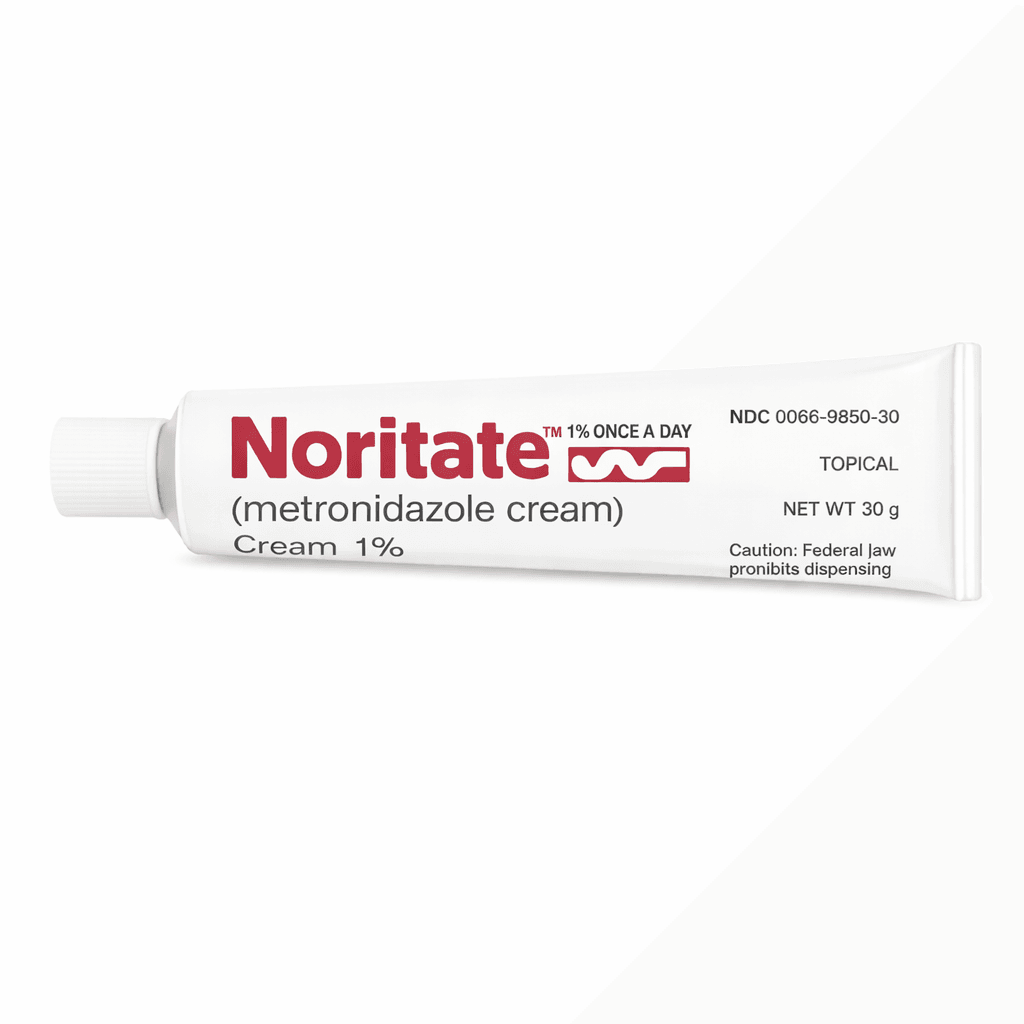
Noritate Cream
Noritate topical cream (metronidazole)
Price:
$49.99
Secure Encrypted Payments
Noritate Cream is a prescription topical medicine commonly used for inflammatory rosacea affecting the face. This guide explains typical uses, safety considerations, and everyday handling details for prescriptions filled through BorderFreeHealth, including Ships from Canada to US access for cash-pay patients without insurance. It is designed to support informed conversations with a prescriber and to set practical expectations.
What Noritate Cream Is and How It Works
This product is a topical form of metronidazole, an antibiotic (germ-fighting medicine) used on the skin for rosacea-related inflammation. In rosacea, the goal is often to reduce redness, bumps, and irritation over time, while supporting the skin barrier with gentle care. The treatment is not the same as oral antibiotics, and it is not intended to treat every cause of facial redness.
Prescription details are confirmed with the prescriber before dispensing. Metronidazole used on the skin is thought to work mainly through anti-inflammatory and antimicrobial effects at the surface, with generally low absorption into the bloodstream when used as directed. Results and tolerability can differ by person and by the subtype of rosacea, so diagnosis and follow-up matter.
Who It’s For
Noritate Cream is generally prescribed for people with rosacea, especially when symptoms include papules and pustules (pimple-like bumps) along with background redness. It may be chosen when sensitive skin makes some other therapies difficult to tolerate, or when a clinician wants a non-steroid anti-inflammatory option for ongoing management.
This medicine may not be appropriate for anyone with a known allergy to metronidazole or to ingredients in the base cream. Extra caution may be needed during pregnancy or breastfeeding, or when treating children, because safety information can be different across groups. Some clinicians may use topical metronidazole for perioral dermatitis, but that use is not the same as an on-label rosacea indication and should be individualized.
Why it matters: Rosacea mimics acne, dermatitis, and irritation from products.
For condition-focused browsing, see the Rosacea Hub. For broader skin topics and care routines, the Dermatology Articles collection can help frame questions and expectations.
Dosage and Usage
Noritate Cream should be used only as directed on the prescription label. Many regimens involve a thin layer to affected facial areas on a regular schedule, with gentle cleansing beforehand and careful avoidance of the eyes, lips, and inside the nose. Hands are typically washed after use, and the product is not shared between people.
Skin treatments often work best when paired with a simple routine that limits irritation. Fragrance-free moisturizers and broad-spectrum sunscreen are commonly recommended alongside rosacea therapies, since sun and harsh products can worsen flushing. If a prescriber has also recommended acne therapies or other actives, spacing products can reduce stinging and dryness. Background reading on general routines may be found in How To Treat Acne, while keeping in mind that rosacea care can differ.
Strengths and Forms
Noritate Cream is a topical cream formulation; metronidazole in this product is commonly supplied as a 1% strength (1% w/w). Availability can vary by region and by partner pharmacy inventory, and tube sizes may differ. The carton and tube label provide the definitive strength, directions, and expiration date for the dispensed product.
Some people compare brand Noritate to a metronidazole cream generic. In many cases, the active ingredient is the same, while the vehicle (the cream base) can differ and may affect feel, spreadability, and sensitivity. Inactive ingredients vary by manufacturer, so it can help to review the full ingredient list when there is a history of contact allergy or frequent irritation. Related options can be explored in the Dermatology Products category.
Storage and Travel Basics
Store the tube at controlled room temperature as described on the label, and keep the cap closed between uses. Avoid exposing the product to excess heat, direct sunlight, or freezing conditions, since extremes can affect texture and stability. Keep all prescription creams out of reach of children and pets, and do not use after the printed expiration date.
Medicines are dispensed by licensed Canadian partner pharmacies. For travel, keeping the tube in a carry-on bag can reduce temperature swings. A labeled box can also help with identification if questions come up during transit. If the cream separates or changes color or odor, the safest step is to pause use and ask a pharmacist whether the tube should be replaced.
Quick tip: Pack it in a small pouch to prevent cap leaks.
Side Effects and Safety
Like many facial therapies, Noritate Cream can cause local skin reactions. Common issues include dryness, mild burning or stinging, itching, redness, or irritation where the medicine is used. These effects may be more noticeable when starting treatment or when other potentially drying products are used at the same time.
Less common but more serious concerns include signs of an allergic reaction, such as hives, swelling, or worsening rash. Eye exposure may cause watering or irritation and should be rinsed with water. Because rosacea flares and product irritation can look similar, new or worsening symptoms should be reviewed with a clinician, especially if there is significant pain, blistering, or facial swelling. For context on how side effects differ across skin medicines, see Clobetasol Propionate Side Effects.
Drug Interactions and Cautions
Topical metronidazole usually has limited absorption, so interaction risk is often lower than with oral forms. Still, prescribers and pharmacists should be told about all medicines and supplements, including other metronidazole products, anticoagulants such as warfarin, lithium, or disulfiram, because precautions may apply in specific situations.
Combining multiple topical therapies can raise the chance of irritation. Retinoids, exfoliating acids, astringents, and alcohol-based products may increase dryness or burning when layered on sensitive facial skin. If facial redness could be driven by another skin condition, reassessment can be important; overlap with eczema-like problems is possible. Additional background reading is available in Dyshidrotic Eczema And Autoimmune Disease, which discusses how inflammatory skin patterns can vary.
Compare With Alternatives
Rosacea management often uses a mix of trigger reduction, gentle skin care, and prescription therapies chosen by subtype and severity. A clinician may consider another topical metronidazole formulation such as Metrogel, which is a gel vehicle rather than a cream. Vehicle differences can matter for people who prefer a lighter feel or who react to certain bases.
Other non-metronidazole options may include azelaic acid gel such as Finacea 15% Azelaic Acid Gel, topical ivermectin, or oral anti-inflammatory antibiotics for flare control. Each option has distinct tolerability considerations and counseling points. A prescriber can help align the choice with skin sensitivity, concurrent conditions, and the specific rosacea features being treated.
Pricing and Access
Noritate Cream is available by prescription only, and access through BorderFreeHealth is set up for cash-pay fulfillment when insurance is not used. US delivery from Canada may be helpful for people managing ongoing skin prescriptions while comparing pharmacy options. Costs can vary based on the dispensed version (brand versus generic metronidazole cream) and the supplied quantity.
Cash-pay access may support people who are without insurance or whose plan does not cover a specific brand. A valid prescription is required, and the dispensing pharmacy may verify details with the prescriber as part of routine safety checks. For site-level updates that may affect total checkout costs, see the Promotions Page. To proceed through the platform, add the medication to cart and complete the prescription steps for prompt, express shipping.
Authoritative Sources
For prescribing details, the most reliable references are the dispensed label and the patient leaflet provided with the tube. When reading online, prioritize sources that distinguish rosacea from acne and that describe topical metronidazole as a prescription therapy with potential skin irritation.
The references below provide additional context on topical metronidazole and rosacea care. They are helpful for understanding general expectations, common adverse effects, and when follow-up may be needed.
This content is for informational purposes only and is not a substitute for professional medical advice.
Express Shipping - from $25.00
Shipping with this method takes 3-5 days
Prices:
- Dry-Packed Products $25.00
- Cold-Packed Products $35.00
Shipping Countries:
- United States (all contiguous states**)
- Worldwide (excludes some countries***)
Standard Shipping - $15.00
Shipping with this method takes 5-10 days
Prices:
- Dry-Packed Products $15.00
- Not available for Cold-Packed products
Shipping Countries:
- United States (all contiguous states**)
- Worldwide (excludes some countries***)
What is Noritate Cream used for?
Noritate Cream is a prescription topical medicine that contains metronidazole and is commonly used to treat inflammatory rosacea on the face. Rosacea can involve persistent redness, flushing, and pimple-like bumps. Metronidazole used on the skin is generally considered an anti-inflammatory therapy for rosacea rather than an acne medication. The specific reason it is prescribed, and the schedule that goes with it, should come from the prescriber and the dispensing label, since rosacea can overlap with other facial rashes.
Is Noritate the same as generic metronidazole cream?
Noritate is a brand-name product, and generic metronidazole cream refers to products with the same active ingredient made by other manufacturers. In many cases, the active ingredient is the same, but the base cream (inactive ingredients) can differ. Those differences may affect how the product feels, how it spreads, and how sensitive skin reacts. If there is a history of irritation, contact allergy, or frequent facial dryness, it is reasonable to ask a pharmacist or clinician about ingredient differences between versions.
Can Noritate Cream be used for perioral dermatitis?
Some clinicians prescribe topical metronidazole for perioral dermatitis, but that use can be considered off-label and is not the same as an on-label rosacea indication. Perioral dermatitis can also be triggered or worsened by topical steroids, heavy cosmetics, or irritating skin products, and it may resemble acne or eczema. Because the diagnosis affects the treatment plan, it is important that a prescriber confirms the condition and provides clear instructions, including what other products to avoid while the rash settles.
What side effects can occur with Noritate Cream?
The most common side effects are local skin reactions where the medicine is used. These can include dryness, burning or stinging, itching, redness, and irritation. Less common but more serious reactions can include signs of allergy such as hives, swelling, or a rapidly worsening rash. Eye exposure may cause irritation and should be rinsed with water. If symptoms become severe, painful, or spread beyond the treated area, a clinician or pharmacist can help decide whether the reaction is expected irritation or something that needs prompt evaluation.
Can moisturizers, sunscreen, or makeup be used with Noritate Cream?
Many rosacea routines include moisturizer and daily broad-spectrum sunscreen, since sun exposure can worsen flushing and inflammation. Cosmetics are also commonly used for camouflage, but product choice matters because fragrance, alcohol, and harsh exfoliants can increase irritation. The best approach is to follow the prescriber’s instructions about layering and timing, and to introduce new products one at a time. If stinging or redness increases after adding a product, a pharmacist or clinician can suggest a gentler routine.
What should I ask my clinician before starting Noritate Cream?
Key questions include what diagnosis is being treated (rosacea subtype versus another rash), where on the face the medicine should be used, and how long the prescriber expects the trial to last before reassessing. It can also help to ask how to handle dryness, whether other actives (retinoids, acids, benzoyl peroxide) should be paused, and what to do during flares. Share any history of allergy to topical ingredients, current medications, and pregnancy or breastfeeding status so precautions can be reviewed.
Do I need monitoring or follow-up while using Noritate Cream?
Ongoing follow-up is often part of rosacea care, even for topical medicines. A prescriber may want to reassess symptoms after an initial trial to confirm the diagnosis and decide whether the plan should continue, change, or add other therapies. Monitoring is also useful if irritation occurs, if there is no meaningful improvement, or if new symptoms appear (such as eye irritation, significant swelling, or widespread rash). Keeping notes on triggers, skin products used, and flare patterns can support more productive follow-up visits.
Rewards Program
Earn points on birthdays, product orders, reviews, friend referrals, and more! Enjoy your medication at unparalleled discounts while reaping rewards for every step you take with us.
You can read more about rewards here.
POINT VALUE
How to earn points
- 1Create an account and start earning.
- 2Earn points every time you shop or perform certain actions.
- 3Redeem points for exclusive discounts.
How to book an appointment
- 1Create Begin by completing a profile or log into your existing account. This step ensures we have the necessary information to provide you with a service that's tailored to your needs. account and start earning.
- 2Scheduling an appointment with our online booking system is easy. Pick a day and time that suits you. You’ll receive an immediate confirmation, without the wait.
- 3Discuss your concerns and symptoms and receive a thorough diagnosis from one of our licensed doctors during a confidential video appointment.
- 4If you've been prescribed medication, your Rx is sent directly to one of our licensed pharmacies and delivered right to your door.
Get Started
To book an online doctor appointment, register for an account or login. After doing so, you can book your visit on this page.
You Might Also Like
Select options
This product has multiple variants. The options may be chosen on the product page
Select options
This product has multiple variants. The options may be chosen on the product page
Select options
This product has multiple variants. The options may be chosen on the product page