
Please note: a valid prescription is required for all prescription medication.
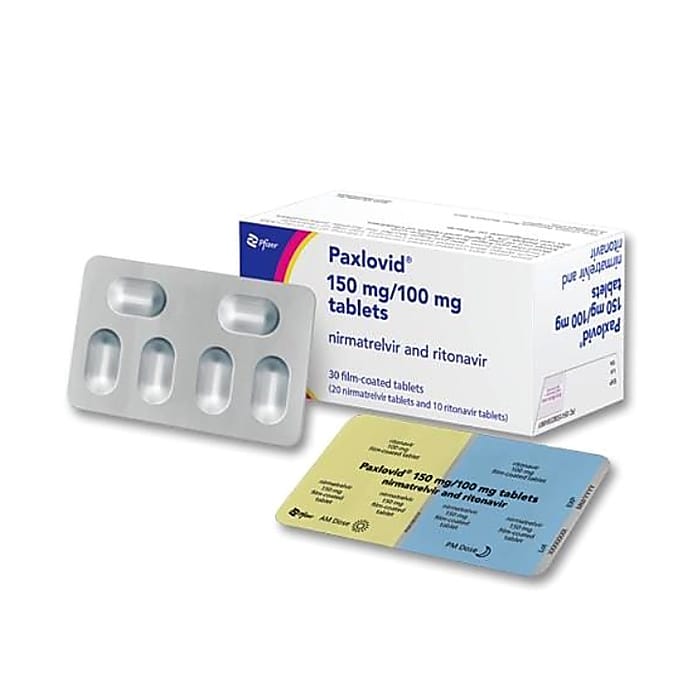
Paxlovid
Buy Paxlovid Online
Secure Encrypted Payments
Paxlovid is an oral COVID-19 antiviral that combines nirmatrelvir and ritonavir tablets in a short-course therapy pack. You can buy Paxlovid online, view the current Paxlovid price during ordering, and match the dose or strength shown to the directions provided by your clinician. Because treatment is time-sensitive and interaction-prone, keep your medication list and clinical instructions close while completing the order.
Paxlovid is used for certain people with mild-to-moderate COVID-19 who are at higher risk of progressing to severe illness. It is not a vaccine, and it is not used as routine prevention before or after exposure. The most important buying decisions are the therapy pack, quantity, timing, kidney-function considerations, and whether other medicines make the antiviral unsuitable.
BorderFreeHealth helps U.S. customers evaluate cash-pay cross-border medication choices, including US delivery from Canada when shown during ordering. For a time-sensitive COVID-19 medicine, do not assume transport timing will fit your treatment window unless the order path confirms the details.
Paxlovid Price, Therapy Pack, and Quantity
The Paxlovid cost shown during ordering should be read together with the therapy pack, quantity, and current supply route. A lower or higher number may reflect a different pack configuration, service path, or coverage arrangement rather than a true same-item comparison. For an antiviral with a short treatment window, product match and safe use matter as much as the displayed amount.
Paxlovid is supplied as co-packaged nirmatrelvir and ritonavir tablets. The commonly referenced adult regimen is often described as Paxlovid 300 100 mg per dose, meaning nirmatrelvir and ritonavir are taken together according to the labeled schedule. That description does not replace individualized instructions, and kidney function can affect which pack is appropriate.
If you are weighing Paxlovid without insurance, Paxlovid insurance coverage, Paxlovid Medicare access, or a cash-pay route, separate the medicine price from plan rules. Paxlovid cost with insurance and Paxlovid price with insurance can depend on coverage terms, network requirements, and assistance programs. Paxlovid out of pocket cost may also differ from the cash price if another payment pathway applies.
Quick tip: Match the active ingredients, pack presentation, and quantity before comparing Paxlovid prices.
How to Order Paxlovid Online
To order Paxlovid online, choose the therapy pack that corresponds with your clinician’s directions and enter the required order information carefully. Use the same name and clinical details shown on your treatment paperwork. Small differences in strength, pack type, or timing instructions can create practical problems for a medicine taken over only a few days.
Because Paxlovid has major drug-interaction considerations, the pharmacy may need to verify clinical or order details before the medication is released. This step helps reduce mismatched packs, incomplete medicine lists, and unsafe combinations with drugs affected by ritonavir. Keep your current medication list ready, including over-the-counter products, inhalers, supplements, and recently stopped medicines.
Payment pathways can change the total amount you pay. A Paxlovid cash price is usually easier to compare when you are looking at the same pack and quantity, while plan-based pathways may involve separate rules. If prompt, express shipping is displayed during ordering, review it in the context of the treatment window and the date your symptoms began.
What Paxlovid Treats
Paxlovid is a COVID-19 medicine used for mild-to-moderate illness in certain people at high risk for severe outcomes. Official labeling describes starting treatment as soon as possible after symptoms begin and within the labeled window. If symptoms are severe, breathing is difficult, oxygen levels are low, or hospitalization may be needed, urgent medical care takes priority over an online order.
The medicine contains two antiviral components. Nirmatrelvir blocks a SARS-CoV-2 protease, an enzyme the virus needs during replication. Ritonavir slows the breakdown of nirmatrelvir, helping maintain antiviral levels during the short treatment course. This pairing is useful clinically, but it is also why interaction checks are essential.
Paxlovid for COVID-19 does not treat every respiratory infection. It does not treat influenza, bacterial pneumonia, or non-COVID viral infections unless another diagnosis and therapy are involved. People reviewing respiratory-season treatment choices can browse the COVID-19 collection or the Antivirals category for related prescription antiviral therapies.
Tablet Pack, Strength, and Dosing Details
The Paxlovid therapy pack contains nirmatrelvir tablets and ritonavir tablets in blister packaging. The tablets are taken together as directed, usually over a short five-day course. Do not split the two components into a different schedule unless a clinician or pharmacist gives explicit instructions for the dispensed pack.
Paxlovid dosing is not only a pill count. Kidney function, interacting medicines, liver status, and the specific pack can affect whether the medicine is appropriate. A standard adult description often references two nirmatrelvir 150 mg tablets plus one ritonavir 100 mg tablet per dose, but that general statement should not be used to self-adjust a course.
When assessing Paxlovid tablets online, look at the whole pack rather than a single tablet strength. Some descriptions may emphasize nirmatrelvir, ritonavir, or the combined pack. The final selection should align with the active ingredients, strength relationship, and timing instructions provided for you.
| Product point | Practical check |
|---|---|
| Form | Oral tablets supplied together in a therapy pack |
| Components | Nirmatrelvir tablets plus ritonavir tablets |
| Typical course | Short labeled course, commonly five days |
| Key selection issue | Match pack, strength, and directions to your clinical instructions |
Who May Be Considered for This Antiviral
Paxlovid medicine is generally considered for people with mild-to-moderate COVID-19 who have risk factors for progression to severe disease. Some adolescents may be covered under regulatory authorization when age and weight criteria are met. A clinician weighs symptom timing, risk factors, current illness severity, kidney function, liver function, and medicine interactions.
The antiviral may not suit people with severe kidney impairment, severe liver impairment, or certain medication combinations. Ritonavir is the main reason many interactions require special handling. Even a five-day course can quickly change blood levels of other drugs, sometimes enough to cause serious harm.
Timing is central. If too much time has passed since symptom onset, the expected role of the medicine may change. If you are unsure whether you remain within the labeled treatment window, seek clinical guidance promptly rather than ordering first and clarifying later.
Side Effects, Warnings, and Monitoring
Common Paxlovid side effects include altered taste, diarrhea, headache, nausea, stomach discomfort, and temporary blood pressure changes. Many people describe the taste change as bitter or metallic. These effects can be unpleasant, but the treatment course is short for many users.
Serious reactions are less common but need prompt attention. Seek medical help for signs of allergic reaction, severe rash, swelling of the face or throat, trouble breathing, yellowing skin or eyes, dark urine, severe weakness, or symptoms that could suggest a dangerous medicine interaction. People with liver disease should be especially careful to report concerning symptoms.
Some people report COVID-19 symptom return after finishing Paxlovid. This is often called rebound. If symptoms return, ask a clinician about testing, isolation guidance, and supportive care. Do not restart, extend, or save tablets for a later illness unless a clinician directs you to do so.
- Taste changes: a bitter or metallic taste may occur during treatment.
- Digestive effects: diarrhea, nausea, or stomach upset can happen.
- Blood pressure: temporary increases have been reported.
- Liver concerns: yellowing skin, dark urine, or severe fatigue need attention.
- Rebound symptoms: ask about testing and isolation if symptoms return.
Drug Interactions and Cautions
Ritonavir is a strong CYP3A inhibitor. CYP3A is a liver enzyme pathway that helps process many medicines. Blocking this pathway can raise levels of certain drugs, and some combinations are contraindicated because the result may be serious or life-threatening.
Medicines of concern can include some antiarrhythmics, sedatives, anticonvulsants, ergot derivatives, rifampin, St. John’s wort, certain statins, and some blood pressure medicines. This is not a complete list. Provide every prescription medicine, over-the-counter product, supplement, inhaler, and recent medication change when asked.
Hormonal contraceptives containing ethinyl estradiol may be less effective during treatment, so additional or alternative contraception may be discussed. People with untreated or unrecognized HIV-1 infection should also discuss ritonavir-related resistance concerns with a clinician. These issues do not mean Paxlovid is unsuitable for everyone, but they do make individualized review important.
Why it matters: A short Paxlovid pill course can still affect other medicines quickly.
Storage, Handling, and Travel
Store the tablets at room temperature in the original blister packaging. Keep the pack dry, away from excessive heat, and out of reach of children and pets. Do not move tablets into another pill container unless a pharmacist says it is acceptable, because the blister card helps organize morning and evening dosing.
If you travel during treatment, keep the labeled packaging with you. Carry treatment directions in hand luggage so the medicine can be identified if questions arise. Avoid leaving the pack in a hot car, checked baggage exposed to temperature extremes, or a damp bathroom cabinet.
Inspect the blister packaging before use. If tablets appear damaged, missing, or exposed, ask a pharmacist what to do before taking them. For a time-sensitive antiviral, it is better to resolve packaging concerns immediately than to guess.
Related COVID-19 and Antiviral Choices
Other COVID-19 treatments may be considered when Paxlovid is unsuitable because of interactions, timing, kidney function, liver concerns, or practical access. Examples can include remdesivir infusion or molnupiravir capsules, depending on local guidance and the person’s clinical situation. The right comparison includes treatment window, route of administration, interaction profile, and current clinical recommendations.
Antivirals differ widely by virus and treatment goal. Products such as Vosevi, Vemlidy, and Pifeltro are used in different viral conditions and should not be treated as substitutes for Paxlovid. Their role is useful for understanding how antiviral products vary by active ingredient, duration, safety considerations, and monitoring needs.
Background articles can help with broader COVID-19 reading, but they do not replace individualized antiviral selection. Topics such as metformin and COVID-19, metformin and vitamin D in COVID-19 research, and COVID-19 outcomes in the SELECT trial can add context for questions to discuss with a clinician.
What to Confirm Before Checkout
Before completing an online Paxlovid order, make sure the therapy pack, active ingredients, strength relationship, and timing instructions align with your clinical directions. If the pack description and your paperwork do not match, pause and ask for clarification. Ordering the wrong pack can be difficult to fix when treatment timing is short.
Use checkout time to gather the information most likely to affect safe use. Know when symptoms began, whether you have kidney or liver disease, which medicines you take, and what symptoms would require urgent care. If your health status changes suddenly, clinical care should come before completing a medication purchase.
- Timing: Are you still within the labeled start window?
- Interactions: Which medicines need stopping, holding, or substitution?
- Kidney function: Is the pack appropriate for your renal status?
- Symptoms: What changes require urgent evaluation?
- Follow-up: What should you do if symptoms return?
- Payment path: Are you comparing the same pack and quantity?
Authoritative Sources
FDA prescribing information for Paxlovid outlines approved use, dosing, contraindications, warnings, and safety information.
FDA patient and caregiver fact sheet summarizes patient-facing use, interaction, and safety details.
Official manufacturer labeling provides detailed information about significant drug interactions and precautions.
This content is for informational purposes only and is not a substitute for professional medical advice.
eGFR Calculator
Estimate kidney filtration using the 2021 CKD-EPI creatinine equation.
eGFR
-
mL/min/1.73 m2
G category
-
requires clinical context
These calculations are for education only and do not replace clinical advice, diagnosis, or treatment. Always confirm medical decisions with a qualified healthcare professional.
Creatinine Clearance Calculator
Estimate creatinine clearance using the Cockcroft-Gault equation.
CrCl
-
mL/min estimate
These calculations are for education only and do not replace clinical advice, diagnosis, or treatment. Always confirm medical decisions with a qualified healthcare professional.
Express Shipping - from $29.99
Shipping with this method takes 3-5 days
Prices:
- Dry-Packed Products $29.99
- Cold-Packed Products $39.99
Shipping Countries:
- United States (all contiguous states**)
- Worldwide (excludes some countries***)
Standard Shipping - $19.99
Shipping with this method takes 5-10 days
Prices:
- Dry-Packed Products $19.99
- Not available for Cold-Packed products
Shipping Countries:
- United States (all contiguous states**)
- Worldwide (excludes some countries***)
What is Paxlovid used for?
Paxlovid is an oral antiviral used for certain people with mild-to-moderate COVID-19 who are at higher risk of severe illness. It is not a vaccine and is not used as routine prevention before or after exposure.
How soon should Paxlovid be started?
Official labeling describes starting Paxlovid as soon as possible after COVID-19 symptoms begin and within the labeled treatment window. Ask a clinician promptly if you are unsure whether your timing still fits.
Why are drug interactions so important with Paxlovid?
Paxlovid contains ritonavir, which strongly affects the CYP3A enzyme pathway. This can raise levels of some medicines and make certain combinations unsafe, so a complete medication and supplement list is important.
What are common Paxlovid side effects?
Common side effects include altered or metallic taste, diarrhea, nausea, headache, stomach discomfort, and temporary blood pressure changes. Serious rash, allergic symptoms, liver-related symptoms, or severe weakness need medical attention.
Can COVID-19 symptoms return after Paxlovid?
Some people report symptom return after finishing treatment. If symptoms come back, ask a clinician about testing, isolation guidance, and supportive care. Do not restart or extend treatment without medical direction.
How should Paxlovid tablets be stored?
Store Paxlovid at room temperature in the original blister packaging. Keep it dry, away from excess heat, and out of reach of children and pets. The blister pack helps organize the dosing schedule.
Rewards Program
Earn points on birthdays, product orders, reviews, friend referrals, and more! Enjoy your medication at unparalleled discounts while reaping rewards for every step you take with us.
You can read more about rewards here.
POINT VALUE
How to earn points
- 1Create an account and start earning.
- 2Earn points every time you shop or perform certain actions.
- 3Redeem points for exclusive discounts.
You Might Also Like
Select options
This product has multiple variants. The options may be chosen on the product page
Select options
This product has multiple variants. The options may be chosen on the product page
Select options
This product has multiple variants. The options may be chosen on the product page
Select options
This product has multiple variants. The options may be chosen on the product page