
Please note: a valid prescription is required for all prescription medication.
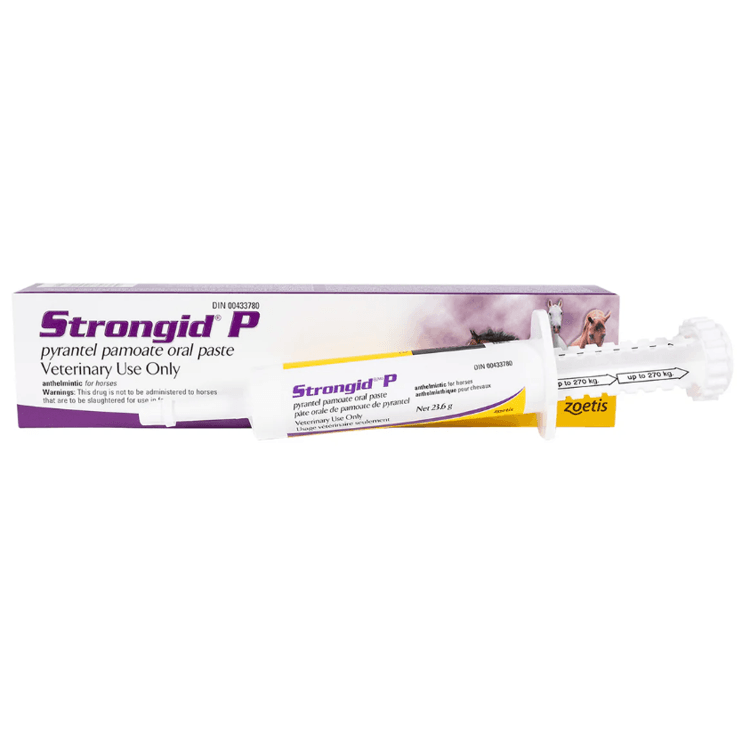
Strongid P
Buy Strongid P Online
Secure Encrypted Payments
Strongid P is an equine dewormer used for horses as part of intestinal parasite control. You can buy Strongid P online, view the current price during ordering, and choose the dose or strength shown for the product so it matches the directions on the package and your veterinarian’s plan. This pyrantel pamoate-based horse wormer is commonly discussed for susceptible internal parasites, including strongyles, ascarids, and pinworms.
Strongid P for horses is intended to be used thoughtfully, not as a one-size-fits-all barn routine. Body weight, parasite target, age, pasture exposure, and fecal egg count trends all influence whether a pyrantel product fits a deworming program. US delivery from Canada may be used for eligible orders, and products are supplied through licensed pharmacies.
Strongid P Price, Ordering, and Dose Selection
Strongid P price can vary with the quantity selected, the available presentation, and current pharmacy supply. During ordering, review the displayed cost, choose the product dose or strength available for Strongid P, and match that choice to the product directions and your horse’s current weight estimate. Equine dewormers are usually dosed by body weight, so an accurate weight tape measurement or scale weight helps reduce the risk of underdosing or overdosing.
Customers often compare the cash price of Strongid P with the number of horses being treated and the planned deworming schedule. A lower per-syringe cost is not helpful if the product does not match the parasite target, and repeated treatment without testing can contribute to resistance. Barn records should include the product name, date, estimated weight, amount given, and any fecal egg count notes.
| Ordering point | Why it matters |
|---|---|
| Current weight estimate | Most horse wormer dosing is weight-based, and the wrong estimate can affect treatment quality. |
| Displayed dose or strength | Select the Strongid P option that aligns with package directions and the deworming plan. |
| Parasite target | Pyrantel products are chosen for susceptible parasites, not every equine parasite risk. |
| Barn treatment log | Records help track response, timing, and rotation decisions over time. |
Quick tip: Keep the horse’s latest weight estimate with your deworming log before ordering replacement supply.
What Strongid P Treats in Horses
Strongid P is widely recognized as a pyrantel pamoate anthelmintic, meaning a medicine used against internal worms. In horses, pyrantel pamoate is commonly used for susceptible intestinal nematodes, including strongyles, ascarids, and pinworms. It is not a flea, tick, mite, or external parasite product, and it should not be used as a substitute for products aimed at those different pests.
Pyrantel works mainly inside the gastrointestinal tract. It affects neuromuscular activity in susceptible worms, which can cause them to lose their grip in the intestine and be passed from the gut. Because parasite risk differs by region, pasture density, age group, and previous deworming history, many veterinarians use fecal egg counts and barn-level patterns to decide when Strongid P horse dewormer is appropriate.
Some pyrantel product labels describe a higher-dose or double-dose approach for certain tapeworm situations. That does not mean every Strongid P use should be doubled, and it does not replace label directions. If tapeworm exposure is a concern, discuss whether pyrantel pamoate, praziquantel-containing products, or another plan is the best fit for the horse and the farm.
For broader background on worm burdens and why species-specific treatment matters, the intestinal worms condition category offers related educational reading. That context can help owners understand why deworming choices differ between horses, dogs, cats, and other animals.
How Pyrantel Pamoate Works
Pyrantel pamoate is used as an anthelmintic, a worm-control medicine. It acts locally in the intestinal tract and interferes with nerve signaling in susceptible parasites. The practical result is that affected worms may become paralyzed and pass through the digestive tract.
This local gut activity is one reason pyrantel products are discussed differently from systemic parasite-control medicines. It also explains why the parasite spectrum matters. A Strongid P wormer paste may be a practical choice for certain roundworms, but other drug classes may be needed when bots, encysted strongyles, tapeworms, or mixed parasite risks are the main concern.
Resistance is a major reason modern equine parasite programs avoid automatic rotation without testing. Frequent use of the same class can select for worms that survive treatment. Fecal egg count reduction testing, local veterinary guidance, and pasture hygiene can all support more responsible use of Strongid P and related dewormers.
Giving Strongid P Safely
Strongid P paste-style equine dewormers are typically administered by mouth according to the package directions. The full measured amount must be swallowed. If a horse spits out part of the dose, the correct next step can depend on how much was lost, the parasite target, and the safety margin, so veterinary guidance is sensible when the amount is unclear.
Calm handling improves both safety and accuracy. Restrain the horse in a familiar area, set the dosing marker according to the label, insert the applicator from the side of the mouth, and place the product toward the back of the tongue. Hold the head briefly after dosing if needed, while avoiding forceful handling that could raise the risk of injury.
Timing should be based on a deworming plan rather than habit alone. Foals, yearlings, adult horses, senior horses, and densely pastured groups may have different risk profiles. Horses with weight loss, diarrhea, poor coat quality, recurrent colic signs, or heavy parasite burdens should be assessed by a veterinarian instead of relying only on routine deworming.
Before and after dosing
- Confirm the horse’s weight estimate and the intended parasite target.
- Read the full package directions before setting the dose.
- Use only for the species and route described on the label.
- Record the product name, date, amount, and horse treated.
- Watch for digestive upset, behavior changes, or signs of colic after treatment.
Storage, Handling, and Shipping Basics
Store Strongid P according to the package directions, usually in a dry place protected from extreme heat, freezing, and direct sunlight. Keep the cap secure, leave the product in its original packaging, and check the expiration date before use. Original packaging also helps preserve lot information if a quality concern or adverse event needs to be discussed later.
Do not leave a horse wormer syringe in a hot vehicle, open tack room window, or freezing trailer compartment. Temperature extremes can affect product quality, and accidental exposure is a safety concern for children, pets, and animals that are not the intended species. Separate dewormers from feed, treats, supplements, and grooming supplies that could contaminate the applicator.
When travel or show schedules require carrying deworming supplies, place the product in a clean medical kit and keep dosing tools dry. If shipping is selected, prompt, express shipping may be available during checkout. After arrival, inspect the package, store the medicine correctly, and avoid using any product with damaged packaging or an unreadable expiration date.
Side Effects, Warnings, and Monitoring
Many horses tolerate pyrantel pamoate dewormers well, but side effects can occur. Mild digestive changes, temporary loose stool, reduced appetite, drooling, or brief mouth irritation may happen after oral administration. These effects are often short-lived, but they should still be documented, especially when several horses are treated at the same time.
More concerning signs need prompt veterinary attention. Contact a veterinarian if a horse develops persistent diarrhea, marked lethargy, weakness, hives, facial swelling, breathing difficulty, severe depression, or signs of colic such as pawing, rolling, sweating, looking at the flank, or repeated attempts to lie down. A high worm burden may increase the chance of problems after parasites are killed or passed.
Do not use Strongid P in a horse with a known hypersensitivity to its ingredients. Extra caution is appropriate for very young foals, pregnant or lactating mares, severely debilitated horses, and animals with serious gastrointestinal illness. These cases need individualized direction because weight estimation, hydration status, gut motility, and concurrent disease can change the risk-benefit balance.
Why it matters: Early recognition of unusual reactions helps protect the horse and the rest of the barn.
Interactions and Barn-Level Cautions
Interactions matter when several parasite-control products are used close together. Pyrantel is classically discussed as having a potentially important interaction with piperazine, another anthelmintic, because the combination may reduce effectiveness. Some insecticide exposures, including certain organophosphates, can also be a reason for added caution around deworming decisions.
Review the horse’s full medication and supplement list before treatment, especially if the horse receives pain medicines, antibiotics, ulcer treatments, endocrine medications, sedatives, or other dewormers. Introducing several products at once can make side effects harder to interpret. A simple barn policy for recording medication dates helps avoid accidental overlap.
Species separation is equally important. A product intended for horses should not be used for dogs, cats, goats, or other animals unless a veterinarian specifically directs that use. Small-animal parasite products can contain different active ingredients and dose ranges; for example, the Drontal for dogs safety article discusses deworming from a dog-specific perspective.
How Strongid P Compares With Other Dewormers
Strongid P is commonly compared with other equine dewormers by parasite spectrum, active ingredient class, administration route, dose presentation, and how it fits into a farm’s testing history. Pyrantel pamoate is one class. Fenbendazole, ivermectin, moxidectin, and praziquantel-containing products are other commonly discussed options in equine parasite control.
Panacur products use fenbendazole, a different anthelmintic class. Strongid T is another equine deworming choice associated with pyrantel-based treatment planning. These medicines are not interchangeable solely by brand name; the intended parasite target and label directions should guide the choice.
For catalog navigation, the Strongid T product option may be relevant when comparing pyrantel-based equine choices, while Panacur Suspension offers a fenbendazole-based reference point. Households managing multiple species can also browse the pet medications category for animal-health items carried across the store.
Small-animal dewormers should stay separate from equine dosing decisions. Drontal Plus, for example, belongs to a different small-animal treatment context and should not be used to estimate a horse deworming plan. Keeping products organized by species reduces dosing mistakes and accidental exposure.
When to Ask a Veterinarian
Veterinary input is especially useful when fecal egg counts remain high after treatment, several horses show signs of illness, or the farm has a history of parasite resistance. A veterinarian can help decide whether Strongid P for tapeworm double-dose use is relevant under the package directions, whether a different class is more appropriate, or whether further testing is needed.
Ask for guidance before deworming a horse that is underweight, dehydrated, colicky, pregnant, nursing, very young, elderly, or medically fragile. Also ask before combining dewormers or treating near exposure to insecticides that could complicate safety. Deworming can be routine, but the safest routine is still based on the individual horse and the barn’s parasite pressure.
Owners should also seek help when symptoms suggest more than a simple parasite issue. Weight loss, chronic diarrhea, recurrent colic, poor performance, potbelly appearance in young horses, and dull coat quality can have several causes. Deworming without diagnosis may delay the right care if ulcers, dental disease, nutrition problems, endocrine disease, or infection are contributing.
Authoritative Sources
Product labeling and veterinary direction are the primary sources for exact administration, parasite claims, cautions, and species-specific use. Independent veterinary references can help explain anthelmintic classes and why fecal testing, resistance awareness, and pasture management matter in horse parasite programs.
Neutral pharmacology background is available from the Merck Veterinary Manual anthelmintics reference. Practical equine parasite-control guidance is available through the AAEP clinical guidelines library.
This content is for informational purposes only and is not a substitute for professional medical advice.
Express Shipping - from $29.99
Shipping with this method takes 3-5 days
Prices:
- Dry-Packed Products $29.99
- Cold-Packed Products $39.99
Shipping Countries:
- United States (all contiguous states**)
- Worldwide (excludes some countries***)
Standard Shipping - $19.99
Shipping with this method takes 5-10 days
Prices:
- Dry-Packed Products $19.99
- Not available for Cold-Packed products
Shipping Countries:
- United States (all contiguous states**)
- Worldwide (excludes some countries***)
What is Strongid P used for in horses?
Strongid P is an equine dewormer commonly used as part of intestinal parasite control. Pyrantel pamoate products are typically discussed for susceptible strongyles, ascarids, and pinworms, with some label-specific higher-dose uses for certain tapeworm situations.
Is Strongid P the same as pyrantel pamoate paste for horses?
Strongid P is widely recognized as a pyrantel pamoate-based horse dewormer. Always follow the exact package directions for the product selected, because labeled use, dose markings, and parasite claims can vary by presentation.
Can Strongid P be used as a double dose for tapeworms?
Some pyrantel product labels describe a double-dose regimen for certain tapeworm use, but that must come from the specific package directions and veterinary guidance. Do not double a dose unless the label and your horse’s care plan support it.
What side effects should I watch for after Strongid P?
Mild digestive upset, loose stool, drooling, or temporary appetite changes may occur. Seek veterinary help for severe diarrhea, hives, facial swelling, breathing trouble, marked weakness, or signs of colic such as pawing, rolling, or flank watching.
How should Strongid P be stored?
Store Strongid P according to the package directions, protected from heat, freezing, sunlight, and contamination. Keep it capped in the original packaging and away from children, pets, feed, and products intended for other species.
Rewards Program
Earn points on birthdays, product orders, reviews, friend referrals, and more! Enjoy your medication at unparalleled discounts while reaping rewards for every step you take with us.
You can read more about rewards here.
POINT VALUE
How to earn points
- 1Create an account and start earning.
- 2Earn points every time you shop or perform certain actions.
- 3Redeem points for exclusive discounts.
You Might Also Like
Select options
This product has multiple variants. The options may be chosen on the product page
Select options
This product has multiple variants. The options may be chosen on the product page
Select options
This product has multiple variants. The options may be chosen on the product page
Select options
This product has multiple variants. The options may be chosen on the product page