
Please note: a valid prescription is required for all prescription medication.
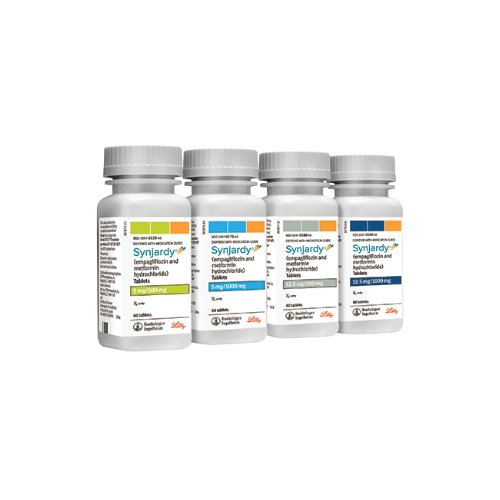
Synjardy
Buy Synjardy Online
Secure Encrypted Payments
Synjardy is an empagliflozin/metformin combination tablet used with diet and exercise to help improve blood sugar control in type 2 diabetes. It can be bought online, with strength choices matched to the directions from your clinician and the tablets shown during ordering. BorderFreeHealth offers U.S.-from-Canada service for cash-pay customers seeking regulated pharmacy access.
Synjardy Price and Strength Selection
Synjardy price can vary by strength, tablet type, quantity, and current supply. When you place an order, choose the strength that matches your current treatment plan rather than switching based on cost alone. Combination tablets contain two active ingredients, so both the empagliflozin amount and the metformin amount matter.
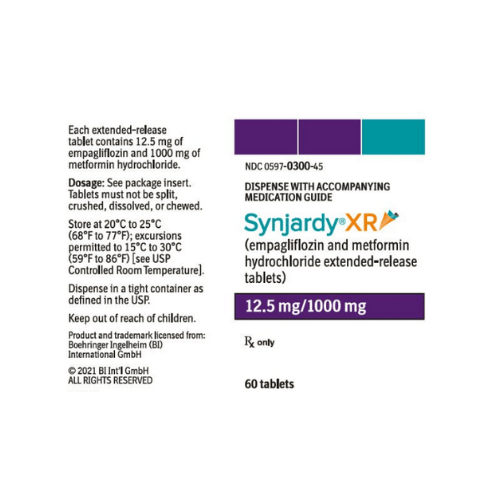
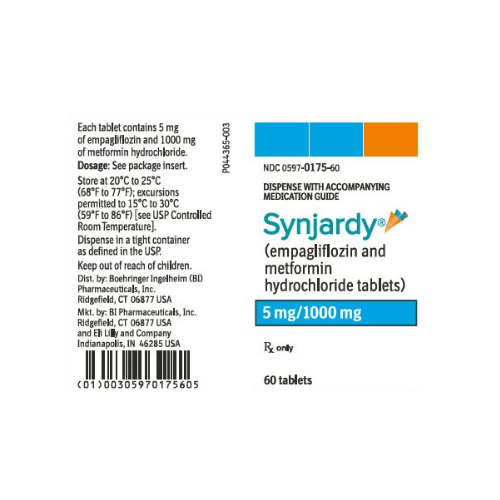
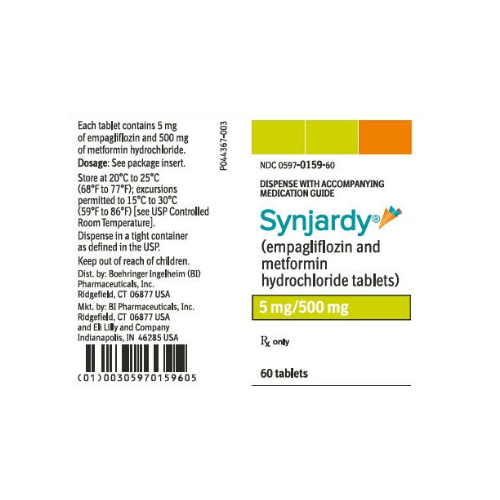
Common immediate-release strengths include 5/500 mg, 5/1000 mg, 12.5/500 mg, and 12.5/1000 mg. Extended-release strengths include Synjardy XR 12.5 mg/1000 mg and Synjardy XR 25 mg/1000 mg. The first number refers to empagliflozin, and the second refers to metformin hydrochloride.
People often compare Synjardy cost without insurance against separate empagliflozin and metformin tablets. That comparison should include tablet count, dosing schedule, refill frequency, and tolerability. A once-daily XR format may be convenient for some people, while immediate-release tablets may fit others who already take medicine with breakfast and dinner.
Quick tip: Keep your medication label handy when selecting a strength so the active ingredients and milligrams match your directions.
How to Buy Synjardy Online
To order Synjardy online from Canada, select the available strength and quantity that match your current directions. Our team may review order details for accuracy before the pharmacy supply process continues. This helps reduce preventable issues such as strength mismatches or an immediate-release/XR mix-up.
Synjardy tablets from Canada are supplied through licensed pharmacies. Orders can include US delivery from Canada, and customers may choose prompt, express shipping when that service is available during checkout. Keep your contact information current so any order questions can be resolved without delaying processing.
For broader browsing, the diabetes care category includes related products used in blood sugar management. If your treatment plan changes, use the new directions from your clinician rather than reordering an old strength out of habit.
What Synjardy Is Used For
Synjardy is used with diet and exercise to improve glycemic control in people with type 2 diabetes. It is not used to treat type 1 diabetes or diabetic ketoacidosis. The medicine is most appropriate when both empagliflozin and metformin are suitable parts of the treatment plan.
Type 2 diabetes develops when the body does not use insulin effectively and blood glucose remains too high over time. Treatment plans often combine nutrition changes, activity, glucose monitoring, and medication. Synjardy fits within that broader plan by combining two established diabetes medicines in one tablet.
The type 2 diabetes condition section offers additional background on the condition and related treatment categories. For ongoing education, the type 2 diabetes article collection covers practical topics that may help you discuss therapy choices with your care team.
How Empagliflozin and Metformin Work Together
Synjardy is not the same as metformin alone. Metformin is one ingredient in the combination, while empagliflozin is the other. Using both in one tablet may reduce pill burden for people whose plan already includes these two mechanisms.
Empagliflozin belongs to a class called SGLT2 inhibitors. These medicines help the kidneys remove extra glucose through urine. This action lowers blood sugar in a way that does not depend directly on increasing insulin release.
Metformin works mainly by reducing how much glucose the liver makes and by improving the body’s response to insulin. It has a long history in type 2 diabetes care. Together, the two actions can help address fasting and after-meal glucose patterns when the medicine is taken consistently with diet and activity.
Synjardy is also not the same as Ozempic. Ozempic contains semaglutide, a GLP-1 receptor agonist, which is an incretin-based medicine given as an injection. Synjardy contains empagliflozin and metformin in oral tablet form, so the ingredients, route, dosing approach, and side-effect profile are different.
Immediate-Release Tablets vs Synjardy XR
Synjardy immediate-release tablets are typically taken with meals, often twice daily. Synjardy XR is an extended-release tablet designed for once-daily use with the evening meal. Your actual schedule should follow the directions given for your treatment plan.
Extended-release tablets should be swallowed whole with water. Do not crush, split, or chew XR tablets, because doing so can change how the medicine releases. If swallowing tablets is difficult, ask a healthcare professional before changing how you take the medicine.
| Form | Typical use pattern | Practical note |
|---|---|---|
| Immediate-release tablets | Usually taken with meals | Often fits morning and evening routines |
| Extended-release tablets | Usually taken once daily with the evening meal | Swallow whole; do not crush or chew |
Stomach upset is more likely when metformin-containing medicine is taken without food. Taking tablets with meals may improve tolerability. If nausea, diarrhea, or abdominal discomfort persists, discuss it with a healthcare professional rather than stopping suddenly on your own.
Missed Dose, Timing, and Daily Routine
If you miss a dose, take it when remembered unless it is close to the next scheduled dose. If the next dose is near, skip the missed one and return to your regular schedule. Do not take two doses together to make up for a missed tablet.
A consistent routine makes treatment easier to follow. Many people link their tablets to meals, evening hygiene, or a phone reminder. A pill organizer can help, but keep tablets in a dry environment and avoid mixing them with medicines that look similar unless you can identify each one safely.
Glucose readings, A1C results, meal patterns, and activity levels all affect how well therapy works over time. Keep a simple log of doses and readings if your clinician has asked you to monitor at home. Bring that information to appointments so treatment decisions are based on real patterns rather than isolated numbers.
Possible Benefits and Weight Expectations
The main goal of Synjardy is better blood sugar control in type 2 diabetes. Combining two active ingredients may simplify treatment when both medicines are appropriate. Fewer separate tablets can make a daily plan easier to maintain.
Some people lose a modest amount of weight while taking an SGLT2 inhibitor, partly because glucose is removed in urine. Weight response varies and should not be the only reason to use the medicine. Diet, activity, fluid status, other medications, and starting weight all influence what happens on the scale.
Empagliflozin may also have class-related effects on blood pressure because it can increase urination. That effect can be helpful for some people but risky for others, especially during dehydration, hot weather, vomiting, or reduced fluid intake. Report dizziness, fainting, or signs of dehydration promptly.
Side Effects, Warnings, and Monitoring
Common side effects include nausea, diarrhea, stomach upset, headache, increased urination, thirst, genital yeast infections, and urinary tract infections. These effects are not the same for everyone. Early stomach symptoms may improve as the body adjusts, especially when tablets are taken with food.
Serious risks need prompt medical attention. Metformin can rarely cause lactic acidosis, a dangerous buildup of lactic acid in the blood. SGLT2 inhibitors can increase the risk of diabetic ketoacidosis, sometimes even when glucose is not extremely high. Seek urgent care for severe weakness, unusual sleepiness, rapid breathing, persistent vomiting, abdominal pain, confusion, or fruity-smelling breath.
Kidney function matters because both active ingredients involve the kidneys in important ways. Dehydration, diuretics, severe infection, or reduced fluid intake can increase the risk of kidney-related problems. Periodic kidney tests may be needed, especially after illness or medication changes.
Genital yeast infections and urinary tract infections can occur because more glucose passes into urine. Contact a healthcare professional for burning with urination, fever, pelvic pain, genital itching, redness, swelling, or discharge. Rare but serious infections of the perineum have been reported with SGLT2 inhibitors and require urgent care.
Low blood sugar is not usually the main risk when this combination is used by itself, but it can happen when combined with insulin or sulfonylureas. Symptoms may include shakiness, sweating, hunger, confusion, headache, or a fast heartbeat. People using additional glucose-lowering medicines should have a clear plan for monitoring and treating lows.
Interactions and Situations That Need Extra Caution
Tell your healthcare professional about all medicines, supplements, and over-the-counter products you use. Diuretics can increase dehydration risk. Insulin and sulfonylureas can increase hypoglycemia risk. Other medicines may affect kidney function or change how blood sugar responds.
Alcohol can increase the risk of metformin-related lactic acidosis, especially with heavy intake or binge drinking. Discuss safe limits if alcohol is part of your routine. Avoid dehydration and seek advice during vomiting, diarrhea, fever, or serious infection.
Iodinated contrast imaging can require special planning for metformin-containing medicines. If you are scheduled for a CT scan or other imaging study with contrast, tell the imaging team and the clinician managing your diabetes therapy. Temporary interruption may be recommended for some people based on kidney function and procedure type.
Synjardy may not be appropriate for people with severe kidney impairment, a history of lactic acidosis, or conditions that increase the risk of dehydration or ketoacidosis. Pregnancy, breastfeeding, surgery, low-carbohydrate dieting, and prolonged fasting should also be discussed with a qualified professional.
Storage and Travel Basics
Store Synjardy tablets at room temperature in a dry place. Keep the bottle tightly closed and away from children and pets. Bathrooms and cars are poor storage locations because heat and humidity can damage medicines.
When traveling, keep tablets in the original labeled container. Pack them in carry-on luggage rather than checked bags, where temperature swings and delays are harder to control. Bring glucose testing supplies if they are part of your plan.
Time-zone changes can complicate dosing schedules. Before longer trips, ask how to handle timing if your routine changes. Carry fast-acting carbohydrates if you use insulin, sulfonylureas, or another medicine that can cause low blood sugar.
How Synjardy Compares With Related Diabetes Options
Several type 2 diabetes medicines combine metformin with another glucose-lowering agent. The best choice depends on current A1C, kidney function, heart and kidney history, side effects, dosing preference, and other medicines. Do not substitute another combination tablet unless your treatment plan has been updated.
Some alternatives pair metformin with a different SGLT2 inhibitor, while others use DPP-4 inhibitors, GLP-1 receptor agonists, insulin, or separate metformin tablets. Each option has different benefits and cautions. A person who cannot tolerate metformin, for example, may need a different approach than someone who only needs a simpler tablet schedule.
Products may also differ by country of origin, manufacturer supply, and package presentation. The Canada origin category can help customers browse items associated with Canadian sourcing. Use product labels and clinician directions to guide actual therapy choices.
Questions to Ask Before Starting or Refilling
Clear questions help avoid medication errors and make follow-up visits more useful. Ask whether the immediate-release or XR form best fits your routine. Confirm the exact milligrams of both active ingredients, not only the brand name.
- What blood sugar targets should I track at home?
- How often should A1C and kidney function be monitored?
- What symptoms suggest dehydration, infection, or ketoacidosis?
- Should I pause the medicine during vomiting, diarrhea, or surgery?
- What should I do before contrast imaging?
- Does my plan include other medicines that can cause low blood sugar?
Why it matters: Combination tablets are convenient, but the strength must match both active ingredients in your treatment plan.
Authoritative Sources
For full medical details, consult the official labeling and a qualified healthcare professional. Authoritative information includes the DailyMed Synjardy drug record, which describes labeled uses, dosage forms, warnings, contraindications, and adverse reactions.
This content is for informational purposes only and is not a substitute for professional medical advice.
Blood Glucose Unit Converter
Convert glucose readings between mg/dL and mmol/L without changing the clinical value.
mg/dL
-
US reporting unit
mmol/L
-
International reporting unit
These calculations are for education only and do not replace clinical advice, diagnosis, or treatment. Always confirm medical decisions with a qualified healthcare professional.
HbA1c & eAG Calculator
Convert between HbA1c percentage and estimated average glucose using the ADAG relationship.
HbA1c
-
percentage
eAG mg/dL
-
estimated average glucose
eAG mmol/L
-
estimated average glucose
These calculations are for education only and do not replace clinical advice, diagnosis, or treatment. Always confirm medical decisions with a qualified healthcare professional.
eGFR Calculator
Estimate kidney filtration using the 2021 CKD-EPI creatinine equation.
eGFR
-
mL/min/1.73 m2
G category
-
requires clinical context
These calculations are for education only and do not replace clinical advice, diagnosis, or treatment. Always confirm medical decisions with a qualified healthcare professional.
Urine Albumin-Creatinine Ratio Calculator
Calculate urine albumin-creatinine ratio from spot urine albumin and creatinine values.
uACR
-
mg/g
uACR
-
mg/mmol
Category
-
A1/A2/A3 albuminuria range
These calculations are for education only and do not replace clinical advice, diagnosis, or treatment. Always confirm medical decisions with a qualified healthcare professional.
BMI Calculator
Estimate adult body mass index from height and weight, with metric and imperial units.
BMI
-
kg/m2 equivalent
Category
-
Adult screening range
These calculations are for education only and do not replace clinical advice, diagnosis, or treatment. Always confirm medical decisions with a qualified healthcare professional.
Express Shipping - from $29.99
Shipping with this method takes 3-5 days
Prices:
- Dry-Packed Products $29.99
- Cold-Packed Products $39.99
Shipping Countries:
- United States (all contiguous states**)
- Worldwide (excludes some countries***)
Standard Shipping - $19.99
Shipping with this method takes 5-10 days
Prices:
- Dry-Packed Products $19.99
- Not available for Cold-Packed products
Shipping Countries:
- United States (all contiguous states**)
- Worldwide (excludes some countries***)
What are Synjardy tablets used for?
Synjardy tablets are used with diet and exercise to help improve blood sugar control in type 2 diabetes. They are not used to treat type 1 diabetes or diabetic ketoacidosis.
Is Synjardy the same as metformin?
No. Synjardy contains metformin plus empagliflozin. Metformin lowers liver glucose production and improves insulin sensitivity, while empagliflozin helps the kidneys remove excess glucose through urine.
Is Synjardy the same as Ozempic?
No. Synjardy is an oral tablet containing empagliflozin and metformin. Ozempic contains semaglutide, a GLP-1 receptor agonist injection. They work differently and have different dosing and safety considerations.
How much weight can you lose with Synjardy?
Weight changes vary. Some people may lose a modest amount of weight with an SGLT2 inhibitor, but Synjardy is used primarily for blood sugar control. Diet, activity, other medicines, and fluid status affect results.
What is the difference between Synjardy and Synjardy XR?
Synjardy is the immediate-release form and is commonly taken with meals. Synjardy XR is extended-release and is typically taken once daily with the evening meal. XR tablets should be swallowed whole.
Rewards Program
Earn points on birthdays, product orders, reviews, friend referrals, and more! Enjoy your medication at unparalleled discounts while reaping rewards for every step you take with us.
You can read more about rewards here.
POINT VALUE
How to earn points
- 1Create an account and start earning.
- 2Earn points every time you shop or perform certain actions.
- 3Redeem points for exclusive discounts.
You Might Also Like
Select options
This product has multiple variants. The options may be chosen on the product page
Select options
This product has multiple variants. The options may be chosen on the product page
Select options
This product has multiple variants. The options may be chosen on the product page
Select options
This product has multiple variants. The options may be chosen on the product page