

Please note: a valid prescription is required for all prescription medication.
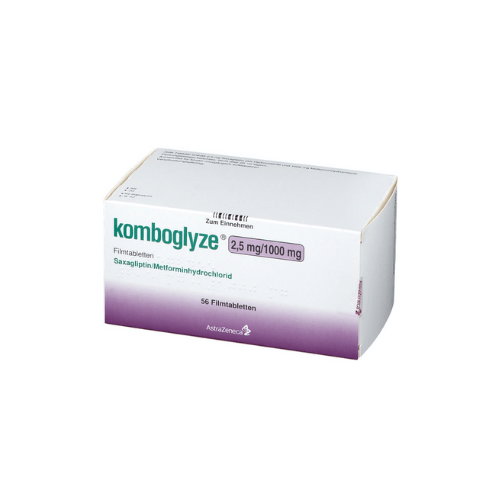
Komboglyze
Buy Komboglyze Online
Secure Encrypted Payments
Komboglyze is a combination diabetes medicine containing saxagliptin and metformin hydrochloride for adults with type 2 diabetes. It can be bought online through BorderFreeHealth, with current price information shown during ordering and the ability to choose the available strength that matches your clinician’s directions. The medicine is used with diet and physical activity to help improve blood sugar control over time.
This tablet combines two established approaches in one product: a DPP-4 inhibitor and metformin. Komboglyze is not used for type 1 diabetes or diabetic ketoacidosis, and it is not a substitute for meal planning, activity, glucose monitoring, or regular medical follow-up.
Komboglyze Price, Strength Selection, and Ordering
The Komboglyze price can vary by strength, quantity, and current supply. During ordering, choose the tablet strength and quantity shown for the product, then match that choice to the directions you were given by your healthcare professional. This helps avoid mix-ups between saxagliptin strength and metformin strength, which are both listed on combination-tablet labels.
People paying out of pocket often look at the Komboglyze cash price, multi-month quantities, and the per-tablet cost before placing an order. BorderFreeHealth offers US delivery from Canada for eligible store medicines, and products are supplied through licensed pharmacies. If you are exploring diabetes medicines more broadly, the Diabetes Care category can help you view related treatment and monitoring products.
Quick tip: Keep the exact strength written down in the same format as the label, such as saxagliptin first and metformin second, to reduce confusion when discussing refills.
What Komboglyze Treats
Komboglyze is used along with diet and exercise to improve blood glucose control in adults with type 2 diabetes. Type 2 diabetes is a long-term condition in which the body does not use insulin effectively and may not make enough insulin to keep blood sugar in range. For a condition-level explanation, see our section on Type 2 Diabetes.
The medicine is generally considered when a clinician wants both saxagliptin and metformin in one tablet rather than using separate medicines. It may be appropriate for adults who need additional glucose control beyond metformin alone or who are already using the two active ingredients separately. Suitability depends on kidney function, other medicines, heart failure history, tolerability, and blood glucose goals.
Komboglyze should not be used to treat diabetic ketoacidosis, a serious condition involving high ketones and metabolic imbalance. It is also not intended for type 1 diabetes. If you have vomiting, dehydration, very high glucose readings, rapid breathing, confusion, or severe illness, seek urgent medical care rather than relying on an oral diabetes tablet.
Ingredients and How the Combination Works
Komboglyze ingredients include saxagliptin and metformin hydrochloride. Saxagliptin is a DPP-4 inhibitor, meaning it helps prolong the activity of incretin hormones that support glucose-dependent insulin release after meals. Metformin is a biguanide that reduces glucose production by the liver and improves how the body responds to insulin.
These actions target different parts of type 2 diabetes management. Metformin mainly helps with fasting glucose and insulin resistance, while saxagliptin can help reduce post-meal glucose rises. The combined effect may help lower A1C when used consistently with food choices, activity, and monitoring.
Komboglyze is not the same as metformin alone. Metformin is one component of the tablet, but saxagliptin adds a second mechanism. This distinction matters when evaluating side effects, interactions, kidney-related precautions, and whether a single-ingredient metformin product would be enough.
Dosage Forms and How Tablets Are Usually Taken
Komboglyze dosage forms commonly refer to tablets that combine a saxagliptin amount with a metformin amount. Published strengths have included 2.5 mg saxagliptin with 500 mg, 850 mg, or 1000 mg metformin, and 5 mg saxagliptin with 500 mg, 850 mg, or 1000 mg metformin. Stock and country-specific packaging may vary, so follow the strength shown for the product you choose.
Take the tablet exactly as directed by your healthcare professional. Combination tablets containing metformin are commonly taken with meals to reduce stomach upset. Swallow tablets whole with water, and do not take extra tablets to make up for missed doses unless a clinician specifically tells you to do so.
Your saxagliptin metformin dosage may depend on your current metformin use, kidney function, glucose readings, and tolerance. If you are switching from separate saxagliptin and metformin tablets, the total daily amounts must be matched carefully. Do not change the strength, split tablets unexpectedly, or combine this medicine with similar products without professional guidance.
Komboglyze XR and Similar Names
Komboglyze and Komboglyze XR names can cause confusion. Komboglyze refers to saxagliptin plus metformin tablets, while Komboglyze XR is an extended-release metformin combination used in some markets. Extended-release products release metformin more gradually and may follow different dosing instructions than immediate-release products.
The generic name for Komboglyze is saxagliptin and metformin hydrochloride. A product described as saxagliptin metformin contains the same active-ingredient pairing, but naming, release type, country of origin, and packaging can differ by market. Always match the exact medicine name, release type, and strength before replacing one product with another.
Some searches mention Kombiglyze or discontinuation questions. Brand spellings and market status can differ between countries, and U.S.-specific product availability does not determine whether a Canadian-supplied regulated medicine can be offered by the store. If a specific brand or strength is not suitable, a clinician may consider separate metformin plus a DPP-4 inhibitor or a different diabetes class.
Missed Dose, Monitoring, and Day-to-Day Use
If you miss a dose, take it with food when remembered unless it is almost time for your next dose. If the next dose is close, skip the missed tablet and return to your usual schedule. Do not double the next dose, because taking too much metformin can increase the risk of stomach upset and, in rare situations, lactic acidosis.
Monitoring helps show whether the treatment plan is working safely. Your clinician may follow fasting glucose, after-meal readings, A1C, kidney function, and symptoms over time. Keep a record of glucose readings, missed doses, stomach symptoms, and any low blood sugar episodes, especially if insulin or a sulfonylurea is also part of your regimen.
Glucose improvement is usually assessed over weeks to months, not after one tablet. Many people need ongoing adjustments to nutrition, activity, weight goals, and other medicines. Articles in our type 2 diabetes library can support practical conversations about long-term self-management.
Side Effects, Warnings, and When to Get Help
Common side effects may include diarrhea, nausea, stomach discomfort, headache, upper respiratory symptoms, a metallic taste, or decreased appetite. Taking metformin-containing tablets with meals may improve stomach tolerance. Report persistent digestive symptoms, new weakness, dizziness, or changes that interfere with eating or hydration.
Serious but less common risks include lactic acidosis, pancreatitis, severe allergic reactions, kidney-related complications, and worsening heart failure in susceptible people. Lactic acidosis is a rare but dangerous buildup of lactic acid that can occur with metformin, especially when kidney function is poor or during severe dehydration, heavy alcohol use, serious infection, or low oxygen states.
Seek urgent care for severe abdominal pain that may spread to the back, trouble breathing, swelling of the face or throat, severe rash, extreme weakness, unusual sleepiness, muscle pain with feeling cold, or signs of dehydration. Stop-and-restart decisions around surgery, severe illness, or iodinated contrast imaging should be made with a healthcare professional.
Low blood sugar is not usually expected from metformin or DPP-4 inhibitors alone, but it can occur when Komboglyze is combined with insulin or medicines such as sulfonylureas. Symptoms may include shaking, sweating, hunger, fast heartbeat, confusion, blurred vision, or unusual irritability. Ask your care team how to prevent and treat lows based on the full medication plan.
Interactions, Contraindications, and Cautions
Tell your healthcare professional about all medicines, supplements, and alcohol use before using saxagliptin metformin. Strong CYP3A4/5 inhibitors can increase saxagliptin exposure, while certain enzyme inducers may reduce its effect. Medicines that affect kidney function, fluid balance, or blood pressure may also change the safety profile of metformin-containing therapy.
People with significant kidney disease, a history of lactic acidosis, active serious infection, severe dehydration, heavy alcohol intake, unstable heart failure, or severe liver problems may need a different treatment. A history of pancreatitis or heart failure symptoms deserves careful discussion because DPP-4 inhibitors, including saxagliptin, have specific warnings in these areas.
Pregnancy, breastfeeding, planned procedures, and contrast imaging can affect diabetes medication choices. Do not assume that a combination tablet is interchangeable with each separate component during these situations. Bring the full medicine list to each appointment, including insulin, sulfonylureas, blood pressure drugs, diuretics, and non-prescription products.
Storage, Travel, and Refills
Store Komboglyze tablets at room temperature in a dry place, away from moisture, direct heat, and children. Keep the container closed, and do not use tablets that are damaged, discolored, or past the expiry date. Avoid storing medication in bathrooms, cars, or checked luggage exposed to extreme temperatures.
For travel, carry tablets in hand luggage with the original labeled container and a current medicine list. Pack enough for the trip plus a small buffer, and plan dose timing if you cross time zones. BorderFreeHealth uses prompt, express shipping when sending orders, but you should plan refills before your supply runs low.
If you also use insulin or other temperature-sensitive diabetes products, storage needs can differ. Organizing tablets, glucose monitoring supplies, and injectable medicines together can make routines easier while still respecting each product’s handling requirements.
Related Diabetes Treatment Choices
Komboglyze may reduce pill burden for people who need both saxagliptin and metformin. Other adults may do better with separate tablets, an extended-release metformin product, or another diabetes class. The best choice depends on A1C goals, kidney function, hypoglycemia risk, weight goals, heart and kidney history, and side-effect tolerance.
Country-of-origin details can matter to people comparing regulated pharmacy products. The Canada country-of-origin section may help you understand how Canadian-sourced items are organized in the store. For overall browsing, diabetes medicines and supplies are grouped in Diabetes Care.
Ask your healthcare professional whether saxagliptin metformin, separate components, Komboglyze XR, or another therapy better matches your current treatment plan. Bring recent glucose logs, A1C results, kidney tests, and a list of side effects you want to avoid.
Questions to Ask Before Using This Medicine
- Which saxagliptin and metformin strength should I use?
- Should I take each dose with a meal?
- How often should kidney function be monitored?
- What symptoms should make me stop and seek care?
- Could my insulin or sulfonylurea dose increase low blood sugar risk?
- Do I need to pause metformin before contrast imaging or surgery?
- Would Komboglyze XR or separate tablets be more suitable?
Authoritative Sources
Official Canadian product monograph
European Medicines Agency medicine summary
Canadian Drug and Health Product Register record
This content is for informational purposes only and is not a substitute for professional medical advice.
Blood Glucose Unit Converter
Convert glucose readings between mg/dL and mmol/L without changing the clinical value.
mg/dL
-
US reporting unit
mmol/L
-
International reporting unit
These calculations are for education only and do not replace clinical advice, diagnosis, or treatment. Always confirm medical decisions with a qualified healthcare professional.
HbA1c & eAG Calculator
Convert between HbA1c percentage and estimated average glucose using the ADAG relationship.
HbA1c
-
percentage
eAG mg/dL
-
estimated average glucose
eAG mmol/L
-
estimated average glucose
These calculations are for education only and do not replace clinical advice, diagnosis, or treatment. Always confirm medical decisions with a qualified healthcare professional.
CGM Time-in-Range Summary
Summarise CGM percentages across very low, low, in-range, high, and very high glucose bands.
Entered total
-
should equal 100%
Below range
-
very low plus low
Above range
-
high plus very high
Summary
-
common adult CGM targets vary by patient
These calculations are for education only and do not replace clinical advice, diagnosis, or treatment. Always confirm medical decisions with a qualified healthcare professional.
Corrected Sodium Calculator
Estimate sodium corrected for hyperglycemia using common 1.6 and 2.4 correction factors.
Corrected sodium
-
1.6 factor
Corrected sodium
-
2.4 factor
These calculations are for education only and do not replace clinical advice, diagnosis, or treatment. Always confirm medical decisions with a qualified healthcare professional.
Carb Serving Calculator
Convert total carbohydrate grams into carb choices for meal planning and diabetes education.
Carb choices
-
total carbs divided by choice size
Rounded choices
-
nearest half choice
Carb calories
-
4 kcal per gram
These calculations are for education only and do not replace clinical advice, diagnosis, or treatment. Always confirm medical decisions with a qualified healthcare professional.
Express Shipping - from $29.99
Shipping with this method takes 3-5 days
Prices:
- Dry-Packed Products $29.99
- Cold-Packed Products $39.99
Shipping Countries:
- United States (all contiguous states**)
- Worldwide (excludes some countries***)
Standard Shipping - $19.99
Shipping with this method takes 5-10 days
Prices:
- Dry-Packed Products $19.99
- Not available for Cold-Packed products
Shipping Countries:
- United States (all contiguous states**)
- Worldwide (excludes some countries***)
What is Komboglyze used for?
Komboglyze is used with diet and exercise to help improve blood sugar control in adults with type 2 diabetes. It is not used for type 1 diabetes or diabetic ketoacidosis.
Is Komboglyze the same as metformin?
No. Komboglyze contains metformin plus saxagliptin. Metformin is one active ingredient, while saxagliptin adds a DPP-4 inhibitor mechanism that works differently from metformin alone.
What is the generic name for Komboglyze?
The generic name is saxagliptin and metformin hydrochloride. Labels usually show both ingredient strengths, so the saxagliptin amount and metformin amount should both match your treatment directions.
How is Komboglyze usually taken?
Komboglyze tablets are typically taken as directed by a healthcare professional, often with meals to reduce stomach upset from metformin. Do not change the dose or double doses after a missed tablet unless instructed.
What side effects should I watch for?
Common effects can include nausea, diarrhea, stomach discomfort, headache, upper respiratory symptoms, and metallic taste. Seek urgent help for severe abdominal pain, breathing trouble, facial swelling, extreme weakness, or dehydration symptoms.
Why do people ask if Kombiglyze was discontinued?
Brand names, spellings, and market availability can differ by country. A U.S.-specific status question does not necessarily describe Canadian-supplied regulated pharmacy products or alternative saxagliptin metformin options.
Rewards Program
Earn points on birthdays, product orders, reviews, friend referrals, and more! Enjoy your medication at unparalleled discounts while reaping rewards for every step you take with us.
You can read more about rewards here.
POINT VALUE
How to earn points
- 1Create an account and start earning.
- 2Earn points every time you shop or perform certain actions.
- 3Redeem points for exclusive discounts.
You Might Also Like
Select options
This product has multiple variants. The options may be chosen on the product page
Select options
This product has multiple variants. The options may be chosen on the product page
Select options
This product has multiple variants. The options may be chosen on the product page
Select options
This product has multiple variants. The options may be chosen on the product page