
Please note: a valid prescription is required for all prescription medication.
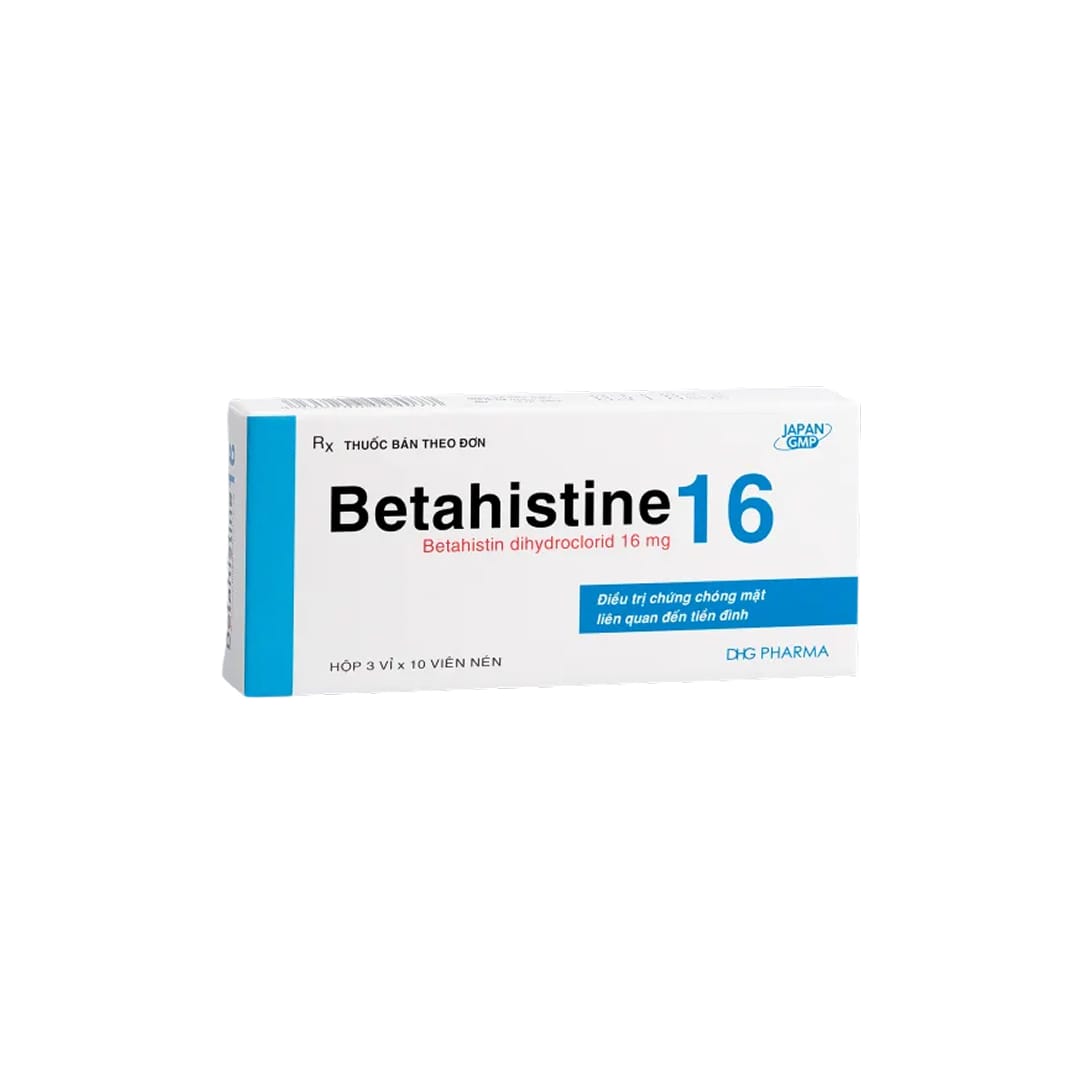
Betahistine
Buy Betahistine Online
Secure Encrypted Payments
Betahistine is a medicine used to help reduce recurrent vertigo episodes associated with Ménière’s disease. It can be bought online with current price information, and you can choose the available dose or strength that matches the directions from your clinician. Tablet strengths may vary by manufacturer and country, so the active ingredient and milligram strength should be checked before use.
Betahistine is also known by names such as Serc or Betaserc in some markets. The medicine is commonly discussed as betahistine dihydrochloride, betahistine hydrochloride, betahistine HCl, or simply betahistin, but the practical buying step is the same: match the dispensed strength and instructions to the treatment plan you were given.
Price, Strength, and Ordering Details
Betahistine price can vary with brand, generic supply, tablet strength, and quantity. During ordering, review the current cash-pay price and select the available strength that fits your written directions. If the product name differs from what you have used before, focus on the active ingredient, milligram strength, and dose schedule rather than tablet appearance alone.
Commonly referenced tablet strengths include 8 mg, 16 mg, and 24 mg in many markets. Betahistine 16 mg and betahistine 24 mg are frequent search terms because clinicians often use divided daily schedules, but you should not change the number of tablets simply because a different strength is supplied. Any change in strength can change the total daily amount.
| Common tablet strength | How it may appear in searches | What to verify before taking it |
|---|---|---|
| 8 mg | Betahistine 8 mg, Betaserc 8mg | Confirm how many tablets are intended for each dose |
| 16 mg | Betahistine 16 mg, Serc 16 mg, Betaserc 16 mg | Make sure the daily schedule matches the strength supplied |
| 24 mg | Betahistine 24 mg, Serc 24mg | Check whether the directions changed from a lower strength |
Some customers use US delivery from Canada when local access is difficult or when the medicine is not routinely stocked by nearby retail pharmacies. Products are supplied through licensed pharmacies, and order details may be reviewed for accuracy before the medicine is released. Shipping may include prompt, express shipping when the order is ready to proceed.
Quick tip: Keep a photo or copy of the label you currently use so the strength, instructions, and active ingredient can be matched carefully.
What Betahistine Is Used For
Betahistine is mainly used for symptoms linked to Ménière’s disease, a disorder of the inner ear that can cause spinning vertigo, tinnitus, ear fullness, nausea during attacks, and fluctuating hearing changes. It is considered an antivertigo medicine rather than a general treatment for every type of dizziness. The goal is usually fewer or less intense recurrent episodes, not instant relief of every attack.
The medicine is thought to act on histamine-related pathways and may influence blood flow or signaling in the inner ear. That inner-ear focus is why betahistine medicine is commonly associated with Ménière’s-type vertigo rather than light-headedness from dehydration, low blood sugar, a new infection, or medication-related drowsiness. If symptoms are new, severe, or unlike prior episodes, medical evaluation matters more than repeating the same medicine.
People often search for betahistine tablet uses, Serc tablet uses, or betahistine hydrochloride tablets uses when trying to understand whether the medicine fits their symptoms. A documented Ménière’s pattern usually includes repeat episodes over time, ear symptoms, and a clinician’s assessment of other causes. For more condition-specific background, see the Ménière’s disease section.
Why it matters: Vertigo has many causes, and the best treatment depends on the pattern and diagnosis.
Why U.S. Access Can Look Different
Betahistine is widely referenced internationally, including under the Serc medication and Betaserc medication names, but it is not routinely marketed through many U.S. retail pharmacies. That difference can make the buying process feel confusing for patients who have received the medicine abroad, used it previously, or were told about it during a specialist visit.
Country-specific naming and regulatory status can differ without changing the active ingredient. A Canadian-supplied betahistine tablet may have packaging, manufacturer names, or leaflet wording that differs from products seen in Europe or other regions. The key product checks remain the same: active ingredient, strength in mg, directions, storage instructions, and expiry date.
Questions such as “Why is betahistine not available in the USA?” usually refer to local marketing and retail availability, not to whether the medicine is used in other healthcare systems. If you are evaluating cross-border access, avoid assuming that a familiar brand name must look identical in every country. The Canada country-of-origin section can help place Canadian-supplied products in context.
How to Take It Safely
Betahistine is commonly taken on a regular schedule, often in divided doses. The exact timing depends on the strength supplied and the directions you were given. Many patient leaflets suggest taking tablets with or after food if nausea, indigestion, or stomach discomfort occurs.
Do not adjust the number of tablets based only on a good or bad vertigo day. Ménière’s symptoms often fluctuate, so one episode is not a reliable measure of whether the medicine is working. A short symptom log can help track attack timing, ear fullness, tinnitus, nausea, and any hearing change between follow-ups.
- Take it consistently: irregular use can make patterns harder to interpret.
- Use food if needed: this may reduce stomach upset.
- Follow the label: strength changes can alter tablet counts.
- Avoid doubling up: missed-dose instructions should come from your label or clinician.
Betahistine is not usually used as a one-time motion sickness tablet. It is more often part of a continuing plan for recurrent inner-ear symptoms. If dizziness is mostly triggered by rolling over in bed, standing quickly, migraine symptoms, or travel nausea, another approach may be more appropriate. The vertigo section gives broader context for different dizziness patterns.
Side Effects, Warnings, and Interactions
Common side effects can include headache, nausea, indigestion, bloating, and mild stomach discomfort. Taking the tablet with food may help some people tolerate it better. Persistent vomiting, severe stomach pain, black stools, hives, swelling, wheezing, or a new severe headache should be treated as reasons to seek medical guidance promptly.
People with asthma, a history of stomach ulcers, low blood pressure symptoms, or an adrenal tumor called pheochromocytoma should make sure those conditions have been considered before using betahistine. Pregnancy and breastfeeding also need individualized clinical discussion. A medicine can be appropriate for many adults and still require extra caution for a specific person.
Interactions are especially relevant because betahistine acts through histamine-related pathways. Antihistamines used for allergies, sleep, or cold symptoms may reduce the intended effect in some people. Monoamine oxidase inhibitors, often called MAOIs, can also affect how the body handles the medicine. Alcohol is not usually described as a classic direct interaction, but it can worsen balance symptoms and make response harder to judge.
Separate expected medicine effects from urgent warning signs. Sudden weakness, facial drooping, trouble speaking, loss of consciousness, chest pain, a severe new headache, or a sudden major hearing drop are not routine betahistine side effects. Those symptoms need urgent medical attention because they may indicate a stroke, neurological event, or another serious problem.
Storage, Travel, and Label Checks
Store betahistine tablets at room temperature unless the label gives different instructions. Keep them dry, away from excess heat, and in the original packaging so the strength, batch number, expiry date, and directions remain visible. A damp bathroom, hot car, or loose pill container can make product checks harder.
When travelling, carry tablets in hand luggage with the original labelled pack whenever possible. Keeping a medication list or label photo can help if you are asked to identify the medicine. If travel crosses time zones, maintaining a sensible spacing pattern is usually more practical than making abrupt schedule changes without guidance.
Tablet appearance may differ between manufacturers. Colour, shape, scoring, and package design are not reliable proof of sameness or difference. Check the active ingredient name, such as betahistine dihydrochloride or betahistine hydrochloride, plus the milligram strength and instructions every time a refill or replacement pack arrives.
How It Compares With Other Vertigo Options
Betahistine is often considered when recurrent vertigo is linked to Ménière’s disease or a similar vestibular disorder. Other medicines may be chosen for short-term nausea control, motion sickness, migraine-associated dizziness, or acute vertigo spells. Sedating vestibular suppressants can help some attacks, but they are not used the same way as a medicine intended for ongoing Ménière’s symptom management.
Non-medicine steps may also be part of a Ménière’s plan. Salt intake, hydration patterns, caffeine or alcohol triggers, hearing monitoring, and vestibular rehabilitation may matter depending on the diagnosis. A treatment plan can include medication while still needing lifestyle tracking and follow-up testing.
If the main question is whether symptoms are truly spinning vertigo, the article What Is Vertigo explains how vertigo differs from faintness or general imbalance. For symptom clusters tied to Ménière’s disease, Ménière’s disease facts can help prepare better questions for a clinician discussion.
Betahistine does not prove the diagnosis by itself. If attacks become more frequent, hearing changes worsen, or symptoms no longer match the original pattern, the overall plan should be reassessed. Sometimes the next useful step is hearing testing, vestibular assessment, medication review, or migraine evaluation rather than simply changing strengths.
When to Pause and Get Medical Help
Do not treat every dizziness episode as routine vertigo. New neurological symptoms, fainting, chest pain, sudden severe headache, new vision changes, or one-sided weakness need urgent evaluation. These symptoms can overlap with serious conditions that require immediate care.
Contact a healthcare professional if stomach pain becomes sharp or persistent, if stools turn black, or if vomiting prevents you from keeping fluids down. New rash, swelling, wheezing, or breathing difficulty can suggest an allergic-type reaction. People with asthma should be especially cautious if breathing symptoms change after starting a new medicine.
Ongoing monitoring should focus on whether vertigo attacks are less frequent, less intense, or easier to recover from. Track tinnitus, ear pressure, hearing changes, nausea, falls, and any side effects. A concise record is often more useful than relying on memory, especially when symptoms come in clusters.
Related Ear, Nose, and Throat Care
Betahistine sits within a broader group of treatments used for ear, balance, and vestibular symptoms. The Ear Nose Throat category can help you browse related products and understand how this medicine differs from treatments aimed at infection, allergy, congestion, or short-term nausea.
Before choosing a related product, identify the main symptom you are trying to manage. Spinning vertigo with ear fullness is different from sinus pressure, motion sickness, allergy-related congestion, or migraine-associated dizziness. Clear symptom timing helps prevent switching between unrelated products without addressing the underlying cause.
Authoritative Sources
- For patient-friendly medicine guidance, review the NHS betahistine medicine information.
- For tablet leaflet details, review the electronic Medicines Compendium patient leaflet.
- For adult medication counseling information, review the MSKCC betahistine patient guide.
This content is for informational purposes only and is not a substitute for professional medical advice.
Blood Pressure Average Calculator
Average home blood pressure readings and show a simple screening range.
Average BP
-
entered readings only
Range
-
screening category
These calculations are for education only and do not replace clinical advice, diagnosis, or treatment. Always confirm medical decisions with a qualified healthcare professional.
Mean Arterial Pressure Calculator
Calculate estimated mean arterial pressure from systolic and diastolic blood pressure.
MAP
-
DBP + one-third pulse pressure
These calculations are for education only and do not replace clinical advice, diagnosis, or treatment. Always confirm medical decisions with a qualified healthcare professional.
Pulse Pressure Calculator
Calculate pulse pressure from systolic and diastolic blood pressure.
Pulse pressure
-
SBP - DBP
These calculations are for education only and do not replace clinical advice, diagnosis, or treatment. Always confirm medical decisions with a qualified healthcare professional.
QTc Calculator
Calculate corrected QT interval from measured QT and heart rate.
QTc
-
milliseconds
RR interval
-
seconds
These calculations are for education only and do not replace clinical advice, diagnosis, or treatment. Always confirm medical decisions with a qualified healthcare professional.
Customer Reviews
4.7
Based on 3 Reviews
Write a Review
Ask a Question
- Reviews
- Questions
Filter Reviews:
VW
09/27/2024
Virginia W.  US
USGreat Customer Service
Border Free Health made my transition to them very easy and filled my order for 16mg Betahistine seamless. I look forward to using them in the future.
09/30/2024
borderfreehealth.com
Hi Virginia,Thank you so much for your wonderful feedback! We're thrilled to hear that your transition to Border Free Health was smooth and that filling your Betahistine order was seamless. We look forward to continuing to serve you in the future!If you have any questions or need further assistance, please let us know, we're here to support you.Thank you for choosing Border Free Health. Have an amazing day!
SH
09/18/2024
Sonya H. USShipping
It was good, I just wish shipping was quicker
09/23/2024
borderfreehealth.com
Hi Sonya,Thank you for your feedback! We're glad to hear everything went well with your order. We understand the desire for quicker shipping and appreciate your patience. We're always working to improve our delivery times.If you have any questions or need further assistance, please let us know, we're here to support you.Thank you for choosing Border Free Health. Have an amazing day!
VW
07/02/2024
Virginia W. USBetahistine in bottles
I appreciated that I received my Betahistine in bottles instead of push through packets. It is easier for me to use this way.
07/03/2024
borderfreehealth.com
Hi Virginia,Thank you for your feedback. It's great to hear that you appreciated receiving your medication in bottles rather than push-through packets, making it easier for you to use. If you have any other preferences or needs for your medications, please feel free to let us know. We're here to assist you with anything you may need.Thank you for choosing Border Free Health. Have a wonderful day!
Express Shipping - from $29.99
Shipping with this method takes 3-5 days
Prices:
- Dry-Packed Products $29.99
- Cold-Packed Products $39.99
Shipping Countries:
- United States (all contiguous states**)
- Worldwide (excludes some countries***)
Standard Shipping - $19.99
Shipping with this method takes 5-10 days
Prices:
- Dry-Packed Products $19.99
- Not available for Cold-Packed products
Shipping Countries:
- United States (all contiguous states**)
- Worldwide (excludes some countries***)
What is the main use of betahistine?
Betahistine is mainly used to help reduce recurrent vertigo episodes associated with Ménière’s disease. It may also be discussed for inner-ear balance symptoms that include tinnitus, ear fullness, nausea during attacks, and fluctuating hearing changes.
Why is betahistine not commonly available in U.S. pharmacies?
Betahistine is used in several countries, but it is not routinely marketed through many U.S. retail pharmacies. Access can therefore look different from filling a common local medicine, especially when brand names such as Serc or Betaserc are used in other markets.
Can I get betahistine over the counter?
Rules can differ by country and product supply channel, so do not assume betahistine is an over-the-counter medicine. Follow the requirements shown during ordering and use the medicine only when it matches clinician directions for your condition.
What should I avoid when taking betahistine?
Avoid changing the tablet strength or schedule on your own. Tell a healthcare professional about antihistamines, MAOIs, sleep aids, alcohol use, asthma, ulcer history, pregnancy, breastfeeding, or any new medicine that could affect dizziness or side effects.
How long does betahistine take to work?
Betahistine is usually judged by symptom patterns over time rather than one dose or one vertigo spell. Keeping a log of attacks, ear symptoms, nausea, and side effects can help determine whether the medicine is helping.
What are common betahistine side effects?
Common side effects may include headache, nausea, indigestion, bloating, or mild stomach discomfort. Seek medical help for severe stomach pain, black stools, swelling, wheezing, hives, persistent vomiting, or sudden neurological symptoms.
Rewards Program
Earn points on birthdays, product orders, reviews, friend referrals, and more! Enjoy your medication at unparalleled discounts while reaping rewards for every step you take with us.
You can read more about rewards here.
POINT VALUE
How to earn points
- 1Create an account and start earning.
- 2Earn points every time you shop or perform certain actions.
- 3Redeem points for exclusive discounts.
You Might Also Like
Select options
This product has multiple variants. The options may be chosen on the product page
Select options
This product has multiple variants. The options may be chosen on the product page
Select options
This product has multiple variants. The options may be chosen on the product page
Select options
This product has multiple variants. The options may be chosen on the product page