
Please note: a valid prescription is required for all prescription medication.
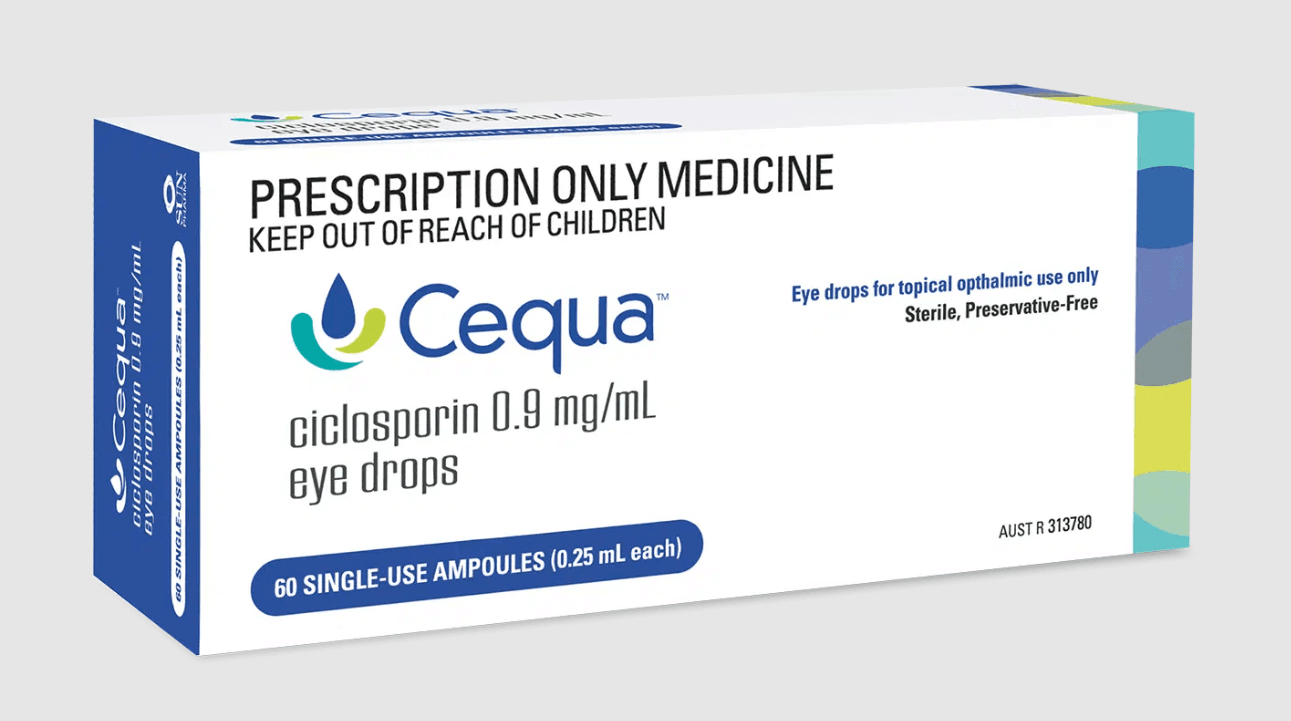
Cequa
Buy Cequa Eye Drops Online
Secure Encrypted Payments
Cequa is a cyclosporine 0.09 ophthalmic solution used for chronic dry eye disease related to ocular surface inflammation. You can buy Cequa online, view current pricing, and choose the quantity shown during ordering that matches your clinic directions. BorderFreeHealth offers U.S.-from-Canada service for supported medication orders through licensed pharmacy channels.
Cequa eye drops are different from ordinary lubricating drops because they contain cyclosporine, an immunomodulating medicine used in the eye. The treatment is supplied as preservative-free single-use vials, which helps protect the solution from repeated contamination after opening. Match the product name, strength, vial quantity, and dosing instructions on your clinic paperwork before placing an order.
Cequa is used for keratoconjunctivitis sicca, a form of chronic dry eye in which tear production is believed to be reduced by inflammation. It is not meant to treat every cause of eye discomfort, so sudden pain, major redness, light sensitivity, discharge, or new vision changes should be assessed promptly by a healthcare professional.
Cequa Price and Quantity Selection
The Cequa price depends on the current carton or vial quantity being purchased and any checkout costs shown with the order. When comparing the cequa eye drops cost, focus on the active ingredient, cyclosporine 0.09, and the total number of single-use vials rather than only the carton description. A larger quantity may last longer, but it should still match the daily schedule your clinician has provided.
Cequa 0.09 solution is a branded ophthalmic medication, not a bottle of artificial tears. The cost of Cequa eye drops can look different across pharmacies because package size, cash-pay terms, insurance plan rules, and sourcing channel may vary. If you are comparing Cequa cost with insurance against direct cash payment, use the same strength and vial count for a fair comparison.
People often search for Cequa drops, eye drops Cequa, cyclosporine eye drops Cequa, or Cequa solution 0.09 when looking for the same branded medicine. Those terms should still lead back to the exact product attributes: Cequa name, ophthalmic solution form, cyclosporine 0.09 concentration, and single-use vial packaging.
Quick tip: Match strength first, then compare the total vial count and final checkout amount.
How to Order Cequa Online
Start with the Cequa eye drops strength and quantity that match your clinic instructions. During checkout, read the medication name, form, concentration, and quantity carefully because small differences can change both the supply duration and total cost. Keep treatment instructions nearby in case order details need clarification before the pharmacy completes the medication supply.
Cequa ships from Canada to US for supported orders, with prompt, express shipping offered as a logistics option when available for the order. Shipping wording describes handling service only; it does not replace clinical judgment about whether this dry eye medication is right for you. If your eye care plan changes, confirm the medication choice with a healthcare professional before switching to another prescription dry eye therapy.
If you are organizing dry eye products more broadly, the Dry Eye collection can help you find related treatment categories. For a wider view of eye medications, browse Ophthalmology products without treating another medicine as an automatic substitute for Cequa.
What Cequa Is Used For
Cequa medication is indicated to increase tear production in people with keratoconjunctivitis sicca. This condition is commonly associated with chronic dry eye, where inflammation on the ocular surface may suppress natural tear production. The goal of treatment is not simply to wet the eye for a few minutes; it is to address an inflammatory process that can contribute to ongoing dryness.
Artificial tears, gels, and ointments can provide short-term lubrication, while Cequa for dry eyes works through cyclosporine activity in the eye. Benefits may take time and consistent use, so early day-to-day comfort does not always reflect the full treatment response. Your clinician may also recommend environmental changes, lid hygiene, tear supplements, or other eye medicines depending on the cause of symptoms.
Dry eye symptoms can overlap with allergies, infection, contact lens intolerance, eyelid disease, medication effects, and screen-related irritation. One-sided worsening, thick discharge, sudden vision changes, or significant eye pain should not be managed by simply adding more drops. Those symptoms may signal a condition that needs direct assessment.
Form, Strength, and Ingredients
Cequa solution is made for ophthalmic use, meaning it is placed in the eye. The commonly referenced strength is Cequa 0.09, corresponding to cyclosporine 0.09 in the formulation. It is supplied in single-use vials, which are opened for one use and then discarded.
Cequa ingredients include cyclosporine as the active ingredient, with inactive ingredients used to create the ophthalmic solution. Tell a healthcare professional if you have reacted to cyclosporine products or eye drop ingredients in the past. Allergy history matters because eye irritation from dry eye can be difficult to distinguish from sensitivity to a medication component.
Single-use packaging helps reduce the need for preservatives, but it also requires careful handling. Do not touch the vial tip to your eye, eyelid, fingers, counter, or any other surface. After instilling the drop as directed, throw away the opened vial even if some liquid remains.
| Product attribute | What it means for ordering and use |
|---|---|
| Brand name | Cequa |
| Active ingredient | Cyclosporine |
| Strength | Cyclosporine 0.09 ophthalmic solution |
| Packaging | Preservative-free single-use vials |
| Therapy role | Dry eye medication, not a simple lubricating tear substitute |
How to Use the Drops Safely
The labeled dosing schedule is one drop in each affected eye twice daily, about 12 hours apart. Follow the schedule given by your clinician, and do not use extra drops to make up for a missed dose unless a healthcare professional has instructed you to do so. More frequent use can increase irritation without improving the treatment plan.
- Wash and dry your hands before opening a vial.
- Remove one single-use vial from the foil pouch.
- Avoid touching the tip to any surface.
- Place one drop in the affected eye as directed.
- Close the eye gently without squeezing the lids.
- Discard the opened vial immediately after use.
If you use lubricants, allergy drops, glaucoma drops, antibiotic drops, steroid eye drops, or ointments, ask how to space them through the day. The official label advises separating Cequa from other topical ophthalmic products by at least 15 minutes. Contact lenses should be removed before use and are typically reinserted after waiting at least 15 minutes.
Why it matters: Spacing eye products reduces washout and helps each drop stay on the eye long enough to work.
Storage, Travel, and Handling
Keep Cequa vials in the original foil pouch until use to protect them from light. Store the medicine as directed on the package and avoid excessive heat, freezing temperatures, direct sunlight, and moisture exposure. Do not use a vial that looks damaged, leaking, cloudy, or contaminated.
For travel, pack enough single-use vials for the time away plus a small buffer in case plans change. Carrying vials in hand luggage can reduce exposure to temperature extremes and rough handling. A clean rigid case can also help prevent crushing inside a bag.
Opened vials should not be saved for later because contamination can increase the risk of irritation or infection. Keep unused vials out of reach of children and pets. If storage conditions are uncertain after a trip or delivery event, ask a pharmacist or clinician before using the medicine.
Side Effects, Warnings, and Monitoring
Common Cequa side effects can include instillation-site pain, burning, stinging, eye redness, watery eyes, blurred vision, discharge, itching, or a foreign-body sensation. These effects are usually local to the eye, but severe, persistent, or worsening symptoms should be discussed with a healthcare professional. Temporary blur can occur after instillation, so wait until vision clears before driving, cycling, using tools, or performing tasks that require sharp vision.
Do not use Cequa if you know you are hypersensitive to cyclosporine or any component of the formulation. Seek urgent help for signs of a serious allergic reaction, such as swelling of the face or eyelids, hives, severe rash, intense irritation, or trouble breathing. Eye infection symptoms, including increasing redness, pus-like discharge, marked light sensitivity, or sudden worsening in one eye, also need prompt care.
Tell your eye care team about recent eye surgery, corneal disease, herpes eye infection history, pregnancy, breastfeeding, contact lens use, and all other eye products. Systemic exposure from ophthalmic cyclosporine is expected to be low, so whole-body drug interactions are not usually the main concern. Practical interactions often involve timing: drops placed too close together may dilute or rinse away the previous medication.
Track dryness, redness, tearing, gritty sensation, comfort with contact lenses, and any new visual symptoms between visits. Bring the carton or a photo of the label if there is uncertainty about the exact medicine being used. Clear records help your clinician decide whether to continue, adjust companion therapies, or reassess the diagnosis.
How Cequa Compares With Other Dry Eye Treatments
Prescription dry eye medicines are not interchangeable without clinician input. Restasis also contains cyclosporine, but it uses a different concentration and formulation. Xiidra Ophthalmic Solution contains lifitegrast, a different active ingredient used for dry eye disease.
Some people may also encounter cyclosporine products in broader searches, but the exact eye formulation, concentration, packaging, and directions matter. Another ophthalmic cyclosporine product, Verkazia, is used in a different eye-care context and should not be treated as a substitute for Cequa. The right choice depends on diagnosis, previous response, tolerability, contact lens habits, and the clinical plan.
For a focused discussion of two common dry eye options, review Restasis vs Xiidra. If you want practical information on lifitegrast treatment, Xiidra eye drops for chronic dry eyes explains how that medicine is commonly considered. These resources support questions for your clinician rather than replacing an individualized eye exam.
Questions to Discuss With a Clinician
Use your appointment to connect Cequa with the type of dry eye found during examination. Ask whether inflammation appears to be contributing to low tear production, how long to use the drops before reassessment, and which lubricating drops are compatible with your routine. If the cost of Cequa is difficult, ask whether quantity, treatment schedule, or another approved option should be considered.
Contact lens wear deserves specific instructions because lenses are removed before instillation and reinserted after a waiting period. Also ask how to handle missed doses, flare-ups, allergy season, and use with other eye medicines. Clear instructions reduce confusion when several eye products are used in the same day.
Authoritative Sources
The FDA-approved prescribing information for Cequa provides official details on indication, dosing, contraindications, adverse reactions, contact lens instructions, and use with other ophthalmic products.
This content is for informational purposes only and is not a substitute for professional medical advice.
Express Shipping - from $29.99
Shipping with this method takes 3-5 days
Prices:
- Dry-Packed Products $29.99
- Cold-Packed Products $39.99
Shipping Countries:
- United States (all contiguous states**)
- Worldwide (excludes some countries***)
Standard Shipping - $19.99
Shipping with this method takes 5-10 days
Prices:
- Dry-Packed Products $19.99
- Not available for Cold-Packed products
Shipping Countries:
- United States (all contiguous states**)
- Worldwide (excludes some countries***)
What is Cequa used for?
Cequa is used to increase tear production in people with keratoconjunctivitis sicca, a chronic dry eye condition in which tear production is believed to be reduced by inflammation. It is not a general treatment for every cause of eye irritation.
Is Cequa the same as artificial tears?
No. Artificial tears mainly lubricate the eye surface for short-term comfort. Cequa contains cyclosporine 0.09, an immunomodulating medicine used in the eye to address inflammatory activity linked with reduced tear production.
How often is Cequa usually used?
The labeled schedule is one drop in each affected eye twice daily, about 12 hours apart. Follow the directions from your clinician, and ask how to space Cequa from other eye drops or ointments.
What are common Cequa side effects?
Common side effects may include burning, stinging, eye pain, redness, watery eyes, blurred vision, itching, discharge, or a foreign-body sensation. Seek clinical advice if symptoms are severe, persistent, or worsening.
Can I use contact lenses with Cequa?
Contact lenses should be removed before using Cequa. The official label advises waiting at least 15 minutes after instillation before reinserting lenses, unless your clinician gives different instructions.
How should Cequa single-use vials be handled?
Keep vials in the foil pouch until use, avoid touching the vial tip, and discard the opened vial immediately after use even if liquid remains. Do not save opened vials for later.
How does Cequa compare with Restasis or Xiidra?
Cequa and Restasis both contain cyclosporine but differ in concentration and formulation. Xiidra contains lifitegrast, a different active ingredient. These medicines should not be substituted for one another without clinician guidance.
Rewards Program
Earn points on birthdays, product orders, reviews, friend referrals, and more! Enjoy your medication at unparalleled discounts while reaping rewards for every step you take with us.
You can read more about rewards here.
POINT VALUE
How to earn points
- 1Create an account and start earning.
- 2Earn points every time you shop or perform certain actions.
- 3Redeem points for exclusive discounts.
You Might Also Like
Select options
This product has multiple variants. The options may be chosen on the product page
Select options
This product has multiple variants. The options may be chosen on the product page
Select options
This product has multiple variants. The options may be chosen on the product page
Select options
This product has multiple variants. The options may be chosen on the product page