
Please note: a valid prescription is required for all prescription medication.
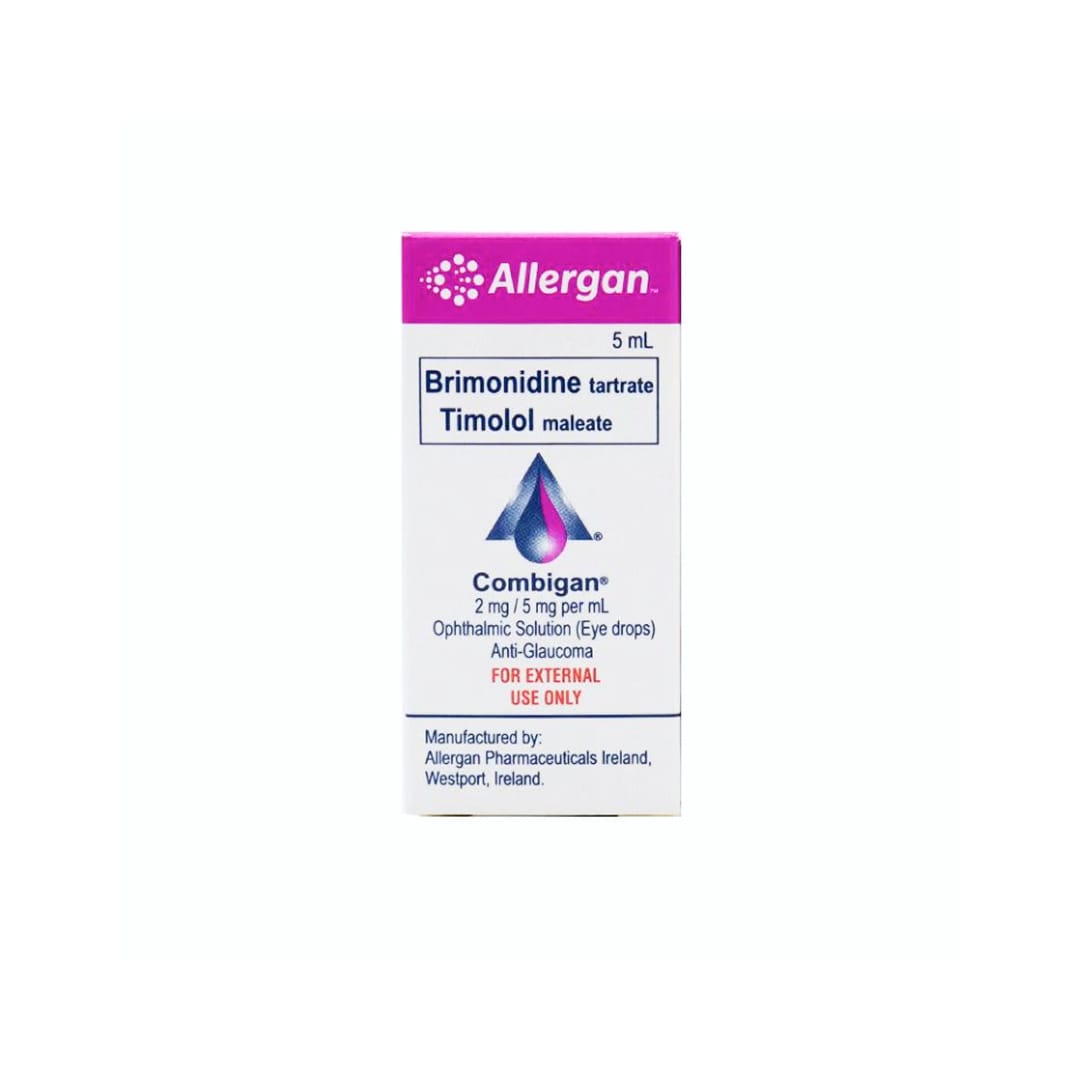
Combigan
Buy Combigan Eye Drops Online
Secure Encrypted Payments
Combigan is a sterile ophthalmic solution used to lower high pressure inside the eye in adults with open-angle glaucoma or ocular hypertension. Combigan can be bought online by choosing the eye drop strength and bottle quantity that match the directions from your eye care clinician. The product combines brimonidine tartrate 0.2% and timolol maleate 0.5% in one bottle, so the active ingredients, concentration, and mL amount should match your treatment plan.
Combigan eye drops are often used when a single pressure-lowering medicine is not enough, or when a combined bottle fits a daily routine better than separate drops. If you are comparing Combigan price, focus on the same strength, bottle size, and number of bottles each time. US delivery from Canada may be part of the service context for eligible orders, and product details should be checked against your label before use.
Combigan Price, Strength, and Bottle Details
The Combigan cost shown during ordering depends on the bottle size and quantity chosen. A Combigan 5 mL bottle is a common presentation, and the labeled concentration is brimonidine tartrate 0.2% with timolol maleate 0.5%. Because eye drops are purchased by bottle rather than by each drop used, the total mL amount and the directions on your label both affect refill planning.
When comparing Combigan eye drops price, use like-for-like details. A lower total is only meaningful when the product is the same ophthalmic solution, the same strength, and a quantity that fits your directions. If you are paying cash, keep local retail totals separate from the online total so you can make a clear Combigan cost comparison without mixing different package sizes.
| Detail | What to match |
|---|---|
| Form | Sterile eye drop solution in a dropper bottle. |
| Active ingredients | Brimonidine tartrate and timolol maleate. |
| Strength | 0.2% brimonidine tartrate and 0.5% timolol maleate. |
| Bottle size | Match the mL amount to your directions. |
| Quantity | Choose the number of bottles needed for the refill period. |
Quick tip: Compare the same mL amount and bottle count before judging the final total.
How to Order Combigan Online
To order Combigan online, choose the product strength and bottle quantity that align with your eye drop label. Enter your details carefully, including your name, shipping address, and any information requested for the medicine. We may review order details so the supplied ophthalmic solution matches the product requested.
Before checkout, look for the brand name, active ingredients, concentration, and total bottle quantity. Combigan brimonidine timolol is a fixed-combination product, which means both medicines are present in each drop. Do not switch to separate brimonidine and timolol bottles, or to another concentration, unless your clinician has told you that change is appropriate.
For U.S. customers using cross-border service, Combigan Ships from Canada to US as part of normal pharmacy supply channels when the order is completed. Handling can include prompt, express shipping, but timing still depends on processing, product handling, and transit conditions. When the bottle arrives, read the pharmacy label and inspect the cap, seal, and solution before the first dose.
What Combigan Eye Drops Treat
Combigan glaucoma eye drops are used to reduce elevated intraocular pressure, which means high pressure inside the eye. The medicine is indicated for adults with open-angle glaucoma or ocular hypertension. Lowering eye pressure can help protect the optic nerve over time, but glaucoma still needs regular monitoring because pressure can rise without pain or obvious vision changes.
The Combigan generic name is brimonidine tartrate and timolol maleate. Brimonidine is an alpha-2 adrenergic agonist, while timolol is a nonselective beta blocker. Both ingredients reduce fluid production inside the eye, and brimonidine may also increase fluid outflow. Together, they help lower intraocular pressure through complementary actions.
Combigan ocular hypertension treatment does not cure the underlying condition. It helps control pressure while you continue eye exams, pressure measurements, optic nerve checks, and visual field testing. If your vision feels stable, keep scheduled appointments because glaucoma progression can occur gradually.
For condition-level information, the glaucoma condition section explains how eye pressure relates to optic nerve health. The ocular hypertension section can help distinguish raised eye pressure from diagnosed glaucoma.
Dosage and Daily Use Basics
The usual Combigan dosage is one drop in the affected eye or eyes twice daily, about 12 hours apart, when used according to the official label. Follow the directions given by your clinician and printed on your bottle. Do not use extra drops to make up for a missed dose, because more medicine can increase side effects without improving pressure control.
Wash your hands before using the bottle. Tilt your head back, pull down the lower eyelid, and place one drop into the small pocket. Avoid touching the dropper tip to your eye, eyelid, lashes, fingers, or any surface, since contamination can lead to eye infection.
- Use morning and evening doses as evenly spaced as possible.
- Separate other liquid eye drops by at least five minutes.
- Use gels or ointments after liquid drops when both are part of care.
- Remove soft contact lenses before dosing.
- Wait 15 minutes before reinserting soft lenses.
After placing the drop, close the eye gently. Press lightly at the inner corner of the eye for one to two minutes if your clinician has recommended this technique. This is called nasolacrimal occlusion, and it may reduce how much medicine drains into the nose and throat.
If you miss a dose, use it when remembered unless the next dose is near. In that case, skip the missed dose and return to the regular schedule. If you frequently miss evening or morning doses, ask your eye care team how to build the medicine into a routine that is realistic for you.
How Long the Drops Last and What to Expect
Combigan is designed for twice-daily use, so each dose is intended to support pressure control until the next scheduled dose. The effect is not judged by comfort alone. Many people with high eye pressure do not feel symptoms, which is why measured intraocular pressure matters more than how the eye feels after dosing.
Temporary blurred vision, mild burning, or stinging may occur shortly after a drop is placed in the eye. Wait until vision clears before driving, reading small print, or using tools. If irritation is severe, persistent, or paired with swelling or discharge, contact a clinician because allergy or infection needs evaluation.
Do not stop Combigan because symptoms are absent. Eye pressure can rise silently, and missed doses may reduce pressure control. If the medicine does not fit your schedule, causes troublesome effects, or seems hard to use with other drops, your clinician can reassess the regimen.
Storage, Travel, and Handling
Store Combigan ophthalmic solution at room temperature as directed on the label. Keep the cap tightly closed between uses and store the bottle away from excessive heat. Do not freeze the product, and do not use a bottle if the solution appears cloudy, the cap is loose, or the container appears damaged.
Eye drop sterility matters. The bottle tip should stay clean and should not touch the eye, skin, contact lenses, counters, or tissues. Recap the bottle right away after each dose and do not share it with another person, even if that person uses similar eye medicines.
For travel, keep the bottle in a clean bag or case and leave the pharmacy label attached. Carry enough supply to avoid missed doses during delays. If your pharmacist gives a discard-after-opening date, follow that date even if liquid remains in the bottle.
Country-of-origin information can matter to customers reviewing cross-border choices. You may browse products associated with Canada country-of-origin details or India country-of-origin details when those attributes are displayed for specific medicines.
Side Effects, Warnings, and Monitoring
Combigan can cause eye effects and body-wide effects because both ingredients may be absorbed after instillation. Common side effects include eye redness, burning, stinging, itching, dryness, eyelid irritation, blurred vision, headache, fatigue, drowsiness, and dry mouth. Many reactions are mild, but symptoms that continue, worsen, or interfere with daily use should be reviewed.
Serious reactions need prompt attention. Seek urgent care for trouble breathing, wheezing, chest tightness, fainting, chest pain, severe dizziness, sudden vision loss, intense eye pain, or signs of a severe allergic reaction. Timolol can affect heart rate and breathing, while brimonidine can cause drowsiness and other nervous system effects in some people.
Combigan is contraindicated in people with bronchial asthma or a history of bronchial asthma, severe chronic obstructive pulmonary disease, sinus bradycardia, second- or third-degree atrioventricular block, overt cardiac failure, cardiogenic shock, or hypersensitivity to any component. It is also contraindicated in neonates and infants under two years of age. These restrictions are important because the active ingredients may have serious effects outside the eye.
Tell your clinician about heart disease, breathing problems, low blood pressure, depression, Raynaud’s phenomenon, circulation problems, diabetes, thyroid disease, kidney disease, or liver disease. Beta blockers may mask signs of low blood sugar or overactive thyroid. Eye pressure monitoring, optic nerve evaluation, and visual field testing help determine whether treatment is working and remains tolerable.
Interactions and Medicines to Mention
Medication interactions matter with brimonidine timolol eye drops because an ophthalmic product can still have systemic effects. Monoamine oxidase inhibitors are contraindicated with brimonidine. Caution is also important with tricyclic antidepressants, oral beta blockers, calcium channel blockers, digoxin, blood pressure medicines, sedatives, alcohol, and other products that may lower heart rate, blood pressure, or alertness.
Using another topical beta blocker at the same time is usually avoided unless your clinician specifically intends it. Bring all eye drops, tablets, inhalers, supplements, and over-the-counter medicines to medication reviews. A complete list helps your care team check for additive cardiovascular, breathing, or drowsiness effects.
If you use several eye medicines, keep a written sequence near your dosing area. Spacing products by at least five minutes can reduce washout, which happens when one drop carries another out of the eye. Ask whether any ointment should be used last, since thicker products can block absorption of liquid drops.
Related Eye Pressure Treatment Choices
Eye pressure treatment is individualized. Some people use prostaglandin analogs, carbonic anhydrase inhibitors, beta blockers, alpha agonists, or fixed-combination products. A combined bottle can reduce the number of separate drops, but it is not the right option for everyone, especially when heart, lung, allergy, or interaction concerns are present.
If a brimonidine timolol eye drops product is offered as an alternative, compare the active ingredients, strength, bottle size, and substitution instructions. The full technical name, brimonidine tartrate timolol maleate ophthalmic solution, should still match the intended therapy. Brand, generic, and separate component drops may differ by market and by what your clinician considers appropriate.
The ophthalmology products category can help you review other prescribed eye care medicines by class and form. For broader reading, the ophthalmology article category covers eye-health topics that may help you prepare questions for appointments.
Questions to Ask Before Checkout
Before buying Combigan online, make sure the bottle size, concentration, and quantity fit your current directions. Check how much medicine you have left so processing and transit do not interrupt dosing. If you have changed eye doctors, added heart or blood pressure medicine, or started an inhaler, update your care team before continuing treatment.
Contact lens users should confirm removal and reinsertion timing. People using more than one drop should ask for a clear dosing order. If you have had allergic reactions to eye drops, preservatives, beta blockers, or alpha agonists, share that history because it may affect whether this medicine is suitable.
Ask how often your intraocular pressure should be checked, what pressure range your clinician is targeting, and which symptoms require a call. Practical questions about missed doses, travel, storage, and combining drops can prevent avoidable confusion after the bottle arrives.
Authoritative Sources
Official FDA label: Combigan prescribing information.
DailyMed label record: Combigan brimonidine tartrate and timolol maleate solution.
This content is for informational purposes only and is not a substitute for professional medical advice.
Express Shipping - from $29.99
Shipping with this method takes 3-5 days
Prices:
- Dry-Packed Products $29.99
- Cold-Packed Products $39.99
Shipping Countries:
- United States (all contiguous states**)
- Worldwide (excludes some countries***)
Standard Shipping - $19.99
Shipping with this method takes 5-10 days
Prices:
- Dry-Packed Products $19.99
- Not available for Cold-Packed products
Shipping Countries:
- United States (all contiguous states**)
- Worldwide (excludes some countries***)
What are Combigan eye drops used for?
Combigan eye drops are used to lower elevated intraocular pressure in adults with open-angle glaucoma or ocular hypertension. They help control eye pressure but do not cure glaucoma, so regular eye exams remain important.
What is another name for Combigan?
The generic name for Combigan is brimonidine tartrate and timolol maleate. It may also be described as brimonidine timolol eye drops or brimonidine tartrate timolol maleate ophthalmic solution.
What is the usual Combigan dosage?
The labeled usual dosage is one drop in the affected eye or eyes twice daily, about 12 hours apart. Follow the directions on your bottle and do not add extra drops unless your clinician instructs you to.
How long do Combigan eye drops last?
Combigan is used twice daily, so each dose is intended to support pressure control until the next scheduled dose. Your response should be judged by eye pressure checks, not by how the eye feels.
What side effects can Combigan cause?
Common side effects include eye redness, burning, stinging, itching, dryness, blurred vision, headache, fatigue, drowsiness, and dry mouth. Seek urgent care for breathing trouble, fainting, chest pain, sudden vision loss, or severe eye pain.
Can Combigan be used with other eye drops?
Combigan may be used with other eye medicines when a clinician includes them in the plan. Separate liquid eye drops by at least five minutes, and use ointments after liquids when directed.
How should Combigan be stored?
Store Combigan at room temperature as directed on the label, keep the cap closed, and avoid freezing or excessive heat. Do not touch the dropper tip to the eye, skin, or surfaces, and do not share the bottle.
Rewards Program
Earn points on birthdays, product orders, reviews, friend referrals, and more! Enjoy your medication at unparalleled discounts while reaping rewards for every step you take with us.
You can read more about rewards here.
POINT VALUE
How to earn points
- 1Create an account and start earning.
- 2Earn points every time you shop or perform certain actions.
- 3Redeem points for exclusive discounts.
You Might Also Like
Select options
This product has multiple variants. The options may be chosen on the product page
Select options
This product has multiple variants. The options may be chosen on the product page
Select options
This product has multiple variants. The options may be chosen on the product page
Select options
This product has multiple variants. The options may be chosen on the product page