
Please note: a valid prescription is required for all prescription medication.
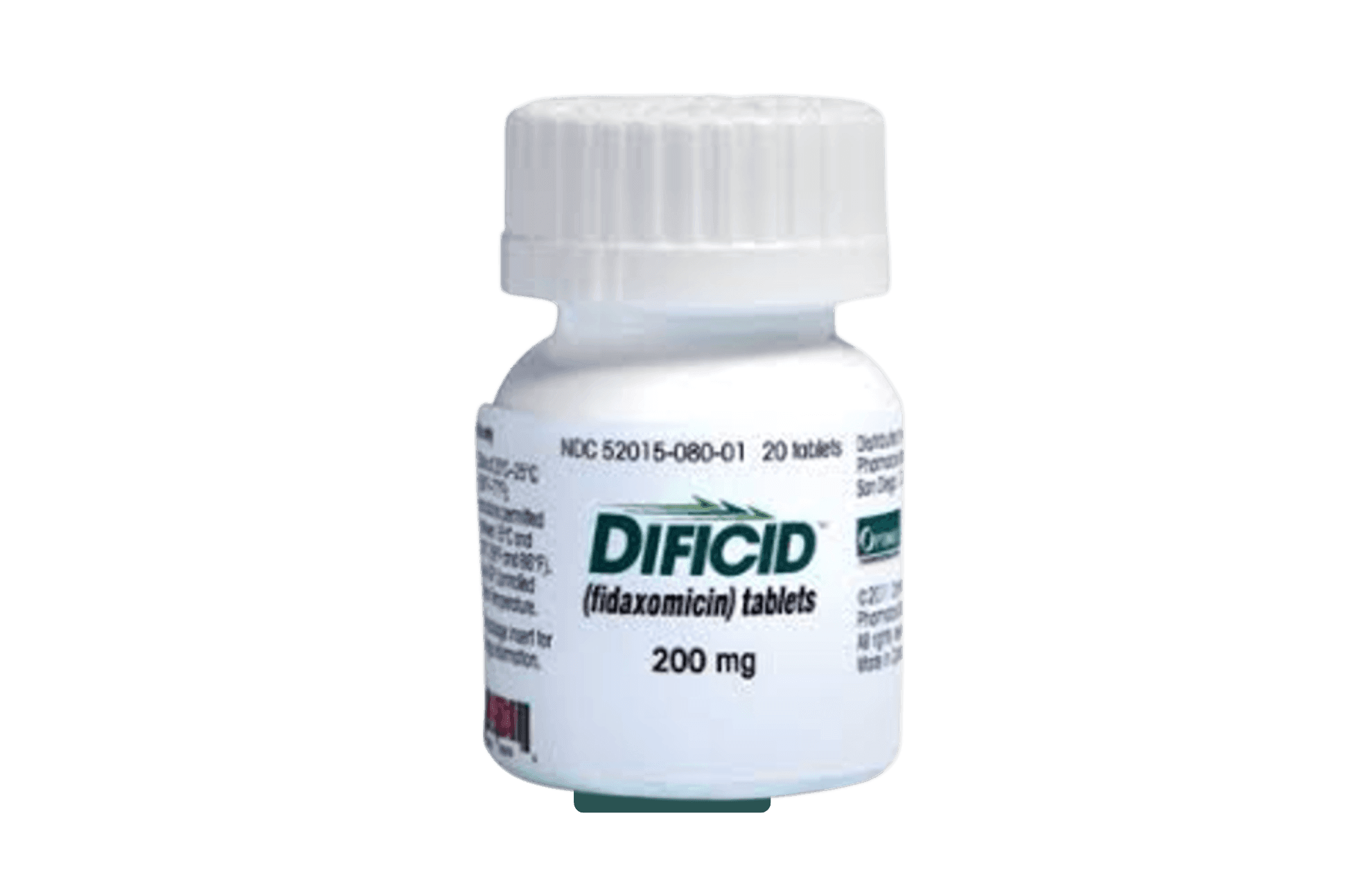
Dificid
Buy Dificid Online
Secure Encrypted Payments
Dificid is an oral antibiotic medicine containing fidaxomicin, used for Clostridioides difficile infection, often called C. diff. It can be ordered online, with customers choosing the listed dose and quantity that match their healthcare professional’s directions. Dificid 200 mg tablets are commonly supplied for a short treatment course, and the Dificid tablets price can be viewed during ordering.
Fidaxomicin works mainly inside the gut, where C. diff causes inflammation and diarrhea. Because very little of the medicine is absorbed into the bloodstream, its action is focused in the colon rather than throughout the body. That local gut activity is one reason people often compare Dificid with other C. diff treatments when discussing therapy choices with a healthcare professional.
Dificid Price, Strength, and Ordering Details
Dificid is available as 200 mg film-coated tablets. During ordering, choose the strength and quantity shown for the product and make sure it matches the directions you received. Many searches for Dificid 200 mg price, Dificid 200 mg cost, or fidaxomicin tablets cost are really about the same practical question: how to complete the full course without unexpected confusion over tablet strength or quantity.
The common adult regimen in labeling is one 200 mg tablet taken twice daily for 10 days. That schedule is included here for orientation only; your own directions may differ based on age, diagnosis, medical history, or local practice. If the quantity shown does not seem to match the full course you were told to take, ask your healthcare professional or pharmacist to clarify before starting.
Cash-pay customers can view current pricing before checkout. BorderFreeHealth provides a U.S.-from-Canada service for many medicines, and products are supplied through licensed pharmacies. Use the order flow to enter your details carefully, because name, dose, quantity, and directions should be consistent across your medication records.
What Dificid Treats
Dificid is used to treat Clostridioides difficile-associated diarrhea in adults and certain pediatric patients. C. diff infection can occur when the normal balance of gut bacteria is disrupted, often after exposure to antibacterial medicines. The infection may cause frequent watery diarrhea, abdominal cramping, nausea, fever, and dehydration risk.
For more condition-specific background, see Clostridioides difficile infection. Dificid is not intended for infections outside the colon. It should not be used for viral illnesses such as colds or flu, and antibacterial medicines should be used only when a bacterial infection is being treated.
Fidaxomicin inhibits bacterial RNA synthesis, which helps stop susceptible C. diff bacteria from growing. It is considered narrow spectrum compared with many systemic antibiotics, meaning its activity is more focused. That distinction matters because C. diff occurs in the gut, and maintaining the balance of other intestinal organisms may be part of recovery.
How to Take Dificid Tablets
Take Dificid exactly as directed by your healthcare professional and the pharmacy label. The usual adult schedule is one tablet by mouth twice daily for 10 days. Try to take doses about 12 hours apart, and swallow tablets with water. Dificid may be taken with or without food.
Finish the full course even if diarrhea begins to improve before the last dose. Stopping an antibiotic early can allow bacteria to remain and may complicate recovery. If vomiting, severe diarrhea, or trouble swallowing prevents you from keeping doses down, contact a healthcare professional promptly for next steps.
If a dose is missed, take it when you remember unless it is almost time for the next scheduled dose. If the next dose is close, skip the missed dose and return to the regular schedule. Do not take two doses at the same time to make up for a missed tablet.
Strengths, Form, and Pack Considerations
Dificid tablets contain fidaxomicin 200 mg. The tablets are oral, film-coated, and commonly associated with a 20-tablet course pack, although packaging can vary by supply. If you are comparing Dificid 200 mg tablets with fidaxomicin 200 mg tablets, the active ingredient and strength are the key details to review.
Some markets may use brand and generic names differently, and product sourcing can vary by country. The practical point for customers is to confirm the active ingredient, strength, form, and quantity before use. If a substitution is discussed, make sure the healthcare professional understands the infection being treated and the course length expected.
Quick tip: Keep the labeled bottle until the course is complete, even if you use a pill organizer for reminders.
Benefits and Treatment Expectations
Dificid acts mainly in the gastrointestinal tract, placing the medicine near the site of C. diff infection. Many people want to know how quickly symptoms may change. Diarrhea may begin to improve during treatment, but recovery can vary depending on infection severity, hydration status, age, other illnesses, and prior C. diff episodes.
Continue fluids as directed and seek help if you develop dizziness, very little urination, worsening abdominal pain, persistent fever, or blood in the stool. These symptoms can suggest dehydration or complications that require medical attention. If symptoms return after treatment, contact a healthcare professional rather than restarting leftover antibiotics.
Dificid is one option within the broader Infectious Disease category. Treatment decisions for C. diff often consider severity, prior recurrence, recent antibiotic exposure, and individual risk factors. A healthcare professional can explain why Dificid was chosen instead of another oral therapy.
Side Effects, Warnings, and Monitoring
Common side effects reported with fidaxomicin can include nausea, vomiting, abdominal pain, gastrointestinal bleeding, anemia, and low white blood cell counts. Some people may also notice headache, constipation, gas, or changes in diarrhea pattern while the infection is improving. Report symptoms that feel severe, persistent, or different from the expected course of recovery.
Allergic reactions are uncommon but can be serious. Seek urgent care for hives, swelling of the face or throat, wheezing, breathing trouble, faintness, or a severe rash. People with a known allergy to fidaxomicin should not use it. Anyone with a history of significant medicine allergies should discuss that history before taking a new antibacterial medicine.
Fidaxomicin is a substrate of P-glycoprotein, often abbreviated P-gp, a transporter that can affect how some medicines move through the body. Because Dificid is minimally absorbed, many systemic interactions are less likely than with broadly absorbed antibiotics, but your medication list still matters. Share all prescription medicines, over-the-counter products, vitamins, and supplements with your healthcare professional or pharmacist.
Pregnancy and breastfeeding decisions should be individualized. Available information may be limited, and the risks of untreated C. diff must be weighed against treatment considerations. Caregivers of children taking fidaxomicin should watch closely for dehydration, rash, breathing symptoms, or worsening diarrhea.
Storage, Travel, and Handling
Store Dificid tablets at room temperature in the original container. Keep the bottle tightly closed and protect it from excess moisture and heat. Avoid storing tablets in bathrooms, cars, or places where temperature and humidity change quickly. Keep all medicines out of reach of children and pets.
When traveling, carry the labeled container in hand luggage along with your medication schedule. If time zones change, aim to keep doses evenly spaced as closely as practical. Phone alarms or a written checklist can help you complete each dose without guessing.
Orders may be handled with prompt, express shipping when applicable. Shipping and handling language does not replace storage instructions, so follow the label after the medicine arrives. Contact the pharmacy or a healthcare professional if tablets appear damaged or if storage conditions were uncertain for an extended period.
Dificid Compared With Other Antibiotics
For C. diff, other treatment options may include oral vancomycin, and metronidazole may be used in select situations depending on clinical guidance. These medicines differ in absorption, spectrum, tolerability, and how they fit individual treatment plans. Dificid’s narrow gut-focused activity is a key reason it is often discussed specifically for C. diff rather than for general infections.
Other antibiotics sold for different infections are not interchangeable with Dificid. For example, clarithromycin is a macrolide antibiotic used in other bacterial infection settings, while Humatin contains paromomycin and has different uses. Do not substitute another antibiotic for C. diff treatment unless a healthcare professional specifically directs that change.
Recent antibiotic exposure can be important in C. diff history. If another antibacterial medicine may have triggered symptoms, that information can help the healthcare professional assess recurrence risk and choose the next step. The infectious disease articles section can provide broader background, but individual treatment choices should be based on clinical evaluation.
Questions to Ask Before Starting
- Is Dificid the intended treatment for my confirmed or suspected C. diff infection?
- Does the quantity match the full course I was told to complete?
- Which symptoms should prompt urgent care during treatment?
- How should I manage fluids, diet, and other medicines while taking it?
- What should I do if diarrhea returns after the course ends?
- Should any household or infection-control steps be followed at home?
These questions are especially useful for people with prior C. diff, inflammatory bowel disease, kidney problems, frailty, pregnancy, or recent hospitalization. C. diff can become serious quickly in some patients, so clear instructions help avoid delays when symptoms worsen.
Authoritative Sources
These sources support labeled use, dosing context, safety warnings, and pediatric-use information. They do not replace individualized directions from a healthcare professional who knows your test results, symptoms, and medical history.
This content is for informational purposes only and is not a substitute for professional medical advice.
Express Shipping - from $29.99
Shipping with this method takes 3-5 days
Prices:
- Dry-Packed Products $29.99
- Cold-Packed Products $39.99
Shipping Countries:
- United States (all contiguous states**)
- Worldwide (excludes some countries***)
Standard Shipping - $19.99
Shipping with this method takes 5-10 days
Prices:
- Dry-Packed Products $19.99
- Not available for Cold-Packed products
Shipping Countries:
- United States (all contiguous states**)
- Worldwide (excludes some countries***)
What is Dificid used for?
Dificid contains fidaxomicin and is used to treat Clostridioides difficile-associated diarrhea, commonly called C. diff infection. It acts mainly in the gut and is not used for infections outside the colon.
How is Dificid 200 mg usually taken?
The common adult schedule in labeling is one 200 mg tablet by mouth twice daily for 10 days. Follow the directions provided for your treatment, and do not change the schedule without professional guidance.
Can Dificid be taken with food?
Yes. Dificid tablets may be taken with or without food. Try to keep doses evenly spaced, and swallow the tablet with water unless you were given different instructions.
What are common Dificid side effects?
Commonly reported effects can include nausea, vomiting, abdominal pain, gastrointestinal bleeding, anemia, and low white blood cell counts. Seek urgent help for breathing trouble, swelling, hives, or a severe rash.
What should I do if symptoms return after finishing Dificid?
Contact a healthcare professional if diarrhea returns after the course ends. C. diff can recur, and the next step should be based on your symptoms, risk factors, and treatment history.
Rewards Program
Earn points on birthdays, product orders, reviews, friend referrals, and more! Enjoy your medication at unparalleled discounts while reaping rewards for every step you take with us.
You can read more about rewards here.
POINT VALUE
How to earn points
- 1Create an account and start earning.
- 2Earn points every time you shop or perform certain actions.
- 3Redeem points for exclusive discounts.
You Might Also Like
Select options
This product has multiple variants. The options may be chosen on the product page
Select options
This product has multiple variants. The options may be chosen on the product page
Select options
This product has multiple variants. The options may be chosen on the product page
Select options
This product has multiple variants. The options may be chosen on the product page