

Please note: a valid prescription is required for all prescription medication.
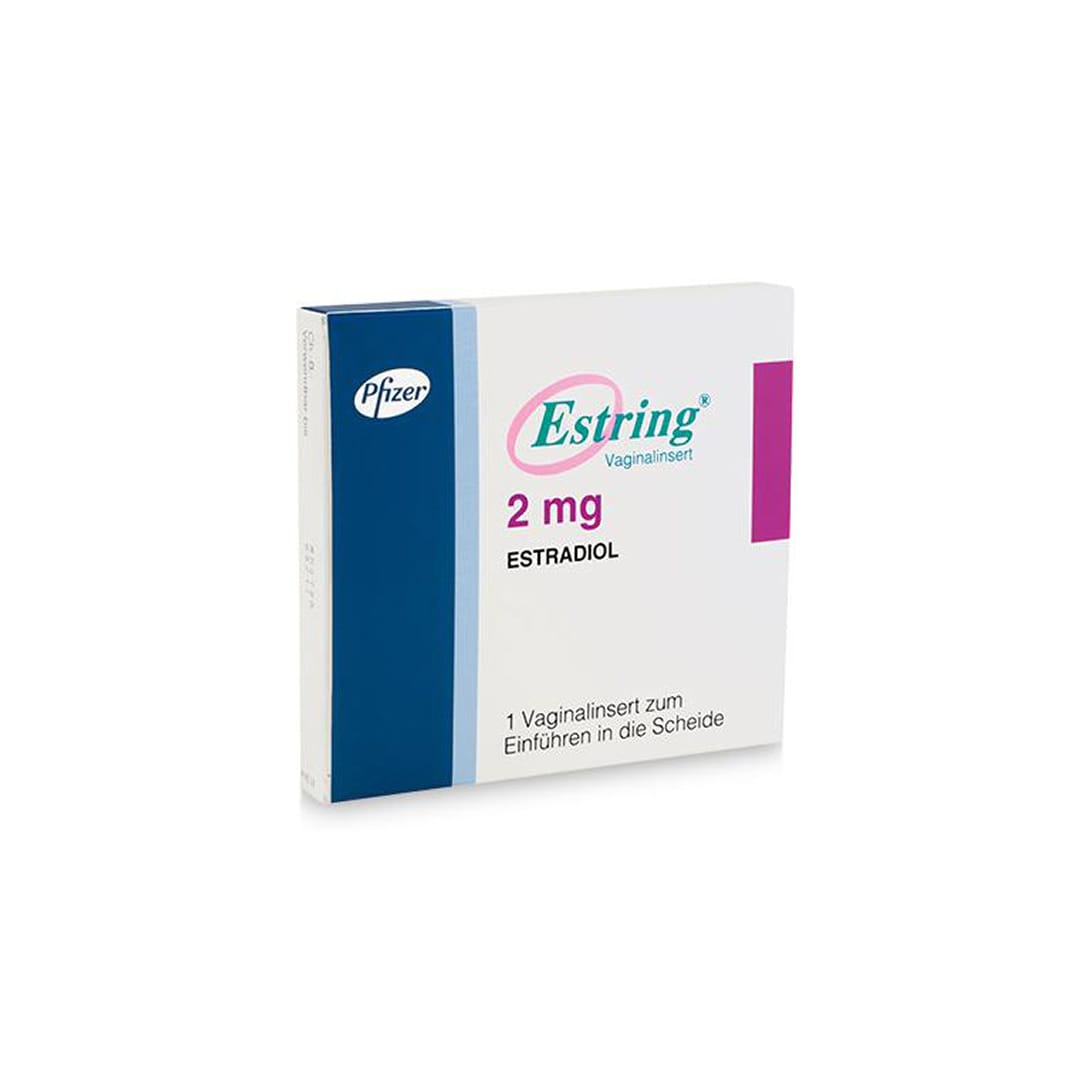
Estring Vaginal Ring
Buy Estring Vaginal Ring Online
Secure Encrypted Payments
Estring Vaginal Ring is an estradiol vaginal delivery system used after menopause for moderate to severe vaginal dryness, burning, irritation, and painful sex linked to tissue thinning. It can be bought online through licensed pharmacy channels, with current price information shown during ordering and the available strength matched to your clinician’s directions. The ring contains 2 mg of estradiol and releases about 7.5 mcg every 24 hours for up to 90 days.
This vaginal estrogen ring is designed for local treatment in and around the vagina. It is not a contraceptive, and it is not mainly used for whole-body menopause symptoms such as hot flashes or night sweats. If your symptoms involve unexplained bleeding, infection-like discharge, pelvic pain, or a new lump, those concerns should be assessed before using estrogen therapy.
Estring Price, Strength, and Ordering Details
When you buy Estring Vaginal Ring, the main product selection is the Estring 2 mg vaginal ring, also described as the 7.5 mcg/24 hour vaginal ring. The total 2 mg amount refers to the estradiol reservoir inside the ring, while the 7.5 mcg/24 hour figure describes the approximate daily release rate during use. Your order should match the product strength and replacement schedule directed by your clinician.
Estring cost can vary because cash-pay amounts depend on the pharmacy source, supply conditions, and the quantity being purchased. The current price should be reviewed at the time of ordering rather than estimated from old forum posts or insurance discussions. Some customers looking at US delivery from Canada also compare the cash price against local pharmacy quotes, especially when insurance coverage is limited.
The ring’s 90-day wear interval is an important cost and convenience factor. A single ring is intended to stay in place continuously for up to three months, so the value comparison is different from creams, tablets, or inserts that may be used more often. If you are comparing products, include the dosing schedule, handling comfort, and safety profile, not only the checkout amount.
What Estring Treats After Menopause
Estring is used for moderate to severe urogenital symptoms due to postmenopausal atrophy, often called vulvovaginal atrophy or genitourinary syndrome of menopause. In plain language, lower estrogen after menopause can make vaginal and nearby urinary tissues thinner, drier, and more easily irritated. Symptoms may include dryness, burning, itching, soreness, painful sex, and discomfort around the vaginal opening.
The product works by releasing a low dose of estradiol directly in the vagina. That local delivery is one reason Estring is often discussed for vaginal dryness and irritation rather than as a general menopause hormone treatment. If your symptoms match the broader condition described under vaginal atrophy, Estring may be one local estrogen option to discuss with a healthcare professional.
Estring does not treat every possible cause of vaginal discomfort. Yeast infections, bacterial vaginosis, urinary tract infections, skin conditions, pelvic floor pain, and sexually transmitted infections can produce overlapping symptoms. New symptoms, unusual discharge, fever, pelvic pain, or bleeding after menopause should be evaluated rather than assumed to be menopause-related dryness.
How the 90-Day Vaginal Ring Is Used
Estring is inserted high in the vagina and left in place continuously for 90 days. The ring is soft and flexible, and it is intended to provide continuous local estradiol release without daily application. After 90 days, it is removed and replaced if ongoing treatment is still appropriate.
Follow the official patient leaflet and the instructions given by your clinician. The ring should not be cut, shared, swallowed, or used outside the vagina. If it slips out, the patient information advises rinsing it with lukewarm water before reinserting it. If reinsertion is difficult, painful, or repeatedly unsuccessful, ask a healthcare professional for guidance.
Some people can feel the ring during placement, while others do not notice it once positioned. It may be removed briefly for certain situations only if your clinician has said that is appropriate, and it should be replaced as directed. Quick tip: Mark the 90-day change date on a calendar when the ring is inserted.
| Feature | Label detail | Practical meaning |
|---|---|---|
| Form | Vaginal ring | Worn internally instead of applied daily |
| Estradiol content | 2 mg | The hormone reservoir inside the ring |
| Release rate | About 7.5 mcg every 24 hours | Continuous low-dose local estrogen delivery |
| Use interval | Up to 90 days | Replaced about every three months if continuing |
Who Estring May Suit
Estring may suit postmenopausal adults who have mainly local vaginal symptoms and prefer a treatment that does not require frequent application. It can be practical for people who find creams messy or who have trouble remembering scheduled tablets or inserts. Comfort with an inserted ring is still important, because the device remains in place for an extended period.
It may be less suitable when symptoms are mainly hot flashes, night sweats, mood changes, or sleep disturbance. Those concerns often require a different menopause discussion because Estring is a local vaginal estrogen product. Patients browsing broader product categories can use women’s health to understand how vaginal therapies fit alongside other health needs.
Fit and safety also matter. Tell a clinician about vaginal prolapse, pessary use, recent vaginal surgery, repeated vaginal infections, or past trouble keeping inserted devices in place. Those factors may affect comfort, placement, or whether another local option is easier to use.
Who Should Not Use It or Needs Extra Caution
People with unexplained vaginal bleeding should not start estrogen therapy until the cause is evaluated. Estring also requires careful medical review in anyone with known or suspected estrogen-dependent cancer, breast cancer history, active or past blood clots, stroke, heart attack, liver disease, or pregnancy. These risks do not mean every person will have a serious problem, but they do mean suitability should be individualized.
Estrogen products carry important warnings, including possible risks related to blood clots, stroke, heart attack, gallbladder disease, dementia in certain older patients, and cancers of the breast or uterus in some circumstances. Using the lowest effective estrogen exposure for the shortest appropriate duration is a common treatment principle. Periodic reassessment helps determine whether continued use still makes sense.
Contact a healthcare professional promptly for postmenopausal bleeding, severe pelvic or vaginal pain, vaginal ulceration, trouble removing the ring, or a new breast lump. Seek urgent care for chest pain, sudden shortness of breath, severe headache, vision changes, one-sided weakness, or sudden leg swelling. Why it matters: Serious estrogen-related events are uncommon for many users, but early attention to warning signs can be critical.
Side Effects, Weight Questions, and Monitoring
Common side effects reported with an estradiol vaginal ring can include vaginal discharge, irritation, itching, pelvic discomfort, yeast infection, headache, breast tenderness, and nausea. Some effects are local and may improve, but persistent discomfort should not be ignored. A ring that causes ongoing pain, pressure, or sores may need reassessment.
Many people ask whether Estring causes weight gain. Weight changes are common around menopause because of age, activity, sleep, body composition, medications, and other health conditions. A local vaginal estrogen ring is not a reliable single explanation for weight gain, so rapid weight change, swelling, shortness of breath, or unusual fatigue should be reviewed medically.
Monitoring is practical rather than complicated for many users. Track whether dryness, burning, irritation, or pain with sex improves over time, and note any bleeding, breast changes, new headaches, or symptoms that feel unusual for you. Keep routine gynecologic and breast screening on schedule, and tell your clinician about any other hormone products you use.
Drug Interactions and Product Combinations
Even though Estring is used locally, medication history still matters. Other estrogen products, progestins, some antifungal medicines, certain seizure medicines, rifampin-like antibiotics, and herbal products such as St. John’s wort can complicate hormone exposure or side-effect interpretation. Do not combine hormone therapies unless a clinician has specifically directed that plan.
Tell your healthcare professional about blood thinners, cancer medicines, migraine history, smoking, high blood pressure, diabetes, high cholesterol, and cardiovascular disease. These factors can influence how estrogen risks are weighed. If symptoms change after starting or stopping another medicine, record the timing because it may help identify the cause.
Vaginal products may also interact in practical ways. Lubricants, moisturizers, antifungal treatments, pessaries, and pelvic devices can affect comfort or placement. Ask how to space products or whether a temporary change is needed if treating an infection.
Storage, Handling, and Travel
Keep the unopened Estring ring in its original pouch until you are ready to use it. Store it at room temperature as directed on the packaging, and protect it from excessive heat, freezing, and damage. Do not use a ring if the pouch is torn or the product appears damaged, brittle, or unusually discolored.
For travel, keep the ring packaging and patient leaflet with your regular medicines. If a trip overlaps with the 90-day replacement date, plan ahead so the change is not rushed. Orders may involve prompt, express shipping, but travel planning should still account for personal schedules and the replacement interval.
Used rings should be discarded according to the patient leaflet and kept away from children and pets. Wash hands before and after handling. If the ring falls into a toilet or becomes contaminated in a way that cannot be safely rinsed according to the leaflet, ask a clinician or pharmacist what to do.
Estring vs Femring, Creams, and Inserts
Estring and Femring are both vaginal rings, but they are not the same product. Estring is a low-dose local estradiol vaginal system used for vaginal and urogenital symptoms after menopause. Femring is generally discussed as a more systemic estrogen ring for broader menopause symptoms, so the choice depends on the treatment goal.
Vaginal estradiol creams allow measured application on a schedule and may suit people who want flexible dosing or external vulvar application. Tablets and inserts can feel smaller and may be preferred by people who do not want a ring in place for months. Nonhormonal moisturizers and lubricants may help milder dryness or be considered when estrogen is not appropriate.
| Option | Main distinction | When it may matter |
|---|---|---|
| Estring | Local estradiol ring used up to 90 days | Convenience and continuous local delivery |
| Femring | Vaginal ring with more systemic estrogen use | Broader menopause symptom discussions |
| Estradiol cream | Measured doses applied on a schedule | Flexible application and external use needs |
| Vaginal tablets or inserts | Scheduled local single-dose products | People who prefer not to wear a ring |
| Moisturizers and lubricants | Nonhormonal symptom support | Milder dryness or hormone avoidance |
The best comparison is not only estrogen versus no estrogen. Consider symptom severity, comfort with insertion, dosing frequency, medical history, and whether your symptoms are local or whole-body. More background on menopause-related treatment topics is available in women’s health articles.
Country of Origin and Service Context
Some customers use cross-border pharmacy access when considering Estring without insurance or when local cash prices are difficult to manage. Products are supplied through licensed pharmacies, and order details may be reviewed for completeness before the medication is released. Country-specific naming, packaging, and pharmacy rules can differ, so the product strength and instructions should be matched carefully.
Information about items sourced from Canada can be browsed through Canada country-of-origin products. That category context does not replace the product label or clinician guidance, but it can help customers understand sourcing while evaluating cost and ordering decisions.
Authoritative Sources
For label-based details, patient instructions, and independent clinical background, these sources are useful starting points:
- Official ESTRING patient and prescribing information
- FDA prescribing document for ESTRING
- Cleveland Clinic estradiol vaginal ring information
This content is for informational purposes only and is not a substitute for professional medical advice.
Customer Reviews
5.0 Based on 5 Reviews
Write a Review Ask a Question - Reviews
- Questions
Filter Reviews:
DP
02/08/2026
Deborah P.  US
USPurchase from Border Free Health
Great, easy ordering and easy to use.
02/09/2026
borderfreehealth.com
Hi Deborah!Thank you for your wonderful feedback, and thank you for choosing BorderFreeHealth!We’re so happy to hear that you found the ordering process easy and our website simple to use. We work hard to make managing your medications as smooth and stress-free as possible, so it’s great to know that reflected in your experience.If you ever have questions or need assistance with a future order, our team is always here and ready to help. We truly appreciate your trust in Border Free Health and look forward to supporting you again.
GE
01/10/2026
Gloria E. USExcellent Product
This is an excellent product for vaginal drybess. It is easy to insert every 90 days and removal is not an issue.
01/12/2026
borderfreehealth.com
Hi Gloria!Thank you so much for sharing your experience! We’re delighted to hear that the product has been easy to use and effective for your needs. Your feedback is incredibly valuable, and it helps us continue providing high-quality products that make a real difference in our customers’ lives.We truly appreciate your trust and support, and we are here for any questions or assistance you may need in the future.Thank you again for choosing Border Free Health! We’re honored to be part of your wellness journey!
GE
11/12/2025
Gloria E. USGreat Product and Service
The Estring Vaginal Ring is easy to use and works well for vaginal dryness. It was easy to order from Border Free Health and the order arrived timely with no issue.
11/13/2025
borderfreehealth.com
Hi Gloria,Thank you so much for your feedback! We’re delighted to hear that the medication was easy to use and helped you well. It’s also great to know that your order experience with Border Free Health was smooth and timely.At Border Free Health, we strive to provide not only high-quality products but also exceptional customer service. Your experience matters to us, and we’re committed to making every interaction easy, convenient, and supportive for you.We sincerely appreciate you choosing Border Free Health and look forward to serving you again in the future. If you ever have any questions or need assistance, please don’t hesitate to reach out we’re always here to help!
GE
09/14/2025
Gloria E. USGreat Service
The product was recommended by my doctor and works well and as advertised. It was easy to order and delivery was very timely! So great product and great service.
09/15/2025
borderfreehealth.com
Hi Gloria,Thank you for your wonderful feedback! We're so pleased to hear that the product came recommended by your doctor and met your expectations. It’s great to know the ordering process was easy and that your delivery arrived on time just as it should. At Border Free Health, we strive to make healthcare access simple, reliable, and stress-free.Thank you once again for choosing us. We look forward to serving you again and being a trusted partner in your ongoing healthcare needs.
KD
08/30/2025
KRISTINE D. USSimple and no hassles
Have been using ESTRING for several years and love the simplicity. Insert and don’t have to worry about it for 3 months. EASY
09/02/2025
borderfreehealth.com
Hi Kristine,Thank you so much for sharing your feedback with us! We’re delighted to hear that ESTRING has been working so well for you and that you appreciate the ease and simplicity it brings. It’s wonderful to know that it gives you the peace of mind of not having to worry for months at a time.At Border Free Health, we always strive to make your medication access just as simple and stress-free. Your trust and loyalty mean a lot to us, and we’re happy to be your partner in healthcare.Thank you for choosing Border Free Health. Wishing you continued good health and an amazing day ahead!
Express Shipping - from $29.99
Shipping with this method takes 3-5 days
Prices:
- Dry-Packed Products $29.99
- Cold-Packed Products $39.99
Shipping Countries:
- United States (all contiguous states**)
- Worldwide (excludes some countries***)
Standard Shipping - $19.99
Shipping with this method takes 5-10 days
Prices:
- Dry-Packed Products $19.99
- Not available for Cold-Packed products
Shipping Countries:
- United States (all contiguous states**)
- Worldwide (excludes some countries***)
Is Estring considered hormone therapy?
Yes. Estring is a local estrogen therapy because it releases estradiol, an estrogen hormone, in the vagina. It is mainly used for local postmenopausal vaginal and urogenital symptoms rather than for whole-body menopause symptoms such as hot flashes.
Who should not use Estring?
People with unexplained vaginal bleeding, known or suspected estrogen-dependent cancer, active or past blood clots, stroke, heart attack, liver disease, or pregnancy need medical review before using estrogen therapy. A clinician should also assess breast cancer history, cardiovascular risk, and severe device discomfort.
Can Estring cause weight gain?
Weight change can occur around menopause for many reasons, including aging, sleep changes, activity, and other medicines. Estring is a local vaginal estrogen ring, so weight gain is not a reliable sign that the ring is the cause. Rapid weight change, swelling, shortness of breath, or chest symptoms should be assessed promptly.
How long does one Estring ring last?
One Estring ring is designed to stay in place continuously for up to 90 days. It contains 2 mg of estradiol and releases about 7.5 mcg every 24 hours during the wear period. Follow the patient leaflet and your clinician’s replacement instructions.
How is Estring different from Femring?
Estring is a low-dose local estradiol vaginal system used for vaginal symptoms after menopause. Femring is also a vaginal ring, but it is generally used for more systemic estrogen exposure and broader menopause symptom treatment. The right choice depends on symptoms, risk factors, and clinician guidance.
Rewards Program
Earn points on birthdays, product orders, reviews, friend referrals, and more! Enjoy your medication at unparalleled discounts while reaping rewards for every step you take with us.
You can read more about rewards here.
POINT VALUE
How to earn points
- 1Create an account and start earning.
- 2Earn points every time you shop or perform certain actions.
- 3Redeem points for exclusive discounts.
You Might Also Like
Select options
This product has multiple variants. The options may be chosen on the product page
Select options
This product has multiple variants. The options may be chosen on the product page
Select options
This product has multiple variants. The options may be chosen on the product page
Select options
This product has multiple variants. The options may be chosen on the product page