
Please note: a valid prescription is required for all prescription medication.
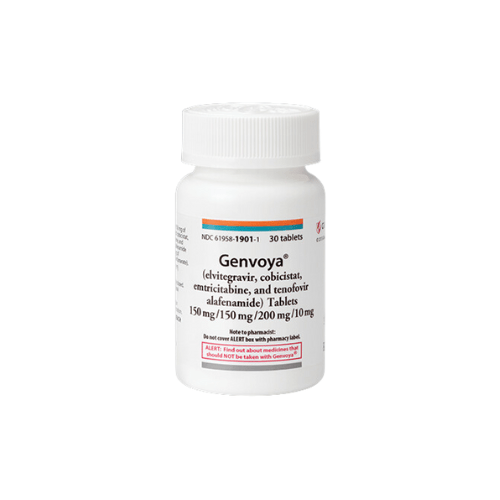
Genvoya
Buy Genvoya Tablets Online
Secure Encrypted Payments
Genvoya is a fixed-dose HIV-1 medication that combines four antiretroviral medicines in one tablet. It can be ordered online, with the 150 mg/150 mg/200 mg/10 mg strength matched carefully to the directions from your healthcare professional. During ordering, choose the quantity that supports your refill plan and make sure the tablet strength sequence is the same as the medicine you use.
Each Genvoya tablet contains elvitegravir, cobicistat, emtricitabine, and tenofovir alafenamide. This combination is used as a complete HIV-1 regimen for eligible adults and children who weigh at least 25 kg. Because uninterrupted treatment matters for HIV care, the main purchase decisions are the correct tablet, current price, quantity, storage needs, and safety fit with your other medicines.
Genvoya Price and Tablet Selection
The Genvoya price shown during ordering should be read with the exact tablet strength and quantity. For cash-pay planning, the most useful number is the final total for the supply you choose, rather than an estimate from another source. If more than one quantity is displayed, compare the full order total and the number of tablets included.
Genvoya cost without insurance may vary across pharmacies, countries, and payment routes. Keep the comparison practical: match the medicine name, strength sequence, and quantity first, then look at the total. US delivery from Canada may be part of the service context for this medicine, so confirm your address and handling choice before completing the order.
| What to review | Why it matters |
|---|---|
| Medicine name | Genvoya should match the HIV regimen directed by your clinician. |
| Strength sequence | The tablet is 150 mg/150 mg/200 mg/10 mg in the ingredient order. |
| Quantity | The number of tablets affects total cost and refill timing. |
| Supply planning | HIV treatment works best when gaps are avoided. |
| Service details | Address, contact details, and prompt, express shipping choices should be reviewed carefully. |
Quick tip: Match the four strengths in order before comparing totals.
How to Order Genvoya Online
Start with the Genvoya tablet strength your clinician directed, then choose the quantity that fits your current treatment plan. The four numbers matter because they correspond to four different active ingredients. A similar-looking HIV product is not automatically interchangeable, even if it is also a once-daily tablet.
- Match the strength: confirm 150 mg/150 mg/200 mg/10 mg before checkout.
- Choose the quantity: plan around your refill schedule and current supply.
- Review contact details: accurate phone and email information helps resolve order questions.
- Plan ahead: allow time for processing, payment, and transportation.
Genvoya tablets should be ordered as part of an ongoing HIV care plan, not as a substitute for clinical follow-up. If you are changing therapy, restarting after a gap, or unsure whether your current regimen is still appropriate, speak with your HIV clinician before placing a new order.
Strength, Ingredients, and Manufacturer
Genvoya 150mg 150mg 200mg 10mg refers to the four active ingredients in each tablet: elvitegravir 150 mg, cobicistat 150 mg, emtricitabine 200 mg, and tenofovir alafenamide 10 mg. Elvitegravir is an integrase inhibitor, a medicine that helps block HIV from inserting its genetic material into human cells. Cobicistat boosts elvitegravir levels but is not itself an HIV treatment agent.
Emtricitabine and tenofovir alafenamide are nucleoside or nucleotide reverse transcriptase inhibitors. They help block another step HIV uses to copy itself. Together, the four medicines form a complete antiretroviral regimen for people who meet label criteria.
| Tablet component | Role in the combination |
|---|---|
| Elvitegravir 150 mg | Integrase inhibitor used for HIV-1 treatment. |
| Cobicistat 150 mg | Pharmacokinetic booster that raises elvitegravir exposure. |
| Emtricitabine 200 mg | Reverse transcriptase inhibitor active against HIV. |
| Tenofovir alafenamide 10 mg | Reverse transcriptase inhibitor supplied as the alafenamide form. |
The Genvoya generic name is often written as elvitegravir cobicistat emtricitabine tenofovir alafenamide. Gilead Sciences is the manufacturer associated with the brand product. When browsing related antiviral products, the Antivirals Collection can help identify medicine names, but any HIV therapy choice should follow your clinician’s regimen.
What Genvoya Is Used For
Genvoya is used to treat HIV-1 infection in patients who meet the approved-use criteria. It is labeled for adults and children weighing at least 25 kg. It may be used in people starting antiretroviral therapy or in certain people replacing a stable HIV regimen, depending on viral suppression, resistance history, and clinical judgment.
This medicine is a complete regimen, so it should not be casually combined with other HIV medicines. Adding or swapping antiretrovirals can change side effects, interaction risks, and resistance considerations. Your clinician may also consider kidney function, liver history, hepatitis B status, pregnancy plans, and other medicines before deciding if Genvoya fits your care.
- Condition treated: HIV-1 infection in eligible patients.
- Regimen type: complete fixed-dose antiretroviral tablet.
- Food instruction: official labeling describes use with food.
- Monitoring need: HIV RNA, kidney labs, and liver-related checks may be used.
The HIV product category may help with name recognition when discussing therapy with a clinician. It should not be used to self-select a replacement regimen.
Genvoya and Other HIV Medicines
Genvoya and Biktarvy are not the same medicine. Both are single-tablet HIV regimens, but they contain different active ingredients and have different interaction profiles. A person stable on one regimen should not switch to another based only on tablet count, convenience, or price.
Some people also compare Genvoya with medicines such as Triumeq, Pifeltro, or other antiretroviral combinations. These therapies differ in drug class, booster use, resistance considerations, food instructions, and safety monitoring. For broader browsing, antiviral medicines can be viewed through the antiviral category, while HIV-specific items are grouped under the HIV condition category.
Genvoya is not the same as emergency HIV prevention after a possible exposure. Post-exposure prophylaxis uses time-sensitive clinical protocols and may involve different medicines. If a recent exposure is the concern, urgent medical care is more appropriate than choosing a chronic HIV treatment tablet on your own.
Storage, Travel, and Handling
Genvoya tablets do not require cold-chain handling like some injectable medicines. Store the tablets according to the pharmacy label and official package information. Keeping the medicine in its original container helps protect the tablets and preserves important label details.
- Moisture protection: avoid bathrooms or other humid storage areas when possible.
- Original container: keep the label visible and the tablets protected.
- Travel planning: carry enough supply for the full trip and possible delays.
- Refill timing: reorder before your current supply is nearly gone.
For travel, keep HIV medicines with you rather than in luggage that could be delayed or lost. If you cross borders, the original labeled container can help clarify what the medication is. Ask your care team how to plan if time zones, meals, or vomiting affect your usual routine.
Side Effects, Warnings, and Monitoring
Common Genvoya side effects can include nausea, diarrhea, headache, fatigue, and stomach discomfort. Many side effects are mild, but persistent, worsening, or unusual symptoms deserve medical attention. Report new symptoms promptly, especially if they affect eating, hydration, mental focus, or daily activities.
Important warnings include the risk of worsening hepatitis B after stopping medicines that contain emtricitabine or tenofovir alafenamide in people with both HIV-1 and hepatitis B virus infection. Serious liver problems and lactic acidosis, which means too much lactic acid in the blood, are also described in official safety information. Warning symptoms may include severe weakness, unusual muscle pain, trouble breathing, stomach pain with nausea or vomiting, dark urine, yellowing skin or eyes, or feeling very cold or dizzy.
Kidney monitoring can matter with tenofovir-containing therapy, even though tenofovir alafenamide differs from older tenofovir forms. Clinicians may order blood and urine tests to watch kidney function. Immune reconstitution syndrome can also occur when the immune system begins responding more strongly after HIV treatment starts, sometimes revealing infections or inflammatory conditions that need care.
- Hepatitis B: testing and follow-up may be needed before and after therapy changes.
- Kidneys: share any kidney disease, abnormal labs, or related medicines.
- Liver health: mention hepatitis, cirrhosis, heavy alcohol use, or jaundice history.
- Pregnancy and feeding: discuss pregnancy, plans, or breastfeeding with a clinician.
- Urgent symptoms: seek help for severe weakness, jaundice, dark urine, or breathing trouble.
Why it matters: The correct tablet still has to fit your current labs and health history.
Interactions and Medicines to Discuss
Cobicistat can affect how other medicines are processed in the body. That makes the full medication list especially important. Include prescription medicines, over-the-counter products, vitamins, minerals, antacids, supplements, and herbal products when discussing Genvoya with your healthcare team.
Some medicines should not be used with Genvoya because they can reduce HIV control or raise serious side-effect risks. Official labeling includes examples such as rifampin, carbamazepine, phenytoin, phenobarbital, and St. John’s wort. Certain sedatives, cholesterol medicines, heart rhythm medicines, and other antivirals may also require avoidance or careful management.
Antacids or mineral-containing products may affect absorption timing for elvitegravir-containing therapy. Do not change timing, stop medicines, or add supplements without asking your clinician or pharmacist. If a new healthcare professional prescribes something for another condition, tell them you take a boosted HIV regimen.
Weight, Body Changes, and Long-Term Questions
Some people ask whether Genvoya causes belly fat or other body changes. HIV therapy, aging, diet, activity, metabolic health, and individual medicine effects can all influence weight and fat distribution. If you notice rapid weight gain, abdominal changes, swelling, or changes in blood sugar or cholesterol, bring those details to your clinician rather than stopping therapy on your own.
Long-term treatment decisions usually depend on viral suppression, tolerability, kidney and liver labs, bone health considerations, other medical conditions, and interaction burden. Staying on an effective regimen can be important for maintaining viral control. Changing treatment without a plan may increase the risk of rebound virus or resistance.
Helpful questions to ask at follow-up include whether your viral load is suppressed, whether kidney or liver tests have changed, and whether any new medicine could interact with Genvoya. If cost is becoming a barrier, raise that early so your care team can help prevent missed doses.
Authoritative Sources
For label-level details, consult the FDA prescribing information for Genvoya, which lists the approved strength, warnings, contraindications, interactions, and monitoring information. The NIH patient drug record summarizes patient-facing use, safety, and interaction points.
This content is for informational purposes only and is not a substitute for professional medical advice.
eGFR Calculator
Estimate kidney filtration using the 2021 CKD-EPI creatinine equation.
eGFR
-
mL/min/1.73 m2
G category
-
requires clinical context
These calculations are for education only and do not replace clinical advice, diagnosis, or treatment. Always confirm medical decisions with a qualified healthcare professional.
Creatinine Clearance Calculator
Estimate creatinine clearance using the Cockcroft-Gault equation.
CrCl
-
mL/min estimate
These calculations are for education only and do not replace clinical advice, diagnosis, or treatment. Always confirm medical decisions with a qualified healthcare professional.
Urine Albumin-Creatinine Ratio Calculator
Calculate urine albumin-creatinine ratio from spot urine albumin and creatinine values.
uACR
-
mg/g
uACR
-
mg/mmol
Category
-
A1/A2/A3 albuminuria range
These calculations are for education only and do not replace clinical advice, diagnosis, or treatment. Always confirm medical decisions with a qualified healthcare professional.
Cholesterol Ratio Calculator
Calculate common lipid ratios and non-HDL cholesterol from a standard cholesterol panel.
Total / HDL
-
cholesterol ratio
LDL / HDL
-
lipid ratio
Non-HDL
-
total minus HDL
These calculations are for education only and do not replace clinical advice, diagnosis, or treatment. Always confirm medical decisions with a qualified healthcare professional.
Cholesterol Unit Converter
Convert cholesterol and triglyceride values between mg/dL and mmol/L.
mg/dL
-
US lipid unit
mmol/L
-
-
These calculations are for education only and do not replace clinical advice, diagnosis, or treatment. Always confirm medical decisions with a qualified healthcare professional.
Express Shipping - from $29.99
Shipping with this method takes 3-5 days
Prices:
- Dry-Packed Products $29.99
- Cold-Packed Products $39.99
Shipping Countries:
- United States (all contiguous states**)
- Worldwide (excludes some countries***)
Standard Shipping - $19.99
Shipping with this method takes 5-10 days
Prices:
- Dry-Packed Products $19.99
- Not available for Cold-Packed products
Shipping Countries:
- United States (all contiguous states**)
- Worldwide (excludes some countries***)
What is Genvoya used for?
Genvoya is used to treat HIV-1 infection in eligible adults and children who weigh at least 25 kg. It is a complete antiretroviral regimen, so treatment choices should be guided by an HIV clinician.
Are Genvoya and Biktarvy the same?
No. Genvoya and Biktarvy are different single-tablet HIV regimens with different active ingredients and interaction profiles. Do not switch between them unless your clinician specifically directs that change.
What is the generic name for Genvoya?
The generic name is commonly written as elvitegravir, cobicistat, emtricitabine, and tenofovir alafenamide. Each Genvoya tablet contains 150 mg/150 mg/200 mg/10 mg in that ingredient sequence.
What are common Genvoya side effects?
Common side effects can include nausea, diarrhea, headache, fatigue, and stomach discomfort. Serious symptoms such as jaundice, dark urine, severe weakness, breathing trouble, or persistent vomiting need prompt medical attention.
Does Genvoya cause belly fat?
Body weight and fat distribution can change for many reasons during HIV care, including treatment, aging, diet, activity, and metabolic health. Report noticeable abdominal weight changes or swelling to your clinician for individualized review.
How much does Genvoya cost?
Genvoya cost depends on the tablet strength, quantity, and current ordering total shown at checkout. For cash-pay planning, compare the final total for the exact quantity you need.
Rewards Program
Earn points on birthdays, product orders, reviews, friend referrals, and more! Enjoy your medication at unparalleled discounts while reaping rewards for every step you take with us.
You can read more about rewards here.
POINT VALUE
How to earn points
- 1Create an account and start earning.
- 2Earn points every time you shop or perform certain actions.
- 3Redeem points for exclusive discounts.
You Might Also Like
Select options
This product has multiple variants. The options may be chosen on the product page
Select options
This product has multiple variants. The options may be chosen on the product page
Select options
This product has multiple variants. The options may be chosen on the product page
Select options
This product has multiple variants. The options may be chosen on the product page