
Please note: a valid prescription is required for all prescription medication.
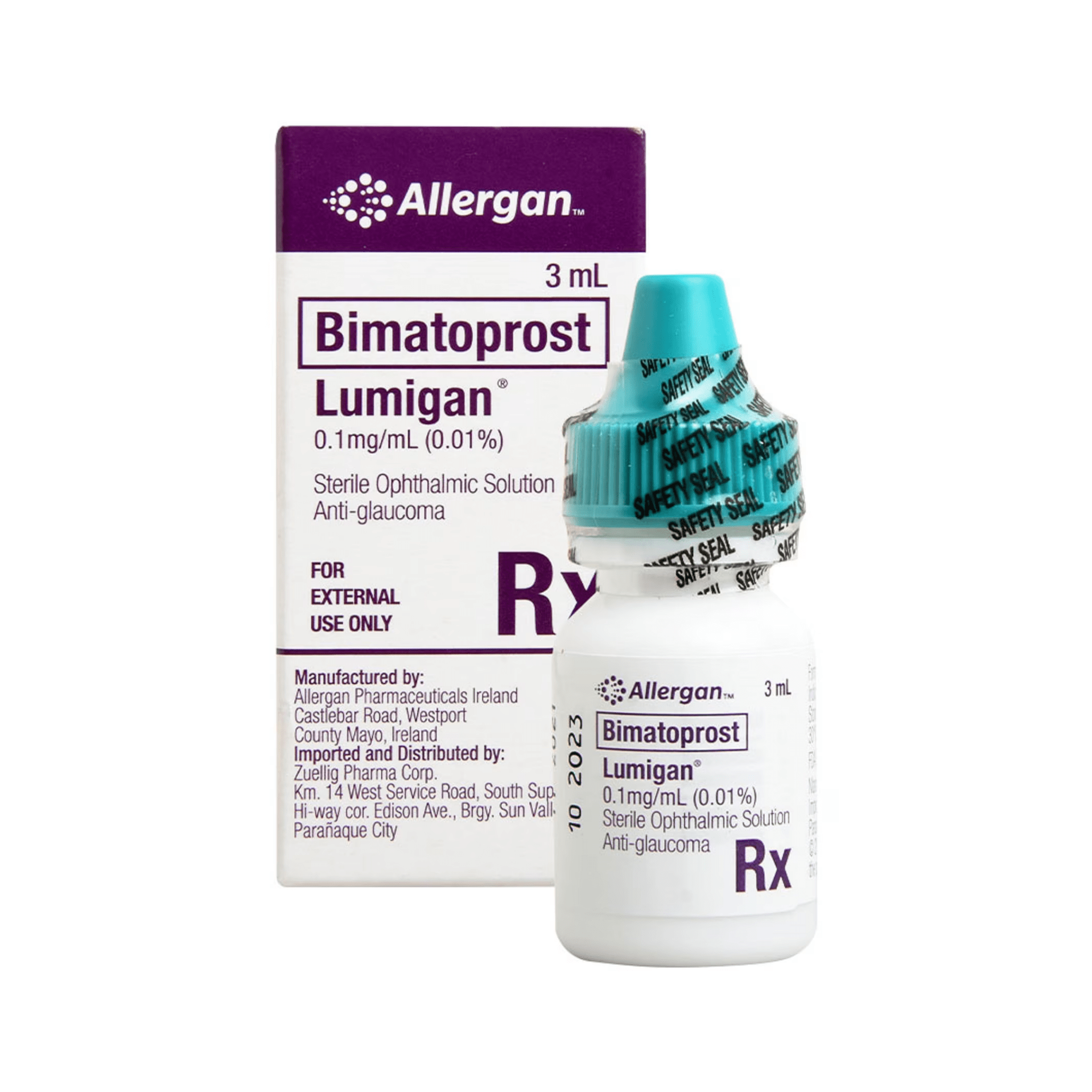
Lumigan
Buy Lumigan Online
Secure Encrypted Payments
Lumigan is a bimatoprost ophthalmic medicine used to lower elevated intraocular pressure, or eye pressure. It can be ordered online, with current pricing shown during checkout and dose or strength choices matched to the directions from your eye-care clinician. US delivery from Canada is available for qualifying cross-border orders supplied through licensed pharmacies.
Many people use Lumigan for long-term pressure control in open-angle glaucoma or ocular hypertension. The goal is to help reduce pressure inside the eye and support ongoing optic nerve protection, alongside regular eye exams and pressure checks.
Lumigan Price, Strength Choices, and Ordering Basics
Lumigan cost can vary by strength, bottle quantity, manufacturer, and the pharmacy channel used for the order. During ordering, select the Lumigan strength and quantity shown for the product and make sure they match the directions provided by your eye-care clinician. If more than one strength is visible, do not switch between them without clinical guidance, because concentration and tolerability can affect the treatment plan.
Searches for Lumigan 0.01 eye drops price, Lumigan 0.01 solution, and Lumigan cost without insurance usually reflect the same practical question: how to budget for a medicine that may be used every day for a long time. Cash-pay customers can view the current product price before completing an order. If your clinician has discussed bimatoprost as the active ingredient, confirm whether the brand name, strength, and substitution instructions align with what you intend to purchase.
Promotions may change over time, but glaucoma treatment decisions should not be driven by cost alone. Comfort, eye pressure response, side effects, bottle handling, and follow-up measurements all matter. People managing high eye pressure can also browse related eye-care treatments in ophthalmology products.
What Lumigan Treats
Lumigan is used to reduce elevated intraocular pressure in people with open-angle glaucoma or ocular hypertension. In open-angle glaucoma, the eye’s drainage angle remains open, but fluid drainage is not efficient enough to keep pressure at a safe level. Over time, uncontrolled pressure can damage the optic nerve and may contribute to permanent vision loss.
Ocular hypertension means eye pressure is higher than expected, even if optic nerve damage or visual field loss has not been diagnosed. Some people with ocular hypertension are monitored closely, while others start pressure-lowering therapy because their risk of glaucoma is higher. Condition background may help you understand the terms used during eye visits; see open-angle glaucoma and ocular hypertension.
Lumigan does not cure glaucoma. It helps lower pressure while the medicine is being used as directed, and your clinician may adjust treatment based on pressure readings, optic nerve exams, visual field testing, and side effect history.
Why it matters: Consistent pressure control helps reduce stress on the optic nerve.
How Bimatoprost Works
The active ingredient in Lumigan is bimatoprost. It belongs to a group often called prostaglandin analog eye drops, which lower eye pressure mainly by increasing the outflow of aqueous humor, the clear fluid inside the eye. When more fluid drains out, intraocular pressure can decrease.
Official labeling for Lumigan 0.01% describes it as bimatoprost ophthalmic solution for reducing elevated intraocular pressure in patients with open-angle glaucoma or ocular hypertension. Bimatoprost has also been marketed in other ophthalmic strengths in some settings, including 0.03%, but the concentration you use should match the treatment directions you were given.
Pressure reduction is not always felt by the person using the drop. Many people with glaucoma or ocular hypertension have no symptoms early on, which is why follow-up measurements are important. If the medicine feels comfortable but pressure remains above target, your clinician may consider technique changes, another drop class, laser treatment, or combination therapy.
Is Lumigan Discontinued or Available?
Lumigan remains a recognized brand name for bimatoprost ophthalmic solution. Some confusion comes from changes in strengths, packaging, market availability, and differences between countries. A specific bottle size or strength may be harder to find through one pharmacy channel while another presentation remains available.
If you have heard that Lumigan was discontinued, ask which strength, country, or packaging format is being discussed. That distinction matters because availability language can refer to one market or one presentation, not necessarily to bimatoprost ophthalmic treatment as a whole. For ordering, focus on the strength and quantity currently shown for Lumigan and keep it aligned with your clinician’s directions.
The generic name for Lumigan is bimatoprost ophthalmic solution. Brand and generic naming can differ by country, and substitution rules may depend on the exact wording provided for the order. If the order allows bimatoprost rather than brand-only Lumigan, product appearance, carton design, and manufacturer may differ while the active ingredient and concentration should match the chosen medicine.
How to Use Lumigan Eye Drops Safely
Lumigan is for use in the eye. Many bimatoprost regimens are once daily, commonly in the evening, but the schedule should follow the directions provided for your own treatment. Using extra drops is not a shortcut to better pressure control and may increase redness, irritation, or other side effects.
Good technique helps the drop reach the eye and reduces the risk of bottle contamination. Wash your hands first. Tilt your head back, gently pull down the lower eyelid to make a small pocket, and place one drop without touching the bottle tip to the eye, eyelid, fingers, or any surface. Close the bottle promptly after use.
If you use more than one eye medicine, spacing the drops apart can help each product stay on the eye. Your clinician or pharmacist can tell you how long to wait between products. For general eye-health topics and monitoring context, the ophthalmology articles section may be useful.
- Use the drop only in the eye or eyes directed for treatment.
- Keep the bottle tip clean and capped between doses.
- Do not share eye drops with another person.
- Ask for help if hand tremor, arthritis, or poor vision makes drop placement difficult.
Contact Lenses, Missed Doses, and Daily Routine
Some ophthalmic solutions contain preservatives that can be absorbed by soft contact lenses. Product labeling may advise removing lenses before using the drop and waiting before reinserting them. If you wear contacts, follow the label instructions and any timing guidance given by your eye-care clinician.
If you miss a dose, many labels advise returning to the regular schedule rather than doubling up. Because instructions can vary, use the specific directions supplied with your medicine. A phone alarm, evening routine, or medication checklist can help keep pressure-lowering drops consistent.
Quick tip: Store a photo of the carton label in your phone before travel.
Side Effects, Warnings, and Monitoring
Common Lumigan side effects can include eye redness, itching, burning, dryness, watering, irritation, or a gritty feeling after dosing. Some people notice longer, thicker, or darker eyelashes. Eyelid skin may darken, and the colored part of the eye may gradually develop more brown pigmentation. Iris color change can be permanent.
Long-term side effects are one reason regular eye follow-up matters. Pigmentation changes, eyelash changes, and surface irritation may develop gradually. People with a history of eye inflammation, retinal swelling, lens surgery, or other complex eye conditions may need closer monitoring while using prostaglandin-type drops.
Seek prompt medical attention for new eye pain, significant swelling, marked light sensitivity, sudden vision changes, discharge, severe redness, or signs of infection. These symptoms may not be typical irritation and should not be ignored. If discomfort persists, your clinician may review drop technique, contact lens timing, other eye products, or whether a different treatment class would be safer for you.
Allergy to bimatoprost or any ingredient in the solution is a reason to avoid the medicine unless a clinician specifically evaluates the situation. Tell your care team about all eye drops, ointments, lubricants, and recent eye procedures, because local eye treatments can interact through irritation, additive effects, or timing problems even when whole-body drug interactions are limited.
Storage, Handling, and Travel
Eye drops should be stored according to the carton and bottle instructions. Many ophthalmic medicines are kept at controlled room temperature, tightly closed, and protected from contamination. Do not use the solution if it becomes cloudy, changes color, or contains visible particles.
Avoid leaving Lumigan in very hot or freezing places, such as a parked car, windowsill, or unprotected travel bag. Keep the bottle in a clean pouch during travel so the cap and tip stay protected. If travel disrupts your schedule, plan a dosing reminder before departure rather than trying to catch up later.
For cross-border orders, prompt, express shipping may be offered when available. Delivery planning should still account for remaining supply at home, follow-up appointments, and the time needed to resolve any order questions.
Lumigan, Latanoprost, and Other Alternatives
Lumigan and latanoprost are both prostaglandin-type eye drops used to lower eye pressure, but they are not identical products. They may differ in active ingredient, preservative profile, tolerability, available strengths, and individual pressure response. Some people do well with one medicine and develop irritation or inadequate pressure control with another.
Other glaucoma treatment classes include beta-blockers, carbonic anhydrase inhibitors, alpha agonists, and combination drops. A combination bottle may simplify the routine, but it can also add contraindications or side effects from the second ingredient. The best alternative depends on eye pressure targets, medical history, other medicines, contact lens use, and how well you can manage the dosing schedule.
Do not switch from Lumigan to another glaucoma drop based only on price or a friend’s experience. Even within the same class, your eye pressure should be rechecked after treatment changes. People who want broader condition education can start with the open-angle glaucoma and ocular hypertension sections linked above, then discuss specific medication choices with an eye-care professional.
Authoritative Sources
The sources below provide neutral background on bimatoprost ophthalmic use, glaucoma, and patient counseling points. They are not a replacement for individualized instructions from an eye-care clinician.
- DailyMed Lumigan labeling
- MedlinePlus bimatoprost ophthalmic information
- American Academy of Ophthalmology glaucoma explanation
This content is for informational purposes only and is not a substitute for professional medical advice.
Express Shipping - from $29.99
Shipping with this method takes 3-5 days
Prices:
- Dry-Packed Products $29.99
- Cold-Packed Products $39.99
Shipping Countries:
- United States (all contiguous states**)
- Worldwide (excludes some countries***)
Standard Shipping - $19.99
Shipping with this method takes 5-10 days
Prices:
- Dry-Packed Products $19.99
- Not available for Cold-Packed products
Shipping Countries:
- United States (all contiguous states**)
- Worldwide (excludes some countries***)
What is the generic name for Lumigan?
The generic name for Lumigan is bimatoprost ophthalmic solution. Bimatoprost is the active ingredient that helps lower elevated eye pressure in open-angle glaucoma or ocular hypertension.
Why do some people say Lumigan was discontinued?
Discontinuation language may refer to a specific strength, package, manufacturer supply channel, or country. Lumigan remains a recognized bimatoprost brand; match the current strength and quantity shown during ordering to your clinician’s directions.
What are the long-term side effects of Lumigan?
Long-term effects can include gradual eyelash changes, eyelid skin darkening, eye surface irritation, and increased brown pigmentation of the iris, which may be permanent. Regular eye follow-up helps monitor pressure control and tolerability.
Can Lumigan make eyelashes grow?
Yes. Bimatoprost can cause eyelashes to become longer, thicker, or darker. This effect may occur when Lumigan is used for eye pressure control, but the medicine should only be used as directed for the treated eye condition.
How is Lumigan different from latanoprost?
Lumigan contains bimatoprost, while latanoprost contains a different prostaglandin-type active ingredient. Both can lower eye pressure, but tolerability, response, preservatives, and dosing directions may differ for each person.
Rewards Program
Earn points on birthdays, product orders, reviews, friend referrals, and more! Enjoy your medication at unparalleled discounts while reaping rewards for every step you take with us.
You can read more about rewards here.
POINT VALUE
How to earn points
- 1Create an account and start earning.
- 2Earn points every time you shop or perform certain actions.
- 3Redeem points for exclusive discounts.
You Might Also Like
Select options
This product has multiple variants. The options may be chosen on the product page
Select options
This product has multiple variants. The options may be chosen on the product page
Select options
This product has multiple variants. The options may be chosen on the product page
Select options
This product has multiple variants. The options may be chosen on the product page