

Please note: a valid prescription is required for all prescription medication.
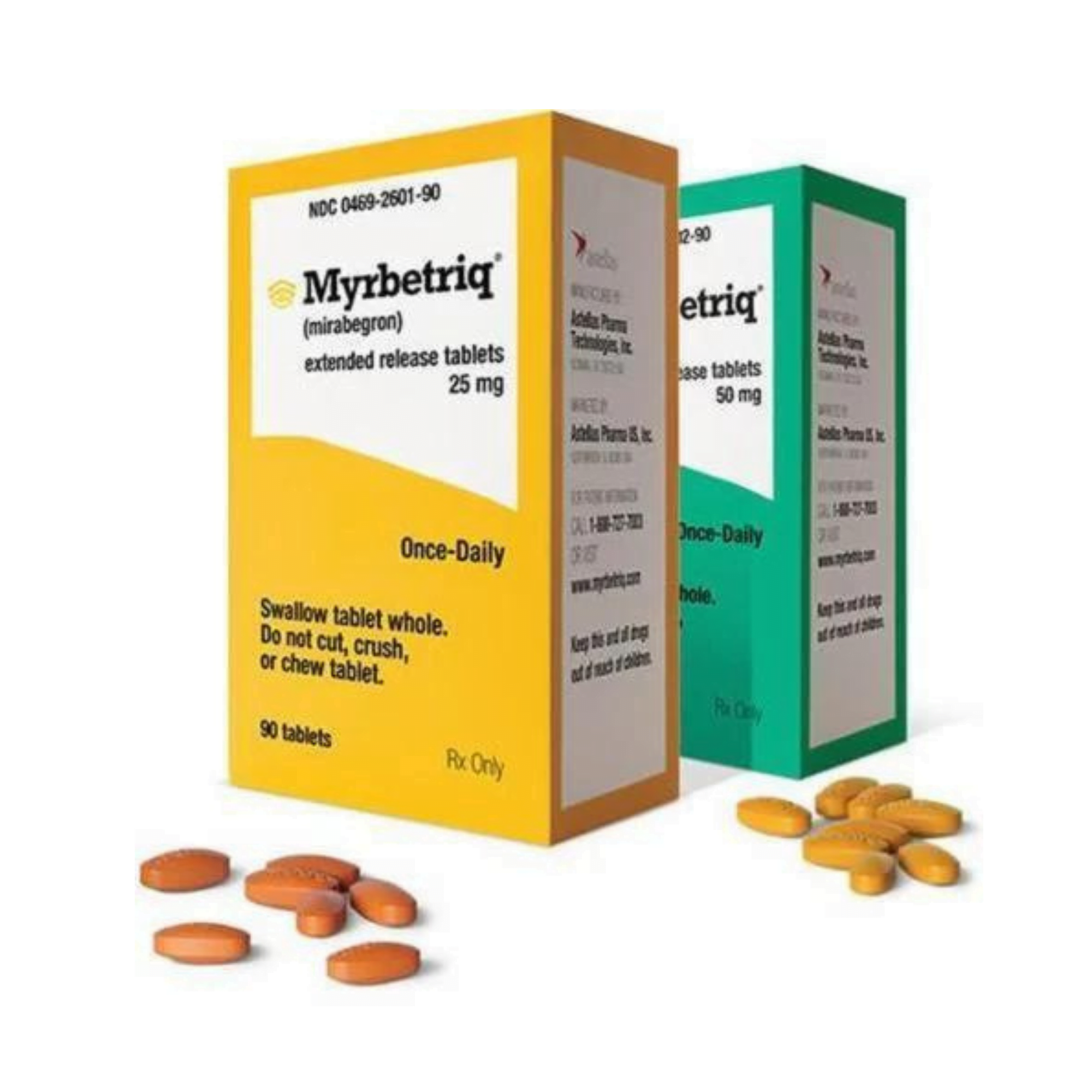
Myrbetriq
Myrbetriq: How to Buy It and What to Check First
Price:
Price range: $84.99 through $189.99
Secure Encrypted Payments
Myrbetriq is a prescription medicine used for overactive bladder symptoms such as urgency, frequent urination, and urge leakage. This product page helps people compare strengths, review safety points, and understand the prescription steps involved before they try to buy Myrbetriq through a compliant pharmacy process. Blood pressure, kidney or liver problems, difficulty emptying the bladder, and possible drug interactions are the main issues to check first.
How to Buy Myrbetriq and What to Know First
Some patients explore US delivery from Canada when looking into cross-border prescription options for ongoing bladder treatment. BorderFreeHealth works with licensed Canadian partner pharmacies, and prescriptions may be checked with the prescriber before dispensing.
Before pursuing treatment, make sure the symptoms fit overactive bladder rather than a urinary tract infection, bladder pain syndrome, kidney stones, or another cause of sudden urgency. Burning, fever, blood in the urine, or new pelvic pain usually need medical assessment first. For broader condition background, the site’s Overactive Bladder hub and How It Helps guide can be useful starting points.
This medicine is prescription-only. A practical review usually includes blood pressure history, kidney or liver problems, bladder-emptying issues, and a full medication list. That matters because the active ingredient, mirabegron, can affect how some medicines are processed. It also matters because the common tablet form is extended release, which changes how it should be taken.
People exploring a purchase often want to know what will be checked first. In most cases, the basics are the diagnosis, current prescription details, and whether the medicine fits safely with other conditions and treatments. That early screening is useful because it helps avoid starting a long-term bladder medicine when the symptoms may have another cause.
Who It’s For and Access Requirements
Myrbetriq is commonly considered for adults with overactive bladder symptoms such as urgency, urinary frequency, and urge urinary incontinence. It may be especially relevant when a person wants to avoid some of the dry mouth or constipation often associated with older antimuscarinic bladder medicines, although treatment choice still depends on the full medical picture.
A prescription is required, and the review is not just a formality. Clinicians usually want to know whether blood pressure is well controlled, whether there is a history of urinary retention, and whether kidney or liver function could affect dose selection. If symptoms started suddenly, keep waking the person from sleep, or come with pain, fever, or visible blood, those details can change the next step.
Good candidates for ongoing therapy are generally people whose symptoms are clearly consistent with OAB and have become bothersome in daily life. That can mean frequent bathroom trips, urgency that is hard to postpone, or leakage before reaching the toilet. Access questions are easier to answer when the diagnosis, current medication list, and prescribed strength are already clear.
Dosage and Usage
For adult OAB use, mirabegron extended-release tablets are commonly started at 25 mg once daily. A clinician may decide whether 50 mg once daily is appropriate based on symptom response, kidney or liver function, other medicines, and tolerability. Dose changes should come from the prescriber rather than from day-to-day symptom swings.
The tablet is usually taken once a day, with or without food, and the exact time often matters less than staying consistent. Morning or evening can both work if the dose is taken the same way each day. Swallow the tablet whole with water. Do not crush, split, or chew extended-release tablets unless the pharmacy label specifically says otherwise.
Quick tip: Keep the dose timing simple by tying it to the same daily routine.
If a dose is missed, follow the pharmacy label or clinician instructions instead of doubling the next dose. Bladder medicines also need a fair trial before they are judged, so abrupt self-escalation is not helpful. For a patient-friendly review of routine use questions, see Dosing Explained.
Strengths and Forms
Brand Myrbetriq contains mirabegron, a beta-3 adrenergic agonist. In plain language, that means it helps the bladder relax during the storage phase so it can hold more urine and send fewer urgent signals. For adults with OAB, the familiar presentation is an extended-release oral tablet.
| Presentation | Common strength | What to know |
|---|---|---|
| Extended-release oral tablet | 25 mg | Often used as a starting strength for adults |
| Extended-release oral tablet | 50 mg | May be used when a clinician decides a higher strength is appropriate |
Availability may vary by pharmacy, market, and prescription review. Generic mirabegron may also be listed differently depending on the source. If questions come up about label wording, tablet strengths, or how extended-release products differ from standard tablets, the site’s Dosage Forms And Strengths page can help frame those details.
Tablet size and swallowability also matter in real life. If swallowing larger tablets is difficult, bring that up before treatment is chosen. Because the formulation is extended release, crushing or altering the tablet can change how the dose is delivered.
Storage and Travel Basics
Store mirabegron extended-release tablets at room temperature in the original container unless the pharmacy label says differently. Keep the bottle closed and away from excess heat, moisture, and places where tablets can be mixed up with other medicines.
Travel is usually simplest when the medicine stays in its labeled container. A current medication list or copy of the prescription can be useful if a healthcare question comes up while away from home. As with most prescription medicines, keep it out of reach of children and pets.
If the tablets change color, crumble, or are exposed to water, check the pharmacy label or a pharmacist before using them. Storage instructions on the dispensed package always take priority over general guidance.
Side Effects and Safety
Myrbetriq can raise blood pressure, so this issue deserves special attention before and during treatment. Commonly discussed side effects include headache, constipation, urinary tract infection, cold-like symptoms, dizziness, and a fast heartbeat, although not everyone experiences them and not every symptom is caused by the medicine.
More serious reactions need prompt medical assessment. These can include severe allergic reaction, swelling of the face or throat, chest symptoms, marked palpitations, or new difficulty passing urine. Urinary retention can matter most in people who already have bladder outlet problems or who take other medicines that make emptying the bladder harder.
Why it matters: Trouble urinating or a meaningful increase in blood pressure should not be ignored.
Routine follow-up may include checking how often the person urinates, whether urgency is improving, and whether blood pressure remains acceptable. Side effects are also evaluated in context. For example, constipation may be more important in someone who already struggles with bowel habits, and a faster heartbeat may deserve closer review in someone with heart concerns. For a longer patient-oriented review, read Side Effects To Watch.
Drug Interactions and Cautions
Mirabegron may affect CYP2D6, a liver enzyme that helps the body clear many medicines. That can matter for certain antidepressants, antipsychotics, beta-blockers, pain medicines, and rhythm drugs. Digoxin is another drug often reviewed carefully when this treatment is started.
Extra caution may be needed if there is bladder outlet obstruction, a history of urinary retention, uncontrolled hypertension, or significant kidney or liver impairment. Kidney issues do not automatically rule the medicine out, but they can affect strength selection and how closely treatment is monitored.
Combination therapy is sometimes used in bladder care, but it can also increase the chance of dry mouth, constipation, or difficulty emptying the bladder when an antimuscarinic is added. Bring a full medication and supplement list to the prescription review. That simple step often prevents avoidable interaction problems.
Pregnancy and breastfeeding questions should be handled individually with the prescribing clinician, because the balance of benefits and risks depends on the situation. The official label is the best reference when special-population questions come up.
Compare With Alternatives
Compared with some older bladder medicines, Myrbetriq may be chosen when dry mouth or constipation are major concerns. It works differently from antimuscarinic drugs, so the benefits, trade-offs, and best-fit patient profile can differ from one option to the next.
| Option | Type | Why it may be chosen | Common trade-offs |
|---|---|---|---|
| Oxybutynin | Antimuscarinic | Often familiar and widely used for urgency and frequency | Dry mouth, constipation, blurry vision, and drowsiness may be more noticeable |
| Vesicare | Antimuscarinic | Once-daily option that may help control OAB symptoms | Dryness and constipation can still limit use for some people |
| Generic mirabegron | Beta-3 agonist | Same active ingredient as the brand product | Availability can vary by pharmacy and jurisdiction |
Choice is not only about symptom relief. Bowel habits, blood pressure, sleep pattern, ability to swallow tablets, and concern about cognitive or anticholinergic side effects all matter. Some people do well with an antimuscarinic, while others prefer mirabegron because the side-effect profile may fit better. A clinician may also compare whether urgency, leakage, or frequency is the main problem before picking one path.
It is also reasonable to revisit an older bladder medicine if coverage, tolerability, or prior response changes. The best comparison is the one that accounts for the whole medication list rather than just the bladder symptoms alone.
Prescription, Pricing and Access
Access usually depends on a valid prescription, the strength prescribed, and whether brand or generic stock is available through the dispensing pharmacy. Cross-border options may be available for eligible U.S. patients, depending on prescription review and jurisdiction.
For people without insurance, cash-pay totals can vary with tablet strength, quantity, and whether brand or generic mirabegron is supplied. The amount paid for Myrbetriq can also differ when prescription details need to be confirmed with the prescriber before dispensing.
When insurance is being used through other channels, plan rules may include prior authorization or step therapy, and those rules can change over time. For people comparing independent payment options, it helps to look at the exact strength on the prescription, whether the product is extended release, and whether the order is for a short fill or a longer maintenance supply.
Stable reference pages on the site, such as Promotions Information and Urology Products, may help when comparing broader cash-pay options. Final eligibility, documentation, and supply decisions are made during prescription review, so availability is never guaranteed.
Authoritative Sources
For FDA-approved prescribing details, review the official prescribing information.
For a patient-friendly clinical summary, see the Mayo Clinic monograph on mirabegron.
For basic tablet-use guidance, read the Cleveland Clinic guide to mirabegron extended-release tablets.
If prescription review is completed and dispensing is approved, the medication may be sent with prompt, express shipping when available.
This content is for informational purposes only and is not a substitute for professional medical advice.
Customer Reviews
4.4 Based on 38 Reviews
Write a Review Filter Reviews:
VD
01/07/2026
Vivian D.  US
USOffice Help / Delivery
I like the product. I loved how Jenny in the office was so helpful! I didn't like the delivery service taking from Dec. 3rd to January 6th to be received.
01/07/2026
borderfreehealth.com
Hi Vivian!Thank you for taking the time to share your feedback and for choosing Border Free Health.We’re truly glad to hear that you like the product and that Jenny was able to provide you with helpful and attentive support. We’ll be sure to share your kind words with her, as recognition like this means a great deal to our team.That said, we sincerely apologize for the extended delivery timeframe you experienced. We understand how frustrating it can be to wait longer than expected, especially when timelines matter. Please be assured that we will look into this matter further, and your dedicated Account Manager will be reaching out to you directly.We appreciate your patience and understanding, and we value your trust in Border Free Health. Should you need anything further in the meantime, please don’t hesitate to contact us we’re always here to help.
RH
12/03/2025
Ronnie H. USSo far not worth the money.
After using for three months I can’t see a lot of improvement. With the price of the medication it should work miracles! Will be contacting my doctor soon to see if there is something else we can try.
12/03/2025
borderfreehealth.com
Hi Ronnie,Thank you for choosing BorderFreeHealth, and for sharing your honest feedback with us. We’re truly sorry to hear that you haven’t experienced the improvement you were hoping for after three months of using the medication. We understand how frustrating this can be, especially given the cost, and we completely respect your plan to reconnect with your doctor to explore other options.In the meantime, we’d be happy to support you in any way we can. If you’re considering alternative treatments, we also offer a wide range of other medications on our website that you can browse and compare at your convenience. You may also take advantage of our available coupons to help you save on your next purchase.If you have any questions about your current prescription, need assistance reviewing other options, or would like us to coordinate with your doctor, please don’t hesitate to reach out. Your wellness is our priority, and we’re here for you every step of the way.Thank you again for choosing BorderFreeHealth.
BE
10/31/2025
Brent E. USVery slow
It took about a month to finally receive. I would call and they would need something else, three different times. Instead of letting me know everything that was needed the first time. I hope refills will be better!
11/03/2025
borderfreehealth.com
Hi Brent!Thank you for sharing your feedback and for choosing Border Free Health! We sincerely apologize for the delay and the inconvenience caused by the multiple follow-ups. We understand how important it is for you to receive your order in a timely manner. Your experience has been noted, and we’ll make sure to review our process to ensure all requirements are communicated clearly from the start. We truly appreciate your patience, and we’ll do our best to make your refill experience much smoother moving forward.Thank you once again for choosing Border Free Health!
DK
10/21/2025
Diane K. USMyrbetriq is a winner
This has been a winning medication for me. Very few side effects that I have gotten over rapidly. Customer service is also very efficient and attentive at Borderline Health.
10/22/2025
borderfreehealth.com
Hi Diane,Thank you so much for your wonderful feedback! We’re thrilled to hear that Myrbetriq has been a winning medication for you and that any side effects were minimal and resolved quickly. It’s also great to know that our customer service team provided you with the efficient and attentive support you deserve.Your trust truly means a lot to us, and we’re grateful for the confidence you’ve placed in Border Free Health. Feedback like yours inspires us to keep improving our service and to continue providing a reliable and caring experience to all our customers.Thank you once again for choosing Border Free Health!
KM
10/20/2025
Kent M. USDifficult became easy
My order had to overcome problems in shipping due to the strike in Canada but a solution was found in going to UPS for shipping to me in the USA. The Persons I talked with were very gracious and knowledgeable in keeping me informed about the shipments progress. Thank you for making a difficult process a success. Kent Matheny mykemath@ hotmail.com
10/21/2025
borderfreehealth.com
Hi Kent,We truly appreciate you taking the time to share your experience. We are so glad to hear that, despite the shipping challenges caused by the strike, our team was able to find a solution and ensure your order reached you successfully.Your kind words mean a lot to us. Our team takes pride in providing clear communication and genuine care throughout the process, and it is wonderful to know that this made a difference for you.Thank you for your patience and understanding while we worked through the situation. We value your trust and look forward to continuing to serve your health needs with the same level of care and commitment.Thank you once again for choosing Border Free Health! We look forward to assisting you again soon and wish you the best on your path to full recovery.
Express Shipping - from $25.00
Shipping with this method takes 3-5 days
Prices:
- Dry-Packed Products $25.00
- Cold-Packed Products $35.00
Shipping Countries:
- United States (all contiguous states**)
- Worldwide (excludes some countries***)
Standard Shipping - $15.00
Shipping with this method takes 5-10 days
Prices:
- Dry-Packed Products $15.00
- Not available for Cold-Packed products
Shipping Countries:
- United States (all contiguous states**)
- Worldwide (excludes some countries***)
What is Myrbetriq used for?
Myrbetriq is used to treat overactive bladder in adults, especially symptoms like urgency, urinary frequency, and urge urinary incontinence. The active ingredient is mirabegron, which helps the bladder store urine more comfortably. It is not an antibiotic and it does not treat a urinary tract infection. If symptoms include burning, fever, or blood in the urine, those problems usually need separate medical evaluation.
Should Myrbetriq be taken in the morning or at night?
Mirabegron extended-release tablets are usually taken once daily, and the exact time of day is less important than taking it consistently. Some people prefer morning with other routine medicines, while others choose evening if that fits better. The tablet can generally be taken with or without food. Because it is extended release, it should be swallowed whole unless the pharmacy label says otherwise. A clinician may give a different schedule if kidney or liver issues affect dose selection.
What side effects need prompt medical attention while taking Myrbetriq?
Prompt medical review is important for trouble urinating, a big jump in blood pressure, chest pain, severe palpitations, fainting, or signs of an allergic reaction such as swelling of the face, lips, tongue, or throat. Common effects like headache, constipation, or cold-like symptoms are usually less urgent but can still matter if they persist. People with a history of hypertension or bladder-emptying problems may need closer follow-up while taking the medicine.
What should be discussed with a clinician before starting mirabegron?
Useful topics include current blood pressure control, kidney or liver disease, difficulty emptying the bladder, past urinary retention, pregnancy or breastfeeding, and any history of serious heart rhythm problems. A full medication list matters because mirabegron can interact with some drugs, including digoxin and medicines cleared through the CYP2D6 pathway. It is also helpful to mention whether symptoms might be from infection, pelvic pain, or blood in the urine rather than typical overactive bladder.
What should be avoided while taking Myrbetriq?
There is no universal food restriction for Myrbetriq, but it is best not to crush or chew the extended-release tablets. Avoid changing the dose on your own, and do not assume new urinary symptoms are harmless. A clinician should review other medicines and supplements because some combinations can raise side-effect risk or alter drug levels. People with uncontrolled high blood pressure or new trouble passing urine need extra caution and follow-up.
Is there a generic for Myrbetriq?
Depending on the market and pharmacy, mirabegron may be available as a generic for Myrbetriq. Brand and generic products contain the same active ingredient, but the exact listing, manufacturer, and stock can vary. The prescribed strength and formulation still matter, since extended-release tablets should match the intended dose schedule. If coverage or availability changes, the pharmacy label and prescriber instructions remain the key references.
Rewards Program
Earn points on birthdays, product orders, reviews, friend referrals, and more! Enjoy your medication at unparalleled discounts while reaping rewards for every step you take with us.
You can read more about rewards here.
POINT VALUE
How to earn points
- 1Create an account and start earning.
- 2Earn points every time you shop or perform certain actions.
- 3Redeem points for exclusive discounts.
How to book an appointment
- 1Create Begin by completing a profile or log into your existing account. This step ensures we have the necessary information to provide you with a service that's tailored to your needs. account and start earning.
- 2Scheduling an appointment with our online booking system is easy. Pick a day and time that suits you. You’ll receive an immediate confirmation, without the wait.
- 3Discuss your concerns and symptoms and receive a thorough diagnosis from one of our licensed doctors during a confidential video appointment.
- 4If you've been prescribed medication, your Rx is sent directly to one of our licensed pharmacies and delivered right to your door.
Get Started
To book an online doctor appointment, register for an account or login. After doing so, you can book your visit on this page.
You Might Also Like
Select options
This product has multiple variants. The options may be chosen on the product page
Select options
This product has multiple variants. The options may be chosen on the product page
Select options
This product has multiple variants. The options may be chosen on the product page
Select options
This product has multiple variants. The options may be chosen on the product page