
Please note: a valid prescription is required for all prescription medication.
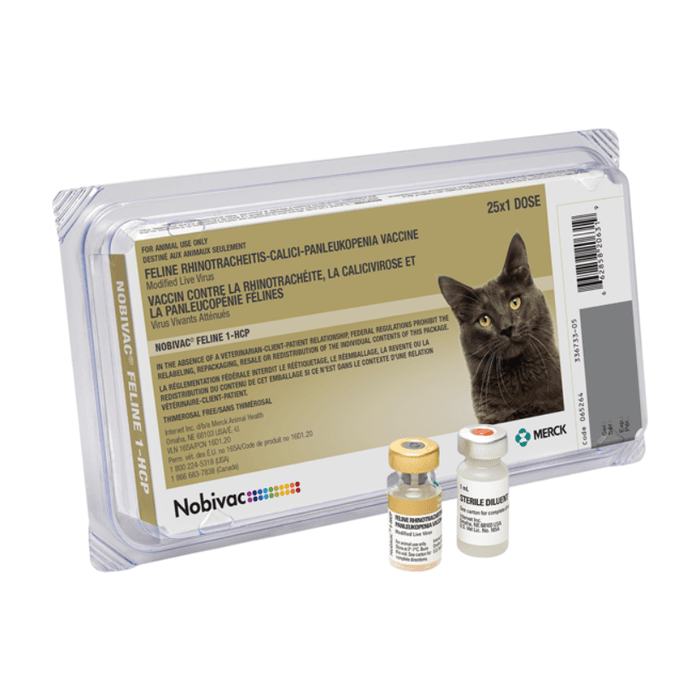
Nobivac Feline 3-HCP
Buy Nobivac Feline 3-HCP Online
Secure Encrypted Payments
Nobivac Feline 3-HCP is a core cat vaccine for healthy cats 8 weeks of age or older. It is used to help protect against feline rhinotracheitis, calicivirus, and panleukopenia. You can buy Nobivac Feline 3-HCP online and match the pack size, quantity, and handling needs to the vaccination plan set by your veterinary team.
This vaccine is commonly discussed as an HCP or FVRCP vaccine for cats because it targets the main viral group used in many feline core vaccination schedules. The product is often supplied in a 25 x 1 mL dose presentation, so it is important to understand the carton wording before placing an order. Storage, transport, timing, and administration setting all matter with vaccines.
Nobivac Feline 3-HCP Price and Pack Details
The Nobivac Feline 3-HCP price should be read together with the exact pack presentation. A 25 x 1 mL description means the product is packaged as 25 one-millilitre dose units, not as a single household vaccine item. That distinction affects total contents, cold-chain planning, and how the vaccine is usually handled in veterinary settings.
When reviewing Nobivac Feline 3-HCP cost, match the product name, quantity, and pack wording to the plan for the cat or group of cats being vaccinated. A 1 mL dose statement describes the labelled dose unit; it is not a reason to change the amount given to an individual animal. The veterinarian’s directions and the official insert should guide preparation, timing, and administration.
Cash-pay customers often need to think beyond the carton price. A complete vaccination visit may involve an exam, administration, record entry, and professional storage before use. For a cat vaccine without insurance, the practical comparison is the full cost of getting the correct vaccine handled and administered safely.
| What to match | Why it matters |
|---|---|
| Product name | Confirms the order is for Nobivac Feline 3-HCP, not another Nobivac vaccine. |
| Pack size | Helps identify the 25 x 1 mL or 25-dose presentation. |
| Quantity | Affects the current price and whether the order fits the planned use. |
| Storage needs | Vaccines can lose suitability if exposed to improper conditions. |
Quick tip: Keep vaccine records nearby when discussing timing with your veterinary clinic.
How to Order Nobivac Feline 3-HCP Online
To order Nobivac Feline 3-HCP online, start with the full name and pack wording. Nobivac makes several animal vaccines, and the brand family alone does not identify the right product. The HCP vaccine is intended for the feline rhinotracheitis, calicivirus, and panleukopenia group.
BorderFreeHealth helps customers access regulated products supplied through licensed pharmacy channels. Order details may be reviewed before the product is supplied, especially when veterinary documentation or professional-use information is needed. For Nobivac Feline 3-HCP US delivery from Canada, build in time for proper handling and do not schedule administration until the vaccine has arrived in acceptable condition.
Prompt, express shipping may be used when appropriate for the product and order route, but shipping speed is not a substitute for storage checks. Inspect the carton, seals, appearance, lot number, and expiry date before use. If the vaccine seems damaged or temperature exposure is uncertain, pause and ask the supplier or veterinarian for guidance.
- Match the exact vaccine name and pack size.
- Confirm the plan against the cat’s vaccine record.
- Arrange storage before the product arrives.
- Do not use a damaged or expired vaccine.
What This Feline HCP Vaccine Is Used For
Nobivac Feline 3-HCP for cats is used for vaccination of healthy cats 8 weeks of age or older against three important viral diseases. HCP refers to herpesvirus-related feline rhinotracheitis, calicivirus, and panleukopenia. Many clinics also call this group FVRCP, which stands for feline viral rhinotracheitis, calicivirus, and panleukopenia.
Feline rhinotracheitis is an upper respiratory disease associated with feline herpesvirus. Calicivirus can also cause respiratory signs and mouth disease. Panleukopenia is a serious feline parvovirus infection that can be life-threatening, especially in young or unprotected cats.
Core vaccination may still be discussed for indoor cats. Exposure can occur through clinic visits, carriers, boarding, foster animals, newly adopted cats, or contaminated objects brought into the home. The vaccine plan can differ for kittens, adult cats with incomplete records, and cats already on a booster schedule.
Condition collections for feline herpesvirus infection, feline calicivirus infection, and feline panleukopenia can help organize related veterinary browsing. Use those categories as educational context, while relying on the cat’s medical record for individual timing.
HCP, FVRCP, and Nobivac Product Names
HCP and FVRCP are often used in the same conversation, which can make product choice confusing. In practical clinic language, both terms refer to the core viral trio of feline rhinotracheitis, calicivirus, and panleukopenia. Product labels, combinations, and vaccine types can still vary, so the full product name matters.
The Nobivac Feline 3-HCP cat vaccine should not be confused with other Nobivac feline vaccines. Some products are designed for different organisms or risk-based needs. For example, Nobivac Feline BB is a separate feline vaccine and does not replace an HCP vaccine when core viral protection is the goal.
Related canine vaccines are also separate from feline products. A dog vaccine such as Nobivac Puppy-DPv or Nobivac Canine 1-DAPPv is not interchangeable with a cat vaccine. Always match the species, disease targets, and clinic plan before ordering.
Modified Live Vaccine and 25 x 1 mL Presentation
Nobivac Feline 3-HCP is commonly described as a modified live vaccine. Modified live means the vaccine contains weakened virus strains intended to stimulate an immune response. Some descriptions also refer to the formulation as non-adjuvanted, meaning it does not include an added immune-stimulating adjuvant.
The 25 x 1 mL presentation is important because it suggests professional-style handling and multiple dose units. It should not be interpreted as permission for dose splitting, schedule changes, or home administration without veterinary direction. Vaccine preparation, reconstitution, and use should follow the official insert and clinic protocol.
Before the vaccine is used, confirm that any diluent or mixing component matches the insert and carton. Check expiry dating, lot number, seal condition, and appearance. If any component appears inconsistent, do not administer the vaccine until the concern is resolved.
| Term | Plain meaning |
|---|---|
| 25 x 1 mL | A 25-dose presentation with one-millilitre dose units. |
| Modified live | Contains weakened live virus strains. |
| Non-adjuvanted | Formulated without an added adjuvant. |
| Core vaccine | Part of the main vaccine group assessed for many cats. |
Why it matters: The right presentation supports correct storage, preparation, and clinic documentation.
Age, Timing, and Veterinary Administration
Current product information describes use in healthy cats 8 weeks of age or older. Kittens often need a series rather than a single lifetime dose. Adult cats may need a different approach if records are incomplete, a booster is due, or a boarding facility requires updated documentation.
Vaccination timing should reflect the cat’s condition on the day of the visit. A fever, active infection, recent severe illness, or previous vaccine reaction can change the plan. These situations do not automatically mean the vaccine is unsuitable, but they do call for veterinary assessment before administration.
Bring prior vaccination records whenever possible. Records help the clinic avoid duplicate entries, choose the right interval, and document the exact product and lot number used. In multi-cat households, write down which cat received which vaccine, the date, and any reaction that followed.
- Label age begins at 8 weeks.
- Kitten schedules may require multiple visits.
- Illness may delay vaccination.
- Records guide booster timing and documentation.
Storage, Handling, and Shipping Basics
Vaccines require more careful handling than many tablets, topicals, or routine pet supplies. Keep the carton in its original packaging so the label, lot number, expiry date, and preparation instructions remain available. Follow the storage range stated on the label or insert.
Temperature exposure matters for a feline 3-HCP vaccine. Do not leave the product in a warm car, direct sun, or any uncontrolled area. If a shipment arrives with broken seals, visible damage, leakage, expired dating, or uncertain temperature history, do not use it until acceptability is confirmed.
Nobivac Feline 3-HCP ships from Canada to US as part of cross-border service when the order can be completed through the appropriate channel. That service context does not change the handling responsibility after arrival. Store the vaccine promptly and keep it separated from food, children’s items, and household clutter.
- Keep the original carton and insert.
- Protect the vaccine from heat and freezing.
- Inspect seals, expiry date, and appearance.
- Use official mixing directions only.
Side Effects, Warnings, and Monitoring
Many cats tolerate core vaccines well, but mild reactions can occur. A cat may be tired, eat less, develop mild fever, or have soreness at the injection site. These effects are often short-lived, but they should be recorded for the next veterinary visit.
Serious reactions are uncommon but need urgent attention. Contact a veterinarian or emergency clinic right away for facial swelling, hives, repeated vomiting, breathing difficulty, collapse, severe weakness, or worsening lethargy after vaccination. Rapid care is especially important when breathing or circulation appears affected.
Tell the veterinary team about prior vaccine reactions, immune-related disease, chronic illness, pregnancy concerns, recent surgery, or medicines that affect the immune system. Steroids, chemotherapy drugs, and immune-modulating treatments may change timing or monitoring. The clinic may also decide whether other vaccines should be given during the same appointment.
Observation after the visit is useful, especially for cats with a reaction history. Keep the cat calm, watch appetite and breathing, and note any swelling or behaviour change. Do not treat a suspected vaccine reaction with human medicines unless a veterinarian gives specific instructions.
Related Veterinary Vaccine Choices
Nobivac Feline 3-HCP belongs to the core feline vaccine category. Other HCP or FVRCP products may target the same viral group while differing by manufacturer, vaccine type, adjuvant status, and clinic protocol. If a veterinarian names a specific product, follow that instruction rather than substituting by brand familiarity alone.
Risk-based vaccines may be discussed for certain cats, especially those with boarding, shelter, foster, or outbreak exposure. A respiratory add-on may complement core vaccination but does not automatically cover the same diseases. The target organism is the main detail to compare.
Pet vaccines are also different from parasite prevention, antibiotics, pain medicine, and other animal health products. The pet medications category can help separate product types when organizing a larger veterinary order. For households with both cats and dogs, canine products such as Nobivac Canine EDGE 1-DAPPv and Nobivac Canine Lepto 4 should remain tied to dog-specific plans.
| Product type | How it differs |
|---|---|
| Feline HCP or FVRCP vaccine | Targets the core feline viral trio. |
| Feline respiratory add-on | May address a different organism or exposure risk. |
| Canine vaccine | Designed for dogs and not interchangeable with cat vaccines. |
| Other pet medication | May treat parasites, pain, infection, or another condition. |
Authoritative Sources
For veterinary label-style information, see the Drugs.com veterinary product monograph.
For USDA study and licensure background, consult the USDA APHIS summary of studies.
This content is for informational purposes only and is not a substitute for professional medical advice.
Express Shipping - from $29.99
Shipping with this method takes 3-5 days
Prices:
- Dry-Packed Products $29.99
- Cold-Packed Products $39.99
Shipping Countries:
- United States (all contiguous states**)
- Worldwide (excludes some countries***)
Standard Shipping - $19.99
Shipping with this method takes 5-10 days
Prices:
- Dry-Packed Products $19.99
- Not available for Cold-Packed products
Shipping Countries:
- United States (all contiguous states**)
- Worldwide (excludes some countries***)
What is Nobivac Feline 3-HCP used for?
Nobivac Feline 3-HCP is used for vaccination of healthy cats 8 weeks of age or older against feline rhinotracheitis, calicivirus, and panleukopenia. Your veterinarian should set the timing based on age, records, health status, and exposure risk.
Is Nobivac Feline 3-HCP the same as an FVRCP vaccine?
HCP and FVRCP usually refer to the same core viral group: feline rhinotracheitis, calicivirus, and panleukopenia. Product labels and combinations can differ, so match the exact vaccine name and disease targets to the veterinary plan.
What does Nobivac Feline 3-HCP 25 x 1 mL mean?
The 25 x 1 mL wording describes a 25-dose presentation with one-millilitre dose units. It does not mean owners should change dose amounts or split doses. Preparation and administration should follow the official insert and veterinary direction.
What side effects can occur after this cat vaccine?
Mild tiredness, reduced appetite, soreness at the injection site, or mild fever may occur. Seek urgent veterinary help for facial swelling, hives, repeated vomiting, breathing trouble, collapse, or worsening weakness after vaccination.
How should Nobivac Feline 3-HCP be stored?
Keep the vaccine in its original packaging and follow the manufacturer’s storage instructions on the label or insert. Avoid heat, freezing, direct sun, and uncontrolled locations. Do not use a damaged, expired, or questionably stored vaccine until acceptability is confirmed.
Rewards Program
Earn points on birthdays, product orders, reviews, friend referrals, and more! Enjoy your medication at unparalleled discounts while reaping rewards for every step you take with us.
You can read more about rewards here.
POINT VALUE
How to earn points
- 1Create an account and start earning.
- 2Earn points every time you shop or perform certain actions.
- 3Redeem points for exclusive discounts.
You Might Also Like
Select options
This product has multiple variants. The options may be chosen on the product page
Select options
This product has multiple variants. The options may be chosen on the product page
Select options
This product has multiple variants. The options may be chosen on the product page
Select options
This product has multiple variants. The options may be chosen on the product page