
Please note: a valid prescription is required for all prescription medication.
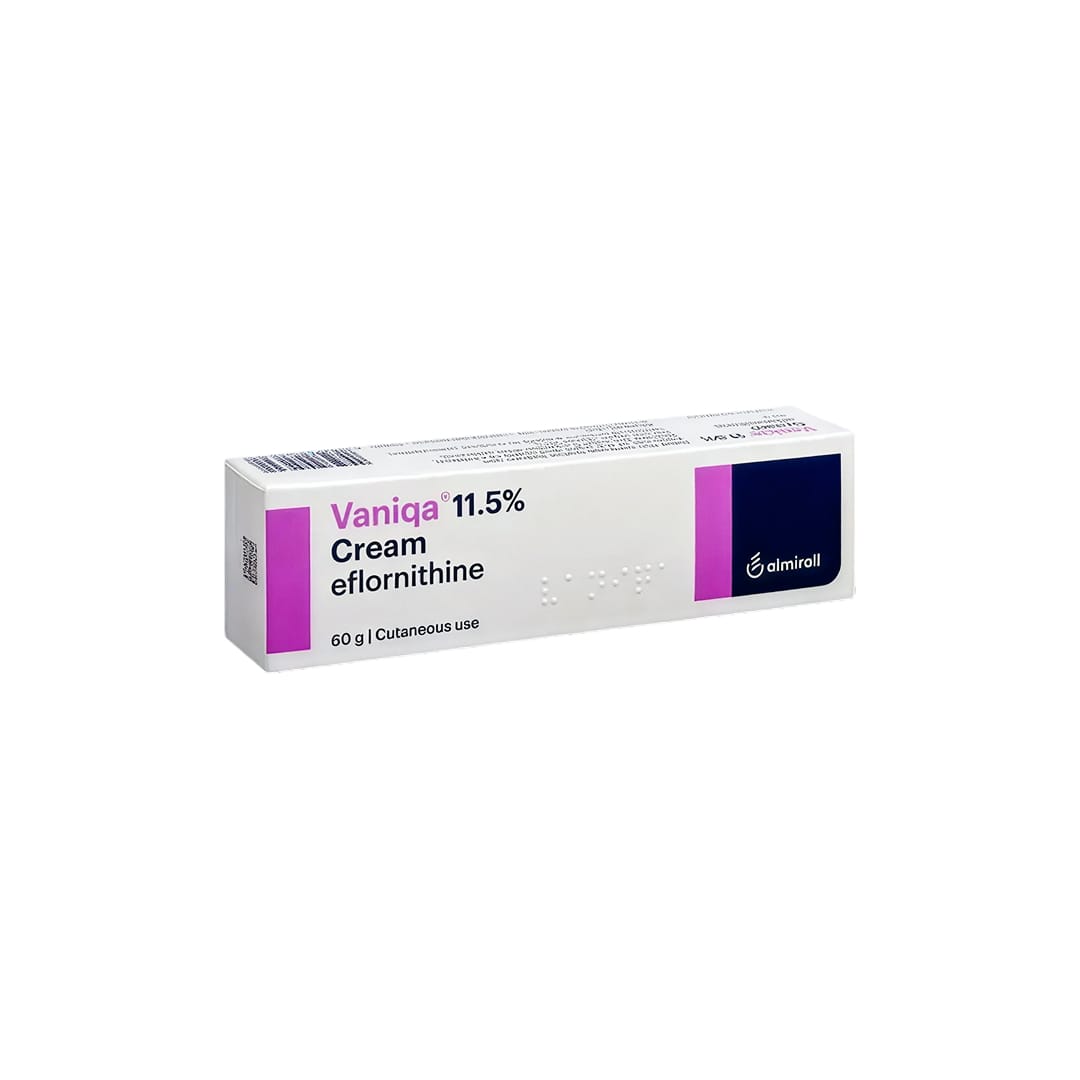
Vaniqa Hair Growth Inhibitor Cream
Buy Vaniqa Hair Growth Inhibitor Cream Online
Secure Encrypted Payments
Vaniqa Hair Growth Inhibitor Cream is a topical eflornithine cream used to slow unwanted facial hair growth. It can be bought online, with the cream strength and quantity chosen to match the directions given by your clinician. The commonly referenced form is eflornithine 13.9% cream for use on the face and under the chin.
This medicine is different from shaving, waxing, threading, plucking, bleaching, or depilatory products. Those methods remove or disguise hair that is already visible, while eflornithine works on new growth within the hair follicle. Many people use Vaniqa cream alongside their usual hair-removal routine while waiting for slower regrowth.
Because results are gradual, the most useful buying decision is practical: choose the correct active ingredient, cream strength, facial-use product, and total quantity. Similar-looking cosmetic hair inhibitors are not the same as eflornithine cream.
Price, Strength, and Quantity to Match
Vaniqa Hair Growth Inhibitor Cream price can vary with the cream strength, tube or pack quantity, brand or eflornithine naming, and current supply. Focus on the total amount of cream being supplied, not only the product name. Two products can look similar online but provide different quantities or contain different ingredients.
The key medicine detail is eflornithine 13.9% cream unless your clinician has directed something different. A lower-looking strength, body-hair inhibitor, moisturizer, or cosmetic product should not be treated as interchangeable with this facial hair medicine. Check the active ingredient, topical cream form, intended use area, and total quantity before checkout.
For people paying cash, the Vaniqa cream cost is best evaluated against the current product strength and quantity rather than older forum posts, marketplace listings, or anecdotal price comments. Insurance coverage, cash-pay status, and sourcing can all affect the amount a customer sees at the time of purchase.
| Product detail | What to match before checkout |
|---|---|
| Active ingredient | Eflornithine |
| Common strength | 13.9% topical cream |
| Use area | Face and under chin |
| Quantity | Choose the amount that aligns with clinician directions |
| Product type | Topical medicine, not a cosmetic hair remover |
Quick tip: Compare total cream quantity and strength together, not the lowest visible vaniqa price alone.
How to Order Vaniqa Cream Online
To order Vaniqa Hair Growth Inhibitor Cream online, choose the eflornithine cream strength and quantity that match your directions, then complete the checkout steps. If you are arranging US delivery from Canada, keep the product name, strength, and clinician instructions consistent throughout the order.
During ordering, avoid substituting creams promoted as natural hair inhibitors, pore-shrinking products, or body-hair reduction cosmetics. Those may be ordinary skin-care products rather than eflornithine. Vaniqa cream online should be evaluated as a medicine for facial hair regrowth, not as an instant hair-removal cream.
Orders may include prompt, express shipping when offered, but handling depends on processing, destination rules, and product availability. We may review order details to help ensure the medicine, strength, and quantity are consistent before the pharmacy supply process continues.
Why it matters: Matching the active ingredient and strength helps prevent buying a product that will not fit the intended treatment plan.
What Vaniqa Cream Is Used For
Vaniqa cream is used to reduce unwanted facial hair growth in women, commonly on the upper lip, chin, and under the chin. It does not remove existing hair. Instead, eflornithine slows hair growth by inhibiting ornithine decarboxylase, an enzyme involved in hair production inside the follicle.
This distinction matters when setting expectations. Shaving, threading, waxing, plucking, or depilatory use may still be needed for visible hair while the cream begins to affect new growth. If the cream is stopped, the slower-growth effect usually fades, and hair growth may gradually return toward its previous pattern.
Unwanted facial hair can be associated with hirsutism, polycystic ovary syndrome, medicines, menopause-related hormone changes, or family traits. If you want to browse condition-focused information and related treatment categories, the Hirsutism page groups relevant options in one place.
Sudden or rapidly worsening facial hair should be discussed with a healthcare professional. New acne, menstrual changes, voice deepening, weight changes, or other hormone-related symptoms can point to a cause that needs assessment beyond a topical cream.
How It Fits Into a Hair-Removal Routine
Label-based use is commonly a thin layer applied to affected facial areas twice daily, with applications spaced at least 8 hours apart. Clean, dry skin is generally preferred. Keep the cream away from the eyes, lips, mouth, and inside the nose, and wash your hands after applying it.
Many directions advise waiting briefly after hair removal before applying the cream, especially if shaving or plucking has irritated the skin. Treated areas are often left unwashed for several hours afterward. Follow the directions you were given, especially if you also use acne medicines, retinoids, exfoliating acids, or other facial treatments.
- Use a thin layer; extra cream does not speed results.
- Apply only to the facial areas directed.
- Keep applications evenly spaced when possible.
- Avoid broken, infected, sunburned, or severely irritated skin.
- If an application is missed, resume the usual schedule without doubling.
Visible change takes time. Some people notice they need hair removal less often after several weeks, while others need a longer assessment period. Overuse can increase stinging, redness, acne-like bumps, or rash without improving the outcome.
Can You Pluck, Wax, or Shave While Using It?
Yes, many people continue plucking, shaving, threading, waxing, or using another hair-removal method while using eflornithine cream. Vaniqa slows new growth; it does not pull out, dissolve, bleach, or permanently destroy existing hair. That means a grooming method may still be needed for immediate cosmetic results.
The timing matters because freshly removed hair and irritated skin can sting when a topical cream is applied. If your skin becomes red, scraped, or inflamed after plucking or waxing, let the area settle before applying the medicine. Gentle skin care can make the routine easier to maintain.
Procedural options work differently. Laser hair reduction targets follicles with light-based treatment, while electrolysis treats individual follicles. Eflornithine cream may suit someone who wants topical support between grooming sessions, while procedure-based methods may be more relevant when long-term follicle reduction is the main goal.
| Option | How it works | Best fit |
|---|---|---|
| Eflornithine cream | Slows new facial-hair growth with regular use | Reducing how quickly facial hair returns |
| Shaving or threading | Removes visible hair quickly | Immediate cosmetic change |
| Waxing or plucking | Removes hair from the root | Short-term removal when skin tolerates it |
| Laser or electrolysis | Targets follicles through procedures | Longer-term hair-reduction goals |
Brand, Generic Name, and Product Status
Vaniqa is the brand name commonly associated with topical eflornithine cream. Eflornithine is the active ingredient name. Depending on market and sourcing, product naming may show the brand, the active ingredient, or both. The clinically important comparison is the active ingredient, 13.9% cream strength, facial use, and quantity.
Generic, brand, and compounded terminology can vary across countries and sellers. A product advertised as a hair-growth inhibitor may be a cosmetic formula rather than a regulated eflornithine cream. Do not assume that an online product is equivalent because the name sounds similar or the packaging uses facial-hair language.
Country-of-origin details can also matter for customers evaluating cross-border supply. If you want to browse products associated with Canadian sourcing, the Canada country-of-origin attribute groups relevant store items without changing the need to match the actual product you intend to use.
Storage, Handling, and Travel
Store the tube at room temperature unless the pharmacy label gives different instructions. Keep the cap closed, avoid excessive heat or freezing, and keep the cream away from children and pets. A clean cap and tube opening help reduce contamination, which matters because the product is used on facial skin.
For travel, original packaging is useful because it keeps the medicine name, strength, lot information, and directions together. Pack the tube where it will not be crushed or exposed to prolonged temperature extremes. Do not share Vaniqa cream with another person, even if their facial hair concerns look similar.
If the cream changes color, separates, develops an unusual odor, or the tube appears damaged, ask a pharmacist before applying it. Facial skin can react strongly to degraded or contaminated topical products, and using a questionable tube may increase irritation risk.
Side Effects, Warnings, and Skin Monitoring
Most side effects of eflornithine cream involve the skin where it is applied. Common reactions can include stinging, burning, redness, rash, dryness, acne, ingrown hairs, or folliculitis, which means inflamed hair follicles. These effects may be more noticeable after shaving, plucking, waxing, or using exfoliating skin-care products.
Mild irritation may improve as the skin adjusts, but persistent discomfort should be discussed with a clinician or pharmacist. Stop applying the cream and seek medical guidance if burning is severe, swelling develops, blisters appear, or a rash spreads beyond the treated area. Urgent care is appropriate for trouble breathing, major facial swelling, or signs of a serious allergic reaction.
Avoid applying the cream to broken, infected, or severely inflamed skin. Keep it out of the eyes and away from mucous membranes. People who are pregnant, planning pregnancy, or breastfeeding should have an individualized risk-benefit discussion before starting any facial-hair medicine.
Skin-care combinations deserve attention. Retinoids, benzoyl peroxide, exfoliating acids, alcohol-heavy toners, harsh scrubs, and frequent shaving can increase irritation. If you use prescription acne treatments or sensitive-skin products, ask how to space them from eflornithine and how to protect the skin barrier.
- Track redness, burning, rash, acne-like bumps, or dryness.
- Note whether irritation follows shaving, waxing, or plucking.
- Avoid applying near eyes, lips, nostrils, or broken skin.
- Report sudden worsening facial hair or hormone-related symptoms.
- Discuss pregnancy or breastfeeding before use.
When to Reassess Results
Vaniqa cream is a gradual treatment. It may reduce how quickly unwanted facial hair returns, but it does not permanently eliminate follicles. If you stop using it, the effect usually fades over time, and hair growth may move back toward its previous pattern.
A practical way to evaluate progress is to track grooming frequency, irritation from hair removal, and the areas being treated. Photos taken in the same lighting can help you discuss changes with a clinician, but they should not replace medical evaluation when symptoms change quickly.
If facial hair is linked with acne, irregular periods, scalp hair thinning, or other hormone signs, topical treatment may be only one part of care. The Dermatology Products category can help you browse skin-related medicines, and Dermatology Articles gathers educational content on skin-care topics.
Authoritative Sources
- Patient drug information is summarized by Mayo Clinic on topical eflornithine.
- Clinical evidence for eflornithine 13.9% cream is discussed in a peer-reviewed PubMed trial report.
This content is for informational purposes only and is not a substitute for professional medical advice.
Express Shipping - from $29.99
Shipping with this method takes 3-5 days
Prices:
- Dry-Packed Products $29.99
- Cold-Packed Products $39.99
Shipping Countries:
- United States (all contiguous states**)
- Worldwide (excludes some countries***)
Standard Shipping - $19.99
Shipping with this method takes 5-10 days
Prices:
- Dry-Packed Products $19.99
- Not available for Cold-Packed products
Shipping Countries:
- United States (all contiguous states**)
- Worldwide (excludes some countries***)
What is Vaniqa Hair Growth Inhibitor Cream used for?
Vaniqa Hair Growth Inhibitor Cream is used to slow unwanted facial hair growth in women, including areas such as the upper lip, chin, and under the chin. It does not remove hair that is already visible, so many people continue their usual grooming method while the cream gradually slows regrowth.
Is eflornithine cream available over the counter?
Access rules can vary by country and product source, so follow the requirements shown during ordering and the directions from your clinician or pharmacist. Do not substitute cosmetic hair-inhibitor creams for eflornithine 13.9% cream unless a healthcare professional confirms they are appropriate for your situation.
What happens when you stop using Vaniqa cream?
When Vaniqa cream is stopped, its effect on slowing facial hair growth usually fades over time. Hair growth may gradually return toward its previous pattern, so ongoing use is typically needed to maintain the reduced-regrowth effect.
What are the common side effects of eflornithine cream?
Common side effects are usually local skin reactions such as stinging, burning, redness, rash, dryness, acne-like bumps, ingrown hairs, or folliculitis. Severe burning, swelling, blistering, spreading rash, or signs of an allergic reaction should be assessed promptly.
Can you pluck or wax while using Vaniqa?
Many people continue plucking, waxing, shaving, or threading while using Vaniqa because the cream does not remove existing hair. If hair removal irritates the skin, let the area calm before applying the cream and follow the timing instructions provided with your medicine.
Rewards Program
Earn points on birthdays, product orders, reviews, friend referrals, and more! Enjoy your medication at unparalleled discounts while reaping rewards for every step you take with us.
You can read more about rewards here.
POINT VALUE
How to earn points
- 1Create an account and start earning.
- 2Earn points every time you shop or perform certain actions.
- 3Redeem points for exclusive discounts.
You Might Also Like
Select options
This product has multiple variants. The options may be chosen on the product page
Select options
This product has multiple variants. The options may be chosen on the product page
Select options
This product has multiple variants. The options may be chosen on the product page
Select options
This product has multiple variants. The options may be chosen on the product page