
Please note: a valid prescription is required for all prescription medication.
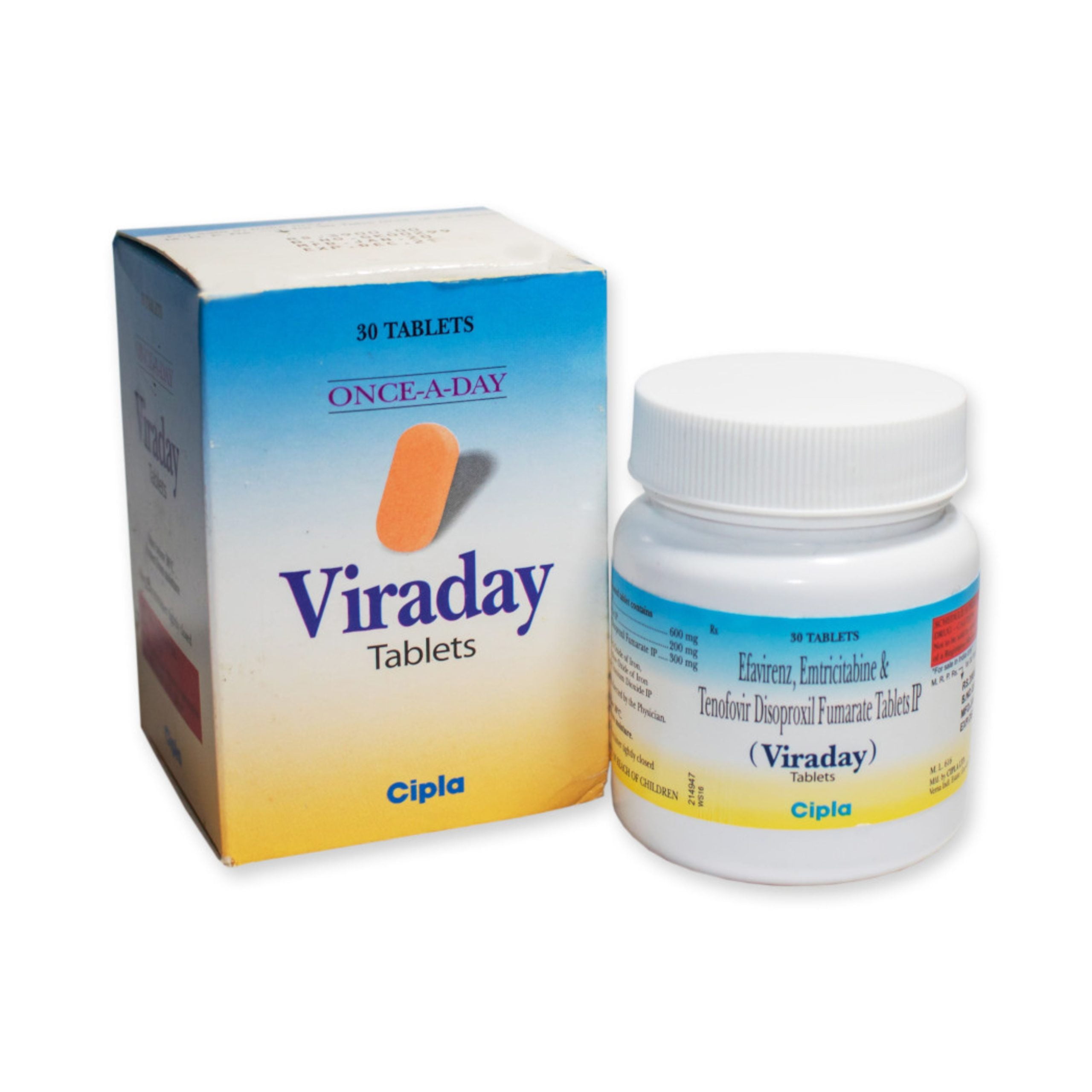
Viraday
Buy Viraday Online
Secure Encrypted Payments
Viraday is an antiretroviral tablet used in HIV treatment. It combines efavirenz, emtricitabine, and tenofovir disoproxil fumarate in one fixed-dose tablet, and customers can buy Viraday online while choosing the strength shown for the product and matching it to their clinician’s directions.
The fixed-dose format may reduce daily pill burden for people whose HIV regimen includes these three ingredients. It also means the components cannot be adjusted separately, so current medicines, lab history, side effect concerns, and treatment goals should be considered before starting, continuing, or switching to this combination.
Viraday Price, Strength, and Ordering Details
Viraday price can vary with the quantity, product source, and pharmacy processing requirements shown during ordering. The tablet is commonly identified by its three-part composition: efavirenz 600 mg, emtricitabine 200 mg, and tenofovir disoproxil fumarate 300 mg. Match the product strength displayed during checkout to the directions from your treating clinician.
BorderFreeHealth works with licensed pharmacies for medication supply and may help coordinate order-detail checks when needed. Some customers use a U.S.-from-Canada service model for cash-pay medication access, including people comparing Viraday cost without insurance. Current pricing is shown during the ordering process rather than estimated in general copy.
When reviewing Viraday Tablet online, focus on the exact active ingredients, the strength, and whether the fixed-dose combination matches the intended HIV regimen. Packaging and country of origin can vary by supply route; if the manufacturing origin matters to you, the India country-of-origin category can help with broader browsing.
Quick tip: Keep the product name and full three-ingredient strength together when discussing the medicine with your healthcare team.
What Viraday Is Used For
Viraday is used as part of antiretroviral therapy for HIV infection when the efavirenz, emtricitabine, and tenofovir disoproxil fumarate combination is appropriate. Antiretroviral therapy helps suppress HIV, which can support immune function and reduce the risk of HIV-related complications when treatment is taken consistently.
This medicine does not cure HIV. It is also not automatically interchangeable with every HIV prevention or emergency-use regimen. Some searches mention Viraday as PEP, but post-exposure prophylaxis decisions are time-sensitive and individualized. A clinician should choose the specific medicines and timing for any possible exposure to HIV.
People often ask whether Viraday benefits include convenience. For the right patient, one tablet containing three antiretroviral medicines may simplify daily treatment. The main tradeoff is flexibility: if one ingredient causes a problem, the whole combination may need to be reconsidered rather than only changing one component.
For more condition-specific browsing, the HIV medication category places Viraday within the wider treatment area. Broader antiviral products can also be viewed through the antivirals category.
Viraday Composition and How the Ingredients Work
Viraday composition includes one non-nucleoside reverse transcriptase inhibitor and two nucleoside-style reverse transcriptase inhibitors. Reverse transcriptase is an enzyme HIV uses to copy its genetic material. Blocking this step helps reduce viral replication when the regimen is active against the person’s virus.
| Ingredient | Amount per tablet | Role in HIV treatment |
|---|---|---|
| Efavirenz | 600 mg | NNRTI, a non-nucleoside reverse transcriptase inhibitor |
| Emtricitabine | 200 mg | NRTI, a nucleoside reverse transcriptase inhibitor |
| Tenofovir disoproxil fumarate | 300 mg | NRTI prodrug used against HIV and active against hepatitis B virus |
Efavirenz is the ingredient most associated with nervous system effects such as dizziness, unusual dreams, sleep disturbance, or mood changes. Emtricitabine and tenofovir disoproxil fumarate form a backbone used in many HIV regimens. Because tenofovir can affect kidney and bone health in some people, lab monitoring may be part of ongoing care.
The phrase tenofovir emtricitabine efavirenz tablet describes the same ingredient combination in plain active-ingredient terms. Viread is different: it is a brand name for tenofovir disoproxil fumarate alone, not the full three-drug Viraday combination.
How Viraday Is Usually Taken
Viraday dosage should follow the directions provided by the treating clinician and the medicine label. Efavirenz-based fixed-dose tablets are often used once daily, but individual instructions matter because timing, food guidance, other medicines, and side effect management can change how the regimen is handled.
Some people are told to take efavirenz-containing tablets at bedtime, often to make dizziness or vivid dreams easier to manage. Food can increase efavirenz exposure and may worsen some nervous system effects for certain people, so follow the label rather than changing timing on your own.
Consistent use is especially important with HIV therapy. Missed or irregular doses can allow the virus to multiply and may contribute to drug resistance. If a dose is missed, use the instructions you were given or ask a pharmacist or clinician; do not double doses unless a healthcare professional specifically tells you to do so.
- Use the same daily routine: steady timing supports viral suppression.
- Swallow as directed: do not crush or split unless instructed.
- Ask before changing timing: food and bedtime guidance can matter with efavirenz.
- Do not stop casually: stopping can affect HIV control and hepatitis B risk.
Storage, Travel, and Handling
Store Viraday tablets at room temperature unless the container label gives different instructions. Keep the bottle closed tightly, protect tablets from excess moisture, and avoid storage in bathrooms, hot cars, or other damp or overheated places. If a moisture-control insert is included, it should usually remain in the bottle.
For travel, keep the medication in carry-on luggage when possible and leave it in labeled packaging. This can help if security staff, border officers, or a healthcare professional need to identify the tablet. Time-zone changes can complicate daily dosing, so plan the next dose before departure rather than guessing mid-trip.
Do not use tablets that look swollen, crumbled, discolored, or unusually soft until a pharmacist has checked them. If an order involves US delivery from Canada, prompt, express shipping may be part of the logistics shown during the ordering process, but storage responsibility begins once the medication is received.
Side Effects, Warnings, and Monitoring
Common Viraday side effects can include dizziness, drowsiness, headache, nausea, tiredness, trouble sleeping, rash, and vivid or unusual dreams. These effects may be more noticeable early in treatment, especially those linked to efavirenz. Some improve as the body adjusts, while persistent or disruptive symptoms deserve medical follow-up.
Serious symptoms need prompt attention. Seek urgent medical help for severe rash, blistering, swelling of the face or throat, breathing trouble, severe abdominal pain, yellowing of the skin or eyes, dark urine, or signs of a serious allergic reaction. Mood changes, depression, unusual thoughts, aggression, hallucinations, or suicidal thoughts should be discussed with a healthcare professional right away.
Kidney and liver monitoring can be important with this combination. Tenofovir disoproxil fumarate may affect kidney function, and liver risks can be higher in people with hepatitis or significant alcohol use. Emtricitabine and tenofovir are active against hepatitis B, so stopping a regimen containing them may trigger a hepatitis B flare in people who carry that virus.
Bone health may also be considered during long-term tenofovir disoproxil fumarate use. People with kidney disease, reduced bone density, seizure disorders, serious mental health history, pregnancy considerations, or liver disease may need a more detailed risk discussion before using an efavirenz emtricitabine tenofovir tablet.
- Common effects: dizziness, nausea, headache, sleep changes, vivid dreams, rash.
- Mental health caution: new or worsening mood symptoms need quick attention.
- Organ monitoring: kidney tests, liver enzymes, and HIV markers may be followed.
- Hepatitis B concern: stopping suddenly can cause a flare in some people.
Drug Interactions and Suitability Checks
Efavirenz can interact with many medicines because it affects liver enzymes that process drugs. This can raise or lower levels of other treatments, sometimes making them less effective or increasing side effects. Interaction review is especially important with seizure medicines, tuberculosis medicines, antifungals, hepatitis C treatments, certain antibiotics, psychiatric medicines, methadone, and herbal products such as St. John’s wort.
Tenofovir may add kidney strain when combined with other medicines that affect the kidneys. Alcohol, sedatives, cannabis products, or sleep aids may make dizziness, drowsiness, confusion, or poor coordination feel worse. Hormonal contraception may be less reliable with efavirenz-containing regimens, so birth control planning should be discussed instead of assumed.
Tell your healthcare team about prescription medicines, non-prescription products, supplements, recreational substances, and treatments you use only occasionally. Short courses of antibiotics, antifungals, pain medicines, or seizure therapies can still matter. A complete medication list helps prevent avoidable interaction problems before Viraday is started or continued.
Viraday Compared With Other HIV Medicines
Viraday is one fixed-dose oral antiretroviral option, but HIV regimens are not chosen by pill count alone. Resistance history, viral load, kidney function, liver status, pregnancy plans, interaction risk, mental health history, and prior side effects all influence whether this combination is suitable.
Newer single-tablet regimens may use different drug classes or have different tolerability profiles. Component-based regimens can offer more flexibility when one ingredient needs to be changed. Viraday may still be appropriate when the three active ingredients fit the treatment plan and the person can take the medicine consistently.
Truvada, for example, contains emtricitabine and tenofovir disoproxil fumarate but not efavirenz. Viread contains tenofovir disoproxil fumarate alone. Those distinctions matter because a two-drug backbone or single active ingredient is not the same as a complete three-drug fixed-dose tablet.
When comparing Viraday review information online, give more weight to active ingredients, safety considerations, and clinical fit than to individual anecdotes. One person’s experience with vivid dreams or dizziness does not predict exactly how another person will respond, but it can highlight useful questions to ask.
Authoritative Sources
For federal HIV medicine and treatment education, see HIVinfo from the U.S. Department of Health and Human Services.
For global background on HIV and antiretroviral treatment, see the World Health Organization HIV fact sheet.
For interaction checks commonly used in HIV care, see the Liverpool HIV drug interactions resource.
This content is for informational purposes only and is not a substitute for professional medical advice.
eGFR Calculator
Estimate kidney filtration using the 2021 CKD-EPI creatinine equation.
eGFR
-
mL/min/1.73 m2
G category
-
requires clinical context
These calculations are for education only and do not replace clinical advice, diagnosis, or treatment. Always confirm medical decisions with a qualified healthcare professional.
Creatinine Clearance Calculator
Estimate creatinine clearance using the Cockcroft-Gault equation.
CrCl
-
mL/min estimate
These calculations are for education only and do not replace clinical advice, diagnosis, or treatment. Always confirm medical decisions with a qualified healthcare professional.
Urine Albumin-Creatinine Ratio Calculator
Calculate urine albumin-creatinine ratio from spot urine albumin and creatinine values.
uACR
-
mg/g
uACR
-
mg/mmol
Category
-
A1/A2/A3 albuminuria range
These calculations are for education only and do not replace clinical advice, diagnosis, or treatment. Always confirm medical decisions with a qualified healthcare professional.
Corrected Sodium Calculator
Estimate sodium corrected for hyperglycemia using common 1.6 and 2.4 correction factors.
Corrected sodium
-
1.6 factor
Corrected sodium
-
2.4 factor
These calculations are for education only and do not replace clinical advice, diagnosis, or treatment. Always confirm medical decisions with a qualified healthcare professional.
Express Shipping - from $29.99
Shipping with this method takes 3-5 days
Prices:
- Dry-Packed Products $29.99
- Cold-Packed Products $39.99
Shipping Countries:
- United States (all contiguous states**)
- Worldwide (excludes some countries***)
Standard Shipping - $19.99
Shipping with this method takes 5-10 days
Prices:
- Dry-Packed Products $19.99
- Not available for Cold-Packed products
Shipping Countries:
- United States (all contiguous states**)
- Worldwide (excludes some countries***)
What is Viraday used for?
Viraday is used as part of antiretroviral therapy for HIV infection when its three-drug combination fits the treatment plan. It helps suppress HIV but does not cure HIV.
What are the ingredients in Viraday?
Viraday contains efavirenz 600 mg, emtricitabine 200 mg, and tenofovir disoproxil fumarate 300 mg in one fixed-dose tablet.
What are common Viraday side effects?
Common side effects can include dizziness, drowsiness, headache, nausea, tiredness, rash, trouble sleeping, and vivid dreams. Severe rash, allergic symptoms, mood changes, or liver warning signs need prompt medical attention.
Is Viraday the same as Viread?
No. Viread is a brand name for tenofovir disoproxil fumarate alone. Viraday contains tenofovir disoproxil fumarate plus emtricitabine and efavirenz.
Can Viraday be used as PEP?
Do not self-select Viraday for post-exposure prophylaxis. PEP decisions are urgent and depend on timing, exposure details, HIV status, drug interactions, and local clinical protocols.
How should Viraday be stored?
Store Viraday at room temperature unless the label says otherwise. Keep tablets dry, tightly closed in the original container, away from heat, moisture, children, and pets.
Rewards Program
Earn points on birthdays, product orders, reviews, friend referrals, and more! Enjoy your medication at unparalleled discounts while reaping rewards for every step you take with us.
You can read more about rewards here.
POINT VALUE
How to earn points
- 1Create an account and start earning.
- 2Earn points every time you shop or perform certain actions.
- 3Redeem points for exclusive discounts.
You Might Also Like
Select options
This product has multiple variants. The options may be chosen on the product page
Select options
This product has multiple variants. The options may be chosen on the product page
Select options
This product has multiple variants. The options may be chosen on the product page
Select options
This product has multiple variants. The options may be chosen on the product page