

Please note: a valid prescription is required for all prescription medication.
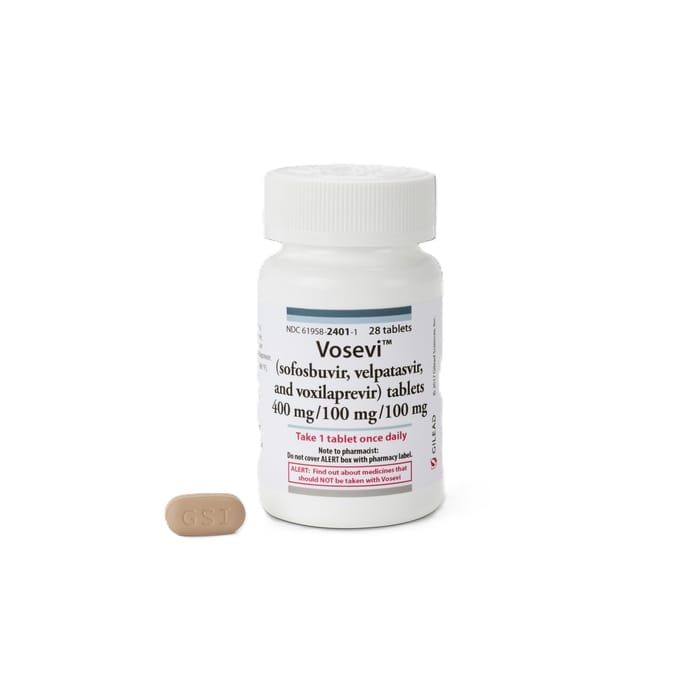
Vosevi
Vosevi Tablets: Buy With Prescription Review
Price:
$24,498.99
Secure Encrypted Payments
Vosevi is a prescription antiviral tablet used to treat chronic hepatitis C infection in certain adults. This page summarizes how it works, dosage basics, key safety points, and practical handling details for US delivery from Canada. It also explains common access steps when paying cash and without insurance through a prescription referral platform.
Hepatitis C is caused by a virus that mainly affects the liver. Many people are cured with modern direct-acting antivirals, but some still need retreatment after an earlier regimen did not work. The information below uses both clinical terms and plain-language explanations, so it is easier to review the “why,” the “how,” and the “what to watch for” before coordinating a fill with a pharmacy.
What Vosevi Is and How It Works
This medicine combines three direct-acting antivirals in one tablet: sofosbuvir (an NS5B polymerase inhibitor), velpatasvir (an NS5A inhibitor), and voxilaprevir (an NS3/4A protease inhibitor). Each ingredient blocks a different step in hepatitis C virus replication, which can help stop the virus from making copies. Prescriptions are confirmed with the prescriber before dispensing.
People often see the ingredients described as “sofosbuvir velpatasvir voxilaprevir tablets” or as sofosbuvir/velpatasvir/voxilaprevir 400/100/100 mg. The “triple” approach is commonly used for certain retreatment situations, where prior therapy did not clear the infection. Ships from Canada to US may appear in service details, but the clinical decisions remain between a patient and their healthcare professional, guided by the official labeling and current practice guidelines.
Who It’s For
In general terms, Vosevi is used for adults with chronic hepatitis C who need a regimen designed for specific treatment histories. Eligibility often depends on which hepatitis C medicines were used before, whether the virus was exposed to an NS5A inhibitor, and whether the liver disease is compensated cirrhosis (scarring that has not led to liver failure). For condition background and terminology, browse the Hepatitis C Hub.
This therapy is not appropriate for everyone. Some people may be advised against certain hepatitis C antivirals if they have decompensated cirrhosis (advanced liver impairment), severe drug interactions, or other clinical factors that require a different plan. Many product labels also caution about use in pregnancy and breastfeeding because data can be limited, and the best choice depends on the full regimen and individual circumstances. Awareness and screening efforts are highlighted during events like World Hepatitis Day, which can be a helpful reminder to discuss testing, vaccination needs, and liver health with a clinician.
Dosage and Usage
Typical label-based dosing for this treatment is one oral tablet taken once daily with food. “With food” matters because it can help the body absorb the medicine more consistently. Vosevi once daily tablets are usually taken for a defined course length set by the prescriber, often based on prior treatment exposure and whether compensated cirrhosis is present.
Practical routines can reduce missed doses. Many people pair dosing with a regular meal and use a reminder system. If a dose is missed, the official prescribing information describes how to handle timing and whether to take a missed dose or skip it; directions can differ depending on how late the dose is. Because hepatitis C regimens can include other medicines in some situations, it is important that the prescriber and pharmacist review the full plan, not just this single product. Medication changes, including stopping early, should be guided by the prescriber, since partial courses can reduce the chance of clearing the virus.
Strengths and Forms
This product is supplied as oral film coated tablets, commonly provided as Vosevi tablets 400/100/100 mg. The fixed-dose combination means each tablet contains sofosbuvir 400 mg, velpatasvir 100 mg, and voxilaprevir 100 mg. Many people receive a 28-day supply as a bottle, which may be described as Vosevi 28 tablets or a Vosevi bottle 28 count, depending on the pharmacy label.
Availability and packaging can vary by supplier and country. Some pharmacies dispense in the manufacturer bottle, while others may use pharmacy-labeled packaging if permitted by local regulations. Fulfillment is coordinated through licensed Canadian partner pharmacies. The table below summarizes the common presentation.
| Form | Strength per tablet | Common pack size |
|---|---|---|
| Film-coated tablet | 400/100/100 mg | 28-count bottle |
Storage and Travel Basics
Store tablets at controlled room temperature and keep them in the original container when possible. Many manufacturer bottles include a desiccant (drying agent) to protect from moisture, so leaving it inside the bottle is usually recommended. Keep the cap tightly closed and avoid storing the medicine in bathrooms, cars, or other places with high heat or humidity.
Travel planning helps prevent gaps in therapy. Keep medicine in a carry-on bag rather than checked luggage, and bring a copy of the prescription or pharmacy label to reduce confusion at security checkpoints. If a dose schedule crosses time zones, a clinician or pharmacist can help confirm a safe timing approach that maintains once-daily spacing without doubling doses.
Quick tip: If the tablets are damaged or exposed to moisture, ask a pharmacist what to do next.
Side Effects and Safety
Like many antivirals, this regimen can cause side effects that are uncomfortable but not dangerous for most people. Commonly reported effects include headache, fatigue, diarrhea, and nausea. The prescriber may recommend supportive steps such as hydration, meal timing adjustments, or reviewing other medicines that could worsen stomach upset.
Some safety issues require extra attention. Hepatitis B virus (HBV) reactivation (HBV becoming active again) has been reported with direct-acting antivirals, so many clinicians test for hepatitis B before starting therapy and monitor as needed during and after treatment. Rare but serious problems can also occur with certain interacting drugs, and people with advanced liver disease may need different options.
Why it matters: Screening for hepatitis B can prevent missed monitoring needs during treatment.
Vosevi should be used under prescriber supervision with a plan for follow-up. Monitoring may include liver blood tests and checks for drug interactions, especially when other prescriptions are started or stopped during the course. For broader liver context that may come up in clinic discussions, see Fatty Liver Disease.
Drug Interactions and Cautions
Drug interactions are one of the most important practical considerations with hepatitis C antivirals. Some medicines can lower antiviral levels, making treatment less effective, while others can raise levels and increase side effects. Strong enzyme inducers (medicines that speed up drug breakdown) are a common concern and may be avoided entirely with this regimen; a prescriber or pharmacist will screen for these.
Acid-reducing agents (such as proton pump inhibitors and H2 blockers) can affect absorption of some hepatitis C agents, so dosing separation or specific maximum doses may be required. Other interaction categories can include certain statins, antiarrhythmics (heart rhythm medicines), anticonvulsants, and some HIV antiretrovirals. It helps to provide a complete, updated medication list that includes over-the-counter products and supplements. For people who also track kidney health alongside antiviral use, background reading like Kidney Health In Older Adults can support more informed conversations with clinicians.
Compare With Alternatives
Hepatitis C treatment is usually selected based on genotype, prior exposure to specific drug classes, liver status, and interaction risk. Other direct-acting antiviral options may include combinations such as sofosbuvir/velpatasvir, glecaprevir/pibrentasvir, or ledipasvir/sofosbuvir, but appropriateness depends on the clinical scenario and prior treatment history. When reviewing choices, it can help to browse the broader Antivirals Category to see how many different viruses require different approaches.
Some medicines people see on antiviral lists are for other infections and are not substitutes for hepatitis C therapy. For example, Vemlidy Overview is used for chronic hepatitis B in appropriate patients, and Biktarvy Overview is used for HIV treatment. If HIV-related terms appear during medication review, resources like HIV Viral Load Guide and PrEP Medication Guide can clarify common vocabulary, but the correct regimen still depends on the diagnosed virus and the prescriber’s plan.
Pricing and Access
Access to Vosevi typically requires a valid prescription and a review of prior hepatitis C treatment history. People often seek out cross-border pharmacy coordination when local coverage is limited, the medicine is not on a preferred formulary, or they are paying out of pocket. Cash-pay access can help when coverage is limited. If paying without insurance, it is still important to confirm what documentation is needed and how refills are handled for a time-limited hepatitis C course.
On BorderFreeHealth, the process generally includes prescription intake, pharmacist review for interactions and appropriateness, and verification with the prescriber before dispensing when clarification is needed. Planning ahead matters because hepatitis C courses are time-limited, and continuity helps avoid missed doses. Keep current contact information on file, and ensure the prescriber’s office can respond if the pharmacy requests confirmation.
Authoritative Sources
The most reliable details on indications, contraindications, interaction management, and missed-dose instructions come from official labeling and evidence-based clinical guidance. Use the sources below for the exact wording that clinicians and pharmacists rely on.
For site actions, submit prescription details and choose prompt, express shipping if offered. This content is for informational purposes only and is not a substitute for professional medical advice.
Express Shipping - from $25.00
Shipping with this method takes 3-5 days
Prices:
- Dry-Packed Products $25.00
- Cold-Packed Products $35.00
Shipping Countries:
- United States (all contiguous states**)
- Worldwide (excludes some countries***)
Standard Shipping - $15.00
Shipping with this method takes 5-10 days
Prices:
- Dry-Packed Products $15.00
- Not available for Cold-Packed products
Shipping Countries:
- United States (all contiguous states**)
- Worldwide (excludes some countries***)
What is Vosevi used for?
Vosevi is a prescription medicine used to treat chronic hepatitis C (HCV) infection in certain adults. It is commonly used in specific situations where a person has been treated for HCV before and needs a different regimen based on prior drug exposure and other clinical factors. The exact indication depends on the hepatitis C genotype, prior treatment history, and whether the person has compensated cirrhosis. A clinician uses lab testing and prior medication records to confirm whether this option fits the label and current guidelines.
How do sofosbuvir, velpatasvir, and voxilaprevir work together?
This combination targets the hepatitis C virus in three different ways. Sofosbuvir blocks the NS5B polymerase, a key enzyme the virus uses to copy its genetic material. Velpatasvir inhibits NS5A, a protein involved in viral replication and assembly. Voxilaprevir inhibits the NS3/4A protease, another viral enzyme needed for processing viral proteins. Using multiple targets in one regimen can be useful for certain retreatment scenarios, but suitability depends on prior therapies and interaction risk.
Do I need hepatitis B testing or monitoring before starting?
Many clinicians screen for hepatitis B virus (HBV) before starting direct-acting antivirals for hepatitis C. HBV reactivation has been reported in some people who had current or past hepatitis B infection, so testing helps identify who may need monitoring or additional management. Monitoring can include liver blood tests and, when appropriate, HBV-related labs during and after the hepatitis C course. The exact plan varies by medical history, so it is important to follow the prescriber’s instructions and keep follow-up appointments.
Can I take Vosevi with acid-reducing medicines?
Some acid-reducing medicines (such as proton pump inhibitors, H2 blockers, and antacids) can change stomach acidity and affect absorption for certain hepatitis C treatments. The official labeling may include specific instructions about whether acid reducers can be used, which products are acceptable, dose limits, or timing separation. Because recommendations depend on the exact acid reducer and dose, a pharmacist or prescriber should review all stomach medications, including over-the-counter products, before the hepatitis C regimen is started.
What should I do if I miss a dose?
Missed-dose instructions are provided in the prescribing information and are often based on how much time has passed since the scheduled dose. In many regimens, taking a missed dose soon after remembering is appropriate, while taking two doses close together is usually avoided. Because the guidance can be time-dependent, the safest approach is to follow the label instructions and contact a pharmacist or prescriber if the timing is unclear. Avoid changing the schedule on your own without professional input.
What should I ask my clinician before starting hepatitis C treatment?
Helpful questions include: which prior hepatitis C medicines were considered in selecting the regimen, whether you have compensated or decompensated cirrhosis, and what lab monitoring is planned. It is also important to review all prescription medicines, supplements, and over-the-counter products for interactions, including acid reducers and heart rhythm drugs. Ask what to do about missed doses, how to manage common side effects like nausea or fatigue, and whether hepatitis B screening or vaccination is recommended based on your history.
Rewards Program
Earn points on birthdays, product orders, reviews, friend referrals, and more! Enjoy your medication at unparalleled discounts while reaping rewards for every step you take with us.
You can read more about rewards here.
POINT VALUE
How to earn points
- 1Create an account and start earning.
- 2Earn points every time you shop or perform certain actions.
- 3Redeem points for exclusive discounts.
How to book an appointment
- 1Create Begin by completing a profile or log into your existing account. This step ensures we have the necessary information to provide you with a service that's tailored to your needs. account and start earning.
- 2Scheduling an appointment with our online booking system is easy. Pick a day and time that suits you. You’ll receive an immediate confirmation, without the wait.
- 3Discuss your concerns and symptoms and receive a thorough diagnosis from one of our licensed doctors during a confidential video appointment.
- 4If you've been prescribed medication, your Rx is sent directly to one of our licensed pharmacies and delivered right to your door.
Get Started
To book an online doctor appointment, register for an account or login. After doing so, you can book your visit on this page.
You Might Also Like
Select options
This product has multiple variants. The options may be chosen on the product page
Select options
This product has multiple variants. The options may be chosen on the product page
Select options
This product has multiple variants. The options may be chosen on the product page
Select options
This product has multiple variants. The options may be chosen on the product page