
Please note: a valid prescription is required for all prescription medication.
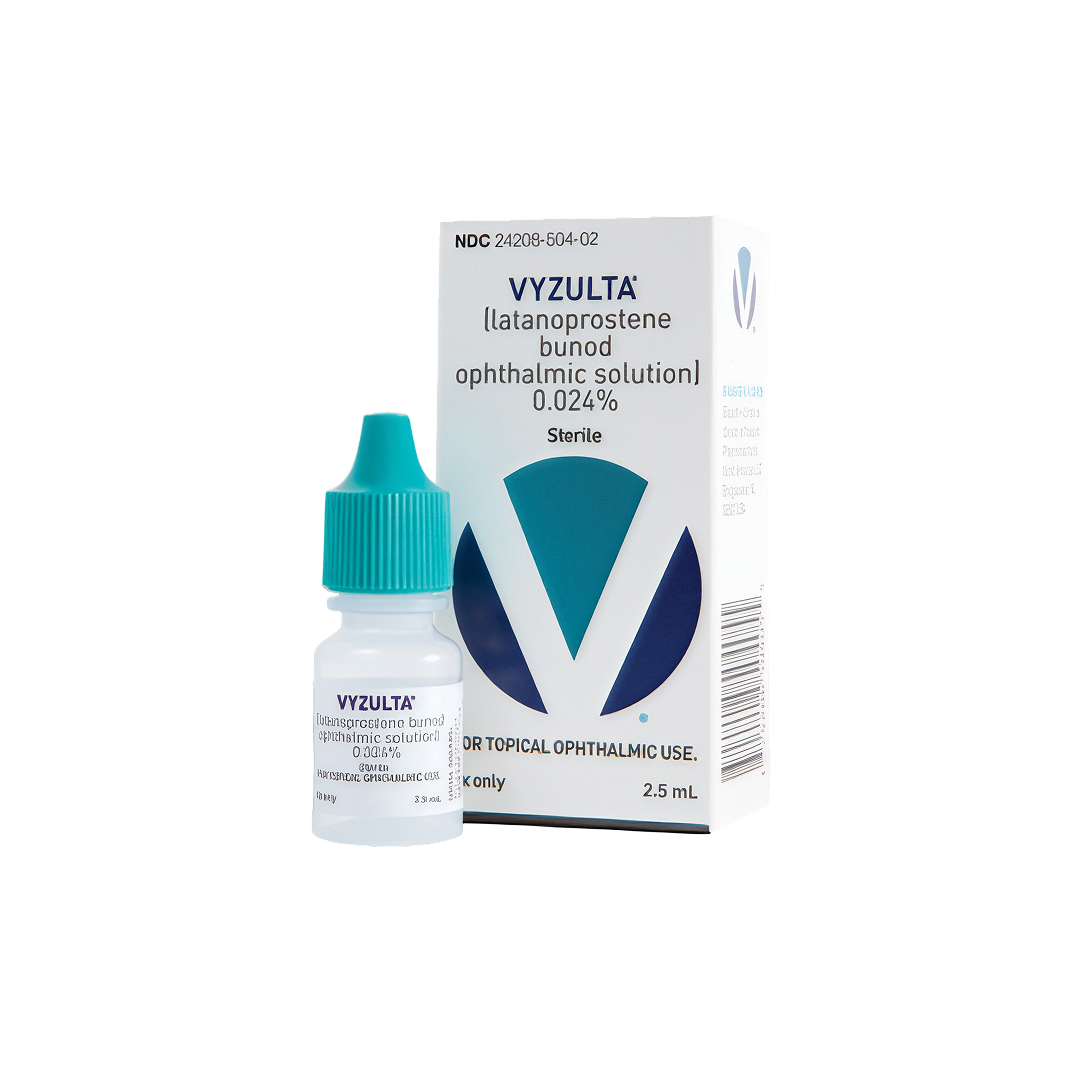
Vyzulta Ophthalmic Solution
Buy Vyzulta Ophthalmic Solution Online
Secure Encrypted Payments
Vyzulta Ophthalmic Solution is an eye drop used to lower elevated pressure inside the eye in people with open-angle glaucoma or ocular hypertension. It can be ordered online, with current price shown during checkout and the available strength selected to match the directions from your eye-care clinician.
The active ingredient in Vyzulta is latanoprostene bunod, a medication that helps fluid leave the eye more effectively. Lowering intraocular pressure, or IOP, is an important part of protecting the optic nerve and reducing the risk of glaucoma-related vision loss.
Vyzulta Ophthalmic Solution price and strength selection
Vyzulta Ophthalmic Solution pricing is shown during ordering so you can see the current cash-pay cost before completing your purchase. Choose the dose or strength displayed for Vyzulta and make sure it matches the instructions provided by your clinician, especially if you are also using other glaucoma eye drops.
Eye pressure treatment is often long term, so the practical cost of therapy may depend on the quantity supplied, how often the bottle is replaced, and whether Vyzulta is used alone or with other medicines. If your clinician changes your glaucoma regimen, update your selection before reordering so the medicine you receive matches the new directions.
Quick tip: Keep a written list of all prescription and non-prescription eye products you use, including artificial tears and allergy drops.
How to order Vyzulta Ophthalmic Solution
To order Vyzulta Ophthalmic Solution, select the available product strength, review the current price, and complete the checkout steps. We may review order details before the medicine is supplied through licensed pharmacy channels, and US delivery from Canada may be available as part of the service logistics.
Use the product exactly as directed by your eye-care clinician. Do not change how often you use Vyzulta, stop it, or add another pressure-lowering eye drop without medical guidance. If you use more than one eye medication, ask how far apart to space each drop so one product does not wash out another.
People often compare Vyzulta with other prostaglandin-style glaucoma therapies. Related choices include latanoprost, Xalatan Ophthalmic Solution, Travatan Z, Lumigan, and Monoprost. Your clinician can explain whether a different drop is appropriate for your pressure target, tolerability, and eye history.
What Vyzulta treats
Vyzulta is indicated for reducing elevated intraocular pressure in people with open-angle glaucoma or ocular hypertension. Open-angle glaucoma is a chronic eye disease in which the drainage angle remains open, but fluid does not leave the eye efficiently enough. Ocular hypertension means eye pressure is higher than normal even if optic nerve damage has not been diagnosed.
High eye pressure is not usually painful, and many people do not notice symptoms early. That is why regular pressure checks, optic nerve exams, and visual field testing are important. Vyzulta helps lower IOP, but it does not replace monitoring by an optometrist or ophthalmologist.
Vyzulta is used as an eye drop, not as an oral medication. It is intended for the eye only. If the solution is swallowed, placed in the wrong area, or used after contamination is suspected, contact a healthcare professional or poison control center for guidance.
How Vyzulta works in the eye
Latanoprostene bunod is designed to lower eye pressure through two related pathways. After it is applied to the eye, it is metabolized into latanoprost acid and butanediol mononitrate. Latanoprost acid increases fluid outflow through the uveoscleral pathway, while the nitric oxide-donating component is believed to relax tissue in the trabecular meshwork and Schlemm’s canal.
In plain language, Vyzulta helps the eye drain fluid better. When fluid leaves the eye more efficiently, pressure inside the eye can decrease. That pressure reduction is the treatment goal because sustained high pressure can damage the optic nerve over time.
Vyzulta belongs to the prostaglandin analog family of glaucoma treatments, but it has a nitric oxide-donating feature that distinguishes it from older prostaglandin-only drops. That difference does not mean it is the best choice for every person. Eye pressure goals, previous response to therapy, side effects, and other eye conditions all matter.
Using Vyzulta safely
Follow the dosing schedule given by your clinician and read the patient information supplied with the medication. Vyzulta is commonly used once daily in the evening according to official labeling, but your own directions should guide use. Using it more often than directed may reduce the pressure-lowering effect and may increase side effects.
Wash your hands before applying eye drops. Avoid touching the dropper tip to the eye, eyelid, fingers, or any surface because contamination can lead to eye infection. If you wear contact lenses, ask your clinician whether they should be removed before using Vyzulta and when they may be reinserted.
If you miss a dose, follow the instructions provided with the medicine or ask your clinician. Do not double up unless a healthcare professional specifically tells you to do so. If you are unsure whether a drop entered the eye, avoid repeated extra doses without guidance.
Side effects, warnings, and monitoring
Common side effects reported with Vyzulta include eye redness, eye irritation, eye pain, and irritation at the application site. Some people may notice increased pigmentation of the iris, eyelid skin darkening, or eyelash changes such as increased length, thickness, or number. These changes can be gradual, and iris color changes may be permanent.
Contact your clinician promptly if you develop eye pain, light sensitivity, sudden vision changes, significant swelling, discharge, or signs of an allergic reaction. People with a history of eye inflammation, macular edema, lens surgery, or other complex eye conditions should discuss those risks before and during treatment.
Vyzulta may not be suitable for every eye condition. Prostaglandin analog medicines can be associated with inflammation inside the eye and may require caution in people prone to uveitis or cystoid macular edema. Your clinician may also monitor corneal health, eye pressure response, and optic nerve status during ongoing therapy.
Tell your clinician about all eye drops and systemic medicines you use. Combining glaucoma medications can be appropriate, but the timing and selection should be individualized. If you are using beta-blocker, carbonic anhydrase inhibitor, alpha-agonist, or combination glaucoma drops, ask for a clear schedule to reduce administration errors.
Storage and handling
Store Vyzulta according to the instructions supplied with the product. The official label provides temperature guidance for unopened and in-use bottles, and those directions should be followed closely. Do not use the solution after the expiration date or if the liquid appears contaminated.
Keep the cap closed tightly when the bottle is not in use. Store eye drops away from children and pets. If the bottle tip touches the eye or another surface, ask a pharmacist or clinician whether the bottle should be replaced.
Travel can make eye-drop routines harder. Keep Vyzulta in its labeled container, carry it with your medication list, and protect it from temperature extremes. If you are away from home for an extended period, plan refills early enough to avoid missed therapy.
Vyzulta compared with other glaucoma eye drops
Vyzulta is one of several medicines used to lower IOP. Prostaglandin analogs such as latanoprost, travoprost, bimatoprost, and preservative-free options may be considered depending on tolerability, cost, dosing routine, and prior response. Some people need more than one medication to reach their target eye pressure.
Combination therapies may be used when a single drop does not lower pressure enough. For example, information about Combigan eye drops explains a different combination approach, while Cosopt preservative-free discusses another option used in glaucoma care. These medicines are not interchangeable without clinician direction.
If side effects are the main concern, the reason matters. Redness, eyelash changes, preservatives, allergy-like reactions, or systemic effects may lead to different next steps. A clinician can help decide whether to continue Vyzulta, adjust timing, add another medicine, or switch to a different eye pressure treatment.
When to ask your clinician before reordering
Ask for guidance before reordering if your vision changes, eye pain worsens, redness becomes severe, or you have eye surgery planned. Also ask if you have been diagnosed with uveitis, macular edema, herpes-related eye disease, or another condition that may affect drop selection.
Bring your Vyzulta bottle or medication list to eye appointments. Accurate medication history helps your clinician judge whether your IOP response reflects consistent use, correct technique, and the right treatment combination. It also helps avoid duplicate therapy with medicines from the same class.
Why it matters: Glaucoma damage can progress quietly, so pressure monitoring is as important as daily drop use.
Authoritative sources
For medical details about approved uses, dosing, precautions, and adverse reactions, review official sources and discuss them with your clinician. Useful references include the Official prescribing information and the Manufacturer information.
This content is for informational purposes only and is not a substitute for professional medical advice.
Express Shipping - from $29.99
Shipping with this method takes 3-5 days
Prices:
- Dry-Packed Products $29.99
- Cold-Packed Products $39.99
Shipping Countries:
- United States (all contiguous states**)
- Worldwide (excludes some countries***)
Standard Shipping - $19.99
Shipping with this method takes 5-10 days
Prices:
- Dry-Packed Products $19.99
- Not available for Cold-Packed products
Shipping Countries:
- United States (all contiguous states**)
- Worldwide (excludes some countries***)
What is Vyzulta Ophthalmic Solution used for?
Vyzulta Ophthalmic Solution is used to reduce elevated intraocular pressure in people with open-angle glaucoma or ocular hypertension. Lowering eye pressure helps reduce the risk of optic nerve damage associated with glaucoma.
How does Vyzulta lower eye pressure?
Vyzulta contains latanoprostene bunod. After it is applied to the eye, it helps increase fluid drainage through pathways involved in eye-pressure control, including a nitric oxide-related effect on the trabecular meshwork.
What are common side effects of Vyzulta?
Common side effects can include eye redness, irritation, eye pain, and application-site discomfort. It may also cause eyelash changes, eyelid skin darkening, or gradual iris color changes, which may be permanent.
Can Vyzulta be used with other glaucoma eye drops?
Vyzulta may be used as part of a broader glaucoma plan, but combinations and timing should be directed by a clinician. Using multiple eye drops too close together may reduce how well each drop stays in the eye.
How should Vyzulta be stored?
Store Vyzulta according to the instructions supplied with the medication, including temperature guidance for unopened and in-use bottles. Keep the cap closed, avoid contaminating the dropper tip, and do not use expired solution.
Rewards Program
Earn points on birthdays, product orders, reviews, friend referrals, and more! Enjoy your medication at unparalleled discounts while reaping rewards for every step you take with us.
You can read more about rewards here.
POINT VALUE
How to earn points
- 1Create an account and start earning.
- 2Earn points every time you shop or perform certain actions.
- 3Redeem points for exclusive discounts.
You Might Also Like
Select options
This product has multiple variants. The options may be chosen on the product page
Select options
This product has multiple variants. The options may be chosen on the product page