
Please note: a valid prescription is required for all prescription medication.
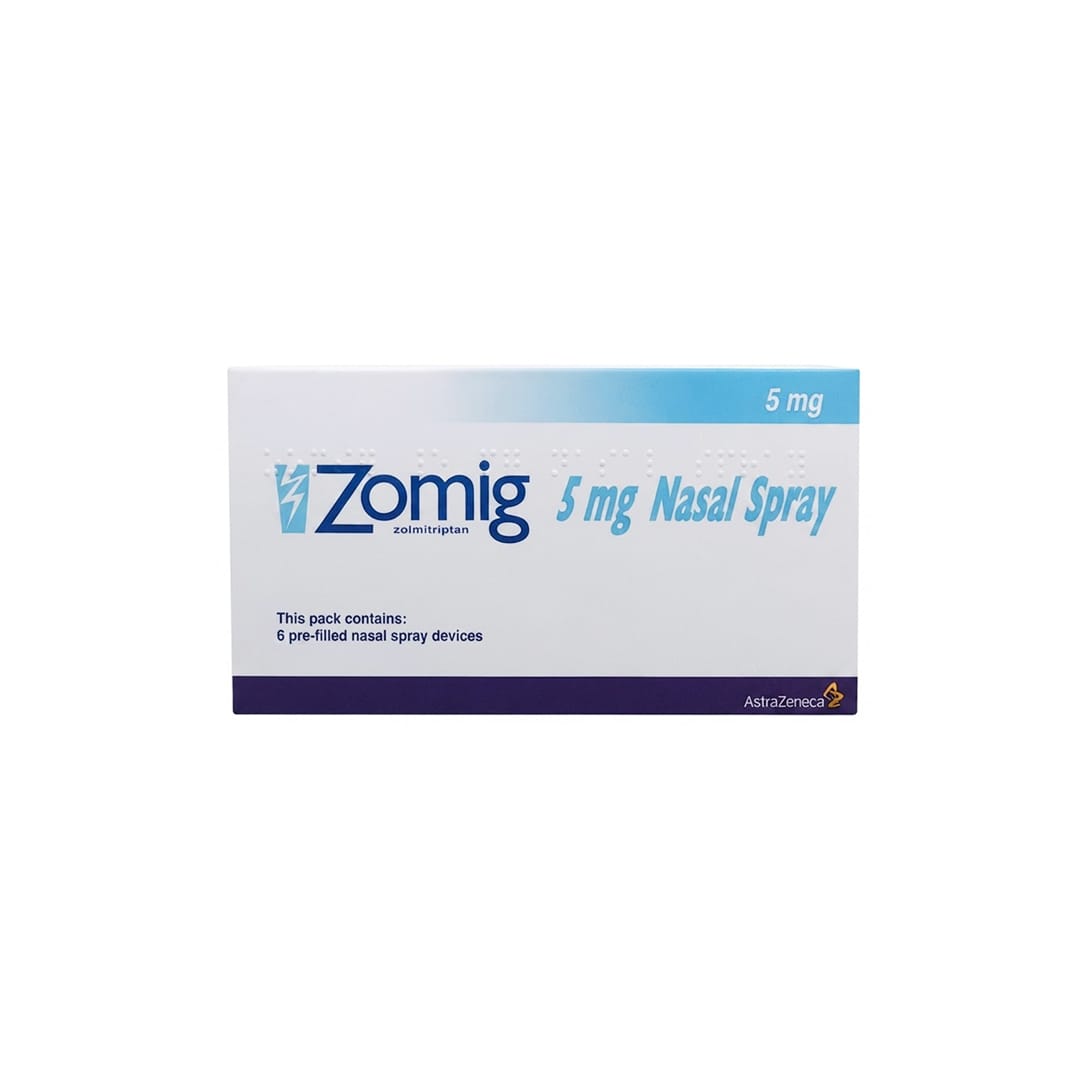
Zolmist Nasal Spray
Buy Zolmist Nasal Spray Online
Secure Encrypted Payments
Zolmist Nasal Spray is a zolmitriptan nasal spray used for acute migraine attacks. It can be bought online through BorderFreeHealth, with current pricing shown during ordering and dose or strength selection matched to the directions from your healthcare professional. This migraine medicine is used when an attack starts; it is not taken every day to prevent migraines.
Zolmitriptan belongs to a medicine class called triptans. These medicines act on serotonin receptors in blood vessels and nerve pathways involved in migraine pain. Many people consider a nasal spray when nausea, vomiting, or trouble swallowing makes tablets harder to use during an attack.
Zolmist Nasal Spray Price, Strength, and Ordering
Zolmist Nasal Spray price can vary by strength, pack size, country of supply, and current pharmacy sourcing. During ordering, choose the strength and quantity shown for the product, then match that selection to the directions given by your healthcare professional. If your treatment plan specifies a particular zolmitriptan nasal spray strength, keep the order consistent with that plan.
Commonly published zolmitriptan nasal spray presentations include 2.5 mg and 5 mg per spray, and Zolmist Nasal Spray 0.7 mL may appear in some markets. Availability of a specific actuator, bottle size, or pack count can differ by manufacturer and country. Always rely on the label that arrives with your medicine for the exact number of sprays and device instructions.
BorderFreeHealth offers US delivery from Canada for customers using cash-pay prescription options and other out-of-pocket pathways. Current product cost is displayed before checkout, so you can decide whether the cash price fits your budget without relying on insurance estimates.
What Zolmist Nasal Spray Treats
Zolmist Nasal Spray is used to treat acute migraine attacks, with or without aura. It is intended for the migraine episode that is already beginning, not for prevention between attacks. It is not an everyday headache medicine and should not be used for tension-type headaches unless a healthcare professional has specifically evaluated your symptoms.
Migraine can cause throbbing head pain, nausea, vomiting, and sensitivity to light or sound. Zolmitriptan may help reduce migraine symptoms by activating 5-HT1B and 5-HT1D receptors, which can narrow certain cranial blood vessels and reduce pain-signaling activity. For more condition background, see our migraine information.
The nasal route may be useful when stomach symptoms are part of your attacks. It does not require water, and absorption through the nasal lining may be more practical than swallowing a tablet during severe nausea. Response still varies from person to person, so tracking when you dose and how you respond can help guide future treatment discussions.
How to Use the Nasal Spray
Use Zolmist Nasal Spray at the start of a migraine attack, following the patient leaflet and the directions from your healthcare professional. Blow your nose gently before use. Keep your head upright, place the nozzle into one nostril, close the other nostril, and press the pump firmly once if your labeled directions call for one spray.
Avoid sniffing hard immediately after spraying, because this can move medicine toward the throat and may increase bitter taste. Do not prime, test, or reuse a single-use device unless the specific instructions supplied with your medicine say to do so. If the device style differs from what you have used before, read the leaflet before the first dose.
If the headache improves and then returns, many zolmitriptan nasal spray labels allow another dose after a set interval, while also setting a maximum amount for 24 hours. Do not use extra sprays to make up for late dosing. Frequent use of acute migraine medicines can contribute to medication-overuse headache, so contact a healthcare professional if attacks or dosing days are increasing.
Generic Status and Related Zolmitriptan Products
Zolmist is a brand of zolmitriptan nasal spray. Zolmitriptan is the active ingredient, and different markets may have different brand names, generic products, strengths, and packaging. A generic zolmitriptan nasal spray may be available in some locations, but substitution should match the active ingredient, route, strength, and directions in your treatment plan.
Country-specific brand and generic naming can be confusing. A product supplied through licensed pharmacies may have different labeling than a U.S. product with the same active ingredient. The key practical checks are the medicine name, active ingredient, nasal route, strength, use instructions, storage directions, and safety warnings included with the package.
Zolmitriptan is not a narcotic or opioid. It is a migraine-specific triptan used for acute attacks. It does not treat pain in the same way as opioid medicines, and it has different warnings, interaction concerns, and use limits.
Benefits and Practical Fit
Zolmist spray may suit adults who need an acute migraine treatment and prefer a non-oral route. It can be carried in a bag, used without water, and taken when nausea makes tablets difficult. The nasal form may also be helpful when migraine symptoms escalate quickly and a convenient route matters.
This product may be less suitable for someone who is very sensitive to bitter taste, has frequent nasal irritation, or needs a preventive migraine plan rather than an attack medicine. If migraines happen often, acute treatment alone may not be enough. A headache diary can show attack frequency, triggers, treatment timing, and whether relief lasts.
Quick tip: Keep one labeled device in a consistent place so it is easy to find when migraine symptoms begin.
Side Effects, Warnings, and Monitoring
Common side effects of zolmitriptan nasal spray can include bitter or unusual taste, nasal discomfort, dry mouth, dizziness, drowsiness, nausea, and unusual sensations such as tingling, warmth, heaviness, or pressure. These effects are often temporary, but they should be discussed with a healthcare professional if they are severe, persistent, or make the medicine difficult to use.
Serious risks are uncommon but important. Triptans can cause blood vessel narrowing and may not be appropriate for people with coronary artery disease, prior stroke or transient ischemic attack, uncontrolled high blood pressure, certain severe circulation problems, hemiplegic or basilar migraine, severe liver disease, or allergy to zolmitriptan. People with major cardiovascular risk factors may need evaluation before using a triptan.
Seek urgent medical help for chest pain, shortness of breath, severe abdominal pain, sudden weakness on one side, trouble speaking, confusion, fainting, or a severe headache that feels different from your usual migraine. These symptoms need prompt assessment and should not be assumed to be routine migraine effects.
Medication-overuse headache is another practical concern. If acute migraine medicines are needed often, the overall migraine plan may need adjustment. Preventive therapies, trigger management, and non-triptan options may be considered depending on your medical history.
Interactions and Use Cautions
Do not combine zolmitriptan with another triptan or an ergot-type migraine medicine within the time window specified on the official label. Combining medicines that narrow blood vessels can increase safety risks. Ask a healthcare professional how to space treatments if you sometimes use more than one migraine medicine.
Monoamine oxidase A inhibitors, often called MAO-A inhibitors, can increase exposure to zolmitriptan and are a key interaction concern. Some antidepressants, including SSRIs and SNRIs, may increase the risk of serotonin syndrome when used with triptans. Serotonin syndrome can involve agitation, hallucinations, fast heartbeat, fever, sweating, muscle stiffness, tremor, nausea, vomiting, or diarrhea.
Cimetidine and certain other medicines may also affect zolmitriptan levels. Alcohol can worsen dizziness or sleepiness during a migraine attack. Share all medicines, supplements, and herbal products with a healthcare professional before using a new acute migraine treatment.
Storage, Handling, and Travel
Store Zolmist Nasal Spray at room temperature in a dry place away from direct light. Keep the cap on, protect the device from dirt, and do not freeze it. Keep all migraine medicines out of reach of children and pets, even when the device looks small or single-use.
For travel, keep the spray in its original packaging with the pharmacy label and medicine information. Carry it in hand luggage so it remains accessible and less exposed to temperature extremes. If you use a travel kit, label it clearly and avoid separating the device from instructions you may need during an attack.
Orders may be handled with prompt, express shipping. When a package arrives, read the label, confirm the medicine name and strength, and store it as directed before placing it in a travel bag or bedside location.
How It Compares With Other Migraine Options
Acute migraine treatment can include triptans, NSAIDs, anti-nausea medicines, and newer migraine-specific options. The best fit depends on attack pattern, nausea, cardiovascular history, other medicines, and whether symptoms return after initial relief. A nasal triptan is mainly a route choice: it may help when swallowing is difficult, while oral medicines may be simpler for attacks without nausea.
People who cannot use triptans, do not respond well, or need a different approach may discuss non-triptan treatments. Browse related therapies in our neurology category, or read broader nervous-system treatment updates in neurology articles. These links can help you prepare questions, but individualized medicine choices should come from a healthcare professional.
Do not switch among migraine medicines without understanding spacing rules. Some combinations are acceptable under supervision, while others raise risks. If you keep multiple acute treatments at home, write down which one to use first and when another may be taken.
Questions to Discuss Before Use
- Which migraine symptoms should prompt the first spray?
- What is the maximum amount allowed in 24 hours?
- How many days per month can I use acute treatment?
- Is this safe with my blood pressure or heart history?
- Can I take an anti-nausea medicine with it?
- Which medicines should I avoid on the same day?
- When should frequent migraines lead to preventive treatment?
Bring details about your migraine pattern, including aura symptoms, attack frequency, nausea, vomiting, and any chest symptoms during prior treatments. This information helps assess whether a triptan nasal spray is a reasonable fit and whether monitoring or a different medicine class is needed.
Authoritative Sources
Use official and regulator-backed information for safety decisions, dosing limits, contraindications, and interactions. Helpful references include the ZOMIG nasal spray prescribing information and the Health Canada Drug Product Database.
Before using any acute migraine medicine, read the patient information that comes with your order. Contact a healthcare professional if your headaches change pattern, become unusually severe, occur after head injury, or are accompanied by neurological symptoms that are new for you.
This content is for informational purposes only and is not a substitute for professional medical advice.
Express Shipping - from $29.99
Shipping with this method takes 3-5 days
Prices:
- Dry-Packed Products $29.99
- Cold-Packed Products $39.99
Shipping Countries:
- United States (all contiguous states**)
- Worldwide (excludes some countries***)
Standard Shipping - $19.99
Shipping with this method takes 5-10 days
Prices:
- Dry-Packed Products $19.99
- Not available for Cold-Packed products
Shipping Countries:
- United States (all contiguous states**)
- Worldwide (excludes some countries***)
What is Zolmist Nasal Spray used for?
Zolmist Nasal Spray is used for acute migraine attacks, with or without aura. It is taken when a migraine starts and is not intended as a daily preventive treatment.
Does Zolmist Nasal Spray have a generic version?
Zolmist contains zolmitriptan. Generic zolmitriptan nasal spray may be available in some markets, but brand names, strengths, packaging, and substitution rules can differ by country.
How often can you use Zolmist Nasal Spray?
Follow the dosing interval and maximum daily amount on the label supplied with your medicine. If you need acute migraine treatment often, ask a healthcare professional about medication-overuse headache and preventive options.
Is zolmitriptan a narcotic?
No. Zolmitriptan is a triptan, not a narcotic or opioid. It treats migraine through serotonin receptor activity in migraine-related blood vessels and nerve pathways.
What are common side effects of Zolmist Nasal Spray?
Common effects can include bitter taste, nasal discomfort, dry mouth, dizziness, drowsiness, nausea, and tingling or pressure sensations. Seek urgent help for chest pain, sudden weakness, trouble speaking, or severe unusual symptoms.
Rewards Program
Earn points on birthdays, product orders, reviews, friend referrals, and more! Enjoy your medication at unparalleled discounts while reaping rewards for every step you take with us.
You can read more about rewards here.
POINT VALUE
How to earn points
- 1Create an account and start earning.
- 2Earn points every time you shop or perform certain actions.
- 3Redeem points for exclusive discounts.
You Might Also Like
Select options
This product has multiple variants. The options may be chosen on the product page
Select options
This product has multiple variants. The options may be chosen on the product page
Select options
This product has multiple variants. The options may be chosen on the product page
Select options
This product has multiple variants. The options may be chosen on the product page