
Please note: a valid prescription is required for all prescription medication.
Irbesartan
Buy Irbesartan Online
Secure Encrypted Payments
Irbesartan is an angiotensin receptor blocker used to lower high blood pressure and help protect kidney function in adults with type 2 diabetes and hypertension. You can buy Irbesartan online, view the current irbesartan price during ordering, and choose the available strength that matches your clinician’s directions. Common tablet strengths include 75 mg, 150 mg, and 300 mg, although appearance and packaging can vary by manufacturer.
This medicine is taken by mouth, usually once daily, and works best when used consistently. Because blood pressure treatment is long term for many people, practical details such as strength selection, refill timing, monitoring, and irbesartan cost without insurance can matter as much as the first fill.
Price, Strength Selection, and Ordering
Irbesartan price can vary by strength, quantity, manufacturer, and supply route. During checkout, match the tablet strength and quantity to the directions from your clinician rather than choosing based on cost alone. If your treatment plan changes, confirm the new strength before reordering so your daily amount stays accurate.
Many adults are prescribed 75 mg, 150 mg, or 300 mg tablets. Searches such as irbesartan 150 mg, irbesartan 300 mg, and irbesartan tablets 300mg usually refer to these common tablet strengths, not different medicines. The right strength depends on your blood pressure readings, kidney function, potassium level, other medicines, and tolerability.
BorderFreeHealth helps customers access regulated medicines supplied through licensed pharmacies. Orders may include US delivery from Canada, with prompt, express shipping used as a handling option when available for the order. If you are comparing cash-pay choices, consider the total quantity, refill interval, and whether your clinician supports a multi-month supply.
Quick tip: Keep the medication name, strength, and directions together when you reorder to avoid accidentally selecting the wrong tablet.
What Irbesartan Treats
Irbesartan is indicated for adults with high blood pressure, also called hypertension. Lowering blood pressure reduces strain on the heart and blood vessels over time. Many people do not feel high blood pressure, so home readings and clinic measurements are important for judging response.
Irbesartan is also indicated to treat diabetic nephropathy in adults with type 2 diabetes and hypertension. Diabetic nephropathy means kidney damage related to diabetes. In this setting, the medicine helps reduce pressure effects within the kidney’s filtering system and may slow worsening kidney disease when used as part of a broader care plan.
For condition background, see our information on Hypertension and Diabetic Nephropathy. These condition topics can help you prepare questions about target blood pressure, kidney lab monitoring, sodium intake, and other medicines that may be used with an ARB.
How This ARB Works
Irbesartan belongs to a medicine class called angiotensin receptor blockers, often shortened to ARBs. Angiotensin II is a hormone that tightens blood vessels and can raise blood pressure. Irbesartan blocks angiotensin II type 1 receptors, allowing blood vessels to relax and reducing vascular resistance.
In the kidneys, this same pathway can affect pressure inside small filtering units. That is why ARBs are commonly considered when high blood pressure and type 2 diabetes affect kidney health. Kidney protection still requires regular monitoring, because kidney function and potassium can change after starting or increasing an ARB.
Avapro is a brand name associated with irbesartan. Generic irbesartan contains the same active ingredient, but products may differ in manufacturer, tablet appearance, packaging, and market labeling. If you have been taking Avapro 150 mg or Avapro 300 mg, ask your clinician how your current directions translate to the generic strength being ordered.
How to Take Irbesartan
Irbesartan is usually taken once a day at about the same time. It can be taken with food or on an empty stomach. Morning or evening dosing may both be acceptable; the best time is the one you can follow consistently, unless your clinician gives a specific instruction.
If you feel dizzy after starting therapy, after a dose increase, or after adding a diuretic, contact your healthcare professional. Dizziness can occur when blood pressure drops too much, especially if you are dehydrated, salt depleted, or taking other blood pressure medicines. Do not stop suddenly or change your daily amount without clinical guidance.
If you miss a dose, take it when you remember on the same day. If it is almost time for your next dose, skip the missed dose and return to your normal schedule. Do not take two doses together. A pill organizer, phone reminder, or blood pressure log can make daily use easier to track.
Common Strengths and Combination Choices
Tablet strengths commonly include 75 mg, 150 mg, and 300 mg. Some adults start at a lower strength because of fluid depletion, diuretic use, or individual tolerability. Others may be directed toward a higher daily amount, such as irbesartan 300 mg, when blood pressure response and kidney-related goals require it.
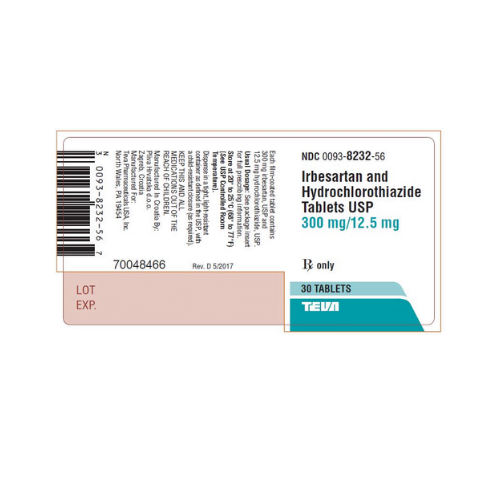
Irbesartan is also available in fixed-dose combinations with hydrochlorothiazide in some treatment plans. Hydrochlorothiazide is a thiazide diuretic, sometimes called a water pill, that helps the body remove extra salt and water. Related searches such as irbesartan hctz 150 12.5 mg, irbesartan hctz 300 12.5 mg, Avalide 150 12.5 mg, and Avalide 300 12.5 generally refer to combination therapy rather than plain irbesartan tablets.
If one medicine does not bring readings to target, clinicians may add a diuretic, calcium channel blocker, or another cardiovascular therapy. Browse our Cardiovascular category for related treatment areas, but make medication changes only with professional direction.
Side Effects, Warnings, and Monitoring
Common side effects can include dizziness, lightheadedness, tiredness, weakness, nausea, or stomach upset. Some people notice symptoms most when standing quickly, starting treatment, or combining irbesartan with other blood pressure medicines. Cough is possible but is generally less associated with ARBs than with ACE inhibitors.
Important risks include very low blood pressure, kidney function changes, high potassium, and rare angioedema. Angioedema is swelling under the skin, often affecting the face, lips, tongue, throat, or airway. Seek emergency care for swelling of the face or throat, trouble breathing, fainting, or severe weakness.
Medicines that act on the renin-angiotensin system can harm or end a pregnancy. Do not use irbesartan during pregnancy. If pregnancy occurs, contact a healthcare professional right away. Breastfeeding decisions should also be discussed, because the safest option depends on your health needs and available alternatives.
Kidney function and potassium are usually monitored with blood tests after starting therapy and after dose changes. This is especially important for people with chronic kidney disease, diabetes, dehydration, heart failure, or diuretic use. Irbesartan is not simply “hard on the kidneys”; it can be kidney-protective in the right setting, but it still requires lab monitoring because kidney blood flow and electrolyte balance may shift.
What to Avoid or Discuss Before Use
Tell your healthcare professional about all medicines, supplements, and salt substitutes you use. Potassium supplements, potassium-sparing diuretics, and potassium-containing salt substitutes can increase the risk of high potassium. Symptoms of high potassium can include muscle weakness, unusual heart rhythm sensations, or feeling very unwell, although lab tests may detect it before symptoms appear.
NSAIDs such as ibuprofen or naproxen can reduce the blood pressure effect of ARBs and may increase kidney risks, especially during dehydration or in older adults. ACE inhibitors, aliskiren, and other medicines affecting the same hormone system can raise the chance of kidney problems or high potassium when combined. Lithium levels may rise with ARBs and require close monitoring if both medicines are used.
Dehydration can make low blood pressure and kidney changes more likely. Vomiting, diarrhea, heavy sweating, or poor fluid intake should prompt a call to your clinician, particularly if you also take diuretics. For broader lifestyle planning around kidney health, see our article on cardiovascular health topics and condition-specific guidance from your care team.
Storage, Travel, and Refill Planning
Store irbesartan tablets in the original, tightly closed container. Keep them away from excess heat and moisture, and store them out of reach of children and pets. Do not move tablets into an unmarked bottle, because strength and identity can become difficult to confirm later.
When traveling, keep tablets in carry-on luggage with your medication directions. Crossing time zones usually does not require a complicated adjustment for once-daily therapy, but try to maintain a steady interval. If you are unsure how to shift the schedule, ask a healthcare professional before your trip.
Refill planning helps prevent missed doses. If your clinician supports a longer supply, it may reduce repeated ordering steps and make the irbesartan cash price easier to budget. Country-of-origin details may vary by item and supply; our Canada origin category can help you understand how products are grouped when browsing.
When to Contact a Healthcare Professional
Call your clinician if your home blood pressure readings stay above target, drop much lower than expected, or come with dizziness, fainting, chest pain, shortness of breath, or swelling. Blood pressure changes should be interpreted with your full health history, measurement technique, and medication list.
Ask when creatinine and potassium should be tested after starting or changing your dose. Bring a blood pressure log to visits, including the time of day, arm used, and whether the reading was taken before or after medication. These details help your clinician decide whether to adjust irbesartan, add another medicine, or address lifestyle factors.
Why it matters: The safest long-term plan combines the correct tablet strength with consistent monitoring.
Related Choices and Therapy Decisions
Irbesartan is one ARB option among several blood pressure medicines. Some people use a different ARB because of response, side effects, formulary needs, or other medical conditions. Others need a combination approach when a single active ingredient does not reach their target blood pressure.
Combination products that include hydrochlorothiazide may be considered when an ARB alone is not enough. A combined tablet can simplify daily routines, but it also adds diuretic-related considerations such as urination changes, sodium balance, and dehydration risk. Your clinician can decide whether plain irbesartan or an irbesartan-hydrochlorothiazide combination fits your readings and lab results.
People with type 2 diabetes, high blood pressure, and kidney involvement often need coordinated care across glucose control, cardiovascular risk, kidney monitoring, and lifestyle changes. Our Diabetic Nephropathy information and Hypertension topic can help organize discussion points, while the Cardiovascular category supports broader browsing by treatment area.
Authoritative Sources
Official U.S. prescribing information provides labeled uses, warnings, adverse reactions, interactions, and monitoring information for irbesartan tablets.
MedlinePlus drug information offers patient-facing safety information, including pregnancy warnings and common precautions for irbesartan.
This content is for informational purposes only and is not a substitute for professional medical advice.
Blood Pressure Average Calculator
Average home blood pressure readings and show a simple screening range.
Average BP
-
entered readings only
Range
-
screening category
These calculations are for education only and do not replace clinical advice, diagnosis, or treatment. Always confirm medical decisions with a qualified healthcare professional.
Mean Arterial Pressure Calculator
Calculate estimated mean arterial pressure from systolic and diastolic blood pressure.
MAP
-
DBP + one-third pulse pressure
These calculations are for education only and do not replace clinical advice, diagnosis, or treatment. Always confirm medical decisions with a qualified healthcare professional.
eGFR Calculator
Estimate kidney filtration using the 2021 CKD-EPI creatinine equation.
eGFR
-
mL/min/1.73 m2
G category
-
requires clinical context
These calculations are for education only and do not replace clinical advice, diagnosis, or treatment. Always confirm medical decisions with a qualified healthcare professional.
Creatinine Clearance Calculator
Estimate creatinine clearance using the Cockcroft-Gault equation.
CrCl
-
mL/min estimate
These calculations are for education only and do not replace clinical advice, diagnosis, or treatment. Always confirm medical decisions with a qualified healthcare professional.
Urine Albumin-Creatinine Ratio Calculator
Calculate urine albumin-creatinine ratio from spot urine albumin and creatinine values.
uACR
-
mg/g
uACR
-
mg/mmol
Category
-
A1/A2/A3 albuminuria range
These calculations are for education only and do not replace clinical advice, diagnosis, or treatment. Always confirm medical decisions with a qualified healthcare professional.
Express Shipping - from $29.99
Shipping with this method takes 3-5 days
Prices:
- Dry-Packed Products $29.99
- Cold-Packed Products $39.99
Shipping Countries:
- United States (all contiguous states**)
- Worldwide (excludes some countries***)
Standard Shipping - $19.99
Shipping with this method takes 5-10 days
Prices:
- Dry-Packed Products $19.99
- Not available for Cold-Packed products
Shipping Countries:
- United States (all contiguous states**)
- Worldwide (excludes some countries***)
What is irbesartan used for?
Irbesartan is used to treat high blood pressure in adults. It is also indicated for diabetic nephropathy in adults with type 2 diabetes and hypertension. Your clinician may use blood pressure readings, kidney labs, potassium levels, and other medicines to decide whether it fits your plan.
What are the most common side effects of irbesartan?
Common side effects can include dizziness, lightheadedness, tiredness, weakness, nausea, or stomach upset. Serious symptoms such as fainting, facial or throat swelling, breathing trouble, or severe weakness need urgent medical attention.
What should you avoid while taking irbesartan?
Avoid potassium supplements or potassium-containing salt substitutes unless your clinician says they are safe for you. Discuss NSAIDs such as ibuprofen or naproxen, diuretics, ACE inhibitors, aliskiren, lithium, and other blood pressure medicines before combining them with irbesartan.
Is irbesartan hard on the kidneys?
Irbesartan can help protect the kidneys in adults with type 2 diabetes and hypertension, but it can also change kidney function in some people. Kidney function and potassium are commonly monitored after starting therapy or changing the dose.
What time of day is best to take irbesartan?
Irbesartan is usually taken once daily at a consistent time. Morning or evening may both work, but follow your clinician’s directions and choose a routine you can maintain. Consistency helps blood pressure control and makes missed doses easier to notice.
Rewards Program
Earn points on birthdays, product orders, reviews, friend referrals, and more! Enjoy your medication at unparalleled discounts while reaping rewards for every step you take with us.
You can read more about rewards here.
POINT VALUE
How to earn points
- 1Create an account and start earning.
- 2Earn points every time you shop or perform certain actions.
- 3Redeem points for exclusive discounts.
You Might Also Like
Select options
This product has multiple variants. The options may be chosen on the product page
Select options
This product has multiple variants. The options may be chosen on the product page
Select options
This product has multiple variants. The options may be chosen on the product page
Select options
This product has multiple variants. The options may be chosen on the product page