
Please note: a valid prescription is required for all prescription medication.
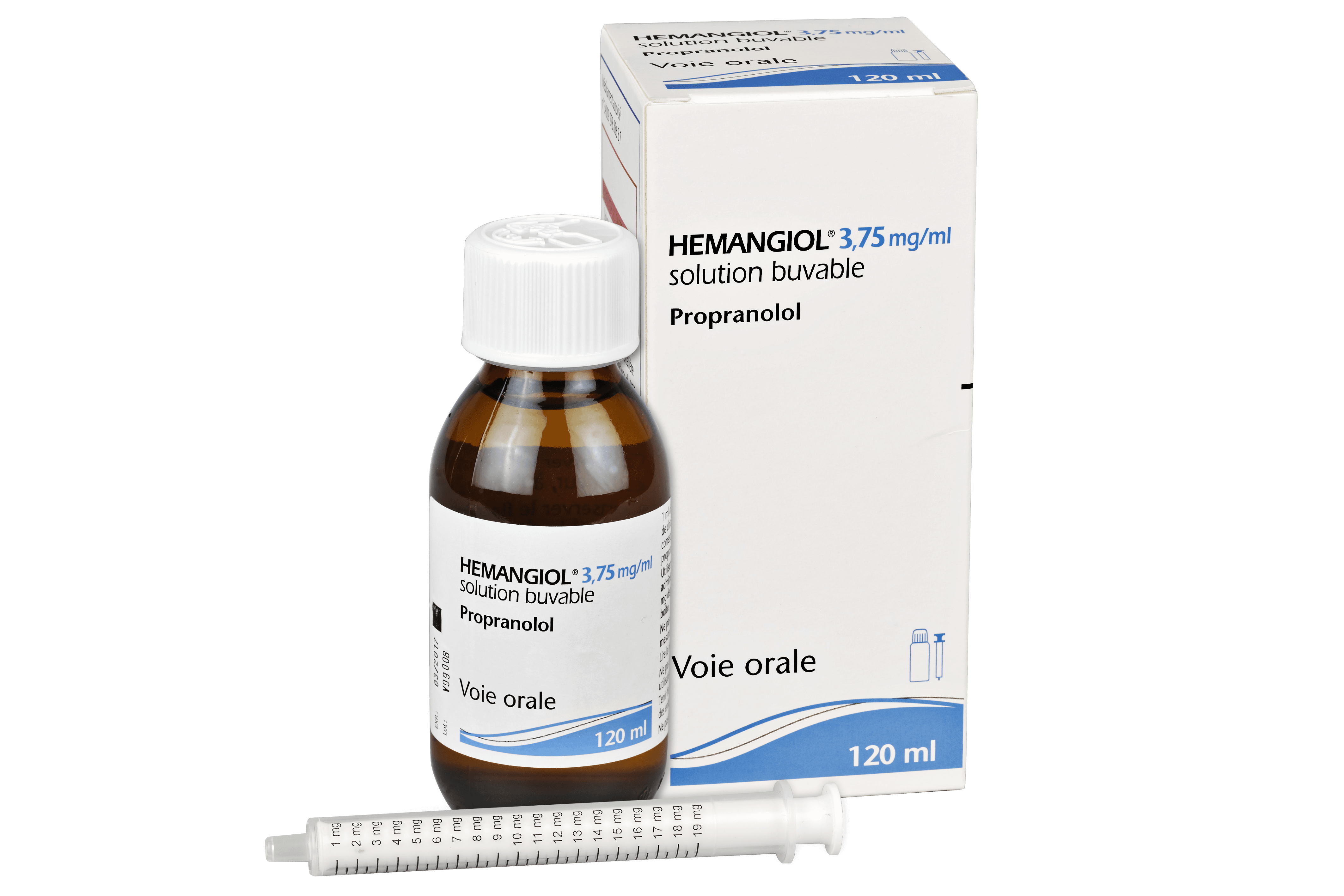
Hemangiol
Buy Hemangiol Online
Secure Encrypted Payments
Hemangiol is a propranolol oral solution used for proliferating infantile hemangioma that requires systemic therapy. It can be ordered through BorderFreeHealth, with the strength shown during ordering matched to the directions from your child’s clinician. The labeled pediatric concentration is Hemangiol 3.75 mg/mL, an oral liquid designed for small, weight-based infant doses.
Caregivers often look for Hemangiol when a hemangioma is growing quickly, affecting feeding or vision, ulcerating, or likely to leave lasting disfigurement. This medicine is not a cosmetic skin product; it is a systemic beta blocker, so safe use depends on feeding routines, monitoring, and clear instructions from the treating team.
Hemangiol Price, Strength, and Ordering Basics
You can buy Hemangiol 3.75 mg/mL and view the current Hemangiol price during checkout. The exact amount an infant receives is weight-based and may change as the child grows, so the bottle strength should be matched to the clinician’s written directions rather than estimated by age or lesion size. If your child’s directions mention propranolol oral solution 3.75 mg/mL, confirm that the concentration on the bottle matches those instructions before giving the first dose.
Cash-pay families may use the displayed Hemangiol cost to plan refills and out-of-pocket treatment needs. Because dose volumes can change after weight checks, many caregivers also track remaining liquid before clinic visits. US delivery from Canada is available for this product, and prompt, express shipping may be selected when suitable for your order.
Quick tip: Keep the bottle label, dosing device, and written schedule together so every caregiver measures the same way.
What Hemangiol Treats
Hemangiol is used to treat proliferating infantile hemangioma requiring systemic therapy. Infantile hemangiomas are noncancerous vascular growths, often called birthmarks, that can enlarge during early infancy before slowly involuting over time. Some lesions need more than observation because they threaten function, break down, bleed, or carry a high risk of permanent skin change.
Systemic therapy is usually considered when the lesion affects the airway, eye area, lips, nose, ear, diaper region, or another location where growth can cause complications. Multiple skin lesions may also prompt further assessment for internal involvement. For broader condition context, see infantile hemangioma.
The “best” treatment for hemangioma depends on size, depth, location, growth pattern, age, symptoms, and the infant’s medical history. Many small or uncomplicated hemangiomas are observed, while superficial lesions may sometimes be treated locally. Hemangiol is most relevant when the care team decides that an oral medicine is needed.
Active Ingredient and How It Works
Hemangiol contains propranolol, a nonselective beta blocker. Beta blockers reduce the effects of adrenaline-like signals on beta receptors. In infantile hemangioma, propranolol is thought to narrow blood vessels within the lesion, reduce growth signaling, and support gradual regression of the vascular tissue.
Caregivers may hear both names: Hemangiol and propranolol. Hemangiol is the branded pediatric oral solution, while propranolol is the active ingredient. Other propranolol products may exist in different forms or concentrations, but they should not be substituted for an infant without clinician direction because small differences in concentration can change the measured volume.
Early visible changes may include softening, less bright redness, or a flatter surface. Size reduction usually takes longer. Photographs taken in similar lighting can help document progress, but dose decisions should remain tied to clinical assessment and weight-based instructions.
How the Oral Solution Is Usually Given
Hemangiol liquid is typically measured carefully with an oral dosing device and given by mouth. Treatment is commonly scheduled with feeds, because reliable intake helps reduce the risk of low blood sugar. If an infant is vomiting, feeding poorly, or acutely ill, caregivers should contact the treating team before continuing the usual routine.
Doses are weight-based and often adjusted as the infant grows. Many treatment plans start at a lower amount and increase in steps under supervision. Never change the dose, concentration, or timing based on online examples, another child’s schedule, or the apparent size of the hemangioma.
- Measure only with the provided or pharmacist-approved oral syringe.
- Give the liquid during or immediately after feeding if directed that way.
- Use a written log during titration and after weight changes.
- Do not repeat a vomited dose unless the clinician specifically says to.
- Keep dosing times consistent from day to day when possible.
Missed Dose and Feeding Interruptions
If a dose is missed, many labels advise giving it when remembered unless it is close to the next scheduled dose. Do not double the next dose to make up for a missed amount. Because Hemangiol affects heart rate, blood pressure, and blood sugar risk, “catch-up” dosing can be unsafe.
Feeding interruptions matter more with beta blockers than with many other pediatric medicines. Prolonged fasting, repeated vomiting, or poor intake can raise the risk of hypoglycemia, which means low blood sugar. The usual warning sign of a fast heartbeat can be masked by propranolol, so caregivers should watch for unusual sleepiness, pallor, sweating, shakiness, weak feeding, or behavior that seems markedly different.
Why it matters: A simple feeding and dose log helps the care team interpret symptoms and adjust treatment safely.
Side Effects, Warnings, and Monitoring
Common or expected side effects can include sleep changes, irritability, cold hands or feet, stomach upset, vomiting, diarrhea, or temporary slowing of heart rate. Some infants may have lower blood pressure, especially during dose increases. The treating team may check heart rate, blood pressure, feeding pattern, and weight during therapy.
Serious but less common problems include severe bradycardia, significant hypotension, bronchospasm, and hypoglycemia. Bronchospasm means tightening of the airways, which can appear as wheezing, trouble breathing, or persistent cough in a sensitive infant. Seek urgent care for breathing difficulty, blue or gray color change, extreme lethargy, seizure-like activity, or inability to feed.
Hemangiol is generally not appropriate for infants with certain heart rhythm disorders, uncompensated heart failure, severe low blood pressure, or a history of bronchospasm or asthma. It should not be used in a child with hypersensitivity to propranolol. Prematurity, low weight, feeding problems, and other health conditions can affect the decision to start or continue treatment.
Drug interactions are also important. Beta blockers can have additive heart-rate or blood-pressure effects with medicines such as verapamil, diltiazem, clonidine, or certain rhythm medicines. Some antidepressants that affect CYP2D6, including fluoxetine or paroxetine, may alter propranolol exposure. Tell the clinician about all medicines, supplements, and topical treatments used for the infant.
Storage, Handling, and Travel
Store Hemangiol according to the bottle label and package directions, usually at room conditions and in the original container. Keep the cap tightly closed, protect the liquid from excessive heat and moisture, and do not freeze it. Many oral liquids have an in-use period after opening, so write the opening date on the package if your pharmacist recommends it.
Keep the dosing syringe clean and reserved for this medicine only. If markings become hard to read, ask for a replacement device rather than using kitchen spoons or medicine cups. Small infant doses require accurate measurement, and even minor volume differences can matter when the child is very young.
For travel, pack the bottle upright with the dosing device and a copy of the medicine label. Carry enough supply for the trip and allow extra time around security screening or border crossings. If time zones change, ask the treating team how to keep doses spaced safely with feeds.
Related Skin and Treatment Choices
Hemangiol belongs in a broader dermatology care plan, but it is not the right answer for every vascular lesion. Browse related prescription skin-treatment categories through dermatology if your child’s clinician is discussing additional products for ulcer care, infection prevention, or another skin condition. The dermatology articles section can also help caregivers prepare better questions for appointments.
Country of origin can matter to families comparing labels and supply routes. Hemangiol from Canada may have packaging or language differences from products sourced in other markets, while the active ingredient and concentration should still be checked against the child’s instructions. You can browse medicines by Canada country of origin when that distinction is useful for planning.
Do not switch between propranolol products, topical beta blockers, or tablet formulations without a clinician’s instruction. A topical medicine may be reasonable for selected superficial lesions, while oral propranolol is considered when systemic treatment is needed. The choice depends on the hemangioma and the infant, not on convenience alone.
Questions to Discuss With the Care Team
Before starting or refilling Hemangiol, caregivers should understand why systemic therapy is being used and what monitoring is expected. Clear instructions are especially important during dose increases, illness, travel, and feeding changes. Bring your dose log and recent weight to appointments when possible.
- Is this hemangioma deep, superficial, mixed, ulcerated, or function-threatening?
- What changes should we expect first, and when should we reassess?
- How should we handle doses during vomiting, fever, or poor feeding?
- Which symptoms suggest low blood sugar, low blood pressure, or airway problems?
- How often will weight be checked for dose adjustments?
- Are any current medicines or supplements a concern with propranolol?
- What should we do if the bottle, label, or dosing syringe looks different after a refill?
Authoritative Sources
| Source | Link |
|---|---|
| FDA prescribing information | HEMANGEOL label |
| European Medicines Agency | Hemangiol medicine record |
| PubMed | Post-marketing surveillance study |
Hemangiol offers a pediatric propranolol oral solution for infants whose hemangioma requires systemic therapy. Responsible use depends on accurate measurement, feeding awareness, side-effect monitoring, and ongoing clinician direction. This content is for informational purposes only and is not a substitute for professional medical advice.
Research & Education Tool
Hemangiol Dosage Calculator
Enter the vial amount, diluent volume, and target amount to estimate concentration, draw volume on a 1 mL U-100 syringe, and approximate vial yield.
For research and educational use only. Check all values against the product label, certificate of analysis, and any applicable professional guidance before relying on the result.
mg
Concentration
-
mcg / mL
Volume per Dose
-
-
Estimated Draws / Vial
-
rounded down to whole draws
Draw Reference
Enter values to estimate the syringe mark.
0
-
-
-
-
Express Shipping - from $29.99
Shipping with this method takes 3-5 days
Prices:
- Dry-Packed Products $29.99
- Cold-Packed Products $39.99
Shipping Countries:
- United States (all contiguous states**)
- Worldwide (excludes some countries***)
Standard Shipping - $19.99
Shipping with this method takes 5-10 days
Prices:
- Dry-Packed Products $19.99
- Not available for Cold-Packed products
Shipping Countries:
- United States (all contiguous states**)
- Worldwide (excludes some countries***)
What is Hemangiol used for?
Hemangiol is used for proliferating infantile hemangioma that requires systemic therapy. It is most often considered when a hemangioma threatens function, ulcerates, grows quickly, or may cause lasting disfigurement.
Is Hemangiol the same as propranolol?
Hemangiol is a branded pediatric oral solution that contains propranolol as the active ingredient. Other propranolol products may differ in concentration or form, so they should not be substituted for an infant unless the treating clinician directs it.
What are common Hemangiol side effects in babies?
Common side effects can include sleep changes, irritability, cold hands or feet, stomach upset, vomiting, diarrhea, and temporary slowing of heart rate. Serious warning signs include breathing trouble, extreme sleepiness, poor feeding, color change, or symptoms of low blood sugar.
How is Hemangiol 3.75 mg/mL usually given?
Hemangiol 3.75 mg/mL is measured as a small oral liquid dose, usually based on the infant’s weight and given with feeds if directed. Caregivers should use the correct oral syringe and follow the schedule provided by the treating team.
What should caregivers do if a baby is not feeding well while taking Hemangiol?
Poor feeding, vomiting, or acute illness can increase the risk of low blood sugar with propranolol. Caregivers should contact the treating team for instructions before continuing usual doses during feeding interruptions.
How should Hemangiol be stored?
Store Hemangiol according to the bottle label, generally in the original container with the cap tightly closed and away from excessive heat, moisture, and freezing. Check the package directions for any in-use period after opening.
Rewards Program
Earn points on birthdays, product orders, reviews, friend referrals, and more! Enjoy your medication at unparalleled discounts while reaping rewards for every step you take with us.
You can read more about rewards here.
POINT VALUE
How to earn points
- 1Create an account and start earning.
- 2Earn points every time you shop or perform certain actions.
- 3Redeem points for exclusive discounts.
You Might Also Like
Select options
This product has multiple variants. The options may be chosen on the product page
Select options
This product has multiple variants. The options may be chosen on the product page
Select options
This product has multiple variants. The options may be chosen on the product page
Select options
This product has multiple variants. The options may be chosen on the product page