
Please note: a valid prescription is required for all prescription medication.
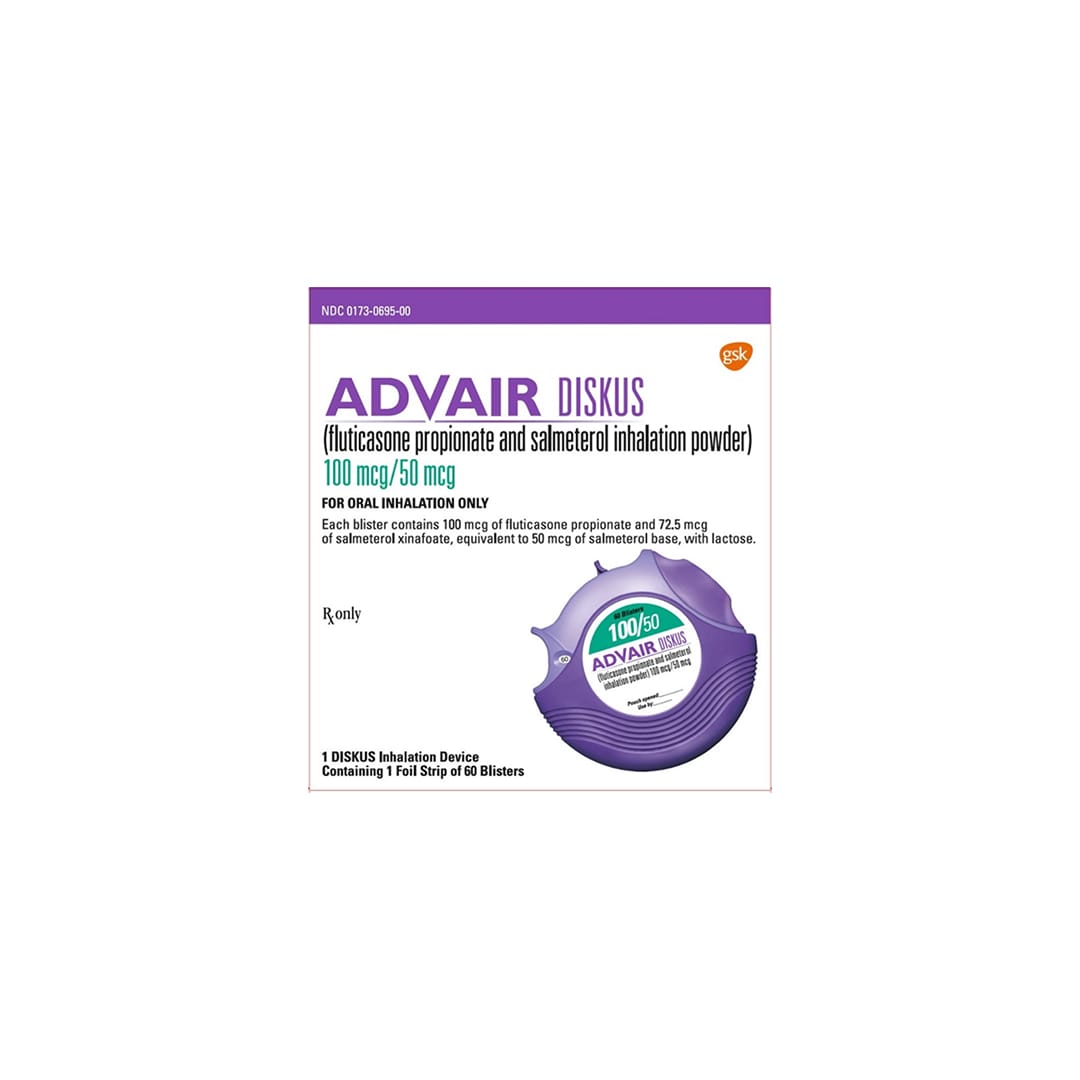
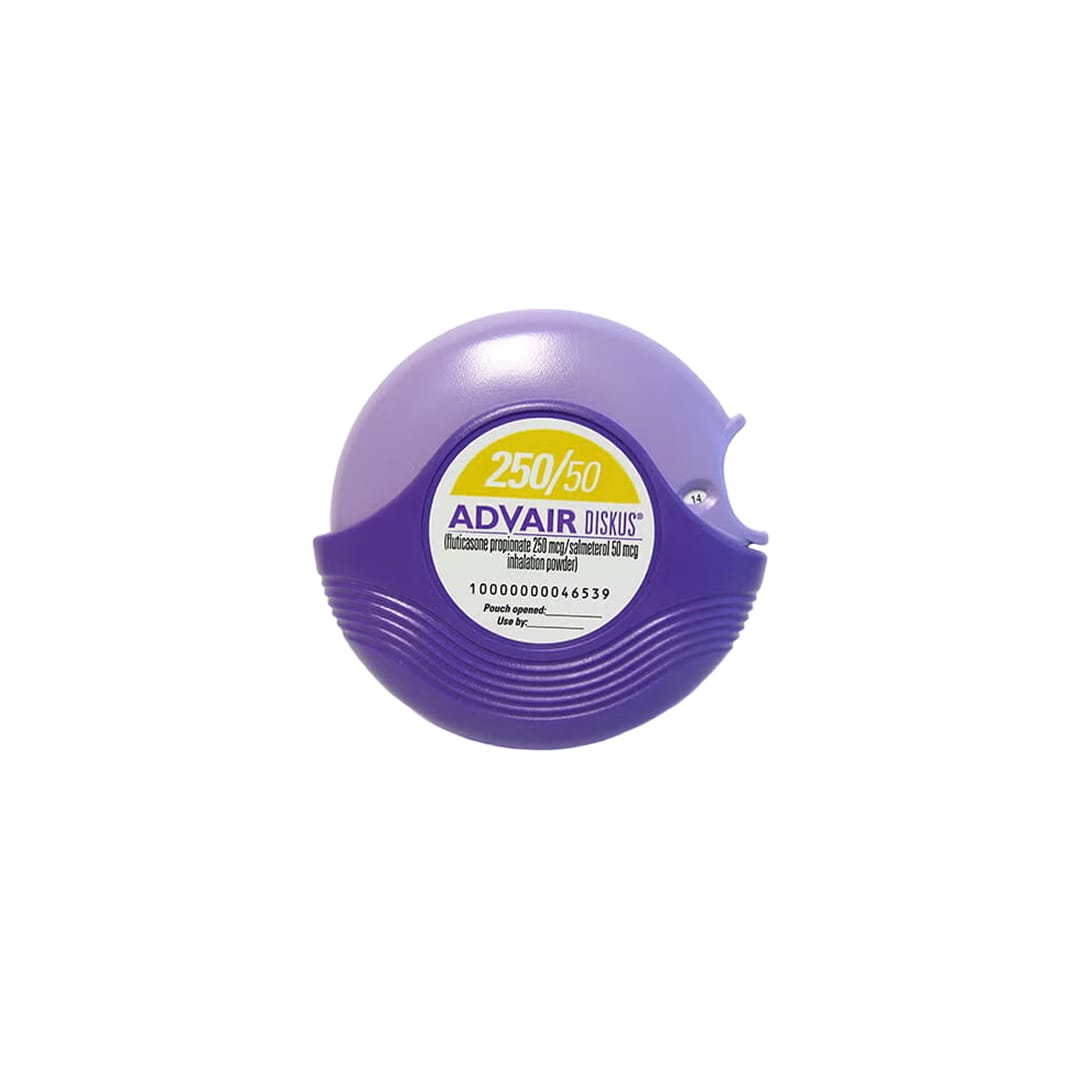


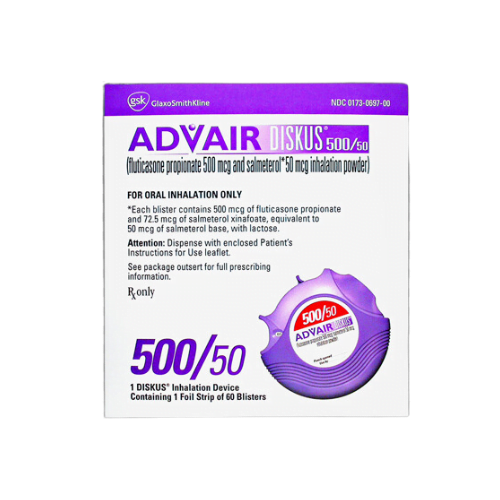
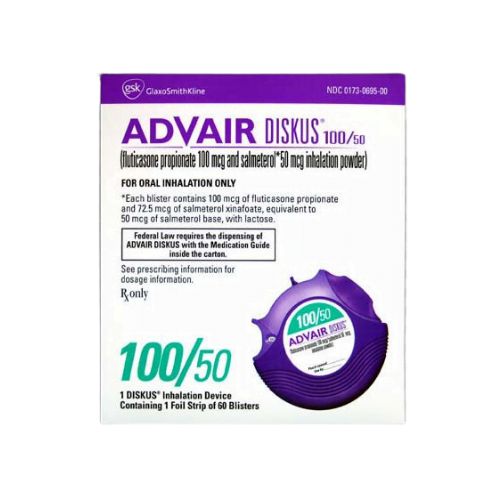
Advair Diskus
Buy Advair Diskus Online
Secure Encrypted Payments
Advair Diskus is a maintenance inhaler used for long-term control of asthma and chronic obstructive pulmonary disease (COPD). You can buy Advair Diskus online and choose the available strength that matches your clinician’s directions, including commonly published 100/50, 250/50, and 500/50 microgram options. It is taken on a regular schedule and is not a rescue inhaler for sudden breathing symptoms.
The Diskus device contains fluticasone propionate, an inhaled corticosteroid, and salmeterol, a long-acting beta agonist. Fluticasone helps reduce airway inflammation, while salmeterol helps keep the muscles around the airways relaxed over time. Customers paying cash can view the current Advair Diskus price during ordering and consider the strength and quantity that fit the treatment plan.
Price, Strength Selection, and Online Ordering
Advair Diskus cost can vary by strength, quantity, brand or generic selection, and pharmacy sourcing. During ordering, select the dose/strength shown for the product and match it to the directions given by your healthcare professional. Do not change from Advair Diskus 100/50 to 250/50 or 500/50, or make any similar strength change, unless a clinician has directed it.
Commonly published Advair Diskus strengths are 100/50, 250/50, and 500/50 micrograms per actuation. The first number refers to fluticasone propionate, and the second refers to salmeterol. People often compare Advair inhaler price, generic Advair price, and Advair Diskus cash price when managing ongoing asthma or COPD therapy without insurance.
BorderFreeHealth helps customers access cash-pay respiratory medicines through licensed pharmacies, with US delivery from Canada when applicable. Product and order information is handled through encrypted checkout, and current billing totals are shown before completion. For broader condition browsing, visit the respiratory medication category.
Quick tip: Keep the strength name on your inhaler and refill record consistent so refill requests do not accidentally use the wrong dose.
What Advair Diskus Treats
Advair Diskus is used as long-term maintenance therapy for asthma and COPD. In asthma, it may be used when ongoing anti-inflammatory treatment and long-acting bronchodilation are appropriate. For COPD, it is used for maintenance treatment and may help reduce exacerbation risk in suitable adults when taken consistently.
This medicine does not treat acute bronchospasm, status asthmaticus, or sudden COPD deterioration. Keep a fast-acting rescue inhaler available if your clinician has recommended one for sudden wheezing, chest tightness, or shortness of breath. If breathing symptoms rapidly worsen, seek urgent medical help rather than taking extra maintenance doses.
Asthma and COPD have different treatment goals, even when some inhalers overlap. Asthma care often focuses on inflammation control, trigger reduction, and preventing attacks. COPD care may include maintenance bronchodilators, smoking cessation support, vaccination planning, pulmonary rehabilitation, and exacerbation prevention. You can explore related education under asthma and COPD.
How the Dry Powder Inhaler Works
Advair Diskus is a dry powder inhaler. It releases a measured dose after the device is opened, the lever is moved until it clicks, and the user inhales through the mouthpiece. The device is breath-activated, so it does not require shaking and does not use a spacer.
Fluticasone is the steroid component. It works locally in the lungs to reduce inflammation and swelling in the airways. Salmeterol is the long-acting bronchodilator component. It helps relax airway smooth muscle for ongoing control between doses. The combination is meant for steady maintenance use rather than quick symptom relief.
Using a long-acting beta agonist without an inhaled corticosteroid can increase asthma-related risk. Advair Diskus combines salmeterol with fluticasone in the same device, which helps keep both components together as directed. If you are also using other inhalers, confirm that you are not duplicating a long-acting beta agonist from another product.
How to Use Advair Diskus Safely
Typical labeling describes one inhalation twice daily, about 12 hours apart, using the strength selected for the individual treatment plan. Many people use it in the morning and evening to create a routine. Take each dose consistently, even when symptoms feel controlled, unless a clinician tells you to stop or change therapy.
To use the Diskus, hold it level, open the cover, and slide the lever until it clicks. Breathe out fully away from the device, seal your lips around the mouthpiece, and inhale quickly and steadily. Hold your breath for several seconds if comfortable, then breathe out slowly away from the inhaler. Close the device after use.
Rinse your mouth with water after each dose and spit the water out. This lowers the chance of oral thrush, which is a yeast infection in the mouth or throat. The dose counter shows how many doses remain. When the counter reaches zero, the device will not provide another full labeled dose.
Missed-dose guidance is straightforward: if a dose is missed, take the next dose at the regular time. Do not take two doses at once to make up for a missed dose. If missed doses happen often, phone reminders or pairing the inhaler with another daily habit may help.
Storage, Travel, and Handling
Store Advair Diskus at room temperature in a dry place, away from heat, direct light, and moisture. Bathrooms are usually poor storage locations because humidity can affect dry powder inhalers. Keep the device closed between doses and out of reach of children.
Many product labels advise keeping the inhaler in the foil overwrap until first use and discarding it one month after opening the foil or when the counter reads zero, whichever comes first. Do not wash the mouthpiece or expose the device to water. If powder clumps, the device is damaged, or the counter does not behave as expected, ask a pharmacist or clinician what to do.
For travel, pack the inhaler in carry-on luggage and keep the device protected from crushing. Bring your medication list and inhaler names, especially if you use both maintenance and rescue therapy. If you are crossing time zones, maintain the twice-daily spacing as closely as practical. BorderFreeHealth may offer prompt, express shipping for eligible orders.
Side Effects, Warnings, and Monitoring
Common side effects can include throat irritation, hoarseness, cough, headache, nausea, and upper respiratory symptoms. Oral thrush can occur with inhaled corticosteroids, especially if the mouth is not rinsed after dosing. Some people notice tremor, nervousness, or palpitations from the long-acting bronchodilator component.
- Contact a clinician if wheezing worsens soon after using the inhaler.
- Seek urgent help for severe allergic symptoms, swelling, or sudden breathing trouble.
- Report frequent rescue inhaler use or nighttime symptoms that are increasing.
- Ask about monitoring if you have glaucoma, cataracts, osteoporosis, diabetes, or heart rhythm concerns.
Serious but less common risks include paradoxical bronchospasm, adrenal suppression, hypercorticism, decreased bone mineral density, glaucoma, cataracts, heart rhythm disturbances, and allergic reactions. In COPD, inhaled corticosteroid therapy can increase the risk of pneumonia in some patients. Children using inhaled steroids may need growth monitoring.
Do not use Advair Diskus if you have a severe allergy to milk proteins, because the device contains lactose. It should also be avoided by people with hypersensitivity to fluticasone, salmeterol, or other ingredients. Extra caution is needed for people with significant cardiovascular disease, seizure disorders, thyroid disease, diabetes, immune suppression, glaucoma, cataracts, or osteoporosis.
Important interactions include strong CYP3A4 inhibitors such as ritonavir, ketoconazole, and clarithromycin, which can increase steroid exposure. Beta blockers may reduce bronchodilator effects and can worsen breathing in some people. Diuretics or other medicines that lower potassium may increase hypokalemia risk. Monoamine oxidase inhibitors and tricyclic antidepressants may increase cardiovascular effects.
Why it matters: Maintenance inhalers work best when safety monitoring, technique, and symptom tracking are all part of the plan.
What to Avoid While Using This Inhaler
Avoid using Advair Diskus for sudden breathing symptoms. It is not designed to open the airways quickly during an acute episode. Use the rescue treatment recommended by your clinician for sudden symptoms and seek emergency care if severe shortness of breath, blue lips, confusion, or chest pain occurs.
Avoid taking another medication that contains a long-acting beta agonist unless a clinician specifically instructs you. Using duplicate LABA therapy can increase the risk of side effects such as fast heartbeat, tremor, low potassium, and rhythm problems. Tell your healthcare professional about all inhalers, nebulizer medicines, tablets, injections, supplements, and recent antibiotics or antivirals.
Do not stop a corticosteroid-containing inhaler suddenly without medical guidance, especially if your breathing has been unstable or you have used oral steroids recently. Also avoid exposing the Diskus to moisture, blowing into the mouthpiece, or taking extra inhalations beyond the directed schedule.
Brand, Generic, and Related Respiratory Choices
Advair Diskus is the brand name for the fluticasone propionate and salmeterol dry powder inhaler. Some markets may also offer generic fluticasone salmeterol Diskus products. Brand and generic naming, appearance, device feel, and substitution rules may differ by country and pharmacy supply, so match the active ingredient, strength, and device instructions to the treatment plan.
Advair Diskus is different from Advair HFA. The Diskus is a breath-activated dry powder inhaler, while HFA inhalers are metered-dose aerosol devices. Technique differs, and a spacer is not used with the Diskus. People switching between devices should receive instruction, because the way you inhale can affect the amount of medicine reaching the lungs.
Other ICS/LABA maintenance options may use different devices, strengths, or dosing schedules. Selection depends on diagnosis, symptom pattern, exacerbation history, inhaler technique, and tolerability. Broader respiratory topics are available in the respiratory articles section.
How to Track Results Over Time
Many people notice steadier day-to-day breathing when maintenance therapy is used consistently, but response varies. Clinicians may track symptoms, nighttime awakenings, rescue inhaler use, peak flow readings, spirometry, and exacerbation history. A symptom diary can make follow-up visits more useful.
If control remains poor, technique is often the first thing to revisit. Dry powder inhalers require a quick, steady inhalation. Very weak inhalation, exhaling into the mouthpiece, skipping mouth rinsing, or failing to load the lever correctly can reduce benefit or increase side effects. Ask a healthcare professional to watch your technique if symptoms are not improving.
Report signs that the plan may need attention, such as needing rescue medication more often, waking at night with symptoms, reduced exercise tolerance, or repeated infections. For COPD, also ask about vaccines, pulmonary rehabilitation, and action plans for flare-ups. For asthma, discuss triggers, allergy control, and when step-up or step-down therapy may be appropriate.
Questions to Ask a Healthcare Professional
- Which Advair Diskus strength should I use, and when should it be reassessed?
- How should I coordinate this inhaler with my rescue medication?
- Can you watch my Diskus technique and correct any errors?
- Which side effects should I track at home?
- Do any of my medicines interact with fluticasone or salmeterol?
- Should I be monitored for thrush, eye changes, bone health, or pneumonia risk?
- What should I do if symptoms worsen between follow-up visits?
Authoritative Sources
MedlinePlus fluticasone and salmeterol information
This content is for informational purposes only and is not a substitute for professional medical advice.
Peak Flow Zone Calculator
Calculate asthma peak-flow zones from personal best and current peak flow.
Current % best-current / personal best
Zone-green >=80%, yellow 50-79%, red <50%
Zone cutoffs-80% and 50% of best
These calculations are for education only and do not replace clinical advice, diagnosis, or treatment. Always confirm medical decisions with a qualified healthcare professional.
Express Shipping - from $29.99
Shipping with this method takes 3-5 days
Prices:
- Dry-Packed Products $29.99
- Cold-Packed Products $39.99
Shipping Countries:
- United States (all contiguous states**)
- Worldwide (excludes some countries***)
Standard Shipping - $19.99
Shipping with this method takes 5-10 days
Prices:
- Dry-Packed Products $19.99
- Not available for Cold-Packed products
Shipping Countries:
- United States (all contiguous states**)
- Worldwide (excludes some countries***)
Is Advair Diskus inhaler a steroid?
Advair Diskus contains fluticasone propionate, which is an inhaled corticosteroid, and salmeterol, a long-acting bronchodilator. The steroid component helps reduce airway inflammation over time.
What are the common side effects of Advair Diskus?
Common side effects can include throat irritation, hoarseness, cough, headache, nausea, and oral thrush. Rinsing your mouth and spitting after each dose helps lower the risk of thrush.
What should I avoid while taking Advair Diskus?
Avoid using Advair Diskus for sudden breathing attacks, taking extra doses, or combining it with another long-acting beta agonist unless a clinician directs it. Avoid the product if you have a severe milk protein allergy.
What is the difference between Advair Diskus and Advair HFA?
Advair Diskus is a breath-activated dry powder inhaler. Advair HFA is a metered-dose aerosol inhaler. The inhalation technique is different, and a spacer is not used with the Diskus device.
How often is Advair Diskus usually used?
Labeling commonly describes one inhalation twice daily, about 12 hours apart. The exact strength and schedule should match the directions from your healthcare professional.
Can Advair Diskus be used as a rescue inhaler?
No. Advair Diskus is a maintenance inhaler for long-term control. It is not intended for sudden breathing symptoms, so a fast-acting rescue treatment should be used when directed for acute symptoms.
Rewards Program
Earn points on birthdays, product orders, reviews, friend referrals, and more! Enjoy your medication at unparalleled discounts while reaping rewards for every step you take with us.
You can read more about rewards here.
POINT VALUE
How to earn points
- 1Create an account and start earning.
- 2Earn points every time you shop or perform certain actions.
- 3Redeem points for exclusive discounts.
You Might Also Like
Select options
This product has multiple variants. The options may be chosen on the product page
Select options
This product has multiple variants. The options may be chosen on the product page
Select options
This product has multiple variants. The options may be chosen on the product page
Select options
This product has multiple variants. The options may be chosen on the product page