

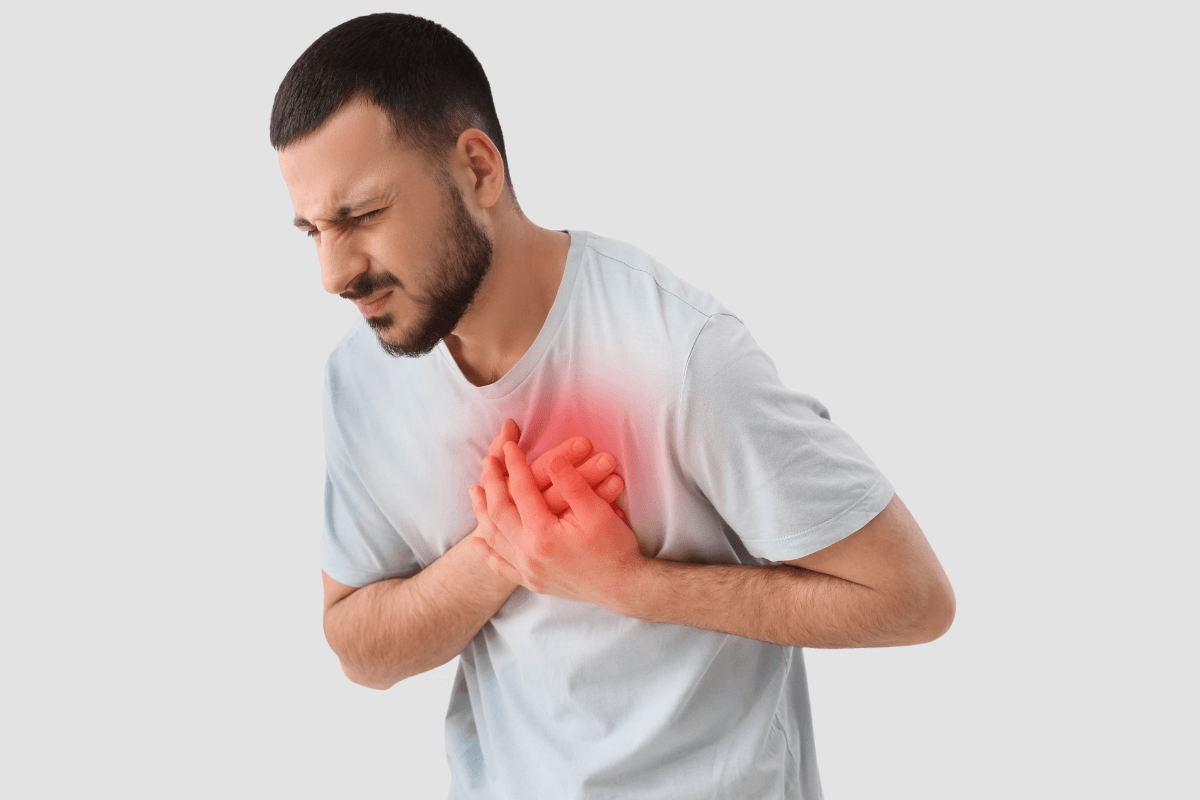
A heart attack happens when blood flow to part of the heart muscle is severely reduced or blocked, usually by a blood clot in a coronary artery. If you are asking what is a heart attack because symptoms are happening now, call emergency services right away. Fast treatment can restore blood flow, limit heart muscle damage, and reduce the risk of dangerous rhythm problems.
Some heart attacks feel dramatic. Others feel like pressure, breathlessness, nausea, fatigue, or indigestion that does not seem normal. The safest response is to treat possible warning signs as urgent until a clinician rules out a serious cause.
Key Takeaways
- Blocked blood flow injures heart muscle.
- Symptoms can be chest pressure or subtle signs.
- Call emergency services; do not drive yourself.
- Fast treatment may limit lasting damage.
- Recovery often includes medicines, rehab, and risk-factor control.
What Happens During a Heart Attack
During a heart attack, oxygen-rich blood cannot reach part of the heart muscle. The clinical term is myocardial infarction, which means heart muscle injury or death caused by lost blood supply. The blockage most often forms when cholesterol-rich plaque inside a coronary artery breaks open and a clot develops on top of it.
Why this matters: heart muscle needs a steady oxygen supply. When the supply drops, cells become stressed within minutes. If blood flow stays blocked, injury can spread. The damaged area may weaken the heart’s pumping ability or disrupt its electrical signals.
A heart attack is not the same as sudden cardiac arrest. A heart attack is mainly a circulation problem. Sudden cardiac arrest is an electrical problem where the heart suddenly stops pumping effectively. A heart attack can trigger cardiac arrest, which is one reason immediate care is so important.
Heart attack symptoms can also overlap with acute coronary syndrome, a broader term for sudden reduced blood flow to the heart. For deeper context on that related diagnosis, see Acute Coronary Syndrome.
How a Heart Attack Can Feel
A heart attack often feels like pressure, tightness, heaviness, squeezing, burning, or pain in the center or left side of the chest. The discomfort may last more than a few minutes, ease, and then return. It may spread to the shoulder, arm, back, neck, jaw, or upper stomach.
Other symptoms can appear with or without chest discomfort. These include shortness of breath, cold sweats, nausea, vomiting, lightheadedness, sudden weakness, or unusual fatigue. Some people describe a strong sense that something is wrong.
Mini heart attack symptoms is a phrase people often use for milder or shorter symptoms. Clinically, even a smaller heart attack can still cause heart muscle injury. Brief chest pressure, unexplained breathlessness, or unusual fatigue should not be dismissed if it is new, recurring, or linked with exertion.
Symptoms That May Be Easier to Miss
Women, older adults, and people with diabetes may have less typical symptoms. They may notice indigestion-like discomfort, upper back pain, jaw pain, sleep disturbance, breathlessness, or fatigue that feels out of proportion. Men can also have subtle symptoms, so no one should rely on chest pain alone.
It can be hard to tell heart attack or anxiety apart, especially when symptoms include chest tightness, sweating, or a racing heart. Anxiety can cause intense body sensations, but it should not be used to explain new chest discomfort without medical assessment. When symptoms are severe, persistent, or unusual for you, emergency evaluation is the safer path.
Some medicines and conditions can affect cardiovascular symptoms. People with migraine, for example, may need extra care with vessel-constricting medicines if they have heart disease risk. For medication-specific precautions, review Nitrostat only in the context of clinician-directed angina care, not as a substitute for emergency evaluation.
Warning Signs Days or Weeks Before
Some people notice warning patterns before a heart attack, but there is no reliable countdown. The commonly searched phrase 6 signs of heart attack a month before usually refers to fatigue, sleep changes, chest discomfort, shortness of breath, indigestion-like symptoms, and anxiety-like unease. These signs can have many causes, yet new or worsening patterns deserve medical attention.
Pre heart attack symptoms female and male searches often focus on differences. Women may report fatigue, nausea, back pain, or shortness of breath more often than classic crushing pain. Men may report chest pressure more often, but overlap is large. The more useful question is whether the symptom is new, worsening, exertional, or clearly not normal for that person.
Warning signs before heart attack or stroke can also overlap with other urgent conditions. Sudden one-sided weakness, facial drooping, trouble speaking, or sudden vision loss points more toward stroke and needs emergency care. Chest pressure, breathlessness, cold sweats, or pain spreading to the arm or jaw may point toward a heart attack. Mixed symptoms should still be treated as urgent.
Quick tip: Write down symptom timing, triggers, and what relieves it, then bring that record to care visits.
What Usually Causes a Heart Attack
The main cause of a heart attack is coronary artery disease, where plaque builds up inside arteries that feed the heart. Plaque contains cholesterol, inflammatory cells, calcium, and other material. If plaque ruptures, the body tries to repair it by forming a clot. That clot can block blood flow.
Other causes are less common but important. A coronary artery can spasm, tightening enough to reduce blood flow. A spontaneous coronary artery dissection means a tear forms within the artery wall. Very low oxygen levels, severe anemia, or extreme physical stress may also contribute in some situations.
Common risk factors include high blood pressure, high LDL cholesterol, diabetes, smoking, chronic kidney disease, family history, and older age. Sleep apnea, inflammatory disorders, sedentary habits, and chronic stress can add risk. Diabetes is especially important because it can damage blood vessels and make symptoms less typical; learn more in Diabetes And Heart Attacks.
High blood pressure silently strains arteries and the heart over time. If you are reviewing prevention steps, What Is Hypertension explains why repeated readings matter and how clinicians interpret them.
What to Do Immediately
What stops a heart attack fast is emergency medical treatment, not a home trick. Call emergency services if you suspect a heart attack. Do not wait to see whether symptoms pass. Do not drive yourself unless there is no safer emergency option.
Sit or lie down while waiting. Keep the door unlocked if possible. Tell the dispatcher your symptoms, age, medical conditions, and current medicines. If a clinician has previously told you to use aspirin or nitroglycerin for chest pain, follow that personal plan. Otherwise, avoid guessing with medications, especially if you have allergies, bleeding risk, low blood pressure, or take medicines that interact.
Searches like how to stop a heart attack in 30 seconds or 7 second trick to prevent heart attack can be dangerous. Coughing, breath-holding, stretching, or drinking water will not reopen a blocked coronary artery. Delays can cost heart muscle.
In the ambulance or emergency department, teams can check an electrocardiogram, give appropriate medicines, treat dangerous rhythms, and move quickly toward artery-opening care when needed. For warning signs and emergency action language, see the American Heart Association warning signs.
Heart Rate, Blood Pressure, and Timing Questions
Blood pressure during a heart attack can be high, low, or near normal. Heart rate can also vary. Some people have a racing pulse because of pain, fear, rhythm changes, or reduced pumping strength. Others may have a slow pulse, especially when certain heart areas or medicines are involved.
There is no single highest bpm before heart attack cutoff that predicts safety. A normal heart rate does not rule out a heart attack. A high reading does not prove one. Symptoms, ECG findings, blood tests, and the overall clinical picture matter more than one number.
Home readings can still help with prevention and follow-up. Averaging several blood pressure readings gives a clearer picture than one isolated value. This calculator can help summarize repeated readings for a discussion with your clinician; it does not diagnose chest pain or replace urgent care.
Blood Pressure Average Calculator
Average home blood pressure readings and show a simple screening range.
These calculations are for education only and do not replace clinical advice, diagnosis, or treatment. Always confirm medical decisions with a qualified healthcare professional.
How long heart attack symptoms last before it happens varies widely. Some symptoms start suddenly. Others come and go for hours or days. Untreated heart attacks can be fatal, but no safe timeline exists for waiting. If symptoms suggest a possible heart attack, act now rather than trying to estimate how long it might take to become dangerous.
Diagnosis and Treatment in the Hospital
Clinicians diagnose a heart attack using symptoms, a 12-lead electrocardiogram, and blood tests such as cardiac troponin. Troponin is a protein released when heart muscle is injured. Imaging, such as echocardiography, may show how well the heart is pumping or whether complications are present.
Treatment depends on the type of heart attack, timing, risks, and local resources. Many people need a cardiac catheterization procedure, where a specialist threads a thin tube to the heart arteries. A blocked artery may be opened with a balloon and supported with a stent. Some settings use clot-dissolving medicine when catheter-based treatment is not immediately available and the situation fits strict criteria.
Hospital medicines may include antiplatelet drugs, anticoagulants, statins, beta-blockers, or blood pressure medicines when appropriate. These decisions depend on the person’s diagnosis, bleeding risk, kidney function, rhythm, blood pressure, and other conditions. For examples of cardiovascular medication categories, you can browse Cardiovascular Products, but urgent symptoms require emergency care rather than product research.
Some people are prescribed antiplatelet therapy after certain heart events or stent procedures. If you are comparing names mentioned by your care team, Ticagrelor and Brilinta provide product-specific context. Use those pages only for general medication information, and follow your prescriber’s instructions for any therapy.
Recovery After a Heart Attack
What happens after a heart attack depends on the amount of heart muscle affected, how quickly blood flow was restored, and whether complications occurred. Many people feel tired, emotional, or unsure about activity at first. Those reactions are common and worth discussing openly with the care team.
Cardiac rehabilitation is a key part of recovery for many people. It usually combines supervised exercise, education, risk-factor management, and emotional support. Rehab can help people rebuild confidence while staying within safe activity limits set by their clinicians.
Long-term care often focuses on preventing another event. Follow-up visits may review blood pressure, cholesterol, blood sugar, kidney function, smoking status, medication tolerance, and symptoms. Some people take medicines such as statins or beta-blockers after a heart attack when their clinicians decide the benefits outweigh risks. For general medication context, see Pravastatin Sodium or Metoprolol SR if those drug classes appear in your care plan.
Life expectancy after a first heart attack varies by age, heart function, other illnesses, and follow-up care. Statistics cannot predict one person’s future. The most practical focus is attending follow-ups, reporting new symptoms, completing rehab when recommended, and taking medicines as directed.
Prevention and Everyday Risk Reduction
Learning how to prevent heart attack starts with knowing your numbers and changing the risks you can change. Blood pressure, LDL cholesterol, blood sugar, tobacco exposure, weight patterns, sleep, and activity all matter. Prevention is not about perfection. It is about steady risk reduction.
Food choices can support heart health when they are realistic and sustainable. Many people benefit from more vegetables, fruits, legumes, whole grains, nuts, fish or lean proteins, and less highly processed food. Omega-3 supplements are often discussed in heart health, but they are not a cure-all; Omega-3 Health Effects explains what they can and cannot do.
Movement helps blood pressure, glucose control, weight management, and mood. Ask your clinician what activity level is safe if you already have heart disease, symptoms, or a recent event. Smoking or vaping nicotine raises cardiovascular risk, so evidence-based quit support can be one of the most powerful prevention steps.
Inflammation around the heart is different from a heart attack but can cause chest pain that needs evaluation. If you were told you have pericarditis, Pericarditis Treatment may help you understand that separate condition.
Authoritative Sources
- NHLBI heart attack overview explains causes, symptoms, diagnosis, and treatment.
- American Heart Association heart attack basics distinguishes heart attack from cardiac arrest.
- MedlinePlus heart attack information offers patient-friendly background from the National Library of Medicine.
Recap
A heart attack is a medical emergency caused by severely reduced or blocked blood flow to heart muscle. Symptoms may be classic chest pressure or more subtle signs such as breathlessness, nausea, fatigue, back pain, or jaw discomfort. When symptoms are new, severe, persistent, or unusual, emergency care is the right next step.
After the urgent phase, recovery centers on rehabilitation, follow-up care, medication adherence, and risk-factor control. Small daily actions matter, but they work best when paired with timely medical evaluation and a clear plan from your care team.
This content is for informational purposes only and is not a substitute for professional medical advice.


