

Please note: a valid prescription is required for all prescription medication.
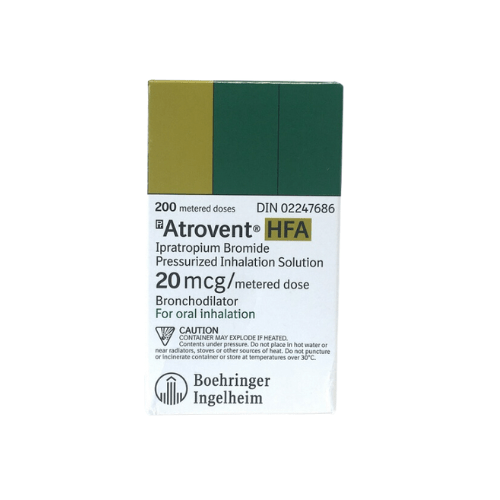
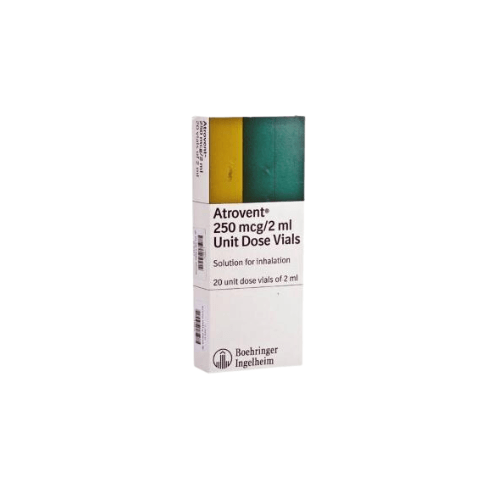
Atrovent Inhaler
Buy Atrovent Inhaler Online
Secure Encrypted Payments
Atrovent Inhaler is an inhaled bronchodilator containing ipratropium bromide, an anticholinergic medicine used to help control bronchospasm in chronic obstructive pulmonary disease. You can buy Atrovent Inhaler online, view the current Atrovent inhaler price during ordering, and choose the dose or strength shown that matches your clinician’s directions. The commonly referenced Atrovent HFA 17 mcg inhaler is a metered-dose aerosol for oral inhalation.
This medicine helps relax airway muscles so air can move more easily through narrowed breathing passages. It is used for maintenance treatment of bronchospasm associated with COPD, including chronic bronchitis and emphysema, and it is not intended to replace a rapid-relief inhaler for sudden severe breathing trouble.
Price, Strength, and Ordering Details
The Atrovent inhaler price can vary by supplied strength, quantity, manufacturer packaging, and current pharmacy sourcing. During checkout, use the displayed product strength and quantity to match your treatment plan. People paying out of pocket often review the cost of Atrovent inhaler therapy alongside ipratropium bromide inhaler cost, especially when managing long-term COPD medication budgets.
Canadian pricing is shown before purchase, and US delivery from Canada may be available for customers using this service. We may review order details before the pharmacy supplies the medication, and products are supplied through licensed pharmacies. If you use several inhalers, confirm the name, active ingredient, and strength on each one so you do not accidentally duplicate anticholinergic therapy.
Quick tip: Keep a written inhaler list with the medicine name, strength, and usual timing for each device.
What Atrovent Treats
Atrovent Inhaler is indicated as a bronchodilator for maintenance treatment of bronchospasm associated with chronic obstructive pulmonary disease. COPD includes long-term lung conditions such as chronic bronchitis and emphysema, where airway narrowing can cause wheeze, cough, chest tightness, and shortness of breath. For broader condition education, see chronic obstructive pulmonary disease information.
The medicine can help with day-to-day breathing symptoms when used as directed. It does not treat the underlying lung damage that causes COPD, and it should not be used as the only medicine for sudden, intense breathing attacks. If breathing worsens quickly, or your usual reliever is not helping, seek urgent medical care.
Atrovent may be mentioned in asthma care discussions, but label-centered use focuses on COPD maintenance treatment. Some clinicians use ipratropium in specific acute-care situations, often with other bronchodilators, but everyday home use should follow the directions given for your diagnosed condition.
How the Inhaler Works
The active ingredient, ipratropium bromide, is a short-acting muscarinic antagonist. In plain terms, it blocks certain nerve signals that tighten airway muscles. When those muscles relax, the airways can open more, which may reduce wheezing and make breathing feel less strained.
Atrovent is not a steroid, and it is not the same as albuterol. Albuterol is a short-acting beta agonist that works through different airway receptors and is commonly used for quick relief. Ipratropium works through anticholinergic pathways and is often positioned as maintenance bronchodilator therapy in COPD. Your clinician may recommend both types when each has a distinct role in your plan.
Many users notice bronchodilator effects within minutes, with benefit lasting several hours. Response can vary based on disease severity, technique, other inhalers, and whether symptoms are stable or worsening. If symptom patterns change, bring your inhaler diary or dosing log to your next visit.
How to Use the Metered-Dose Inhaler
Use Atrovent exactly as directed on your medication label. The labeled adult regimen commonly described for Atrovent HFA is two inhalations four times daily, with additional inhalations used only within labeled limits when directed. Do not exceed 12 inhalations in 24 hours unless a healthcare professional gives different instructions.
Prime a new inhaler before first use by releasing two test sprays into the air, away from your face. If the device has not been used for more than three days, or if it has been dropped, prime it again with two sprays. Shake well before each inhalation. Breathe out fully, place your lips around the mouthpiece, press the canister while inhaling slowly and deeply, then hold your breath for up to 10 seconds if comfortable.
If two puffs are scheduled, wait about one minute between inhalations. Avoid spraying the medicine into your eyes because this can worsen narrow-angle glaucoma symptoms in susceptible people. Keep the mouthpiece clean and capped so dust does not block the spray. If coordination is difficult, ask whether a spacer or technique check could help.
Strengths and Form
Atrovent HFA is a pressurized metered-dose aerosol inhaler for oral inhalation. The commonly referenced U.S. presentation delivers ipratropium bromide 17 mcg per actuation. Packaging, dose counters, and market presentations can vary, so rely on the label supplied with your inhaler and the strength shown during ordering.
The terms Atrovent aerosol inhaler, Atrovent MDI 17 mcg, ipratropium bromide HFA inhaler, and ipratropium bromide MDI 17 mcg may be used to describe related metered-dose inhaler presentations. Those names should not be used to guess your dose. Match the dispensed strength and dosing instructions to your medication label.
Missed Dose and Daily Timing
If you miss a scheduled dose, take it when you remember unless it is almost time for your next dose. If your next dose is close, skip the missed one and return to your usual schedule. Do not double doses to catch up.
People using several COPD inhalers often find it helpful to tie Atrovent doses to consistent daily routines. A phone reminder, written calendar, or inhaler tracker can reduce missed doses. If you frequently forget doses or feel the schedule is difficult, ask your healthcare professional whether the regimen should be simplified.
Side Effects, Warnings, and Monitoring
Common side effects can include dry mouth, throat irritation, cough, headache, dizziness, nausea, stomach discomfort, hoarseness, and nasal dryness. These effects are often mild, but persistent symptoms should be discussed with a healthcare professional. Sipping water, using correct technique, and keeping the spray away from the eyes may reduce irritation.
Serious reactions are less common but need prompt attention. Stop using the inhaler and seek medical help if you develop hives, rash, swelling of the face or throat, severe dizziness, or trouble breathing after a dose. Paradoxical bronchospasm, where breathing suddenly worsens after inhalation, can be life-threatening and needs immediate care.
People with narrow-angle glaucoma, bladder neck obstruction, urinary retention, or enlarged prostate should discuss anticholinergic risks before using ipratropium. Eye pain, blurred vision, halos around lights, or red eyes after exposure may signal a glaucoma-related problem. Difficulty urinating or painful urination should also be reported.
Tell your healthcare professional about other inhalers, cold medicines, bladder medicines, gastrointestinal antispasmodics, Parkinson’s medicines, and allergy products you use. Combining anticholinergic medicines can increase dry mouth, constipation, blurred vision, and urinary retention. If you need more rescue medication than usual, that can signal worsening COPD control and should be addressed quickly.
Storage, Handling, and Travel
Store the canister at room temperature, away from excessive heat, open flame, and direct sunlight. Do not puncture or burn the canister, even when it appears empty. Keep the protective cap on when the inhaler is not in use, and keep all medicines out of reach of children and pets.
For travel, carry the inhaler with your medication label and keep it in hand luggage when possible. Do not leave it in a hot vehicle or checked bag exposed to extreme temperatures. Replace the inhaler when the dose counter or label instructions indicate it is empty, even if it still seems to spray.
Orders may be shipped with prompt, express shipping when available through the service. Plan refills before your inhaler runs low, especially if COPD symptoms worsen when doses are missed.
Benefits and Day-to-Day Expectations
Atrovent can reduce bronchospasm and may make routine breathing feel easier for people with COPD. Some patients notice less wheeze, less chest tightness, or better tolerance for daily activities. The benefit depends on correct inhaler use, consistent timing, and the rest of your COPD care plan.
This medicine is best viewed as one part of COPD management. Smoking cessation, vaccinations, pulmonary rehabilitation, activity planning, and correct use of all prescribed inhalers may also matter. Browse our respiratory treatments category if you are organizing related inhalers and breathing medicines.
Why it matters: Good inhaler technique can change how much medicine reaches the lungs.
How Atrovent Differs From Nearby Options
Atrovent contains ipratropium alone. Combination inhalers may pair ipratropium with a beta agonist, while long-acting anticholinergic inhalers use different medicines designed for longer duration. These products can differ in onset, dosing schedule, device handling, and role in COPD therapy.
Atrovent is also different from inhaled corticosteroids. Steroid inhalers help reduce airway inflammation in selected patients but do not work the same way as ipratropium. A clinician may choose one or more inhaler classes based on symptoms, flare history, lung function, and side effect risk.
If you are deciding between short-acting and long-acting bronchodilators, ask about timing, rescue use, and how to recognize loss of control. For ongoing education about breathing conditions and treatment topics, visit our respiratory articles.
Questions to Ask Before Starting or Refilling
- What role should Atrovent play in my COPD plan?
- Which inhaler should I use for sudden shortness of breath?
- How many inhalations should I use each day?
- What is the maximum number of inhalations allowed in 24 hours?
- Could any of my other medicines increase anticholinergic side effects?
- Should I use a spacer or have my inhaler technique checked?
- When should I call about worsening cough, wheeze, or rescue inhaler use?
Authoritative Sources
| Resource | Link |
|---|---|
| Official prescribing information | ATROVENT HFA label |
| DailyMed drug label | ATROVENT HFA monograph |
This content is for informational purposes only and is not a substitute for professional medical advice.
Peak Flow Zone Calculator
Calculate asthma peak-flow zones from personal best and current peak flow.
Current % best-current / personal best
Zone-green >=80%, yellow 50-79%, red <50%
Zone cutoffs-80% and 50% of best
These calculations are for education only and do not replace clinical advice, diagnosis, or treatment. Always confirm medical decisions with a qualified healthcare professional.
Express Shipping - from $29.99
Shipping with this method takes 3-5 days
Prices:
- Dry-Packed Products $29.99
- Cold-Packed Products $39.99
Shipping Countries:
- United States (all contiguous states**)
- Worldwide (excludes some countries***)
Standard Shipping - $19.99
Shipping with this method takes 5-10 days
Prices:
- Dry-Packed Products $19.99
- Not available for Cold-Packed products
Shipping Countries:
- United States (all contiguous states**)
- Worldwide (excludes some countries***)
What is an Atrovent inhaler used for?
Atrovent Inhaler is used as a bronchodilator for maintenance treatment of bronchospasm associated with COPD, including chronic bronchitis and emphysema. It helps relax airway muscles but is not meant to replace a quick-relief inhaler for sudden severe breathing problems.
Is Atrovent the same as albuterol?
No. Atrovent contains ipratropium bromide, an anticholinergic medicine. Albuterol is a short-acting beta agonist. They work through different airway pathways and may have different roles in a COPD treatment plan.
Does Atrovent have a steroid in it?
No. Atrovent is not a steroid inhaler. Its active ingredient, ipratropium bromide, is an anticholinergic bronchodilator that helps reduce airway muscle tightening.
What are the bad side effects of Atrovent?
Common side effects include dry mouth, throat irritation, cough, headache, dizziness, nausea, hoarseness, and nasal dryness. Serious but less common problems include allergic reactions, paradoxical bronchospasm, urinary retention, and worsening narrow-angle glaucoma symptoms if spray reaches the eyes.
How should Atrovent Inhaler be stored?
Store the inhaler at room temperature away from heat, open flame, and direct sunlight. Do not puncture or burn the canister. Keep the cap on when not in use and keep the medicine away from children and pets.
Rewards Program
Earn points on birthdays, product orders, reviews, friend referrals, and more! Enjoy your medication at unparalleled discounts while reaping rewards for every step you take with us.
You can read more about rewards here.
POINT VALUE
How to earn points
- 1Create an account and start earning.
- 2Earn points every time you shop or perform certain actions.
- 3Redeem points for exclusive discounts.
You Might Also Like
Select options
This product has multiple variants. The options may be chosen on the product page
Select options
This product has multiple variants. The options may be chosen on the product page
Select options
This product has multiple variants. The options may be chosen on the product page
Select options
This product has multiple variants. The options may be chosen on the product page