
Please note: a valid prescription is required for all prescription medication.
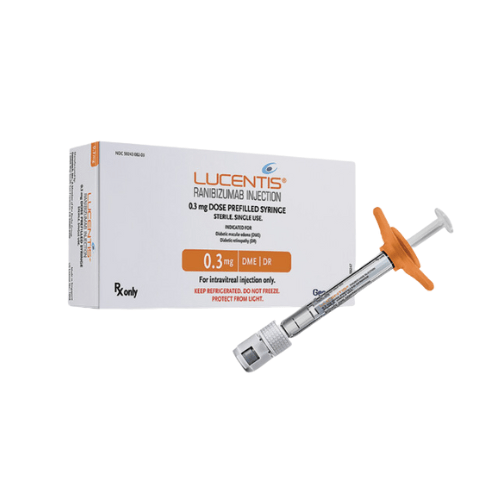
Lucentis Prefilled Syringe
Buy Lucentis Prefilled Syringe Online
Secure Encrypted Payments
Lucentis Prefilled Syringe is a ranibizumab ophthalmic injection presentation used by retina specialists for certain retinal diseases involving abnormal blood vessels or fluid leakage. It can be bought online through licensed pharmacy channels, with the dose strength selected during ordering and matched to the eye specialist’s directions. The prefilled syringe is intended for intravitreal injection, which means the medicine is injected into the eye in a clinic setting using sterile technique.
Lucentis ranibizumab prefilled syringe options are commonly referenced as 0.5 mg/0.05 mL and 0.3 mg/0.05 mL presentations, both using a 10 mg/mL ranibizumab solution. The right strength depends on the diagnosis, the treatment plan, and the clinic’s preferred workflow. If your clinic has specific receiving or handling rules, settle those details before the appointment date.
Lucentis Prefilled Syringe Price and Strength Selection
Current Lucentis injection price can vary by strength, sourcing route, and clinic administration fees. The medication price does not always include the professional injection visit, imaging, eye pressure checks, or follow-up monitoring. When comparing Lucentis cost without insurance, separate the pharmacy medication cost from any charges billed by the retina clinic.
During ordering, choose the available strength that matches the clinic’s directions. The 0.5 mg/0.05 mL prefilled syringe is often associated with wet age-related macular degeneration and some retinal vein occlusion-related uses, while the 0.3 mg/0.05 mL prefilled syringe is often associated with diabetic eye disease in labeling. The final strength selection should follow the treating specialist’s plan, not a general preference for one syringe over another.
People reviewing retina treatment categories may find it useful to browse ophthalmology products for related clinic-use therapies. Product choice should still be guided by the active ingredient, diagnosis, dose strength, handling requirements, and the clinic’s acceptance process for the medicine.
Quick tip: Ask the clinic whether medication cost and injection visit fees are billed separately.
How This Ranibizumab Syringe Is Used
Lucentis is not a home self-injection medicine. A retina specialist or ophthalmologist administers the dose into the vitreous, the gel-like space inside the eye. A typical treatment visit may include vision testing, retinal imaging, numbing drops, cleaning around the eye, placement of a sterile eyelid holder, the injection, and short observation afterward.
The prefilled presentation can reduce some preparation steps compared with drawing the medicine from a vial, but it does not remove the need for sterile technique. The syringe should remain sealed until handled by qualified clinic staff. If both eyes are being treated, official labeling states that separate sterile supplies and a separate prefilled syringe or vial should be used for the other eye.
Follow-up timing depends on the retinal condition and the response seen on examination or optical coherence tomography scans. Monthly treatment is common at the start for some conditions, but later intervals may change. Some people continue frequent injections for a period, while others move to longer intervals or as-needed treatment when the retina is stable.
- Clinic administration: the syringe is prepared for in-office intravitreal injection.
- Strength matching: the 0.3 mg or 0.5 mg dose should align with the clinic plan.
- Monitoring: vision checks and retinal scans help guide future injections.
- After-care: written clinic instructions should guide activity and eye care.
What Lucentis Treats
Ranibizumab is an anti-VEGF medicine. VEGF means vascular endothelial growth factor, a signal that can drive abnormal blood vessel growth and leakage in the retina. By blocking this signal in the eye, Lucentis can help treat conditions where retinal fluid, bleeding, or fragile new vessels threaten vision.
Approved or labeled use context can include neovascular, or wet, age-related macular degeneration; diabetic macular edema; diabetic retinopathy; macular edema after retinal vein occlusion; and myopic choroidal neovascularization, depending on the country label and specific clinical plan. You can read more about condition background in neovascular age-related macular degeneration, diabetic macular edema, macular edema, and myopic choroidal neovascularization.
The diagnosis matters because treatment goals and dosing schedules differ. Wet AMD care often focuses on controlling abnormal choroidal blood vessels. Diabetic eye disease care may combine glucose, blood pressure, retinal monitoring, and injection planning. Retinal vein occlusion-related swelling may require repeated imaging to judge how much fluid remains.
Why it matters: The same prefilled syringe format can be used in different retinal diseases, but the treatment plan is diagnosis-specific.
Strengths, Form, and Clinic Handling
Lucentis Prefilled Syringe is a single-use, sterile ranibizumab injection presentation for ophthalmic use. The solution concentration is 10 mg/mL, but the injected dose is usually expressed as 0.3 mg/0.05 mL or 0.5 mg/0.05 mL. Concentration and injected dose are related, but they are not the same customer-facing decision.
| Presentation | Common labeled strength | Practical note |
|---|---|---|
| Prefilled syringe | 0.5 mg/0.05 mL | Commonly referenced for wet AMD and some retinal vein occlusion-related macular edema uses, depending on labeling. |
| Prefilled syringe | 0.3 mg/0.05 mL | Commonly referenced for diabetic macular edema and diabetic retinopathy uses in labeling. |
| Solution concentration | 10 mg/mL | The concentration appears on product materials, while the clinic administers the intended 0.05 mL dose. |
Some clinics use Lucentis vials, while others prefer a prefilled syringe for workflow consistency. The prefilled format can help reduce drawing and transfer steps, but the medicine must still be inspected before use. Do not use a syringe if the cap is detached from the Luer lock, the syringe is damaged, or the solution is cloudy, discolored, or contains particles.
If the clinic asks you to bring the carton, keep the packaging intact and bring the pharmacy label and any temperature-handling notes. Do not open the syringe or attempt to prepare it. The clinic should decide whether the product meets its standards for storage, documentation, and sterile handling.
Storage, Travel, and US Delivery From Canada
Storage should follow the official label and pharmacy instructions. Lucentis is generally kept refrigerated, protected from light, and not frozen before use. The syringe should stay in its original carton until clinic handling, because the carton protects the medicine and preserves identifying information needed by the office.
If you are coordinating US delivery from Canada, plan around the appointment date and the clinic’s receiving policy. Prompt, express shipping may support scheduling, but temperature-sensitive injectable medicines still require careful handling once received. Avoid leaving the carton in a hot car, freezing environment, mailbox, or uncontrolled location.
Travel with the medicine only if the clinic has agreed to that process. Keep the carton closed, avoid shaking or repackaging it, and carry any written handling directions. If the package arrives opened, crushed, leaking, or exposed to questionable temperatures, contact the supplying pharmacy before bringing it to the injection visit.
- Refrigerate as directed: do not freeze the syringe.
- Protect from light: keep the carton closed until clinic use.
- Inspect packaging: damage or leakage needs pharmacy review.
- Coordinate receiving: the clinic may have rules for outside-sourced injectables.
Side Effects, Warnings, and Monitoring
Lucentis safety involves both the medicine and the injection procedure. Mild eye effects can include redness, watering, temporary blurred vision, a scratchy sensation, small floaters, and mild discomfort after the injection. These symptoms may be short-lived, but the clinic’s written after-care instructions should guide what is expected and when to call.
Serious eye problems are less common but require urgent attention. These can include endophthalmitis, a severe infection inside the eye; retinal detachment; retinal tears; significant inflammation; and increased intraocular pressure. Seek prompt medical assessment for severe eye pain, worsening redness, light sensitivity, sudden vision loss, a curtain-like shadow, or a sudden shower of floaters or flashes.
Anti-VEGF medicines may also carry warnings about arterial thromboembolic events, such as stroke or heart attack, although these events are uncommon. Tell the treating clinician about any history of stroke, transient ischemic attack, heart disease, clotting problems, glaucoma, recent eye surgery, active eye infection, or inflammation inside the eye. Pregnancy and breastfeeding should also be discussed before treatment planning.
Traditional drug interactions are less prominent with intravitreal therapy than with many oral medicines, but the medication list still matters. Current eye drops, anticoagulants, antiplatelet medicines, supplements, and planned eye procedures can affect the safety conversation. If laser therapy, surgery, or another eye injection is scheduled, the clinic may coordinate timing.
- Common effects: redness, irritation, tearing, floaters, and temporary blur may occur.
- Urgent symptoms: severe pain or sudden vision change needs same-day medical advice.
- Pressure monitoring: clinics may check eye pressure after injection.
- Medical history: clotting events, glaucoma, pregnancy, and recent procedures matter.
After-Care and Treatment Expectations
After a macular degeneration or retinal injection, your clinic may advise avoiding eye rubbing, swimming, eye makeup, contact lenses, or dusty environments for a short period. Instructions vary by practice and by how the treated eye responds. Driving plans should account for dilation, blurred vision, discomfort, or the clinic’s advice after the procedure.
The number of Lucentis injections needed can vary widely. Some treatment courses begin with monthly injections, then continue based on fluid control, visual acuity, and retinal imaging. Others may remain frequent if the disease is active. Stopping or spacing treatment too soon can allow fluid or abnormal vessels to recur, so interval decisions should come from the retina specialist.
Response is usually judged through a combination of symptoms, vision testing, and retinal scans rather than how the eye feels on the day of injection. Some people notice vision changes quickly, while others mainly see stability or slower worsening. Keep planned follow-up visits even if the eye feels normal, because retinal disease can change before symptoms become obvious.
How It Compares With Other Retina Injection Options
The most practical comparison is often between the prefilled syringe, the Lucentis vial, and other anti-VEGF medicines. The active ingredient in this product is ranibizumab. A vial presentation may fit one clinic’s established routine, while a ranibizumab PFS may reduce certain preparation steps for another clinic.
Other intravitreal anti-VEGF medicines differ in active ingredient, labeled uses, dosing intervals, clinic familiarity, and safety discussions. A retina specialist may recommend a switch or alternative if the retinal scan response, visit burden, inflammation history, or overall risk profile suggests a different approach. These are individualized medical decisions, not simple brand substitutions.
For broader reading on eye medicines and retinal treatment topics, the ophthalmology articles section can help explain common terms. Country-of-origin information may also be relevant for customers arranging a cross-border order; see products associated with Canada country of origin when reviewing sourcing context.
Authoritative Sources
- For approved uses, dosing, administration, contraindications, and warnings, review the official FDA prescribing information.
- For manufacturer administration details and syringe inspection cautions, see Lucentis dosing and administration information.
- For professional background on the prefilled syringe approval, read the American Academy of Ophthalmology update.
This content is for informational purposes only and is not a substitute for professional medical advice.
Express Shipping - from $29.99
Shipping with this method takes 3-5 days
Prices:
- Dry-Packed Products $29.99
- Cold-Packed Products $39.99
Shipping Countries:
- United States (all contiguous states**)
- Worldwide (excludes some countries***)
Standard Shipping - $19.99
Shipping with this method takes 5-10 days
Prices:
- Dry-Packed Products $19.99
- Not available for Cold-Packed products
Shipping Countries:
- United States (all contiguous states**)
- Worldwide (excludes some countries***)
How is Lucentis Prefilled Syringe administered?
Lucentis Prefilled Syringe is administered by a retina specialist or ophthalmologist as an intravitreal injection into the eye. It is not intended for self-injection at home. The visit may include numbing drops, eye cleaning, sterile preparation, the injection, and monitoring afterward.
How much does a Lucentis injection cost?
Lucentis injection cost can vary by strength, pharmacy source, and clinic fees. The medicine price may be separate from the injection visit, retinal imaging, and follow-up care. If paying without insurance, ask the clinic and pharmacy which charges are included.
How many Lucentis injections will I need?
The number of injections depends on the retinal condition, scan results, vision findings, and the specialist’s treatment plan. Some people start with monthly injections, then adjust the interval based on response. Do not change or stop the injection schedule without the retina specialist’s guidance.
What should I avoid after a macular degeneration injection?
Follow the written after-care instructions from the injecting clinic. Many clinics advise avoiding eye rubbing, swimming, eye makeup, or contact lenses for a short period, but instructions differ. Seek urgent care for severe pain, sudden vision loss, worsening redness, flashes, or many new floaters.
What is the difference between Lucentis 0.3 mg and 0.5 mg prefilled syringes?
Both are ranibizumab prefilled syringe presentations using a 10 mg/mL solution, but the injected dose differs. The 0.5 mg/0.05 mL and 0.3 mg/0.05 mL strengths are associated with different labeled retinal uses. Select the strength that matches the clinic’s directions.
Rewards Program
Earn points on birthdays, product orders, reviews, friend referrals, and more! Enjoy your medication at unparalleled discounts while reaping rewards for every step you take with us.
You can read more about rewards here.
POINT VALUE
How to earn points
- 1Create an account and start earning.
- 2Earn points every time you shop or perform certain actions.
- 3Redeem points for exclusive discounts.
You Might Also Like
Select options
This product has multiple variants. The options may be chosen on the product page
Select options
This product has multiple variants. The options may be chosen on the product page
Select options
This product has multiple variants. The options may be chosen on the product page
Select options
This product has multiple variants. The options may be chosen on the product page