
Please note: a valid prescription is required for all prescription medication.
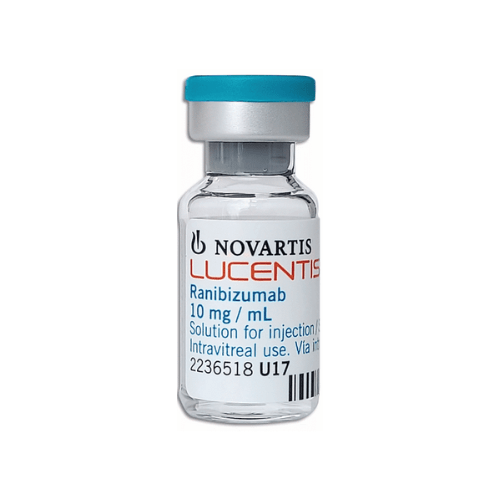
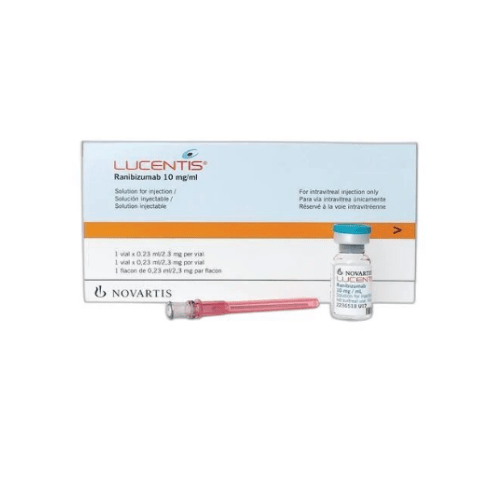
Lucentis Vial
Buy Lucentis Vial Online
Secure Encrypted Payments
Lucentis Vial is an injectable eye medicine containing ranibizumab, an anti-VEGF therapy used by retina specialists for several vision-threatening retinal conditions. You can buy Lucentis Vial online, view the current product price, and choose the vial strength shown during ordering that matches your ophthalmologist’s treatment plan. The vial is prepared and injected into the eye in a sterile clinical setting, not self-administered at home.
Ranibizumab helps block vascular endothelial growth factor A, often called VEGF-A, a protein involved in abnormal blood vessel growth and leakage in the retina. By reducing this VEGF-driven leakage, Lucentis can help manage swelling and damage that affect central vision. Your eye specialist decides whether a Lucentis Injection Vial is appropriate based on your diagnosis, retinal imaging, prior response, and visit schedule.
Lucentis Vial Price and Strength Selection
Lucentis Vial price can vary by strength, supply source, and clinic purchasing arrangements. During ordering, match the available vial strength to the exact directions from your retina clinic. Do not choose a different strength to reduce cost unless your ophthalmology team has specifically approved that change.
Commonly referenced vial strengths include Lucentis 0.5 mg Vial and Lucentis 0.3 mg Vial. The official dosing amount depends on the retinal condition being treated, and the vial format is intended for single-use preparation by trained clinical staff. If your clinic specifies Lucentis Vial 0.5 mg/0.05 mL or Lucentis Vial 0.3 mg/0.05 mL, confirm that the strength selected during checkout matches those written directions.
Self-pay customers often compare Lucentis Vial cost with clinic-administered billing, insurance reimbursement, and other anti-VEGF options. When comparing Canadian pricing with local clinic pathways, include the medicine cost, appointment fees, administration charges, monitoring visits, and any handling requirements your clinic expects. BorderFreeHealth may help coordinate US delivery from Canada for customers arranging treatment supply with their eye care office.
Quick tip: Ask your clinic whether it needs the vial delivered directly to the office or brought to the appointment with documentation.
How to Order and Coordinate Clinic Use
Order Lucentis Vial online only when your retina clinic has confirmed the product, strength, and timing needed for your treatment visit. The vial must be stored and handled correctly before the appointment, so coordinate early if your clinic has specific receiving instructions. Products are supplied through licensed pharmacies, and order details may be reviewed before the medicine is released.
The Lucentis Injection Vial is not designed for home injection. A retina specialist injects the medicine into the vitreous, the gel-like space inside the eye, using sterile technique and local numbing measures. After the injection, the clinic may measure eye pressure, examine the eye, and explain symptoms that need urgent attention.
Some patients need a vial because their clinic prefers clinic-based preparation, while others may use a prefilled presentation when appropriate. The vial can support precise professional preparation, but it also requires careful sterile handling. If a different presentation is acceptable for your plan, ask your clinic whether the prefilled syringe format would change workflow, storage, or cost.
What Lucentis Treats
Lucentis is used in adults for retinal diseases where abnormal blood vessel growth or fluid leakage threatens vision. These include neovascular, or wet, age-related macular degeneration; diabetic macular edema; diabetic retinopathy; macular edema after retinal vein occlusion; and myopic choroidal neovascularization. Each condition affects the retina differently, but VEGF-driven leakage and swelling are key treatment targets.
Wet age-related macular degeneration can damage central vision because fragile new vessels grow beneath the retina and leak. For more background on this condition, see wet age-related macular degeneration. Diabetic eye disease can also cause retinal swelling or abnormal vessel growth; related condition information is available for diabetic macular edema and diabetic retinopathy.
Retinal vein occlusion occurs when a retinal vein becomes blocked, which can lead to swelling in the macula, the central area needed for sharp vision. Lucentis may be used when macular edema follows branch or central retinal vein occlusion. You can read more about the condition under retinal vein occlusion.
How Ranibizumab Works in the Eye
Ranibizumab is the active ingredient in Lucentis Vial. It is a monoclonal antibody fragment designed to bind VEGF-A. Blocking VEGF-A helps reduce leakage from abnormal blood vessels and may reduce retinal fluid seen on optical coherence tomography scans.
Because the medicine is injected directly into the eye, the treatment is local and procedure-based. The goal is to stabilize vision, reduce swelling, and limit further damage, but individual response varies. Your eye specialist monitors vision tests, retinal scans, eye pressure, and symptoms to decide whether to continue, adjust the interval, or consider another anti-VEGF medicine.
Lucentis is not a general eye drop, supplement, or laser treatment. It is a biologic medicine used as part of a monitored retinal care plan. Missed visits can affect disease control, especially early in treatment, so calendar reminders and transportation planning are practical parts of care.
Dosage, Appointment Timing, and Missed Visits
Lucentis treatment is commonly started with regular injection visits, often monthly for many labeled retinal conditions. Exact timing can differ by diagnosis, imaging results, and how the eye responds over time. Your retina clinic sets the injection schedule and decides when monitoring alone, continued dosing, or a different interval is appropriate.
If you miss an appointment, contact the clinic as soon as possible to reschedule. Do not attempt to save, split, reuse, or self-administer any vial. The medication is intended for single-use sterile preparation, and improper handling can increase the risk of infection or eye injury.
Before each visit, tell the clinic if you have eye pain, new redness, discharge, a recent eye infection, or a sudden change in vision. These symptoms may affect whether an injection should proceed that day. Also share major changes in health status, including recent stroke-like symptoms, heart problems, or planned surgery.
Storage, Handling, and Travel to the Clinic
Clinics usually manage storage for intravitreal medicines. If you are responsible for bringing the vial to an appointment, follow the storage directions provided with the medicine and your clinic’s instructions. Lucentis should be kept refrigerated, protected from light, and not frozen or shaken.
Use clean insulated transport if the clinic instructs you to carry the vial, and keep the carton secure until handoff. Bring any paperwork requested by the office, and avoid leaving the medicine in a hot car, checked luggage, or direct sunlight. If you have concerns about temperature exposure, contact the clinic before the injection visit.
Orders may be handled with prompt, express shipping when appropriate for the product and route. For customers evaluating country-of-origin details, the Canada product attribute can help place sourcing information in context. Handling requirements should still be guided by the vial’s storage instructions and the receiving clinic’s process.
Side Effects, Warnings, and Monitoring
Lucentis injections can cause temporary eye discomfort, redness, small surface bleeding, floaters, blurred vision, or a short-term increase in eye pressure. Mild irritation or a gritty feeling can occur after the visit. The clinic may advise what sensations are expected and how long routine irritation should last.
Serious eye risks are uncommon but require urgent attention. These include endophthalmitis, a severe infection inside the eye; retinal tear or detachment; traumatic cataract; and significant inflammation. Seek urgent medical care if you develop severe eye pain, worsening redness, light sensitivity, sudden vision loss, new large floaters, flashes, or a curtain-like shadow in vision.
Lucentis should not be injected into an eye with an active ocular or periocular infection, and it should be avoided when there is active significant intraocular inflammation. People with a known serious hypersensitivity to ranibizumab or product components should not receive it. Your eye specialist will also consider cardiovascular history because anti-VEGF medicines have been associated with arterial thromboembolic events such as stroke.
Systemic drug interactions are limited because Lucentis is injected into the eye, but your care team still needs a complete medication list. Tell them about blood thinners, antiplatelet medicines, eye drops, supplements, and any recent procedures. Monitoring usually includes visual acuity, retinal imaging, symptom review, and eye pressure assessment when clinically needed.
Pregnancy, Breastfeeding, and Medical History
Discuss pregnancy, plans to become pregnant, or breastfeeding with the clinician managing your retinal care. The potential benefit of treatment must be weighed against possible risks, especially because Lucentis affects a pathway involved in blood vessel growth. Do not stop or delay recommended eye care without speaking with the treating specialist.
Medical history matters because retinal disease often occurs alongside diabetes, vascular disease, or age-related health concerns. Tell your clinic about recent heart attack, stroke, transient ischemic attack, uncontrolled blood pressure, active infection, or upcoming eye surgery. These details help the ophthalmology team decide whether the injection timing is appropriate.
If you have diabetes, regular retinal monitoring remains important even when injections are helping. Blood sugar, blood pressure, kidney health, and lipid management can all influence long-term eye outcomes. Lucentis treats retinal complications; it does not replace broader diabetes care.
Lucentis Vial Compared With Other Eye Medicines
Lucentis and Eylea are both anti-VEGF medicines used for several retinal diseases, but they are not the same drug. Lucentis contains ranibizumab, while Eylea contains aflibercept. They differ in molecule design, labeled dosing schedules, approved indications by market, and how a patient may respond.
Your retina specialist may consider alternatives if the eye has persistent fluid, if visit timing is difficult, if safety concerns arise, or if the clinic’s workflow favors a different product. The broader ophthalmology category can help you see related eye-care medicines carried by the store. Condition-specific browsing under the ophthalmology articles category may also support conversations with your care team.
Switching anti-VEGF medicines should be a clinical decision. Cost alone should not drive a switch if the current therapy is controlling retinal fluid or preserving vision. Bring your imaging history, treatment dates, and response pattern to any discussion about alternatives.
Questions to Ask Before Treatment
Before arranging a Lucentis Vial, ask your retina clinic which strength is required, when the injection is scheduled, and whether the office will receive the medicine directly. Clarify how the clinic handles storage, what documentation it needs, and what you should do if the vial arrives close to the appointment date.
- Which retinal condition is being treated with Lucentis?
- Which vial strength should be selected for this visit?
- How often will vision and retinal scans be monitored?
- What symptoms after injection require urgent care?
- Would a prefilled syringe or another anti-VEGF medicine be appropriate?
- How should the vial be transported if the clinic asks me to bring it?
Why it matters: Clear clinic instructions reduce the chance of appointment delays, storage mistakes, or strength mismatches.
Authoritative Sources
Official prescribing information
Manufacturer patient information
This content is for informational purposes only and is not a substitute for professional medical advice.
Express Shipping - from $29.99
Shipping with this method takes 3-5 days
Prices:
- Dry-Packed Products $29.99
- Cold-Packed Products $39.99
Shipping Countries:
- United States (all contiguous states**)
- Worldwide (excludes some countries***)
Standard Shipping - $19.99
Shipping with this method takes 5-10 days
Prices:
- Dry-Packed Products $19.99
- Not available for Cold-Packed products
Shipping Countries:
- United States (all contiguous states**)
- Worldwide (excludes some countries***)
What is Lucentis Vial used for?
Lucentis Vial is used by retina specialists for several retinal conditions involving abnormal blood vessel growth or fluid leakage, including wet age-related macular degeneration, diabetic macular edema, diabetic retinopathy, macular edema after retinal vein occlusion, and myopic choroidal neovascularization.
Can Lucentis Vial be self-injected?
No. Lucentis Vial is injected into the eye by a trained ophthalmology professional using sterile technique. Do not self-inject, reuse a vial, split a dose, or change the scheduled treatment plan without direction from the treating eye specialist.
What strengths are commonly referenced for Lucentis Vial?
Commonly referenced strengths include Lucentis 0.5 mg Vial and Lucentis 0.3 mg Vial. Select the strength that matches the clinic’s directions, because the appropriate amount depends on the retinal condition and treatment plan.
Are Lucentis and Eylea the same?
No. Lucentis contains ranibizumab, while Eylea contains aflibercept. Both are anti-VEGF eye medicines, but they differ in active ingredient, labeling, dosing considerations, and individual response. Your retina specialist decides which option fits your eye condition.
What side effects need urgent attention after a Lucentis injection?
Seek urgent care for severe eye pain, worsening redness, light sensitivity, sudden vision loss, new large floaters, flashes, or a curtain-like shadow. These symptoms may signal serious complications such as infection, retinal tear, or retinal detachment.
Rewards Program
Earn points on birthdays, product orders, reviews, friend referrals, and more! Enjoy your medication at unparalleled discounts while reaping rewards for every step you take with us.
You can read more about rewards here.
POINT VALUE
How to earn points
- 1Create an account and start earning.
- 2Earn points every time you shop or perform certain actions.
- 3Redeem points for exclusive discounts.
You Might Also Like
Select options
This product has multiple variants. The options may be chosen on the product page
Select options
This product has multiple variants. The options may be chosen on the product page
Select options
This product has multiple variants. The options may be chosen on the product page
Select options
This product has multiple variants. The options may be chosen on the product page