

Please note: a valid prescription is required for all prescription medication.
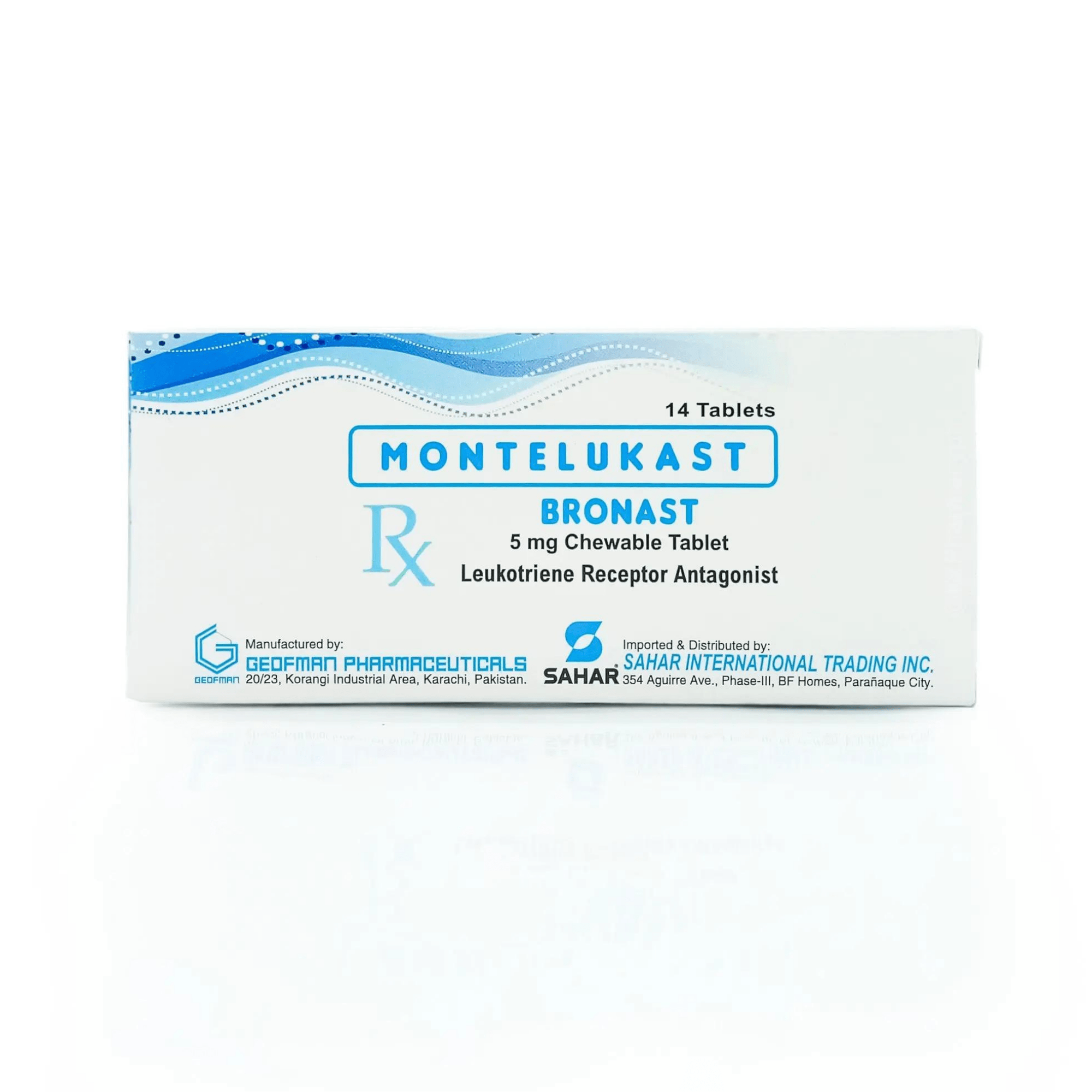
Montelukast
Buy Montelukast Online
Secure Encrypted Payments
Montelukast is an oral leukotriene receptor antagonist used for long-term asthma control and for allergic rhinitis in certain people. You can buy Montelukast online, view the current price, and choose the dose or strength shown during ordering to match the directions from your clinician. It is not a rescue medicine for sudden breathing symptoms, so anyone using it for asthma should keep their quick-relief plan separate.
Montelukast sodium is the generic active ingredient associated with Singulair. It works by blocking leukotrienes, which are inflammation signals that can tighten airways, increase swelling, and worsen nasal symptoms. Because it has an important boxed warning about serious mental health side effects, the benefit-risk discussion matters before and during treatment.
Montelukast Price, Strength, and Ordering Details
Current Montelukast price can vary by strength, form, quantity, and supply source. During ordering, choose the dose or strength displayed for the medicine and match it to the label directions you have been given. If you are comparing montelukast 10 mg, montelukast sodium 10 mg, or Singulair 10 mg, focus on the active ingredient, form, strength, and schedule rather than the name alone.
Adults are commonly treated with a 10 mg oral tablet when this medicine is used for maintenance therapy, while some children may use chewable tablets or oral granules. Pediatric forms are not interchangeable with adult tablets. The right selection depends on age, treatment purpose, and the exact form supplied with the medicine.
BorderFreeHealth works with licensed pharmacies for U.S. customers using cash-pay cross-border medication services. US delivery from Canada may be part of the service experience, and prompt, express shipping may be available after order details are completed. Product supply and final handling depend on the medicine, destination, and required checks.
- Choose the strength that matches the treatment directions.
- Check whether the medicine is a tablet, chewable tablet, or granules.
- Compare generic montelukast and Singulair by active ingredient and strength.
- Keep the treatment purpose clear: asthma control, exercise prevention, or allergic rhinitis.
What Montelukast Treats
Montelukast is used to help prevent and control asthma symptoms over time. It may also be used to prevent exercise-induced bronchoconstriction in certain people and to treat allergic rhinitis, including seasonal or year-round allergy symptoms. It is not intended to treat an asthma attack that is already happening.
Asthma symptoms can include wheezing, coughing, chest tightness, and shortness of breath. Allergy symptoms may include sneezing, runny nose, nasal itching, and congestion. People whose asthma worsens during pollen season or with exercise may discuss whether a leukotriene blocker fits their plan. The Asthma section and Exercise-Induced Bronchoconstriction information can help frame those symptom patterns.
For nasal allergy symptoms, montelukast is only one category among several. Antihistamines and nasal steroid sprays may be more appropriate for some people, especially when symptoms are limited to sneezing, itching, or congestion. The Allergic Rhinitis section explains how allergy symptoms can overlap with lower-airway conditions.
Why it matters: A daily controller medicine cannot replace fast-acting treatment for sudden breathing trouble.
How It Works and How It Differs From Allergy Medicines
Montelukast blocks leukotriene receptors. Leukotrienes are chemical messengers involved in airway tightening, mucus production, and inflammation. Blocking those signals can support asthma control and may reduce allergy-related nasal symptoms in some people.
Montelukast is not a steroid and is not an antihistamine. Steroid inhalers and nasal steroid sprays reduce inflammation through a different pathway. Antihistamines block histamine, a chemical linked to itching, sneezing, and runny nose. This distinction is useful when deciding whether the main treatment goal is asthma maintenance, exercise-related symptom prevention, or nasal allergy relief.
Many people compare this medicine with products in the Respiratory category or with condition articles in Respiratory Articles. Category comparisons can be helpful, but the most important practical question is whether the medicine matches your diagnosis, age group, and daily routine.
- Leukotriene blocker: targets one inflammation pathway.
- Not a steroid: different from inhaled or nasal corticosteroids.
- Not an antihistamine: different from medicines used mainly for itching and sneezing.
- Controller role: used for prevention or maintenance, not immediate rescue.
Common Forms and Strengths
Montelukast products may be supplied as film-coated tablets, chewable tablets, or oral granules. The 10 mg tablet is commonly associated with adult use. Chewable tablets and granules are used in certain pediatric age groups when the form and strength match the directions.
| Form | Common strength | General use note |
|---|---|---|
| Film-coated tablet | 10 mg | Often used for adult maintenance treatment. |
| Chewable tablet | 4 mg or 5 mg | Used in some children when appropriate for age and directions. |
| Oral granules | 4 mg | Used for certain younger patients when the format is suitable. |
Product names can look similar across strengths, especially when the label uses montelukast sodium. Sodium refers to the salt form of the active ingredient and does not mean a separate allergy or asthma medicine. Always match the dose, strength, form, and schedule shown on the medicine to the treatment directions.
Timing and Daily Use Basics
Montelukast is usually taken once daily when used for ongoing asthma or allergy control. Evening dosing is common, particularly for asthma maintenance, but timing can differ by treatment purpose. For exercise-induced bronchoconstriction, the directions may specify a different timing pattern.
People often ask why montelukast is taken at night. The short answer is that asthma symptoms may worsen overnight for some people, and many treatment plans use evening dosing for consistent control. The safest approach is to follow the schedule on the medicine label and avoid changing timing on your own.
A missed dose should be handled according to the medicine instructions. Do not double doses to make up for one you forgot. If symptoms worsen, follow the asthma action plan you were given rather than relying on montelukast for immediate relief.
- Take it consistently when used as a controller medicine.
- Use chewables and granules only as described on the label.
- Keep a rescue inhaler or quick-relief therapy available if part of your asthma plan.
- Ask about timing if the medicine is used around exercise.
Side Effects, Boxed Warning, and Monitoring
Common side effects may include headache, stomach pain, cough, diarrhea, tiredness, or fever. Many people tolerate montelukast, but new or bothersome symptoms deserve attention. The most important safety issue is the boxed warning about serious neuropsychiatric events, which are mood, sleep, thinking, or behavior changes.
Reported neuropsychiatric effects have included agitation, aggression, anxiety, depression, abnormal dreams, sleep problems, hallucinations, and suicidal thoughts or actions. These effects have been reported during treatment and, in some cases, after stopping the medicine. Because the warning is serious, new mental health symptoms should be addressed promptly.
Children and teens may show changes differently than adults. Caregivers might notice irritability, nightmares, restlessness, attention changes, new impulsive behavior, or unusual sadness. Adults may notice anxiety, low mood, sleep disruption, or behavior that feels out of character. A prior mental health diagnosis is not required for symptoms to occur.
Severe allergic reactions are less common but require urgent medical help. Warning signs may include swelling of the face, lips, tongue, or throat; trouble breathing; severe rash; or faintness. Worsening asthma symptoms, increased rescue-medication use, or breathing trouble at rest also need urgent attention according to the asthma action plan.
Quick tip: Tell a family member or caregiver to watch for new mood or sleep changes after starting the medicine.
Interactions and People Who Need Extra Caution
Montelukast has fewer interaction concerns than some medicines, but interaction checks still matter. Rifampin and phenobarbital may lower montelukast exposure. Gemfibrozil may raise exposure. A complete medication list should include over-the-counter products, vitamins, and herbal supplements because they can affect safety decisions.
People with liver problems should discuss whether extra caution is needed. Chewable forms may contain ingredients that matter for people with phenylketonuria, depending on the label. Pregnancy and breastfeeding questions should be handled individually, using the current medicine label and personal health history.
Anyone with current or past depression, anxiety, sleep disorders, suicidal thoughts, or significant behavior changes should raise that history before using montelukast. The boxed warning does not mean everyone will have these effects. It does mean monitoring should be taken seriously, especially when the reason for use is allergic rhinitis rather than asthma control.
- Share all medicines and supplements before use.
- Ask about liver disease, pregnancy, or breastfeeding considerations.
- Check chewable tablet ingredients if phenylketonuria is relevant.
- Report new mood, sleep, or behavior changes promptly.
Storage and Travel
Store montelukast at room temperature in its original container or packaging unless the label gives different instructions. Keep tablets, chewables, and granule packets dry and protected from excess heat. Bathrooms, cars, and other humid or hot places are poor storage areas.
For travel, keep the medicine in its labeled packaging so the name, strength, and directions remain readable. This is especially important for families carrying both adult tablets and pediatric forms. Damaged, expired, or unreadable packets should be checked with a pharmacist before use.
Caregivers should avoid transferring pediatric granules or chewables into unlabeled containers. Similar-looking medicines can be confused, and children may need different strengths than adults in the same household.
Montelukast Generic and Singulair Comparison
Montelukast is the active ingredient in the generic medicine associated with Singulair. When comparing Singulair tablets with montelukast tablets, the practical checks are the active ingredient, dosage form, strength, and directions. Brand familiarity alone does not confirm the right medicine for your situation.
Generic montelukast sodium products may be sold under different manufacturer names. The label may use wording such as montelukast sodium tablets, montelukast sodium 10 mg oral tablet, or montelukast tablets. These names usually point back to the same active ingredient, but the form and strength still need to match the intended use.
Country-specific naming and supply can differ. That does not change the need to use regulated pharmacy channels and label-directed handling. If you are comparing products sourced from Canada with U.S. familiar names, use the active ingredient and strength as your anchor points.
Related Respiratory and Allergy Choices
Montelukast can be helpful when asthma control and allergy symptoms overlap, but it does not replace every respiratory or allergy medicine. A nasal steroid may be more targeted for persistent nasal congestion. An oral antihistamine may fit itching, sneezing, or runny nose when asthma is not the main concern.
For asthma, the broader treatment plan may include inhaled controller therapy, a quick-relief inhaler, trigger control, and monitoring of symptom frequency. Montelukast may be used as one part of that plan. If exercise is the main trigger, timing and activity-related instructions become especially important.
For allergic rhinitis, symptom pattern matters. Nasal blockage, post-nasal drip, itching, and seasonal timing can point toward different treatment categories. Reviewing the Allergic Rhinitis information alongside the Respiratory category can help organize questions before the next clinical discussion.
- Nasal steroid sprays: often aimed at nasal inflammation and congestion.
- Oral antihistamines: often aimed at sneezing, itching, and runny nose.
- Leukotriene blockers: may fit asthma and allergy overlap.
- Rescue medicines: used for sudden breathing symptoms when included in an asthma plan.
Authoritative Sources
For patient-friendly medication details, see MedlinePlus montelukast drug information.
For the boxed warning background, see the FDA boxed warning safety communication.
This content is for informational purposes only and is not a substitute for professional medical advice.
Peak Flow Zone Calculator
Calculate asthma peak-flow zones from personal best and current peak flow.
Current % best-current / personal best
Zone-green >=80%, yellow 50-79%, red <50%
Zone cutoffs-80% and 50% of best
These calculations are for education only and do not replace clinical advice, diagnosis, or treatment. Always confirm medical decisions with a qualified healthcare professional.
Express Shipping - from $29.99
Shipping with this method takes 3-5 days
Prices:
- Dry-Packed Products $29.99
- Cold-Packed Products $39.99
Shipping Countries:
- United States (all contiguous states**)
- Worldwide (excludes some countries***)
Standard Shipping - $19.99
Shipping with this method takes 5-10 days
Prices:
- Dry-Packed Products $19.99
- Not available for Cold-Packed products
Shipping Countries:
- United States (all contiguous states**)
- Worldwide (excludes some countries***)
Is montelukast a steroid or antihistamine?
Montelukast is neither a steroid nor an antihistamine. It is a leukotriene receptor antagonist, meaning it blocks inflammation signals involved in airway tightening and some allergy symptoms.
What is the main use of montelukast?
Montelukast is mainly used for long-term asthma control. It may also be used for exercise-induced bronchoconstriction prevention and allergic rhinitis in certain people, but it is not for sudden asthma attacks.
Why is montelukast often taken at night?
Evening dosing is common because asthma symptoms can worsen overnight for some people. Timing can differ by use, so follow the directions on the medicine label rather than changing the schedule yourself.
What is the most common side effect of montelukast?
Headache is commonly reported. Other possible side effects include stomach pain, cough, diarrhea, tiredness, or fever. New mood, sleep, or behavior changes need prompt attention because of the boxed warning.
Is montelukast the generic of Singulair?
Montelukast is the generic active ingredient associated with Singulair. When comparing products, check the active ingredient, form, strength, and directions rather than relying on the brand name alone.
Rewards Program
Earn points on birthdays, product orders, reviews, friend referrals, and more! Enjoy your medication at unparalleled discounts while reaping rewards for every step you take with us.
You can read more about rewards here.
POINT VALUE
How to earn points
- 1Create an account and start earning.
- 2Earn points every time you shop or perform certain actions.
- 3Redeem points for exclusive discounts.
You Might Also Like
Select options
This product has multiple variants. The options may be chosen on the product page
Select options
This product has multiple variants. The options may be chosen on the product page
Select options
This product has multiple variants. The options may be chosen on the product page
Select options
This product has multiple variants. The options may be chosen on the product page