

Please note: a valid prescription is required for all prescription medication.
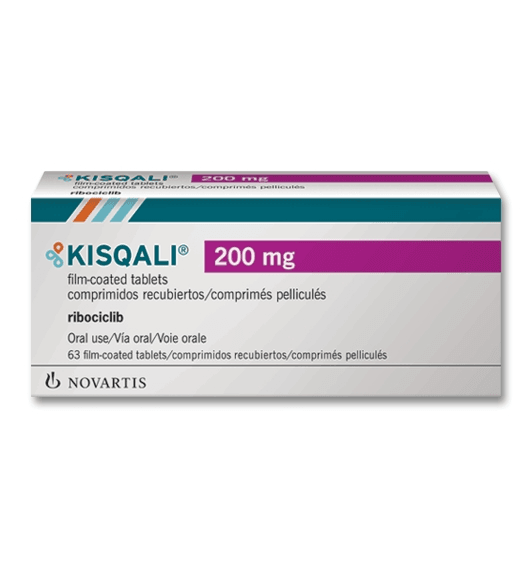
Kisqali
Kisqali Tablets: Buy With Monitoring and Safety Info
Price:
$6,604.99
Secure Encrypted Payments
Kisqali (ribociclib) is a prescription, targeted cancer medicine that works by blocking CDK4/6 proteins involved in tumor cell growth for certain hormone receptor–positive breast cancers. This page brings together label-based dosing basics, key safety monitoring, interaction cautions, and practical handling details in one place, including notes for people using cash-pay without insurance. BorderFreeHealth supports access through a referral model with partner pharmacies and Ships from Canada to US, so it can be easier to understand what information is needed before dispensing and what to expect when coordinating refills across borders.
Because cancer therapy decisions are individualized, the information here stays high level and focuses on common, evidence-based points that clinicians use when prescribing ribociclib. It also highlights everyday issues—like travel storage and medication list reviews—that can reduce avoidable problems during treatment. If something in this overview conflicts with the instructions from a licensed prescriber, the prescriber’s guidance and the official label should take priority.
What Kisqali Is and How It Works
Ribociclib is a CDK4/6 inhibitor (cell-cycle blocker) used as part of endocrine-based therapy. CDK4 and CDK6 are proteins that help regulate how cells move from a resting phase into active division. In some hormone receptor–positive cancers, that growth signaling can become overactive. By inhibiting CDK4/6, ribociclib can slow the transition through the cell cycle, which may reduce cancer cell proliferation when paired with hormone therapy.
It is typically prescribed alongside an aromatase inhibitor (a medicine that lowers estrogen) or with fulvestrant (an estrogen receptor degrader). The goal is to combine two complementary strategies: suppress hormone signaling and limit cell-cycle progression. This combination approach is why prescribers often review both cancer subtype details (such as HR+/HER2-) and prior endocrine therapy history before selecting a regimen.
Prescriptions are confirmed with the original prescriber before dispensing.
On labels and clinic notes, it helps to recognize naming conventions. Kisqali is the ribociclib brand name, while ribociclib is the nonproprietary (generic) name used in drug references and many interaction checkers. The manufacturer listed on regulatory labeling is Novartis. Availability of a true “generic version” (a substitutable product sold as a generic) can vary by country and timing, so pharmacy teams usually rely on the DIN/NDC or product identifier rather than the word “generic” alone.
Who It’s For
This therapy is generally used for hormone receptor–positive, HER2-negative breast cancer that is advanced or metastatic, in combination with endocrine therapy. Indications can include use with an aromatase inhibitor as initial endocrine-based treatment, or use with fulvestrant in certain settings depending on prior treatment history. Some labels also include use in men with HR+/HER2- advanced breast cancer in combination with endocrine therapy. For a browseable hub of related options and background, see the Breast Cancer collection.
Because regimens vary, many people see ribociclib discussed alongside endocrine partners such as anastrozole or fulvestrant. For plain-language background on these companion medicines, the articles Anastrozole Overview and Fulvestrant Injection Guide can help clarify why combination therapy is used and what monitoring differs by drug.
Kisqali is not appropriate for every situation. A prescriber will typically avoid or adjust therapy in circumstances such as prior serious hypersensitivity to ingredients, certain heart-rhythm risks (including a history of long QT syndrome), significant liver impairment, or when pregnancy is possible without effective contraception. This medicine can cause fetal harm, so pregnancy status and contraception planning are part of routine clinical screening. Breastfeeding is also generally not recommended during treatment and for a period after the last dose per labeling.
Dosage and Usage
Ribociclib is taken by mouth as a tablet on a repeating cycle. The usual starting schedule on the U.S. label is 600 mg once daily for 21 consecutive days, followed by 7 days off, repeating every 28 days, in combination with endocrine therapy. Tablets are taken at about the same time each day and may be taken with or without food. Dose reductions, interruptions, or delays can occur based on lab results or side effects, and those changes should be directed by the prescribing oncology team.
Administration basics matter because this is a narrow-therapeutic-window treatment with important monitoring needs. Tablets should be swallowed whole and not crushed, chewed, or split unless the product-specific instructions allow it. If a dose is missed or vomiting occurs after a dose, labeling commonly advises taking the next dose at the scheduled time rather than “making up” extra tablets, but the exact instruction should be verified on the dispensed package insert.
| Topic | Common label-based approach |
|---|---|
| Cycle pattern | 21 days on, 7 days off (28-day cycle) |
| Monitoring | Regular blood counts, liver tests, and ECGs as directed |
| Co-therapy | Paired with endocrine therapy (AI or fulvestrant) |
Why it matters: The off-week helps manage tolerability while maintaining a planned cycle.
Strengths and Forms
This medicine is supplied as oral film-coated tablets. Many references describe “kisqali tablets” as 200 mg tablets used to build the prescribed daily amount. A common daily dose on the label is 600 mg, which is typically three 200 mg tablets taken together once daily during the on-treatment days. Availability of specific pack configurations can vary, so pharmacies focus on the tablet strength and total quantity needed per cycle.
In product information and online searches, people may see terms like “kisqali 600mg” or “ribociclib 600mg.” These usually refer to the daily dose amount rather than a single 600 mg tablet. If there is any mismatch between what is written on a prescription and what appears on a label or carton, it should be clarified before starting a cycle, because the number of tablets per day is a frequent source of confusion.
Some patients also compare ribociclib tablet regimens based on companion endocrine therapy, prior lines of treatment, and anticipated monitoring. The endocrine partner may be oral (such as an aromatase inhibitor) or injectable (such as fulvestrant), which can change appointment cadence and practical planning even when the ribociclib schedule stays similar.
Storage and Travel Basics
Store tablets at controlled room temperature as directed on the package labeling, and keep them in their original container until use unless a pharmacist advises otherwise. Protecting the medicine from excess moisture and heat helps maintain tablet integrity. Keep all doses out of reach of children and pets, and store separately from household medicines to reduce mix-ups—especially when multiple daily tablets are taken together.
For travel, keep the medication in a carry-on bag when possible, along with the prescription label or a copy of the prescription. This can help with identification if luggage is delayed. If a clinic has scheduled lab monitoring or ECG checks around cycle transitions, travel dates are often coordinated so monitoring is not missed. Temperature swings in cars or checked baggage can be significant, so following labeled storage ranges is more reliable than “room temperature” guesswork.
If tablets appear damaged, discolored, or broken, the safest step is to set them aside and ask a pharmacist what to do. Handling should also consider household exposure risk; caregivers who are pregnant or could become pregnant may be advised to avoid direct contact with tablets, depending on local safety guidance.
Side Effects and Safety
Like other CDK4/6 inhibitors, ribociclib can cause side effects that range from manageable to serious. Commonly reported issues include low neutrophils (a type of white blood cell), nausea, fatigue, diarrhea or constipation, headache, and mouth sores. Hair thinning can occur; searches for Kisqali hair loss or ribociclib hair loss often reflect this pattern, and it is usually described as thinning rather than complete hair loss. The oncology team may recommend supportive care strategies based on symptoms and lab trends.
More serious risks include QT prolongation (a heart rhythm change visible on an ECG), liver injury (seen on blood tests), severe skin reactions, and interstitial lung disease/pneumonitis (lung inflammation). Because symptoms like shortness of breath, chest pain, fainting, fever, or yellowing of the skin can signal urgent problems, labeling generally advises contacting a healthcare professional promptly if these occur. Routine monitoring is part of the safety plan: blood counts to watch neutropenia, liver function tests to detect hepatotoxicity, and ECG/electrolytes to manage rhythm risk.
Medicines are dispensed through licensed Canadian partner pharmacies.
When reading kisqali patient information, it helps to separate “expected” effects from red-flag symptoms. “Expected” issues often improve with supportive care or dose adjustments. Red flags are symptoms that need quick clinical review because they can indicate infection risk, significant rhythm changes, or organ inflammation. Patient experiences and kisqali patient reviews can vary widely, so decisions are best grounded in lab monitoring and clinician assessment rather than anecdotes.
Drug Interactions and Cautions
This therapy has clinically important interactions because ribociclib is processed through CYP3A (a liver enzyme system). Strong CYP3A inhibitors can increase drug levels, while strong inducers can decrease them and reduce exposure. Prescribers often review all prescription medicines, over-the-counter products, and supplements before starting and at each cycle. St. John’s wort is a common example of an inducer that may be avoided with many oncology drugs.
Kisqali drug interactions also include additive effects on heart rhythm. Medicines known to prolong the QT interval may raise risk when combined, so an oncology pharmacist may coordinate with cardiology or primary care when a QT-prolonging agent is necessary. Food interactions matter too: kisqali and grapefruit juice is a frequent search because grapefruit can inhibit CYP3A and may raise ribociclib levels. Patients are commonly advised to avoid grapefruit and Seville oranges unless a prescriber says otherwise.
Quick tip: Keep an up-to-date medication list for every visit and lab check.
Other cautions can include liver disease history, electrolyte abnormalities (such as low potassium or magnesium), and drugs that affect these electrolytes. Because interaction risk changes when medicines are started or stopped, it is safer to re-check the full list at each cycle rather than assuming the original review still applies.
Compare With Alternatives
For HR+/HER2- advanced breast cancer, ribociclib is one of several CDK4/6 inhibitors used with endocrine therapy. Other options in the same class include palbociclib and abemaciclib. Selection is individualized and may consider prior therapy, comorbidities, side-effect patterns, monitoring logistics, and clinician experience. For a class overview tied to palbociclib, the article Ibrance Palbociclib Guide offers context that can help people understand what is shared across the class versus what varies by agent.
When comparing Kisqali with alternatives, clinicians often focus on practical differences such as diarrhea tendency, neutropenia frequency patterns, QT monitoring needs, and liver test monitoring—without assuming one medicine is “best” for everyone. Endocrine partners also vary: an aromatase inhibitor may be chosen in some settings, while fulvestrant is used in others. For endocrine comparisons that sometimes come up in care discussions, see Aromasin Vs Arimidex.
Within BorderFreeHealth’s catalog, related prescription products sometimes discussed in the same treatment space include Ibrance and Verzenio. These links are provided for comparison and browsing; the right choice depends on a prescriber’s assessment and the official labeling for each medicine.
Pricing and Access
Cancer medicines can be expensive, and searches like ribociclib price, kisqali monthly cost, or ribociclib cost without insurance often reflect that reality. Out-of-pocket amounts can vary by dose, cycle length, companion therapy, dispensing pharmacy, and any manufacturer or third-party assistance rules. Rather than relying on averages online, it is more reliable to confirm the exact prescribed daily dose (for example, whether the cycle starts at 600 mg/day or a reduced dose) because that directly changes the number of tablets per month.
BorderFreeHealth’s role is to coordinate cross-border access for cash-pay prescriptions by working with Canadian partner pharmacies and verifying prescription details before dispensing. This often includes confirming prescriber information and ensuring the prescription matches local dispensing requirements. For people browsing broader oncology options, the Cancer Category can be used as an index of related therapies.
Cash-pay access is available for patients without insurance.
If a site promotion applies, details may be listed on Promotions. Any discount rules typically depend on eligibility and may change, so it is important to review terms at the time of request. Refill planning matters with cyclical medicines: many people coordinate requests well before a new cycle so there is time for prescriber clarification, lab review, and pharmacy verification if questions arise.
Authoritative Sources
For the most accurate and up-to-date safety details, dosing modifications, and monitoring instructions, the official label should be the primary reference. It contains the clinically important cautions that are easy to miss in summaries, including QT prolongation language, hepatic monitoring guidance, and interaction categories. For additional educational material and condition-level context, the Cancer Articles hub collects related guides in one place.
Neutral, official references include: for FDA-approved prescribing information, see the FDA drug labels database and locate the ribociclib label. For patient-friendly drug information written for the public, see the MedlinePlus drug information directory entry for ribociclib. These sources can help confirm details like contraindications, boxed or major warnings, and the recommended response to missed doses.
For community and prevention context (not prescribing guidance), BorderFreeHealth also publishes awareness resources such as Breast Cancer Awareness Month and National Cancer Control Month. These are intended for education and support rather than treatment selection.
To start a request on the site, select prompt, express shipping when choosing delivery options.
This content is for informational purposes only and is not a substitute for professional medical advice.
Express Shipping - from $25.00
Shipping with this method takes 3-5 days
Prices:
- Dry-Packed Products $25.00
- Cold-Packed Products $35.00
Shipping Countries:
- United States (all contiguous states**)
- Worldwide (excludes some countries***)
Standard Shipping - $15.00
Shipping with this method takes 5-10 days
Prices:
- Dry-Packed Products $15.00
- Not available for Cold-Packed products
Shipping Countries:
- United States (all contiguous states**)
- Worldwide (excludes some countries***)
What is ribociclib and how is it different from Kisqali?
Ribociclib is the nonproprietary (generic) drug name, and Kisqali is the brand name used on the product label and packaging. They refer to the same active ingredient. In clinical use, many interaction checkers and research summaries list the generic name, while prescriptions and pharmacy records may show either name depending on the system. If someone sees both terms in paperwork, it usually reflects naming conventions rather than two different medicines. When confirming details, the active ingredient and tablet strength are the key identifiers.
What monitoring is usually required with ribociclib treatment?
Monitoring commonly includes blood tests to check complete blood counts (for neutropenia) and liver function (for hepatotoxicity). Electrolytes may also be checked because imbalances can affect heart rhythm. ECG monitoring is often used to evaluate QT interval changes, especially early in therapy and when other QT-affecting medicines are added. The exact schedule varies by clinician and patient-specific risks. Symptoms such as fever, fainting, new shortness of breath, or yellowing skin should be reported promptly, since they can signal serious complications.
Can ribociclib be taken with food, and what if a dose is missed?
Ribociclib tablets are generally taken once daily at about the same time each day and may be taken with or without food, following the package insert. Tablets should be swallowed whole unless a pharmacist provides different instructions. For missed doses or vomiting after a dose, official labeling commonly advises taking the next dose at the usual scheduled time rather than taking extra tablets to “catch up.” Because directions can differ by product labeling updates and individual plans, the dispensed instructions and prescriber guidance should be followed.
What drug interactions are most important to review before starting ribociclib?
The most important interactions typically involve medicines that strongly affect CYP3A enzymes, since these can raise or lower ribociclib levels. Strong inhibitors can increase exposure and side-effect risk, while strong inducers can reduce exposure. Another key category includes medicines that may prolong the QT interval, because combining QT-prolonging drugs can increase rhythm risk. Grapefruit and grapefruit juice are commonly avoided due to CYP3A effects. A complete review should include prescriptions, OTC products, and supplements such as St. John’s wort.
Does ribociclib cause hair loss?
Hair changes can occur with ribociclib, but they are often described as hair thinning rather than complete hair loss. The degree varies across individuals and can be influenced by other medicines in the regimen, overall health, and stress from illness. If hair changes are troubling, clinicians may suggest supportive measures and check for other contributors such as thyroid issues, iron deficiency, or nutritional factors. Any sudden, patchy, or scalp-irritating hair loss should be discussed promptly, since it can suggest a different cause.
What should I ask my clinician before starting a CDK4/6 inhibitor?
Useful questions include: which endocrine partner is planned and why; what monitoring schedule is expected (blood counts, liver tests, ECGs); which symptoms should trigger urgent contact; and how dose holds or reductions are handled if labs change. It also helps to review a complete medication and supplement list for interaction screening, including QT-prolonging agents and CYP3A modifiers. People may also ask about contraception needs, pregnancy testing, and breastfeeding guidance, since embryo-fetal risk precautions are a routine part of counseling.
Rewards Program
Earn points on birthdays, product orders, reviews, friend referrals, and more! Enjoy your medication at unparalleled discounts while reaping rewards for every step you take with us.
You can read more about rewards here.
POINT VALUE
How to earn points
- 1Create an account and start earning.
- 2Earn points every time you shop or perform certain actions.
- 3Redeem points for exclusive discounts.
How to book an appointment
- 1Create Begin by completing a profile or log into your existing account. This step ensures we have the necessary information to provide you with a service that's tailored to your needs. account and start earning.
- 2Scheduling an appointment with our online booking system is easy. Pick a day and time that suits you. You’ll receive an immediate confirmation, without the wait.
- 3Discuss your concerns and symptoms and receive a thorough diagnosis from one of our licensed doctors during a confidential video appointment.
- 4If you've been prescribed medication, your Rx is sent directly to one of our licensed pharmacies and delivered right to your door.
Get Started
To book an online doctor appointment, register for an account or login. After doing so, you can book your visit on this page.
You Might Also Like
Select options
This product has multiple variants. The options may be chosen on the product page
Select options
This product has multiple variants. The options may be chosen on the product page
Select options
This product has multiple variants. The options may be chosen on the product page
Select options
This product has multiple variants. The options may be chosen on the product page