

Please note: a valid prescription is required for all prescription medication.
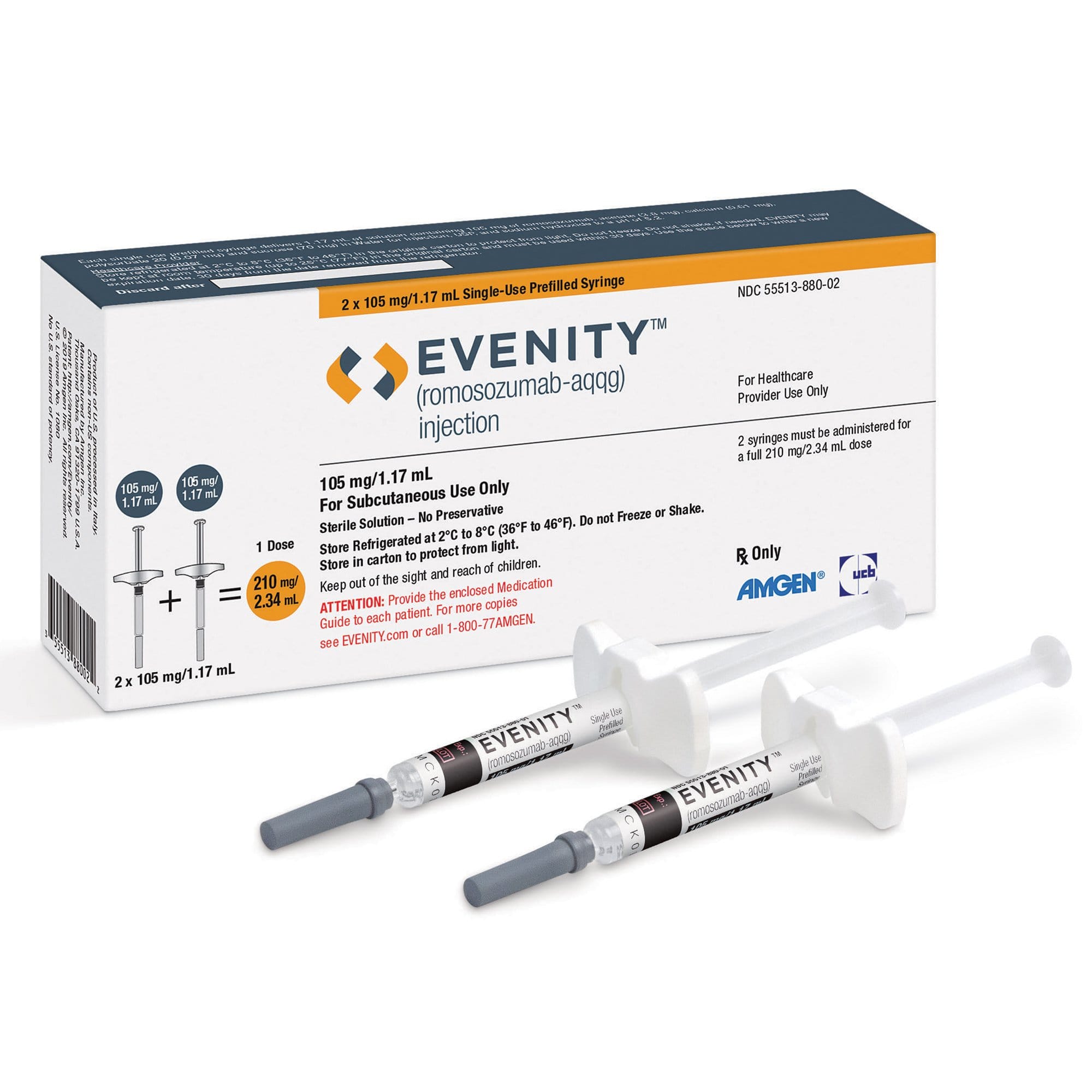
Evenity
Evenity (romosozumab-aqqg) Injection Overview
Price:
$961.99
Secure Encrypted Payments
Evenity is a prescription injection used to treat osteoporosis in certain people at high fracture risk. This page explains what it does, how it’s typically dosed, and key safety and storage points to review with a clinician. Ships from Canada to US, and access may be helpful for people seeking cash-pay options without insurance.
What Evenity Is and How It Works
Romosozumab-aqqg is a monoclonal antibody (a targeted protein medicine) that affects bone remodeling. It works by blocking sclerostin, a natural signal that limits new bone formation. By changing that signaling, the therapy can increase bone building and also reduce bone breakdown. In practice, it is used as a time-limited “bone builder” course, then many patients transition to a maintenance therapy that slows bone loss.
Prescriptions are confirmed with the original prescriber before dispensing. The medicine is typically considered for people with osteoporosis at high risk for fracture, especially when fracture risk is urgent or prior therapies were not suitable. Because this treatment has important safety considerations, the full prescribing information should guide screening, lab checks, and the overall plan for follow-on treatment.
Who It’s For
Clinicians prescribe Evenity for osteoporosis in postmenopausal women who are at high risk for fracture. “High risk” can include a history of osteoporotic fracture, multiple risk factors, or not being able to use (or not responding well to) other osteoporosis medicines. For background on bone health terms and treatment categories, the Osteoporosis Hub and Osteoporosis Treatment Options overview can help frame common next steps clinicians discuss.
This therapy is not appropriate for everyone. It should not be started in people with low blood calcium (hypocalcemia) until corrected. It also has cardiovascular warnings; prescribers generally avoid starting it in people with a recent heart attack or stroke and weigh risks carefully in those with cardiovascular risk factors. Allergic reactions can occur with any biologic medicine, so prior hypersensitivity to romosozumab is also a reason not to use it.
Dosage and Usage
Evenity dosage on the label is 210 mg given once monthly, and the course is limited to 12 monthly doses. The monthly total is administered as two separate subcutaneous injections (under the skin) given during the same visit. Most people are also advised to maintain adequate calcium and vitamin D intake, because low calcium can be dangerous during therapy and may need correction before the first dose.
How monthly administration is given
A healthcare professional typically gives the two injections one right after the other, using different locations to reduce local irritation. Common areas include the abdomen, thigh, or upper arm; documentation may reference Evenity injection sites when teaching rotation. The dose should not be injected into areas that are tender, bruised, red, or hard. If a dose is missed, the prescribing team should advise how to reschedule, because timing and the 12-dose limit matter for the overall plan.
Why it matters: The intended course length is part of the benefit-risk design.
- Administration setting: usually clinic-based
- Monthly schedule: keep appointments consistent
- Lab checks: correct low calcium first
- Follow-on plan: maintenance therapy discussion
Strengths and Forms
This medicine is supplied as a prefilled syringe for subcutaneous injection. The labeled presentation is designed so that two syringes make the full monthly dose, often described as Evenity 210 mg per month in total. Availability can vary by pharmacy partner and by current supply channels, so the exact packaging details shown at dispensing may differ from what is seen in general educational materials.
Evenity manufacturer information on U.S. labeling identifies Amgen as the product sponsor. If questions come up about what arrives with a shipment (for example, whether alcohol swabs or ancillary supplies are included), it’s best to confirm at the time of dispensing, because accessory items can vary.
| Item | What it means |
|---|---|
| Form | Subcutaneous injection (prefilled syringe) |
| Monthly total | 210 mg administered as two injections |
| Course length | 12 monthly doses on the label |
Storage and Travel Basics
Storage instructions are important for biologic injections, because temperature extremes and rough handling can damage the medicine. In general, romosozumab is kept refrigerated and protected from light until use, and it should not be frozen. Many patients are instructed to let the syringe reach room temperature before injection to reduce discomfort, and to avoid shaking the syringe.
Quick tip: Keep the carton until use so the label and lot details stay with it.
For travel, plan ahead so refrigeration is maintained and the carton stays dry and secure. A small cooler pack can help, but avoid direct contact between ice packs and the syringe to prevent accidental freezing. If there is any concern that the product was exposed to unsafe temperatures, the safest step is to contact the dispensing pharmacy or prescriber for guidance rather than using a potentially compromised dose.
Side Effects and Safety
Evenity side effects can include joint pain, headache, and injection-site reactions such as redness or swelling. Some people report muscle aches or general discomfort after dosing. Most reactions are manageable, but new or worsening symptoms should be reviewed with a clinician, especially if they suggest an allergy (hives, facial swelling, trouble breathing) or low calcium (muscle cramps, tingling around the mouth, confusion).
Dispensing is handled by licensed Canadian partner pharmacies. Serious risks discussed in prescribing information include cardiovascular events, osteonecrosis of the jaw (a rare jawbone problem), atypical femur fractures, and severe hypersensitivity reactions. Clinicians may recommend a dental exam and addressing planned invasive dental work before treatment. Any chest pain, shortness of breath, sudden weakness, or speech changes needs urgent medical evaluation.
Drug Interactions and Cautions
This therapy does not have a long list of classic “drug-drug interactions” like some oral medicines, but practical cautions still matter. Medicines or conditions that lower calcium levels can raise the risk of hypocalcemia during treatment. That is why clinicians may check calcium and vitamin D status, kidney function, and related labs based on individual risk factors before and during therapy.
Other osteoporosis treatments also affect how romosozumab is used in a broader plan. A prescriber may avoid overlapping certain bone medicines without a clear rationale and monitoring plan, and many people are transitioned to an antiresorptive drug after the 12-month course. If surgery or major dental work is planned, it is important to tell the treating teams about current or recent osteoporosis injections so they can coordinate timing and monitoring.
Compare With Alternatives
In osteoporosis care, clinicians often compare a bone-building option like romosozumab with antiresorptive therapies (medicines that slow bone breakdown). Examples include denosumab and bisphosphonates, which differ in how they’re given and how long effects may persist. Treatment selection depends on fracture history, bone density results, kidney function, age, and cardiovascular history, along with patient preferences and adherence considerations.
On BorderFreeHealth, related options in this category may include Prolia Prefilled Syringe (denosumab) and Actonel Tablets (risedronate). These are not interchangeable, and they are not used the same way. A clinician can explain whether switching, sequencing, or choosing a different class is appropriate based on current guidelines and individual risk factors.
Pricing and Access
The cost of Evenity can vary widely depending on pharmacy channel, dispensing fees, and whether a patient is using commercial coverage, Medicare benefits, or paying cash. Some people specifically research Evenity Medicare coverage because prior authorization and clinical criteria can apply. If coverage is not used, cash-pay access may still be an option depending on prescription verification and dispensing requirements.
We support cross-border access on a cash-pay basis when coverage isn’t used. US shipping from Canada may be part of the fulfillment model, and prescriptions are reviewed as part of the process. For site navigation, browse the Women’s Health Category, explore the Women’s Health Articles, or read related guides such as Menopause And Beyond Guide and Premarin Hormonal Balance Guide. If applicable, the Site Promotions Page may list available programs.
Authoritative Sources
For clinical decision-making, the most reliable details come from official prescribing information and regulator-reviewed resources. These documents cover the boxed warning, contraindications, administration instructions, storage limits, and the evidence basis behind the labeled 12-month course. They also outline situations where treatment should not be started and symptoms that require urgent evaluation.
For deeper context on osteoporosis care goals and follow-on therapy after an anabolic course, clinicians often combine label guidance with specialty society recommendations. If you are keeping personal records, it can help to write down the dose date, injection locations, and any symptoms to discuss at the next visit.
- For full prescribing details, see the FDA prescribing information for romosozumab-aqqg.
- For patient-friendly counseling points, review the MedlinePlus romosozumab injection page.
To submit a prescription request through the site, select prompt, express shipping if available at checkout.
This content is for informational purposes only and is not a substitute for professional medical advice.
Express Shipping - from $25.00
Shipping with this method takes 3-5 days
Prices:
- Dry-Packed Products $25.00
- Cold-Packed Products $35.00
Shipping Countries:
- United States (all contiguous states**)
- Worldwide (excludes some countries***)
Standard Shipping - $15.00
Shipping with this method takes 5-10 days
Prices:
- Dry-Packed Products $15.00
- Not available for Cold-Packed products
Shipping Countries:
- United States (all contiguous states**)
- Worldwide (excludes some countries***)
What is Evenity used for?
Evenity (romosozumab-aqqg) is used to treat osteoporosis in postmenopausal women who are considered at high risk for fracture. “High risk” can mean a prior osteoporotic fracture, multiple fracture risk factors, or not being able to use other osteoporosis medicines. It is designed as a time-limited course, and many people transition to another osteoporosis treatment afterward to help maintain gains. A prescriber decides whether it fits based on bone density, fracture history, labs such as calcium, and cardiovascular history.
How is Evenity given and where are the injections placed?
Evenity is given as a monthly subcutaneous injection regimen administered by a healthcare professional. The total monthly dose is delivered as two injections during the same visit, typically at different locations. Common injection areas include the abdomen, thigh, or upper arm, and sites are rotated to reduce irritation. Injections are usually avoided in skin that is bruised, red, tender, or hardened. The clinic team can explain what to expect on dosing day and how injection-site reactions are handled.
How long can someone take Evenity?
The labeled course for Evenity is limited to 12 monthly doses. After the course is completed, clinicians commonly recommend transitioning to a maintenance osteoporosis therapy (often an antiresorptive medicine) to help preserve bone density changes. The exact next step depends on a person’s fracture risk, other medical conditions, kidney function, and prior osteoporosis treatment history. Because it is time-limited, planning for follow-on therapy is typically part of the initial treatment discussion.
What monitoring is needed while on Evenity?
Monitoring is individualized, but clinicians often focus on calcium status and symptoms that could suggest low calcium (tingling, muscle cramps, confusion) or hypersensitivity reactions. A prescriber may check labs before starting therapy, especially if a person has kidney disease, malabsorption, or other risks for low calcium or vitamin D deficiency. Dental health may also be reviewed because rare jawbone problems have been reported with osteoporosis medicines. Any chest pain, shortness of breath, or neurologic symptoms should be treated as urgent.
What should I ask my clinician before starting Evenity?
Useful topics include whether the treatment is appropriate given any history of heart attack or stroke, how calcium and vitamin D intake should be managed, and whether lab work is needed before the first dose. It can also help to ask about dental care timing, especially if extractions or implants are planned, and what the follow-on plan will be after the 12-month course ends. Discuss current osteoporosis medicines and supplements so the clinician can coordinate sequencing and avoid unintended overlap.
What happens if a monthly dose is missed?
If a monthly dose is missed, the safest approach is to contact the prescribing clinic for instructions rather than trying to “make up” a dose independently. Clinicians can advise how to reschedule while keeping the overall course aligned with label limits. They may also review any reason the dose was missed, such as side effects, illness, or logistics, and decide whether additional monitoring is needed. Because the regimen is monthly and time-limited, timing decisions are typically made by the prescriber.
Rewards Program
Earn points on birthdays, product orders, reviews, friend referrals, and more! Enjoy your medication at unparalleled discounts while reaping rewards for every step you take with us.
You can read more about rewards here.
POINT VALUE
How to earn points
- 1Create an account and start earning.
- 2Earn points every time you shop or perform certain actions.
- 3Redeem points for exclusive discounts.
How to book an appointment
- 1Create Begin by completing a profile or log into your existing account. This step ensures we have the necessary information to provide you with a service that's tailored to your needs. account and start earning.
- 2Scheduling an appointment with our online booking system is easy. Pick a day and time that suits you. You’ll receive an immediate confirmation, without the wait.
- 3Discuss your concerns and symptoms and receive a thorough diagnosis from one of our licensed doctors during a confidential video appointment.
- 4If you've been prescribed medication, your Rx is sent directly to one of our licensed pharmacies and delivered right to your door.
Get Started
To book an online doctor appointment, register for an account or login. After doing so, you can book your visit on this page.
You Might Also Like
Select options
This product has multiple variants. The options may be chosen on the product page
Select options
This product has multiple variants. The options may be chosen on the product page
Select options
This product has multiple variants. The options may be chosen on the product page
Select options
This product has multiple variants. The options may be chosen on the product page