
Please note: a valid prescription is required for all prescription medication.
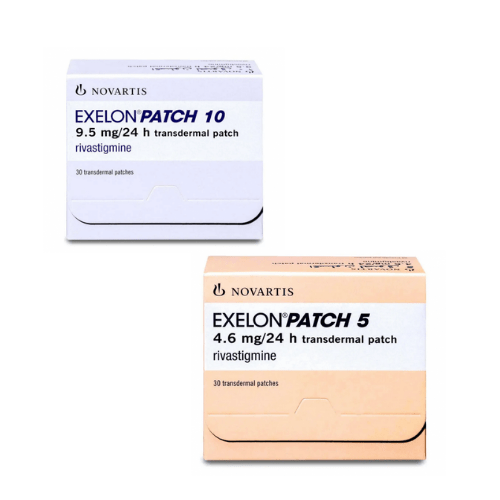
Exelon Patch
Buy Exelon Patch Online
Secure Encrypted Payments
Exelon Patch is a rivastigmine transdermal system used for dementia symptoms associated with Alzheimer’s disease and Parkinson’s disease dementia. It can be ordered online, with the strength chosen during ordering matched to the directions from the treating clinician. Each patch is designed for 24-hour wear, so the daily routine matters as much as the strength selected.
The active ingredient, rivastigmine, belongs to a group of medicines called cholinesterase inhibitors. These medicines help preserve acetylcholine signaling in the brain, which is involved in memory, attention, and daily function. Exelon Patch may help manage symptoms, but it does not cure dementia or stop the underlying disease process.
Exelon Patch Price and Strength Selection
The Exelon Patch price can vary by strength, package size, manufacturer, and sourcing. During ordering, choose the dose or strength shown for the product and make sure it matches the clinician’s directions. A lower or higher patch is not a simple substitute, because rivastigmine exposure changes with the labeled 24-hour delivery rate.
Many people also compare rivastigmine patch cost when planning a longer caregiving routine. Cash-pay customers should weigh the exact strength, quantity, and refill timing instead of stretching patch wear or alternating strengths without clinical input. Wearing a patch longer than directed, cutting it, or using more than one patch can increase safety risks.
Exelon Patch is commonly discussed alongside its active ingredient name, rivastigmine transdermal patch. Brand and generic naming can differ by market, but the practical ordering point is the same: the active ingredient, release rate, directions, and quantity must align with the intended treatment plan. BorderFreeHealth can help U.S. customers access US delivery from Canada through licensed pharmacies, with order details checked as part of the pharmacy process.
How to Use the Rivastigmine Transdermal Patch
Rivastigmine patches are generally worn once daily, with only one patch on the skin at a time. Remove the old patch before applying a new one. This step is essential because duplicate patches can lead to excessive medication exposure and serious adverse effects.
For rivastigmine patch how to use questions, the package leaflet and pharmacist instructions are the safest references. Apply the patch to clean, dry, hairless, unbroken skin. Common application areas include the upper or lower back, upper arm, or chest, unless the product instructions provide different site guidance.
- Remove first: make sure yesterday’s patch is off before applying the next one.
- Choose skin carefully: avoid irritated, oily, burned, or freshly shaved areas.
- Rotate sites: do not reuse the same exact spot too soon.
- Avoid heat: keep heating pads, electric blankets, and intense heat away from the patch.
- Do not cut: cutting may change how rivastigmine is released.
For rivastigmine patch where to apply decisions, caregivers often choose a site that is easy to inspect but not likely to rub under tight clothing. A back-of-shoulder or upper-back site may help reduce accidental removal when the person tends to touch the patch. If a patch falls off, follow the product leaflet or ask a pharmacist rather than guessing the next step.
Quick tip: Keep a simple log with the date, time, strength, and body site.
What Exelon Patch Is Used For
Exelon Patch is used for dementia of the Alzheimer’s type and for dementia associated with Parkinson’s disease. In U.S. labeling, rivastigmine transdermal systems are described for Alzheimer’s dementia across mild, moderate, and severe stages, and for mild to moderate Parkinson’s disease dementia. The medicine is intended to help symptoms such as cognition and daily functioning, not to reverse the condition.
Families coordinating care for Alzheimer’s symptoms may find the Alzheimer’s Disease Dementia section helpful for browsing related treatment areas. For Parkinson’s-related cognitive changes, the Parkinson’s Disease Dementia section gives condition-specific context. Diagnosis, treatment choice, and dose changes should remain individualized clinical decisions.
Some people ask whether Exelon improves memory. Rivastigmine may help some patients maintain or improve symptoms for a period, but responses vary. Caregivers should track daily function, appetite, sleep, falls, skin reactions, and confusion changes so the clinician can judge whether the patch remains appropriate.
24-Hour Patch Strengths and Dose Changes
The rivastigmine transdermal system is labeled by the amount of medicine delivered over 24 hours. Packaging can vary, but the strength should appear on the carton and individual pouch. Checking the pouch before each application is especially important during titration or after a recent change.
| Strength per 24 hours | Common role in treatment plans |
|---|---|
| 4.6 mg/24 h | Often used when starting therapy; examples include rivastigmine patch 4.6 mg, rivastigmine 4.6 mg 24hr patch, and Exelon Patch 4.6 mg labeling. |
| 9.5 mg/24 h | Often used as a maintenance strength if tolerated; examples include rivastigmine 9.5 mg patch and Exelon Patch 9.5 mg labeling. |
| 13.3 mg/24 h | A higher maintenance strength for selected patients; examples include rivastigmine patch 13.3 mg and Exelon 13.3 mg patch labeling. |
Clinicians often start with a lower strength and increase only if the patient tolerates it. If treatment is stopped for more than a few days, restarting may need clinical reassessment. Do not restart at a previous higher strength or change the wear schedule without professional guidance.
Why it matters: A consistent one-patch routine helps prevent missed doses and accidental duplicate patches.
Storage, Disposal, and Travel
Store Exelon Patch at room temperature and keep each patch sealed in its pouch until use. Avoid bathrooms, hot cars, windowsills, and other places with excess heat or moisture. Keep unused patches away from children, pets, and anyone for whom the medicine was not intended.
Used patches still contain medication. Fold the sticky sides together before disposal, then follow local medication disposal guidance when available. If a caregiver manages medicines, keeping the patches in one storage location and counting remaining pouches can reduce missed or duplicate applications.
When traveling, keep patches in original packaging with the label information available. Pack enough for the trip plus reasonable delays, and avoid storing them in places where temperatures may fluctuate. Prompt, express shipping may be available after pharmacy processing and required order checks.
Side Effects, Warnings, and Monitoring
People looking up Exelon Patch side effects often want to know which symptoms are expected and which need urgent attention. Common side effects can include nausea, vomiting, diarrhea, decreased appetite, dizziness, headache, weakness, and redness or itching where the patch was applied. Weight loss can occur, so appetite, hydration, and body weight may need monitoring during ongoing use.
More serious symptoms need prompt medical attention. These include repeated vomiting, dehydration, fainting, a very slow heartbeat, seizures, black or bloody stools, severe stomach pain, worsening confusion with weakness or falls, or signs of a severe allergic skin reaction. Skin irritation limited to the patch site can be mild, but blistering, swelling, intense itching, or rash spreading beyond the patch area may indicate allergic contact dermatitis.
Medication errors are a known concern with rivastigmine patches. Wearing more than one patch, forgetting to remove the old patch, cutting a patch, or applying heat over it can increase rivastigmine exposure. Caregivers should inspect the skin and review the medication log before placing the next patch.
Some people need extra caution before or during rivastigmine treatment. Low body weight, frailty, fainting history, slow heartbeat, ulcers, gastrointestinal bleeding, breathing problems, seizures, urinary obstruction, or worsening Parkinson’s motor symptoms should be discussed with a clinician. These factors do not always rule out treatment, but they can affect monitoring and tolerability.
Drug Interactions and Caregiver Checks
Rivastigmine can interact with prescription medicines, over-the-counter products, and supplements. Anticholinergic medicines, which block acetylcholine activity, may work against rivastigmine’s intended effect. Medicines that slow heart rate, including some beta-blockers, may increase dizziness or fainting risk in susceptible patients.
Metoclopramide may increase the chance of movement-related side effects when used with rivastigmine. This matters for Parkinson’s disease dementia because tremor, stiffness, walking problems, or balance changes may already be present. Surgical and anesthesia teams should know about rivastigmine patch use because cholinesterase inhibition can affect certain neuromuscular blocking medicines used during procedures.
- Bring a full list: include bladder, sleep, allergy, heart, stomach, and nausea medicines.
- Watch timing: dizziness or falls after medicine changes should be reported.
- Inspect skin: look for the old patch before placing the new one.
- Track intake: poor appetite, vomiting, or diarrhea can lead to dehydration.
- Note behavior changes: new confusion, weakness, or falls may need clinical review.
The Neurology Articles section offers broader educational reading on nervous-system conditions and medicines. Educational reading can support caregiver questions, but it should not replace the product leaflet or individualized clinical instructions.
How the Patch Compares With Related Options
Patch treatment can be useful when swallowing tablets is difficult or when a caregiver can reliably manage a daily skin check. It may be less suitable for someone with repeated adhesive reactions, widespread skin irritation, or a routine that makes patch changes hard to verify. The main practical advantage is steady medicine release over 24 hours, paired with a visible daily adherence check.
Rivastigmine is also available in oral forms in some markets. Tablets, capsules, or solution may be considered when a clinician prefers oral dosing, but the side effect pattern and routine can differ from a transdermal patch. A person should not switch between oral rivastigmine and a patch without clinical direction.
Other dementia medicines may be discussed depending on diagnosis and stage. Donepezil and galantamine are oral cholinesterase inhibitors, while memantine works through a different pathway and is often considered in moderate to severe Alzheimer’s disease care plans. For browsing within this therapeutic area, the Neurology category groups related prescription and nervous-system treatments.
Access From Canada and Product Origin Context
Some U.S. customers consider cross-border cash-pay access when insurance coverage is limited or out-of-pocket costs are high. For Exelon Patch without insurance, the most useful comparison is the exact strength, quantity, and total order cost rather than a broad average. Price decisions should never lead to unsafe dose spacing, patch cutting, or wearing two strengths together unless a clinician specifically directs that plan.
Products supplied through licensed Canadian pharmacies may have country-specific packaging, labeling, or brand and generic naming. That does not change the need to match the active ingredient and labeled delivery rate to the treatment plan. The Canada-origin product attribute can help customers understand sourcing context when it appears with medicines in the store.
Authoritative Sources
DailyMed provides official U.S. labeling information for Exelon Patch, including indications, dosing, warnings, and adverse reactions: DailyMed prescribing information.
Mayo Clinic provides patient-facing information on rivastigmine transdermal use, side effects, and precautions: Mayo Clinic rivastigmine transdermal information.
This content is for informational purposes only and is not a substitute for professional medical advice.
Express Shipping - from $29.99
Shipping with this method takes 3-5 days
Prices:
- Dry-Packed Products $29.99
- Cold-Packed Products $39.99
Shipping Countries:
- United States (all contiguous states**)
- Worldwide (excludes some countries***)
Standard Shipping - $19.99
Shipping with this method takes 5-10 days
Prices:
- Dry-Packed Products $19.99
- Not available for Cold-Packed products
Shipping Countries:
- United States (all contiguous states**)
- Worldwide (excludes some countries***)
What is Exelon Patch used for?
Exelon Patch is used to treat dementia symptoms associated with Alzheimer’s disease and Parkinson’s disease dementia. It may help with cognition and daily function in some people, but it does not cure dementia or stop disease progression.
How long is one rivastigmine patch worn?
Each rivastigmine transdermal patch is designed for 24-hour wear. The old patch should be removed before a new one is applied, because wearing more than one patch can cause excessive medication exposure.
Where should the rivastigmine patch be applied?
Common application areas include clean, dry, hairless, unbroken skin on the upper or lower back, upper arm, or chest, unless the product instructions say otherwise. Rotate sites and avoid irritated, oily, burned, or freshly shaved skin.
What are common Exelon Patch side effects?
Common side effects can include nausea, vomiting, diarrhea, decreased appetite, dizziness, headache, weakness, and patch-site redness or itching. Weight loss can occur, so caregivers may need to monitor appetite, hydration, and body weight.
What warnings should caregivers know about Exelon Patch?
Caregivers should watch for repeated vomiting, dehydration, fainting, very slow heartbeat, seizures, black or bloody stools, severe stomach pain, falls, worsening confusion, or rash spreading beyond the patch site. Accidental duplicate patches are a key preventable safety risk.
Rewards Program
Earn points on birthdays, product orders, reviews, friend referrals, and more! Enjoy your medication at unparalleled discounts while reaping rewards for every step you take with us.
You can read more about rewards here.
POINT VALUE
How to earn points
- 1Create an account and start earning.
- 2Earn points every time you shop or perform certain actions.
- 3Redeem points for exclusive discounts.
You Might Also Like
Select options
This product has multiple variants. The options may be chosen on the product page
Select options
This product has multiple variants. The options may be chosen on the product page
Select options
This product has multiple variants. The options may be chosen on the product page
Select options
This product has multiple variants. The options may be chosen on the product page