
Please note: a valid prescription is required for all prescription medication.
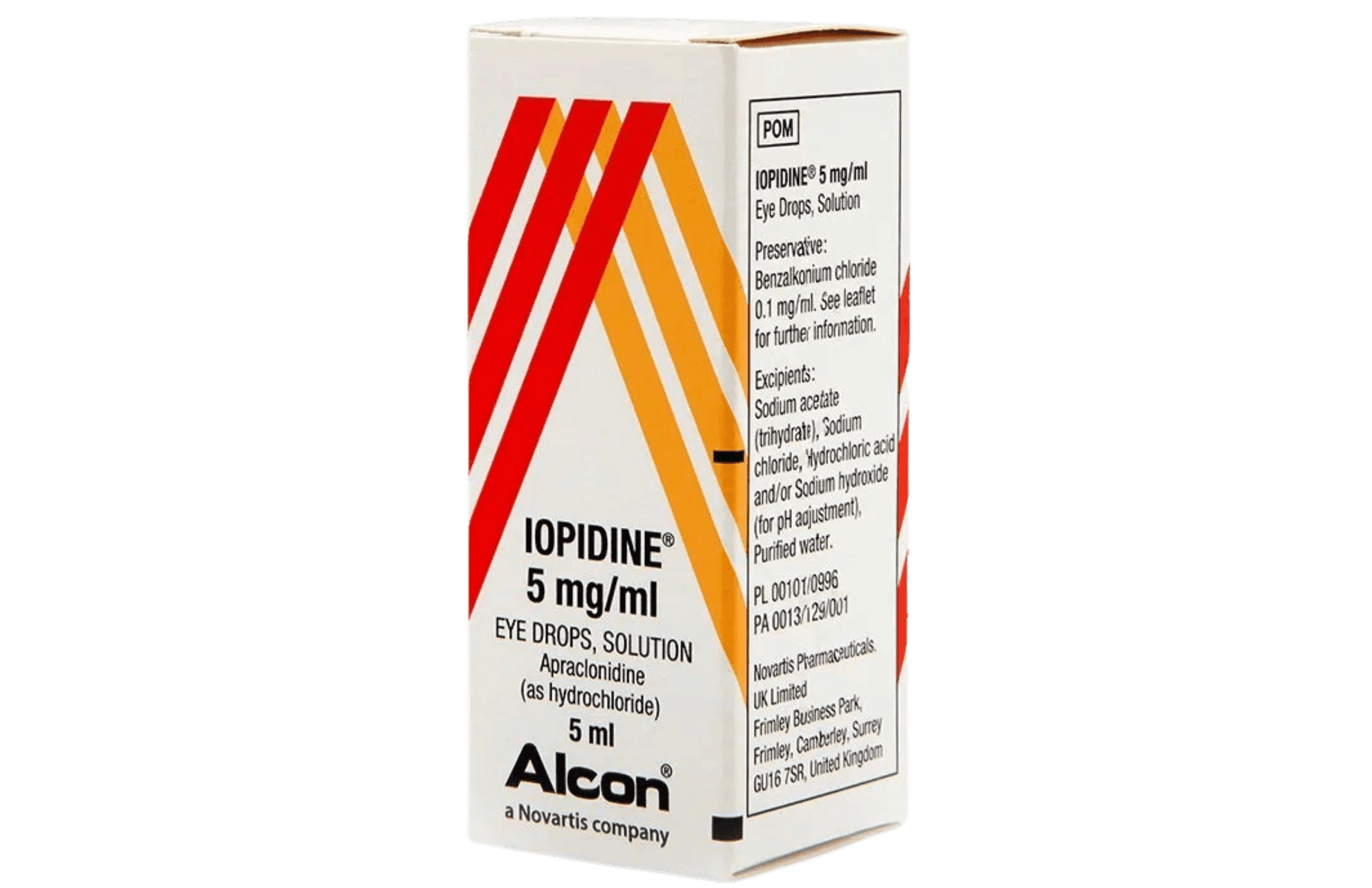
Iopidine Solution
Buy Iopidine Solution Online
Secure Encrypted Payments
Iopidine Solution is an apraclonidine ophthalmic solution used to lower elevated intraocular pressure in specific eye-care settings. It can be ordered online, with the strength selected during ordering matched to the clinician’s directions and the intended treatment setting. Iopidine eye drops are available as 0.5% or 1% products, and those strengths are used differently.
The 0.5% strength is generally associated with add-on pressure lowering in people already using other glaucoma medicines. The 1% strength is mainly used around certain anterior segment laser procedures to help control short-term pressure increases. Because both products contain apraclonidine hydrochloride, the label strength, treated eye, and timing matter as much as the brand name.
Iopidine Solution Price, Strength, and Ordering Basics
When you buy Iopidine Solution, start by matching the medicine to the strength and directions written for your eye-care plan. Current pricing can vary by strength, quantity, brand versus generic supply, and whether the order is for IOPIDINE 0.5%, IOPIDINE 1%, or apraclonidine ophthalmic solution. The safest choice is the product strength that matches the directions you were given, not the lowest price alone.
BorderFreeHealth works with licensed Canadian pharmacy channels for U.S. patients using cash-pay, cross-border medication options. Some orders may involve US delivery from Canada, and order details may be reviewed so the supplied medicine matches the selected strength and directions. If you use more than one eye medicine, keep the bottle name and concentration clear to avoid confusing apraclonidine with another glaucoma drop.
People often look at Iopidine cash price or apraclonidine without insurance because eye medicines can differ widely in coverage and availability. The final amount depends on the exact product supplied and the quantity chosen. If brand substitution is allowed in your treatment plan, generic apraclonidine hydrochloride ophthalmic solution may be considered when available.
Why it matters: IOPIDINE 0.5% and IOPIDINE 1% contain the same active ingredient, but they are not used interchangeably.
How 0.5% and 1% Eye Drops Are Used
Iopidine 0.5% ophthalmic solution is commonly used as adjunctive therapy when other glaucoma treatment is not lowering intraocular pressure enough. Intraocular pressure means the fluid pressure inside the eye. High pressure can damage the optic nerve over time, so treatment plans often combine medicines, monitoring, and follow-up pressure checks.
Iopidine 1% ophthalmic solution is mainly used around certain laser eye procedures. Eye specialists may use it before and after anterior segment laser treatment to help prevent or control a temporary pressure spike. That use is short-term and procedure-focused, so it should not be treated like a daily glaucoma bottle unless the directions specifically say so.
| Product strength | Common use context | Important ordering detail |
|---|---|---|
| IOPIDINE 0.5% | Add-on pressure lowering in glaucoma care | Match the daily schedule and treated eye or eyes |
| IOPIDINE 1% | Pressure control around certain laser procedures | Match the procedure timing and clinic instructions |
| Generic apraclonidine | Same active ingredient when an equivalent product is supplied | Confirm the strength and substitution instructions |
For broader condition information and related eye-care treatments, the glaucoma condition section explains common therapy categories. The ophthalmology category also groups eye medicines used in pressure control and other eye conditions.
What Iopidine Treats in Eye-Care Plans
Apraclonidine eye drops reduce elevated eye pressure by decreasing aqueous humor production and increasing outflow through certain pathways. Aqueous humor is the clear fluid inside the front part of the eye. Lowering pressure can be important in glaucoma care and after some laser procedures because pressure spikes may increase stress on the optic nerve.
Iopidine is not a general redness-relief drop and should not be used to self-treat unexplained eye pain, sudden vision changes, injury, or infection symptoms. It is also not a substitute for routine monitoring when glaucoma is already diagnosed. Eye pressure can change without obvious symptoms, so pressure measurements remain important even if the eye feels normal.
The reason for use affects how the product is selected. A person needing add-on glaucoma therapy may require regular scheduled dosing with the 0.5% solution. Someone receiving laser care may need the 1% solution only within a narrow procedure window. These are different clinical situations, even though both involve elevated intraocular pressure.
Directions, Drop Technique, and Daily Handling
Use Iopidine drops exactly as directed on the bottle label and the accompanying instructions. The 0.5% product is often used as one drop in the affected eye or eyes three times daily. The 1% product is commonly used as one drop about one hour before laser treatment and one drop immediately after the procedure. These examples reflect common label-aligned patterns, but your own directions should control how the bottle is used.
- Wash your hands before handling the bottle.
- Tilt the head back and pull the lower eyelid down gently.
- Place one drop into the eye without touching the dropper tip.
- Close the eye briefly after the drop is placed.
- Separate different eye drops by at least 5 minutes unless told otherwise.
- Recap the bottle promptly after use.
Temporary blurred vision can occur after instillation. Wait until your vision clears before driving, reading small print, or using equipment that requires sharp sight. If only one eye is being treated, do not assume the other eye should receive the same drop unless the directions say so.
Contact lens instructions can vary by product and label. Follow the bottle directions if lenses must be removed before use. Avoid touching the dropper to the eye, eyelid, fingers, counter, or lens case because contamination can introduce bacteria into the bottle.
Brand Iopidine, Generic Apraclonidine, and Similar Drops
Brand Iopidine and apraclonidine hydrochloride ophthalmic solution are closely related naming terms. The active ingredient is apraclonidine, an alpha-adrenergic agonist used in eye pressure management. Some pharmacy records may show the brand name, while others show the active ingredient and concentration.
Generic Iopidine wording is sometimes used casually, but the practical question is whether the supplied apraclonidine ophthalmic solution matches the intended strength and directions. Country-specific naming and substitution rules can differ. That difference does not change the need to use the exact 0.5% or 1% strength intended for the treatment plan.
Apraclonidine is in the same broad alpha-agonist family as brimonidine, but it is not automatically interchangeable with every brimonidine product. Related brimonidine options include brimonidine tartrate ophthalmic solution, Alphagan ophthalmic solution, and Alphagan P ophthalmic solution. Treatment choice depends on diagnosis, pressure target, previous response, and other medicines already being used.
Storage, Travel, and Shipping Considerations
Store Iopidine Solution according to the label on the dispensed bottle. Keep the cap tightly closed, protect the dropper tip from contamination, and keep the medicine away from children and pets. Do not use the bottle if the liquid changes color, becomes cloudy, or has passed the expiry date.
For travel, keep apraclonidine eye drops in the original labeled container. Avoid leaving the bottle in a hot car, near a heater, or in freezing conditions. Carrying current eye-care paperwork may help if airport or travel staff ask why the medicine is being transported.
When logistics are needed, prompt, express shipping may be used when appropriate. Keep the bottle upright when possible, and inspect the package on arrival. If the seal appears damaged or the bottle looks unusual, pause use and ask for guidance before putting drops in the eye.
Quick tip: Write the opened-bottle date on the carton if the label includes a discard-after-opening instruction.
Side Effects, Warnings, and Monitoring
Common side effects of apraclonidine ophthalmic solution can include burning, stinging, eye redness, itching, tearing, dry mouth, unusual taste, tiredness, dizziness, headache, or brief blurred vision. Some discomfort right after placing a drop can be expected, but worsening irritation or symptoms that persist should be taken seriously.
Allergic-type eye reactions may develop during treatment. Watch for eyelid swelling, crusting, increasing redness, eye discharge, or itching that becomes more noticeable with continued use. These symptoms may be confused with routine irritation, so the timing and severity matter. Pressure-lowering effect may also decrease over time in some people, which is why follow-up pressure checks remain important.
Seek prompt medical attention for sudden vision loss, severe eye pain, marked shortness of breath, fainting, chest symptoms, or a widespread rash. After laser eye surgery, mild irritation may come from the procedure, the drop, or both. A clear change in vision, severe pain, or symptoms much stronger than expected after a drop should be assessed urgently.
Apraclonidine can have body-wide effects even though it is used in the eye. Extra caution may be needed in people with serious cardiovascular disease, low blood pressure, slow heart rate, fainting history, circulation problems, stroke history, kidney impairment, depression, or prior allergy to clonidine-like medicines. Pregnancy and breastfeeding questions should be discussed with a healthcare professional because the decision depends on the eye condition and the overall medical situation.
Interactions and Medicines to Mention
Medication interactions matter with Iopidine eye drops because some of the medicine can be absorbed beyond the eye. Tell your healthcare professional about all glaucoma drops, blood pressure medicines, heart medicines, antidepressants, sleep medicines, opioid pain medicines, alcohol use, and any medicines that affect alertness. Monoamine oxidase inhibitors and tricyclic antidepressants are especially important to mention.
If multiple eye medicines are used, spacing drops helps reduce washout. Washout happens when one drop dilutes or pushes out another before it can work properly. Keeping a written schedule can also make it easier to identify which bottle may be causing irritation.
Do not use apraclonidine as a substitute for assessment of new eye pain, sudden redness, halos around lights, or abrupt visual change. Those symptoms may signal an urgent eye problem. People interested in general eye-health education can browse the ophthalmology articles, including broader awareness topics such as Healthy Vision Month eye-health awareness.
How It Compares With Other Eye Pressure Medicines
Iopidine Solution is one option within a larger eye-pressure treatment landscape. For ongoing glaucoma care, clinicians often consider prostaglandin analogs, beta blockers, carbonic anhydrase inhibitors, alpha agonists, combination drops, and laser procedures. Each option has a different schedule, side-effect profile, and role in pressure control.
| Alternative category | When it may be considered | Main practical difference |
|---|---|---|
| Brimonidine products | Alpha-agonist glaucoma therapy | Same broad class family, but different product labeling and tolerability |
| Timolol or dorzolamide | Add-on pressure lowering | Different mechanisms and different heart, lung, or allergy considerations |
| Prostaglandin analogs | Common long-term glaucoma treatment | Often once-daily, with different cosmetic and eye-surface effects |
| Procedure-specific therapy | Laser-related pressure management | Used around a narrow procedure window rather than routine daily therapy |
Another commonly used glaucoma medicine is Xalatan ophthalmic solution, a prostaglandin analog. Combination-drop decisions can also come up in glaucoma care; the article on Combigan eye drops uses and safety tips explains one related treatment approach. These resources can help you discuss medicine categories, but individualized pressure targets should guide the final plan.
Authoritative Sources
For U.S. labeling details on IOPIDINE 0.5%, see the FDA-approved IOPIDINE 0.5% label.
For patient-friendly information about apraclonidine ophthalmic use and safety, see MedlinePlus apraclonidine ophthalmic information.
For a clinical summary of apraclonidine ophthalmic precautions and use, see the Mayo Clinic apraclonidine ophthalmic overview.
This content is for informational purposes only and is not a substitute for professional medical advice.
Express Shipping - from $29.99
Shipping with this method takes 3-5 days
Prices:
- Dry-Packed Products $29.99
- Cold-Packed Products $39.99
Shipping Countries:
- United States (all contiguous states**)
- Worldwide (excludes some countries***)
Standard Shipping - $19.99
Shipping with this method takes 5-10 days
Prices:
- Dry-Packed Products $19.99
- Not available for Cold-Packed products
Shipping Countries:
- United States (all contiguous states**)
- Worldwide (excludes some countries***)
What is Iopidine Solution used for?
Iopidine Solution is an apraclonidine eye drop used to lower elevated intraocular pressure in specific settings. The 0.5% strength is generally used as add-on glaucoma therapy, while the 1% strength is mainly used around certain laser eye procedures.
Are IOPIDINE 0.5% and IOPIDINE 1% the same?
They contain the same active ingredient, apraclonidine, but they are used differently. IOPIDINE 0.5% is commonly linked to adjunctive glaucoma treatment, while IOPIDINE 1% is commonly linked to pressure control around laser procedures.
Can Iopidine eye drops cause side effects?
Yes. Common effects can include burning, stinging, redness, itching, tearing, dry mouth, unusual taste, tiredness, dizziness, and brief blurred vision. Severe pain, sudden vision changes, fainting, chest symptoms, or a widespread rash need urgent medical assessment.
Is generic apraclonidine the same as brand Iopidine?
Generic apraclonidine ophthalmic solution contains the same active ingredient when an equivalent product is supplied. The important details are the concentration, directions, treated eye, and whether brand substitution fits the treatment plan.
How should I store Iopidine eye drops?
Store the bottle as directed on the label, keep it tightly closed, and avoid contaminating the dropper tip. Do not use the drops if the liquid changes color, becomes cloudy, or is past the expiry date.
Rewards Program
Earn points on birthdays, product orders, reviews, friend referrals, and more! Enjoy your medication at unparalleled discounts while reaping rewards for every step you take with us.
You can read more about rewards here.
POINT VALUE
How to earn points
- 1Create an account and start earning.
- 2Earn points every time you shop or perform certain actions.
- 3Redeem points for exclusive discounts.
You Might Also Like
Select options
This product has multiple variants. The options may be chosen on the product page
Select options
This product has multiple variants. The options may be chosen on the product page
Select options
This product has multiple variants. The options may be chosen on the product page
Select options
This product has multiple variants. The options may be chosen on the product page